.avif)
Ultimate Guide to Temperature Swings Impact on Heating & Cooling
Learn how temperature swings affect your heating and cooling efficiency and protect your Sacramento HVAC system from weather volatility.
Learn how temperature swings affect your heating and cooling efficiency and protect your Sacramento HVAC system from weather volatility.

Why Temperature Swings Are Hard on Your Heating and Cooling System
How temperature swings affect your heating and cooling is something every Sacramento-area homeowner deals with — especially during spring and fall, when mornings can feel cold enough for heat and afternoons push you straight to air conditioning. That daily back-and-forth puts real stress on your HVAC system, drives up energy bills, and wears out components faster than most people realize.
Here is a quick summary of the main ways temperature swings impact your system:
- Short cycling - Your system turns on and off too frequently, straining the compressor and other components
- Mode switching strain - Switching between heat and cool repeatedly stresses reversing valves and refrigerant lines
- Higher energy bills - A 20°F daily temperature swing can increase HVAC energy use by 25–35%, according to ASHRAE data
- Reduced system lifespan - Systems in variable climates work 15–30% harder, and extreme swings can shorten equipment life by 3–5 years
- Thermal fatigue - Repeated expansion and contraction of metal components causes wear that builds up over time
- Humidity imbalance - Frequent mode switching can introduce moisture into ductwork, leading to mold and musty odors
Sacramento's Central Valley climate makes this especially relevant. The region routinely sees 20°F or more of daily temperature variation — cool, foggy mornings followed by warm afternoons — and that pattern repeats enough throughout the year to take a serious toll on HVAC equipment that was never designed for constant back-and-forth demands.
If your system has been struggling to keep up with the weather lately, you are not imagining it. The guide below breaks down exactly what is happening inside your equipment and what you can do about it.
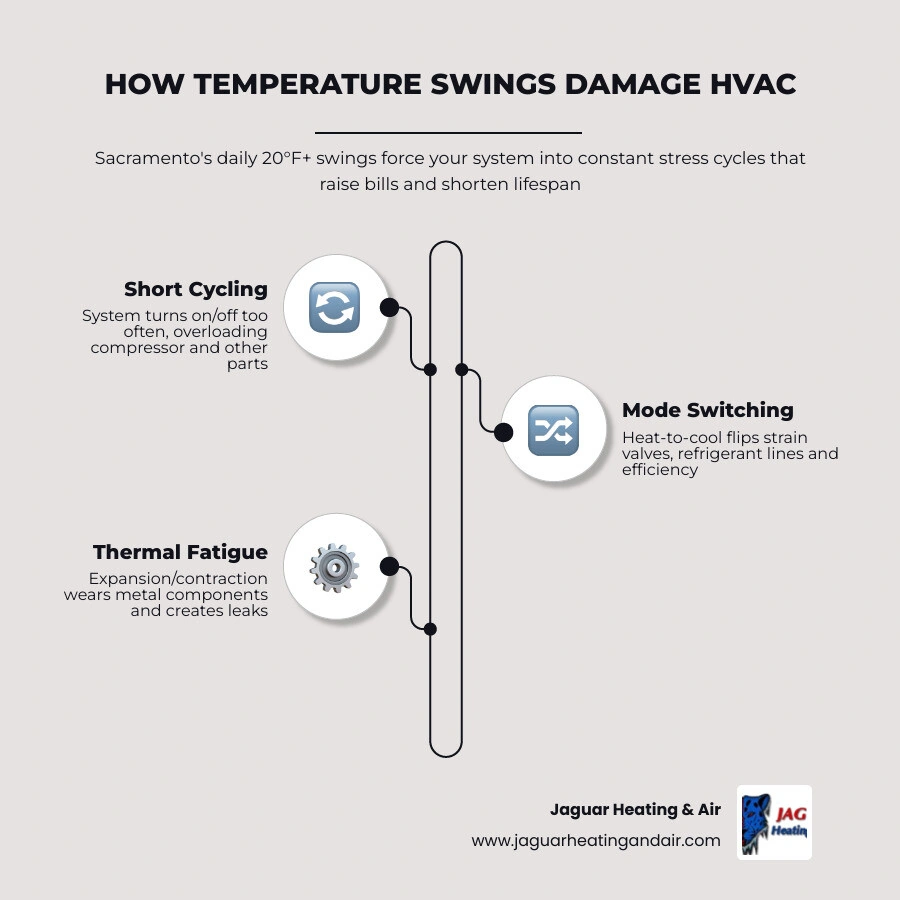
How Temperature Swings Affect Your Heating and Cooling
When we talk about weather in the Central Valley, we often focus on the blazing summer days or the damp, chilly winter mornings. But it is actually the transitions between these extremes—and the wide daily temperature swings—that quietly do some of the worst damage to your HVAC system.

Our local climate is famous for its high diurnal temperature range. In cities like Roseville, Folsom, and Elk Grove, it is incredibly common to wake up to a crisp 45°F morning that requires a jacket and the heater, only to find yourself turning on the air conditioner by 3:00 PM when the thermometer hits 75°F or 80°F.
This rapid fluctuation causes constant thermal expansion and contraction within your heating and cooling system. When metals heat up, they expand; when they cool down, they contract. When your system is forced to repeatedly ride this temperature roller coaster, it experiences what engineers call metal fatigue. Over time, this constant physical movement weakens structural joints, loosens electrical connections, and causes microscopic cracks in vital components.
To learn more about optimizing your system for our unique local weather patterns, check out our guide on Beating the Heat: The Best HVAC Setup for Sacramento Area Weather.
Why Short Cycling Happens During Temperature Swings
One of the most immediate mechanical consequences of rapid temperature swings is a phenomenon called short cycling. To understand short cycling, imagine driving your car through downtown Sacramento in heavy, stop-and-go traffic versus cruising smoothly down Interstate 80. Stop-and-go driving burns significantly more fuel and places immense wear on your engine, transmission, and brakes.
Short cycling is the HVAC equivalent of stop-and-go traffic. It occurs when your heating or cooling system turns on, runs for a brief period (often just 5 to 10 minutes), and then shuts off before completing a full, healthy cycle. During mild transitional days, the outdoor temperature is not extreme enough to require long, steady runs, so the system quickly reaches the thermostat's setpoint and shuts down. Because the outdoor temperature is fluctuating rapidly, the thermostat calls for air again just a few minutes later.
This constant starting and stopping has several negative consequences:
- High Electrical Draw: The startup phase of an air conditioner or heat pump draws up to six times more electrical current than running at a steady state. Frequent startups spike your utility bills.
- Component Wear: The compressor, blower motor, and electrical contactors experience rapid physical wear, leading to premature failure.
- Moisture and "Dirty Sock Syndrome": Air conditioners do not just cool the air; they also dehumidify it. To remove moisture, the indoor evaporator coil must run long enough to get cold and condense water out of the air. If the system short cycles, the moisture condenses on the coil but never drains away. When the system shuts off, that moisture evaporates back into the ductwork. Over time, this damp environment breeds bacteria and mold, resulting in a musty, stale odor throughout your home—commonly known in the industry as "Dirty Sock Syndrome."
If you suspect your system is short cycling because it is poorly matched to your home's layout, sizing might be the root issue. You can read more about this in our articles on Goldilocks and the HVAC Finding the Just Right Size and AC Sizing Matter Sacramento CA.
How Temperature Swings Affect Your Heating and Cooling Efficiency
When your HVAC system is forced to adapt constantly to unpredictable outdoor conditions, its overall efficiency plummets. HVAC systems are engineered to perform at their highest efficiency ratings when running in a steady, continuous state.
According to data from the American Society of Heating, Refrigerating and Air-Conditioning Engineers (ASHRAE), every 1°F of daily temperature swing can reduce your HVAC system's operational efficiency by 0.5% to 1%. When you live in an area like Sacramento or Citrus Heights, where daily temperature variations can easily exceed 20°F or 30°F, your system's efficiency can drop dramatically.
In fact, a 20°F daily temperature variation can push HVAC energy consumption up by 25% to 35% compared to running in a stable climate. Because the system is constantly playing catch-up, it consumes far more electricity than it would during a steady summer heatwave or a consistent winter cold snap.
Understanding these efficiency drops is crucial when evaluating your home's energy performance. For a deeper dive into these metrics, take a look at our guides on Standard vs High Efficiency HVAC Comparison and Efficiency Ratings Explained for Homeowners.
The Mechanical Toll of Weather Volatility on HVAC Components
To understand why weather volatility is so punishing, we have to look inside the metal cabinets of your outdoor and indoor units.
Systems operating in highly variable climates work 15% to 30% harder than those in stable environments. This continuous adaptation places an intense mechanical toll on specific internal components, ultimately shortening the overall lifespan of the equipment.
To illustrate how different types of systems handle this environmental stress, let's compare standard single-stage equipment against modern variable-speed technology:
| HVAC Performance Metric | Single-Stage Systems | Variable-Speed Systems |
|---|---|---|
| Response to Temperature Swings | Cycles on and off at 100% capacity | Adjusts output continuously in tiny increments |
| Energy Consumption | High startup spikes; less efficient during swings | Low startup frequency; maintains steady-state efficiency |
| Component Wear & Tear | High mechanical stress from frequent stops/starts | Low stress; runs continuously at lower speeds |
| Indoor Humidity Control | Poor; short cycles prevent effective dehumidification | Excellent; continuous airflow extracts moisture |
| Average Lifespan in Variable Climates | Shorter (often reduced by 3–5 years) | Longer; protected by gradual, gentle operation |
How Temperature Swings Affect Your Heating and Cooling Compressors
The compressor is the "heart" of your air conditioner or heat pump, responsible for pumping refrigerant through the system. During rapid temperature swings, the compressor is subjected to extreme mechanical strain.
When you switch your system back and forth between heating and cooling modes on the same day, a critical component called the reversing valve must physically shift positions to change the direction of the refrigerant flow. In heat pumps, this valve is vital for keeping you comfortable year-round. However, rapid mode changes alter refrigerant pressures suddenly. If the system is switched before these pressures have a chance to equalize, liquid refrigerant can flood back into the compressor.
Because liquid cannot be compressed, this can cause "slugging," which can instantly destroy the compressor's internal valves and pistons. To learn how these systems manage heating and cooling seamlessly, explore our article on How Heat Pump Keep You Comfortable.
Thermal Fatigue in Heat Exchangers and Ductwork
For gas furnaces, the primary danger of rapid temperature swings is thermal fatigue within the heat exchanger. The heat exchanger is a set of metal tubes or chambers that prevents toxic combustion gases—like carbon monoxide—from mixing with the clean air blowing into your home.
When the furnace turns on, the heat exchanger gets incredibly hot and expands. When the cycle ends, it cools down and contracts. During rapid outdoor temperature swings, the furnace may cycle on and off far more frequently than normal. This rapid expansion and contraction acts like repeatedly bending a metal paperclip back and forth. Eventually, the metal weakens, leading to microscopic cracks. A cracked heat exchanger is a major safety hazard, as it can allow carbon monoxide to leak into your living spaces.
At the same time, your home's ductwork experiences similar expansion and contraction. This movement can break the seals between duct segments, leading to ductwork leaks. In fact, duct leaks can cause up to a 30% loss in airflow efficiency, forcing your system to work even harder to keep up with the volatile weather outside.
Best Practices to Protect Your HVAC System During Unpredictable Weather
While you cannot control the weather in Sacramento, Elk Grove, or Rancho Cordova, you can take proactive steps to protect your heating and cooling equipment from the damaging effects of temperature swings.
One of the single most effective upgrades you can make is installing a smart thermostat. Modern smart thermostats allow you to establish a "deadband" setting (ideally a buffer of 5°F to 6°F) between your heating and cooling setpoints. This buffer prevents the system from accidentally switching back and forth between heating and cooling when the indoor temperature fluctuates slightly.
Additionally, keeping your air filters clean is absolutely essential. During transitional seasons, pollen and dust levels spike across the Central Valley, quickly clogging your filters. A clogged filter restricts airflow, exacerbating short cycling and putting extra strain on your blower motor.
To prevent sudden breakdowns during these volatile periods, we recommend implementing a strict maintenance routine. You can read more about safeguarding your system in our guide on How to Prevent HVAC Emergencies with Maintenance.
Here is a checklist of practical steps you can take to protect your system:
- Check and replace air filters monthly during high-pollen spring and autumn seasons.
- Set a moderate thermostat range and avoid making sudden, drastic temperature adjustments of more than 3°F to 4°F at a time.
- Maintain a clear perimeter of at least two feet around your outdoor condenser unit, keeping it free of leaves, twigs, and overgrown landscaping.
- Keep all indoor supply and return vents open and unobstructed by furniture or drapes to maintain proper system static pressure.
- Utilize ceiling fans to help distribute air evenly throughout your home, reducing the demand on your thermostat.
- Seal air leaks around doors and windows with weatherstripping to buffer your home's interior from rapid outdoor temperature shifts.
Frequently Asked Questions about Temperature Swings
Is it safe to switch between heating and cooling on the same day?
Yes, modern HVAC systems are designed to handle switching between modes, but you must do so carefully. The primary danger is switching the system too quickly, which does not allow the internal refrigerant pressures to equalize.
To protect your compressor, always wait at least 5 to 10 minutes when manually switching from heat to cool (or vice versa). Most modern thermostats have a built-in safety delay that prevents the compressor from starting immediately, but waiting manually is a great extra precaution. If you use a smart thermostat's "auto-changeover" mode, ensure you have set a wide enough deadband (at least 5°F) so the system does not cycle back and forth continuously as the outdoor temperature fluctuates.
How much does a 20-degree temperature swing increase energy use?
A 20°F daily temperature swing can increase your HVAC system's energy consumption by 25% to 35%. This dramatic spike occurs because the system is forced out of its highly efficient "steady-state" operation and must constantly cycle on and off.
During these cycles, the system must overcome the thermal inertia of your home's structure and air. Because every 1°F of daily temperature swing can reduce overall operational efficiency by 0.5% to 1%, a wide diurnal range forces your equipment to work significantly harder, leading to higher utility bills during transitional seasons like spring and autumn.
When should I consider replacing my system due to weather strain?
Most residential HVAC systems have an average operational lifespan of 12 to 15 years. However, in climates with volatile weather patterns and wide daily temperature swings, this lifespan can be cut short by 3 to 5 years due to accumulated mechanical stress and thermal fatigue.
You should consider replacing your system if:
- Your equipment is over 10 to 12 years old and struggles to maintain consistent indoor temperatures during mild weather.
- You are facing frequent, increasingly expensive repairs (such as a failing compressor, motor issues, or electrical failures).
- Your monthly energy bills have steadily risen despite regular maintenance.
- Your system utilizes older, single-stage technology that cannot efficiently adapt to rapid temperature fluctuations.
Upgrading to a modern, variable-speed system can dramatically lower your energy costs and provide much smoother comfort during extreme weather shifts. To learn more about how modern systems perform under varying conditions, read our guide on Heat Pump Efficiency in Extreme Heat and Mild Winters.
Conclusion
Unpredictable temperature swings are a natural part of living in the Sacramento region, but they do not have to break your HVAC system or your budget. By understanding how these rapid shifts affect your equipment—from inducing short cycling to causing thermal fatigue—you can take the necessary steps to protect your home.
Regular professional maintenance is the best defense against the wear and tear caused by weather whiplash. Our NATE-certified technicians at Jaguar Heating & Air are here to help keep your system running smoothly, efficiently, and reliably, no matter what the Central Valley weather decides to do.
If your heating or cooling system is struggling to keep up with the changing seasons, do not wait for a complete breakdown. Schedule professional service with Jaguar Heating & Air today, and let us ensure your home remains a comfortable sanctuary all year long.
Recent Posts
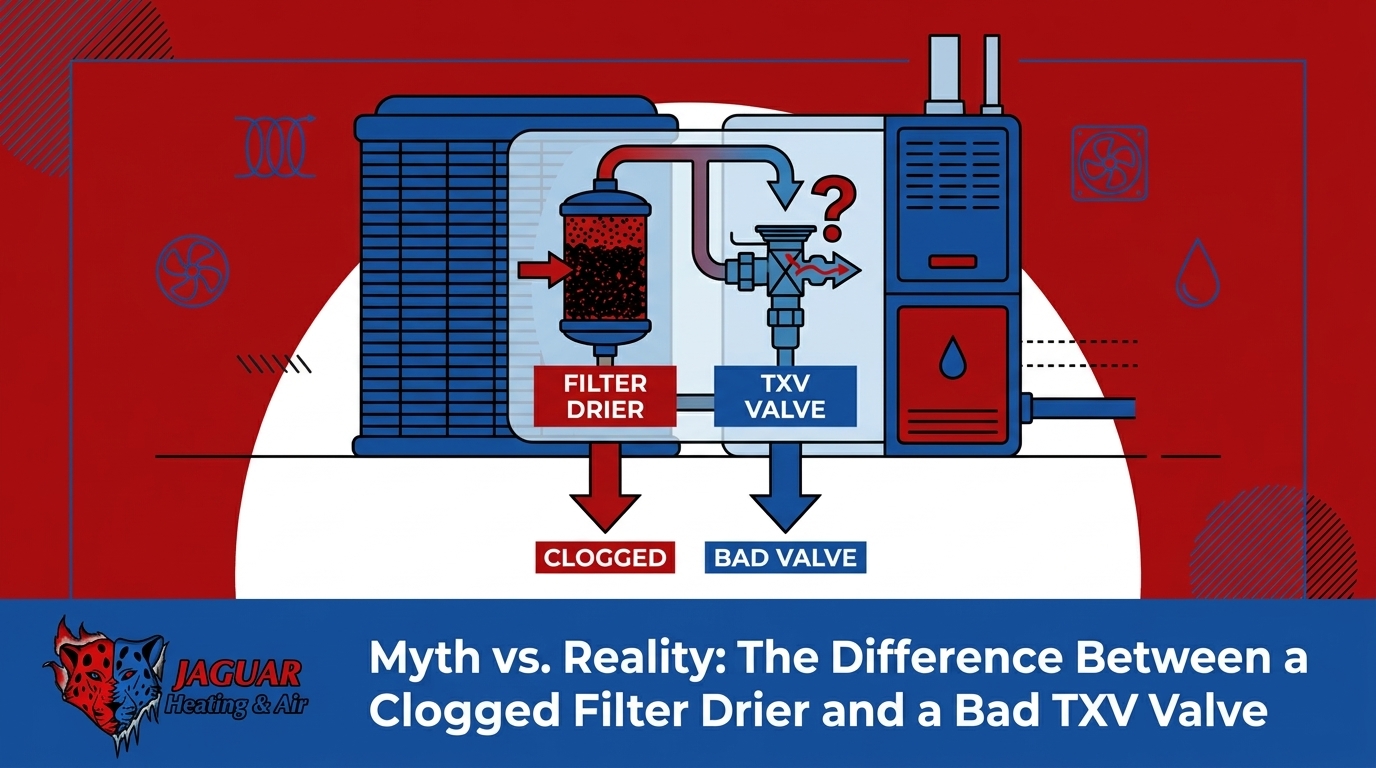
The Difference Between a Clogged Filter Drier and a Bad TXV Valve
An AC that blows warm air isn't always leaking refrigerant—it might be suffering from a flow restriction. Find out how technicians trace the bottleneck to restore your cooling.
How Sacramento's Hard Water Affects Your Evaporative Cooler Pads
By September, Sacramento's heavy mineral content often turns swamp cooler pads into rock-hard blocks. See why airflow drops drastically and weigh your end-of-season options.
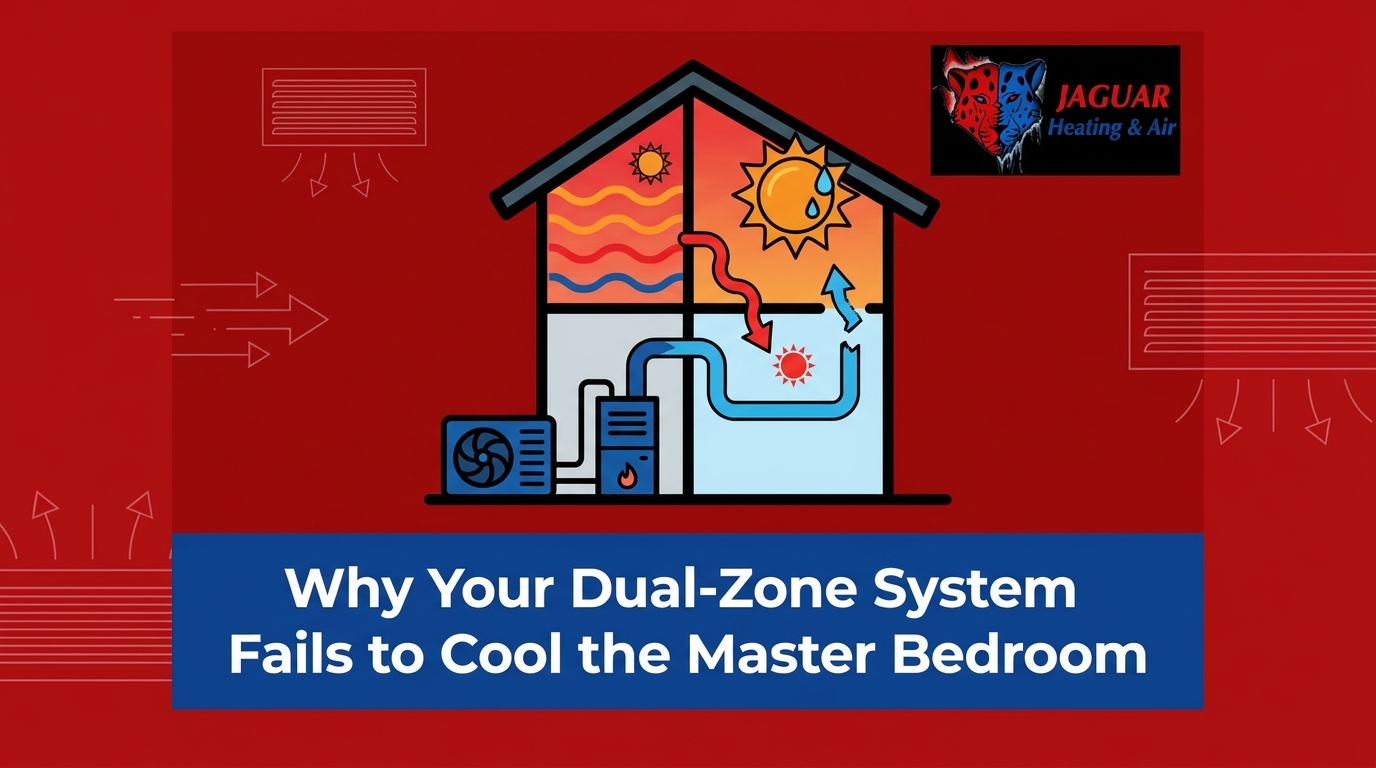
Why Your Dual-Zone System Fails to Cool the Master Bedroom
Persistent temperature imbalances in your master suite are rarely a main AC capacity issue. Discover how stuck motorized zone dampers disrupt airflow and why a pre-season diagnostic is crucial.