.avif)
Goldilocks and the HVAC: Finding the Just Right Size
Discover why correct system sizing matters for your home: efficiency, comfort, energy savings & avoiding short cycling. Expert HVAC tips!
Discover why correct system sizing matters for your home: efficiency, comfort, energy savings & avoiding short cycling. Expert HVAC tips!

Why Correct System Sizing Matters for Your Home's Comfort and Efficiency
Why correct system sizing matters for your home comes down to one simple idea: an HVAC system that is too big or too small will cost you more money, wear out faster, and leave you uncomfortable — no matter how expensive or well-reviewed the equipment is.
Here is a quick summary of what is at stake:
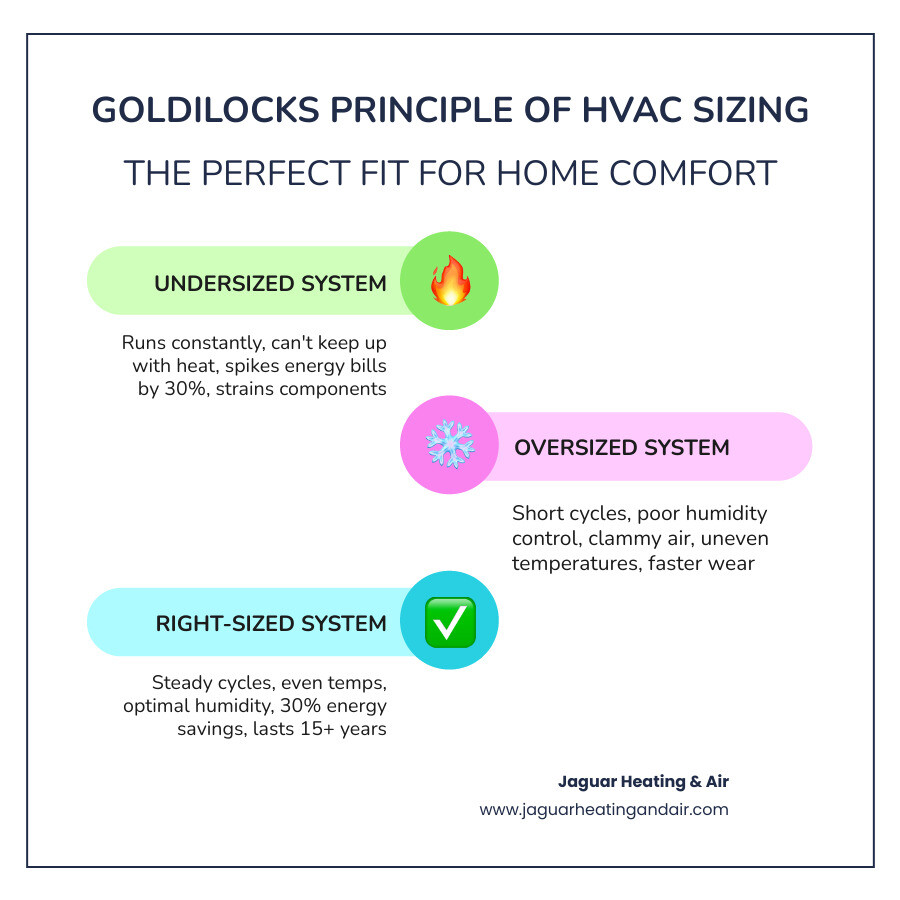
- Too big: The system blasts air, shuts off too fast, and never properly removes humidity — leaving your home feeling cold and clammy
- Too small: The system runs nonstop, struggles to keep up on hot Sacramento days, and drives up your energy bills
- Just right: The system cycles steadily, maintains even temperatures, controls humidity, and lasts years longer
Heating and cooling account for nearly half of a typical home's energy use. Yet industry research suggests that up to 90% of HVAC systems are improperly sized or installed — and the majority of those mistakes lean toward oversizing. That means most homeowners are already paying a price for a system that does not fit their home.
The good news is that this is a solvable problem. Getting the size right from the start — or catching a sizing mistake early — can reduce energy bills by as much as 30%, extend system life, and make every room in your home genuinely comfortable.
In this guide, we will walk you through exactly how HVAC sizing works, what goes wrong when it is off, and how professionals get it right.
What is HVAC Sizing and How is it Measured?
When we talk about HVAC "size," we aren't talking about the physical dimensions of the unit sitting in your backyard or attic. You could have a massive metal box that actually has a lower cooling capacity than a smaller, high-tech unit. In the HVAC world, size refers to capacity—the system's ability to move heat into or out of your home.
The two most common units of measurement you will hear us use are BTUs and Tons.
- BTU (British Thermal Unit): This is a basic unit of heat. One BTU is roughly the amount of energy released by burning a single wooden match. In HVAC terms, it measures how much heat a system can add (furnace) or remove (air conditioner) from your home per hour.
- Tonnage: This is a bit of a historical quirk. One "ton" of cooling capacity represents the cooling power of one ton of ice melting over a 24-hour period. In modern 2026 standards, one ton is equal to 12,000 BTUs per hour.
So, if you have a 3-ton AC unit, it is capable of removing 36,000 BTUs of heat from your home every hour. Understanding AC Sizing Matter Sacramento CA is the first step toward ensuring your home stays comfortable during our intense valley summers. Generally, residential systems range from 1.5 to 5 tons. If your home needs more than 5 tons, you usually move into the territory of having multiple systems to handle the load.
Why Correct System Sizing Matters for Your Home’s Efficiency
Efficiency is about more than just a high SEER2 rating. You could buy the most efficient unit on the market, but if it is the wrong size, that efficiency goes right out the window. Why correct system sizing matters for your home is deeply tied to how the system operates through its "cycles."
Think of your HVAC system like a car. A car gets its best gas mileage when cruising at a steady speed on the highway. It gets its worst mileage in stop-and-go traffic. An HVAC system is exactly the same. The most "expensive" part of an HVAC cycle—in terms of both energy use and mechanical wear—is the startup. Every time the compressor or blower motor kicks on, it draws a massive surge of electricity.
When a system is correctly sized, it runs long enough to reach "steady-state" efficiency. It stays on for a good 15 to 20 minutes, gently circulating air and maintaining a consistent temperature. This reduces component wear and keeps energy consumption predictable.
Furthermore, the Importance Correct HVAC Installation cannot be overstated. A system that is sized perfectly but installed on leaky, undersized ductwork will still fail to perform.
| Feature | Oversized System | Undersized System | Right-Sized System |
|---|---|---|---|
| Cycle Length | Very short (5-8 mins) | Very long (runs nonstop) | Optimized (15-20 mins) |
| Energy Bill | High (frequent starts) | High (constant draw) | Lowest possible |
| Humidity Control | Poor (clammy air) | Moderate | Excellent |
| System Lifespan | Shortened (wear & tear) | Shortened (overworked) | Maximized |
| Comfort | Uneven/Spiky | Never hits target temp | Smooth & Consistent |
The Dangers of an Oversized HVAC System
In many industries, "bigger is better" is a safe bet. If you buy a truck with more towing capacity than you need, it just means you’ll never struggle to pull a trailer. But in HVAC, oversizing is a recipe for disaster.
The biggest problem with an oversized unit is short cycling. Because the unit is too powerful for the space, it blasts the house with cold air and hits the thermostat's target temperature in just a few minutes. The thermostat says "Mission accomplished!" and shuts the system down. A few minutes later, the air settles, the temperature ticks up, and the system blasts on again.
This rapid on-off pattern causes:
- Increased Energy Spikes: Starting the compressor draws the most electricity. Short cycling can increase energy consumption by 8% to 30%.
- Uneven Temperatures: The air near the vents gets freezing cold, but the air in the corners of the room stays stagnant and warm.
- Premature Mechanical Failure: Imagine turning your car on and off 15 times an hour. The starter and engine wouldn't last long. The same happens to your HVAC's blower motor and compressor.
When considering a Need New AC Installation Important Considerations, "padding" the size "just in case" is actually one of the worst things a contractor can do for you.
Why Correct System Sizing Matters for Your Home Humidity Levels
One of the most overlooked jobs of an air conditioner is dehumidification. As warm air passes over the cold evaporator coil, moisture condenses out of the air (like sweat on a cold soda can) and drains away.
However, it takes time for the coil to get cold enough to reach the dew point. An oversized system shuts off before this process even really begins. The result? The air temperature might be 72 degrees, but the relative humidity is still 65% or higher. This creates that "cold and clammy" feeling that makes you want to turn the thermostat even lower just to feel comfortable. Keeping indoor humidity between 40-60% is vital for preventing mold growth and maintaining healthy indoor air quality.
The Consequences of an Undersized HVAC System
On the flip side, an undersized system is like trying to cool a warehouse with a window unit. It simply doesn't have the "muscle" to keep up with the heat gain from the Sacramento sun.
If you suspect your system is too small, you'll notice it struggling during peak demand (usually between 2:00 PM and 7:00 PM). You might set the thermostat to 74, but the indoor temperature stubbornly sits at 79 while the AC runs for six hours straight.
This constant operation leads to:
- Blower Motor Strain: The fan never gets a break, leading to bearings wearing out and motors burning out.
- Temperature Lag: No matter how long it runs, it can't catch up to the heat entering through your windows and roof.
- High Energy Bills: While it avoids the "startup spikes" of an oversized unit, the sheer duration of operation means your meter is spinning all day long.
If your system is constantly running and your home is still warm, it might be time to look at the Year Need Replace AC System Folsom CA to see if a capacity upgrade—or a more efficient right-sized unit—is necessary.
Why Correct System Sizing Matters for Your Home Energy Bills
In 2026, energy standards are stricter than ever, but those standards assume the system is sized correctly. An improperly sized HVAC system can push up your energy bills by as much as 30 percent.
When a system is too small, it consumes electricity continuously. Even a high-efficiency unit will drain your wallet if it has to run 24/7 to do a job it wasn't built for. Efficiency loss isn't just about the technology inside the box; it's about the relationship between the box and the home.
How Professionals Determine the Perfect Fit
So, how do we avoid the "too big" and "too small" traps? We stop guessing.
For decades, many contractors used a "rule of thumb," such as "one ton for every 500 square feet." In 2026, that is considered a dangerous oversimplification. A 2,000-square-foot home built in 1970 with original windows needs a much larger system than a 2,000-square-foot home built in 2024 with modern spray-foam insulation and radiant barrier roofing.
At Jaguar Heating & Air, we use the industry-standard Manual J Load Calculation. This is a scientific approach that looks at your home as a complete "building envelope." We factor in:
- Insulation R-values: How well your attic and walls hold in the air.
- Window Orientation: A west-facing window in Roseville or Elk Grove lets in a massive amount of heat in the afternoon compared to a north-facing one.
- Ceiling Height: Vaulted ceilings mean more air volume to treat.
- Occupancy Patterns: How many people live in the home and what heat-generating appliances are running.
- Ductwork Condition: We ensure your "veins and arteries" can actually handle the airflow the unit provides.
Whether you are Buying New Furnace Sized Correctly or installing a new heat pump, this calculation is the only way to be 100% certain of the result.
Frequently Asked Questions about HVAC Sizing
Is square footage enough to determine system size?
Absolutely not. While square footage gives us a starting point, it is only about 20% of the story. Two identical floor plans can have drastically different cooling needs if one is shaded by oak trees and the other is in direct sunlight, or if one has upgraded double-pane windows and the other does not. Using square footage alone is just a "rule of thumb," and in the HVAC world, that usually leads to an oversized system.
What is short cycling and why is it bad?
Short cycling is when your HVAC system turns on and off too frequently (more than 8-10 times per hour). It is bad because it wastes energy, fails to dehumidify your home, and puts immense stress on the compressor. Think of it like a lightbulb; it’s most likely to burn out right when you flip the switch. Frequent starts mean frequent opportunities for components to fail.
How often should a properly sized system cycle?
In moderate weather, a properly sized system should cycle about two to three times per hour, with runtimes of 15 to 20 minutes. This allows the system to reach thermal equilibrium, where the air is mixed thoroughly and the humidity is pulled out effectively. On the hottest 105-degree Sacramento days, it is actually normal for a correctly sized system to run almost continuously—that means it is perfectly matched to the heat gain of your home!
Conclusion
Finding the "Just Right" size for your HVAC system isn't a matter of luck; it's a matter of science. In the unique climate of the Sacramento valley—from the heat of Citrus Heights to the cool evenings in El Dorado Hills—your home needs a system tailored to its specific structural needs.
Why correct system sizing matters for your home is simple: it is the difference between a system that is a constant source of bills and frustration, and one that provides silent, efficient comfort for two decades.
At Jaguar Heating & Air, our NATE-certified technicians don't just "swap boxes." We perform the detailed Manual J load calculations necessary to ensure your new Trane system is a perfect fit. Whether you are in Sacramento, Folsom, Elk Grove, or Lincoln, we are here to provide the expert evaluation your home deserves.
Don't settle for a system that's "close enough." Ensure your home is "just right." Schedule your professional HVAC services today and experience the difference that proper sizing makes.
Recent Posts
Why We Test Your AC's Amp Draw During Late Summer Maintenance
Even if your vents are blowing cold air, months of intense heat can push your compressor to the brink. We measure invisible electrical fatigue to catch stressed parts before a total breakdown.
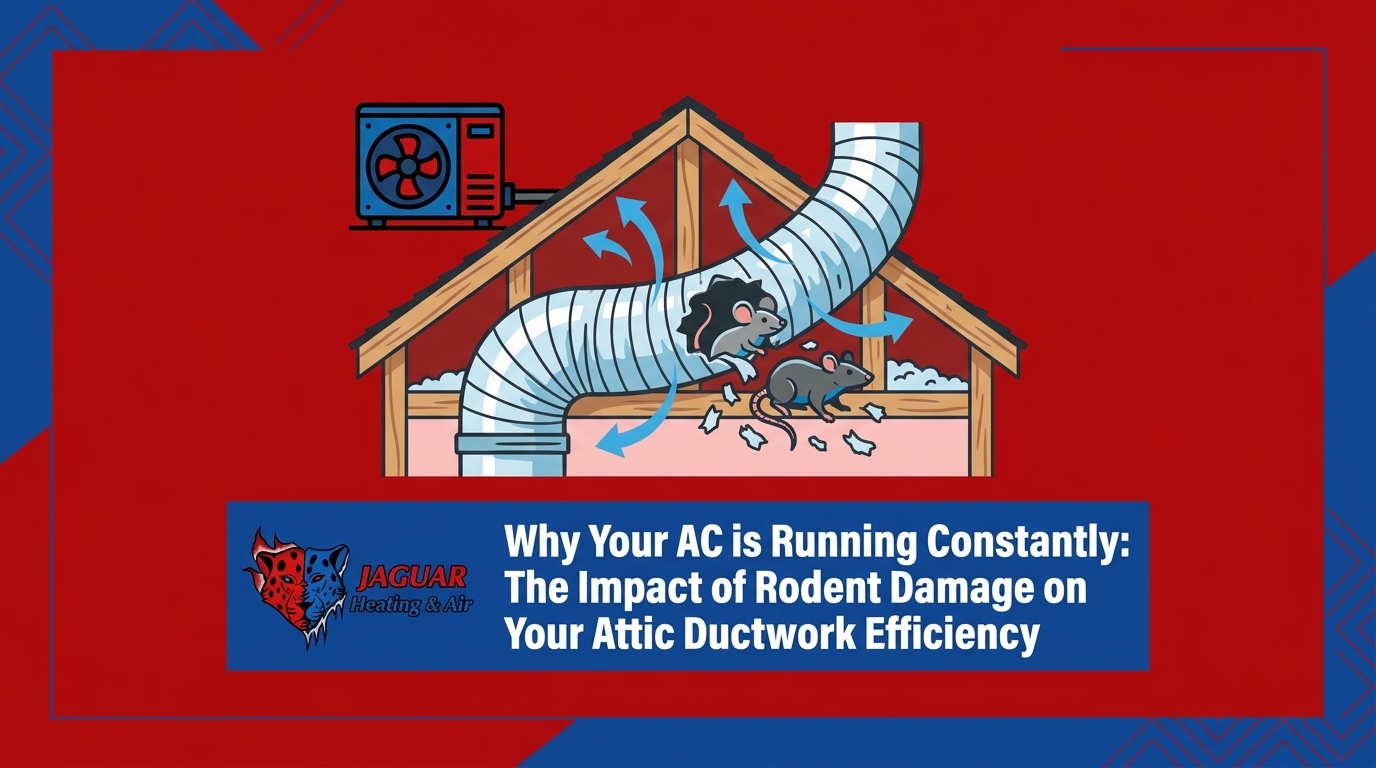
The Impact of Rodent Damage on Your Attic Ductwork Efficiency
If your cooling system runs constantly but your home stays warm, roof rats may have chewed through your flex ducts. See why a tape patch isn't enough to safely restore your system's airflow.
How Proper Refrigerant Charge Impacts Your Monthly SMUD Bill
Blaming lingering Sacramento heat for high September electricity usage? A minor 10% refrigerant undercharge forces your AC to run drastically longer, quietly multiplying your energy costs.