.avif)
Don't Let It Clog: Your Ultimate Guide to HVAC Filter Timing
Learn how often should you change your hvac air filter. Prevent clogs, boost IAQ, and save energy with our ultimate guide.
Learn how often should you change your hvac air filter. Prevent clogs, boost IAQ, and save energy with our ultimate guide.

How Often Should You Change Your HVAC Air Filter? (Quick Answer)
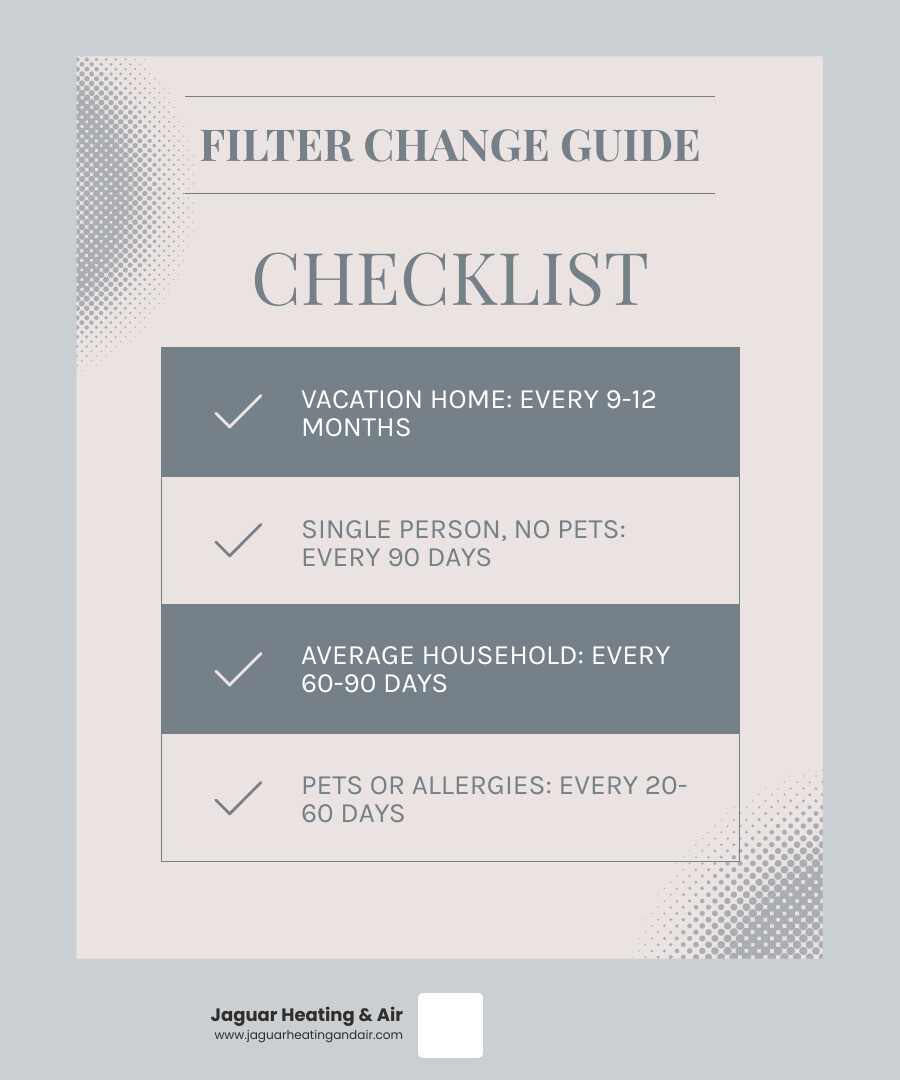
How often should you change your HVAC air filter depends on your home, your filter type, and your lifestyle — but here's the fast answer most homeowners need:
| Household Situation | Recommended Change Frequency |
|---|---|
| Vacation home / rarely occupied | Every 9-12 months |
| Single person, no pets, clean environment | Every 90 days |
| Average household, 1-2 occupants | Every 60-90 days |
| Home with one pet | Every 60 days |
| Home with children | Every 60 days |
| Multiple pets or mild allergy sufferers | Every 30-60 days |
| Severe allergies or respiratory conditions | Every 20-45 days |
Filter thickness matters too. A 1-inch filter typically needs changing every 30-90 days, while a thicker 4- to 5-inch filter can last 6-12 months.
Some home maintenance tasks are easy to forget about — right up until they cause a real problem. Changing your HVAC air filter is one of them. It takes five minutes, costs next to nothing, and yet it's one of the most skipped tasks on any homeowner's list.
Here's the thing: your HVAC filter is working hard every single day. It catches dust, pet dander, pollen, mold spores, and other airborne particles before they cycle through your home's heating and cooling system. Once it gets too clogged to do its job, your system has to work harder, your air gets dirtier, and your energy bills start creeping up. According to the U.S. Department of Energy, simply replacing a clogged filter can improve your system's efficiency by 5 to 15%.
If you're in the Sacramento area — where dry summers, high pollen counts, and wildfire smoke can hit your filters harder than average — staying on top of filter changes matters even more.
This guide covers everything you need to know: the right schedule for your specific situation, how different filter types and MERV ratings affect timing, what happens when you wait too long, and how to actually replace the filter yourself.
The General Rule: How Often Should You Change Your HVAC Air Filter?
If you were to ask a group of HVAC technicians for a single number, the general consensus is that you should replace your filter every 90 days. However, as we move through 2026, we’ve learned that a "one-size-fits-all" approach usually doesn't fit anyone perfectly. Think of the 90-day mark as your absolute deadline, but not necessarily your goal.
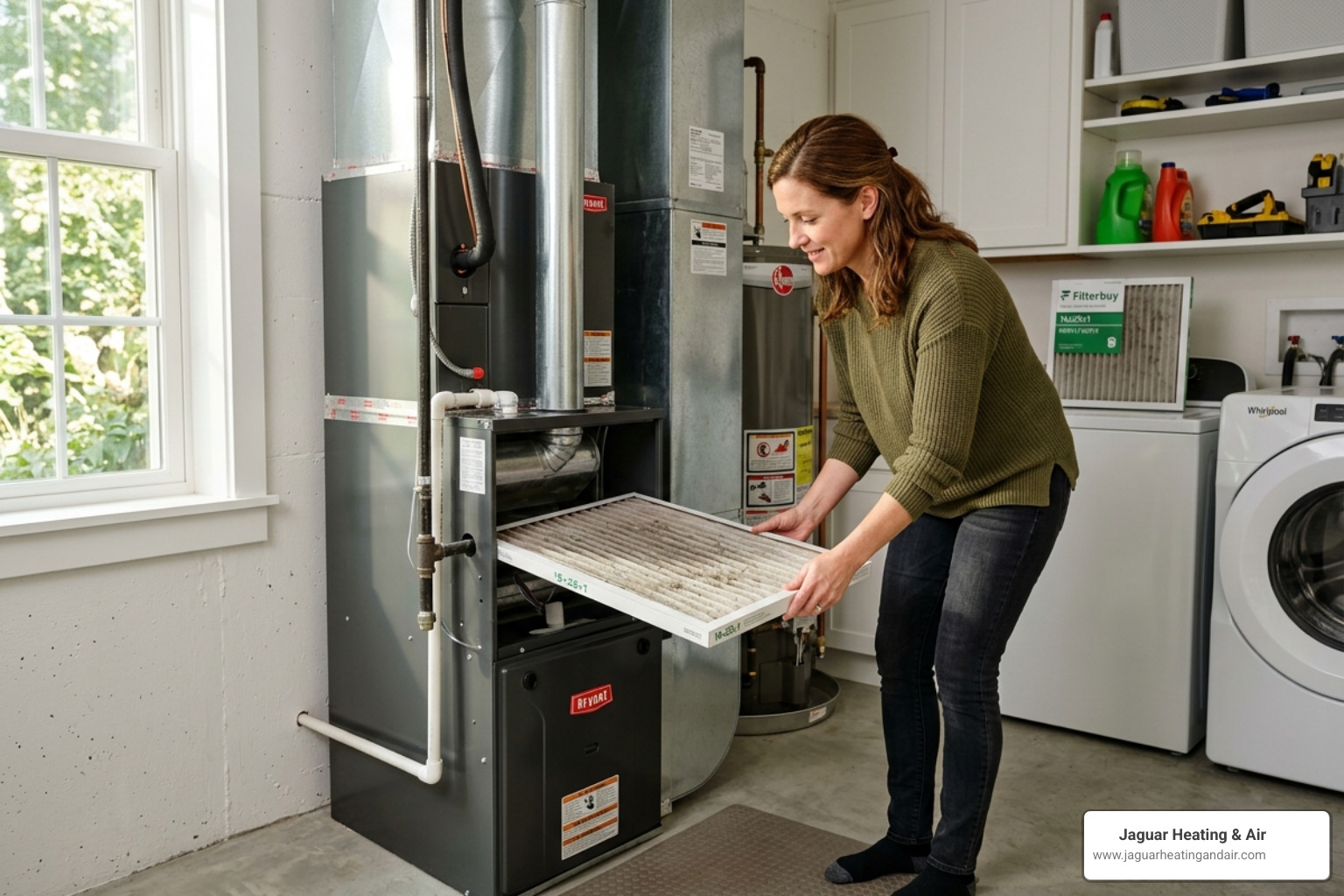
At Jaguar Heating & Air, we recommend a monthly visual inspection. It only takes a second to pull the filter out and see how it’s holding up. If it looks like it’s been through a dust storm, it’s time for a swap, even if it’s only been 30 days. To really master the basics, you can check out our guide on Everything You Need to Know About HVAC Filters.
Understanding Filter Thickness
One of the biggest factors in how long a filter lasts is its physical size — specifically the thickness. Most standard homes use 1-inch filters, but many modern systems are designed for high-capacity media filters.
| Filter Thickness | Typical Lifespan | Why the Difference? |
|---|---|---|
| 1-inch | 1-3 Months | Less surface area; clogs quickly. |
| 2-inch | 2-4 Months | Moderate surface area for better airflow. |
| 4-inch | 6-9 Months | Deep pleats allow for more dust storage. |
| 5-inch | 9-12 Months | High capacity; designed for year-round use. |
Seasonal Adjustments
Your replacement schedule shouldn't be static. During the peak of a Sacramento summer or a chilly winter in Folsom, your HVAC system runs almost constantly. More air moving through the system means more dust hitting the filter. We recommend checking your filter every 30 days during these "peak seasons" to ensure your system isn't struggling against a wall of debris.
Factors That Accelerate Your Replacement Schedule
Why do some filters look brand new after two months while others are gray and fuzzy in three weeks? It all comes down to the environment inside and outside your home.
Several factors can fast-track the need for a new filter:
- Home Occupancy: More people mean more skin cells (sorry, but it's true!), more movement, and more dust stirred up into the air.
- Construction Activity: If you’re remodeling your kitchen in Roseville or there’s a new housing development going up nearby in Elk Grove, that fine construction dust will find its way into your vents.
- Indoor Air Quality (IAQ): Activities like cooking, burning candles, or using a fireplace all release particulates. Understanding Ways Your HVAC System Impacts Health can help you realize just how much your filter is protecting you.
Local Environmental Impact
In the Sacramento Valley, we deal with specific challenges. Our dry winds stir up outdoor dust, and our spring pollen counts can be through the roof. Most significantly, wildfire smoke has become a seasonal reality. During periods of poor outdoor air quality, your filter acts as a primary defense. We've seen how How Trane CleanEffects Improves IAQ After a Wildfire in Folsom, CA can make a massive difference, but even standard filters need much more frequent attention when the air is smoky.
If you find yourself constantly battling dust or odors, it might be time for more than just a filter change. There are many Reasons to Invest in IAQ Solutions that can work alongside your filter to keep your home healthy.
Impact of Pets and Allergies on How Often Should You Change Your HVAC Air Filter
If you have a furry friend (or three), your filter is doing double duty. Pet hair and dander are much larger and heavier than standard dust, and they can mat across the surface of a filter, blocking airflow almost entirely.
- One Pet: We recommend changing your filter every 60 days.
- Multiple Pets: Check the filter every 30 days. You’ll likely need to replace it every month.
For those with allergies or respiratory conditions, the filter is a medical necessity rather than just a mechanical one. If someone in your home suffers from asthma or severe seasonal allergies, changing the filter every 20-45 days ensures that allergens aren't being recirculated. Keep an eye out for Warning Signs of Poor Indoor Air Quality, such as increased sneezing or musty smells, which often signal that the filter is full.
Choosing the Right MERV Rating and How Often Should You Change Your HVAC Air Filter
MERV stands for Minimum Efficiency Reporting Value. It’s a scale from 1 to 16 (for residential use) that measures how well a filter traps particles.
- MERV 1-4: Basic fiberglass filters. They stop "bunnies" but not much else.
- MERV 5-8: Good for most homes. They trap dust, mold spores, and some dander.
- MERV 9-12: High efficiency. Great for allergies and pet owners.
- MERV 13-16: Hospital-grade filtration. Excellent for IAQ but can restrict airflow if your system isn't designed for it.
Choosing a higher MERV rating can improve your air, but it also means the filter is trapping smaller particles, which means it will clog faster. Finding the balance is key to following Tips to Boost HVAC Efficiency. For extreme cases, high-efficiency HEPA options can capture 99.97% of particles, but these usually require a specialized housing or a high-capacity system.
Understanding Different Filter Materials and Their Lifespans
Not all filters are created equal. The material determines both the price and the lifespan.
- Fiberglass Filters: These are the blue or white "throwaway" filters in cardboard frames. They are very thin and only protect the HVAC equipment from large debris. They generally must be changed every 30 days.
- Pleated Polyester/Cotton: These are the most common. The "folds" in the material increase the surface area, allowing them to catch more dust without blocking airflow. These can last 60 to 90 days.
- Electrostatic Filters: These use self-charging fibers to attract particles like a magnet. They can be disposable or permanent.
- Washable Filters: These are eco-friendly but high-maintenance. You must wash them every month and — most importantly — let them dry completely before re-inserting them. If you put a damp filter back in, you risk mold growth.
Regularly choosing the right material is one of the best Reasons to Maintain Your Home's HVAC System. Plus, using the manufacturer-recommended filter type is often a requirement to How to Keep Your HVAC Warranty in Place.
The Risks of Running a System with a Clogged Filter
It’s easy to think, "It’s just a little dust, what’s the harm?" But a clogged filter is the leading cause of HVAC system failure.
When air can't pass through the filter, several bad things happen:
- Energy Bills Spike: Your system has to run longer and work harder to move the same amount of air. This can lead to a 5-15% drop in efficiency. If your Energy Bills Too High? Consider an Energy Audit to see if a simple filter change or duct issue is the culprit.
- Blower Motor Strain: The motor that pulls the air through the filter can burn out prematurely if it's constantly fighting resistance.
- Frozen Coils: In the summer, your AC needs a steady stream of warm air to keep the refrigerant from getting too cold. Without airflow, the coils can literally turn into a block of ice.
- Short Cycling: The system may overheat and shut itself off frequently to prevent damage, leaving your home uncomfortable.
- Dirty Ducts: A clogged filter can eventually "leak" dust around the edges or even collapse, leading to How Dirty Ductwork Decreases HVAC Efficiency.
You are facing the Consequences of Neglecting Home Air Quality, which affects both your wallet and your lungs.
How to Inspect and Replace Your Filter Like a Pro
Ready to take action? Changing a filter is a simple DIY task that makes a world of difference.
The Visual "Light Test"
Not sure if it's dirty? Hold the filter up to a bright light or a window. If you can see light passing through the fibers, it still has some life left. If the light is blocked by a solid wall of gray fuzz, it’s done.
Step-by-Step Replacement
- Turn off the system: Switch your thermostat to "Off" so the fan doesn't kick on while you're working.
- Locate the filter: This is usually behind a return air grille on a wall/ceiling or in a slot on the side of your furnace/air handler.
- Remove the old filter: Slide it out gently to avoid dropping dust on your carpet.
- Check the size: Look at the dimensions printed on the side (e.g., 20x25x1).
- Note the "Airflow Arrow": This is the most important part! Look for the arrow printed on the new filter's frame. It must point toward the HVAC unit (away from the room).
- Slide in the new filter: Make sure it fits snugly without gaps.
- Turn the system back on: You’re good to go!
Regularly performing this task is one of the Key Benefits of AC Maintenance. To make it easier, set a recurring calendar reminder on your phone or sign up for a filter subscription service that mails a new one to your door exactly when it's time to swap.
Frequently Asked Questions about Filter Timing
How do I know if my filter is dirty before the 90-day mark?
Aside from the "light test," look for these physical clues:
- A visible layer of gray dust on the filter surface.
- Dust building up quickly on your furniture or around the air vents.
- A slight "musty" or "dusty" smell when the heat or air kicks on.
- The system is running longer than usual to reach the set temperature.These are all Warning Signs of Poor Indoor Air Quality that suggest your filter has reached its capacity.
Do vacation homes need filter changes as often?
No. If the home is vacant for months at a time, there isn't much dust being stirred up and the HVAC system isn't running. In these cases, you can typically wait 6-12 months. However, dust does settle, so we recommend a fresh filter before you head up to the cabin or vacation rental for a long stay. This is a great item to include in an Reasons an HVAC Maintenance Agreement is a Good Choice so a pro can check it for you before you arrive.
Can a high-MERV filter damage my HVAC system?
It can. High-MERV filters (MERV 13+) are very dense. If your blower motor isn't powerful enough to pull air through that dense material, it creates "static pressure." This is like trying to breathe through a thick sweater. It can cause the motor to overheat or significantly reduce the lifespan of your equipment. We always recommend checking your owner's manual or asking one of our technicians for Tips to Boost HVAC Efficiency regarding specific filter ratings.
Conclusion
Changing your HVAC air filter is the simplest, most effective way to protect your home’s comfort and your family’s health. Whether you’re in Sacramento, Elk Grove, or Granite Bay, staying on top of this 90-day (or 30-day!) task will save you money and headaches in the long run.
At Jaguar Heating & Air, we’re committed to keeping your home running smoothly. As a family-owned Trane Comfort Specialist, our NATE-certified technicians are always here to help with more than just filter advice. From professional duct cleaning to full system tune-ups, we guarantee 100% satisfaction.
Want to take the guesswork out of home maintenance? Ask us about our Maintenance Agreements. We’ll handle the inspections, the cleaning, and the technical checks so you can just sit back and enjoy the clean air. Give us a call today!
Recent Posts
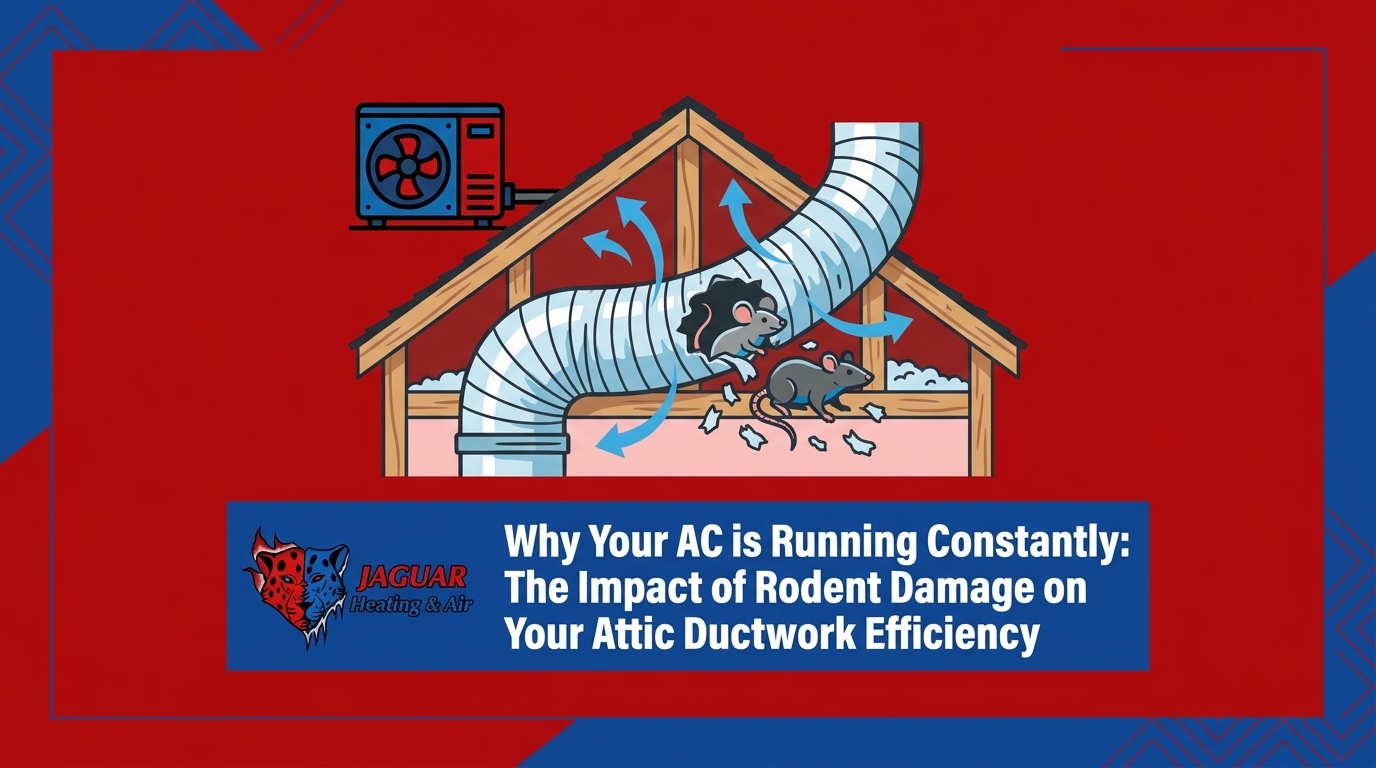
The Impact of Rodent Damage on Your Attic Ductwork Efficiency
If your cooling system runs constantly but your home stays warm, roof rats may have chewed through your flex ducts. See why a tape patch isn't enough to safely restore your system's airflow.
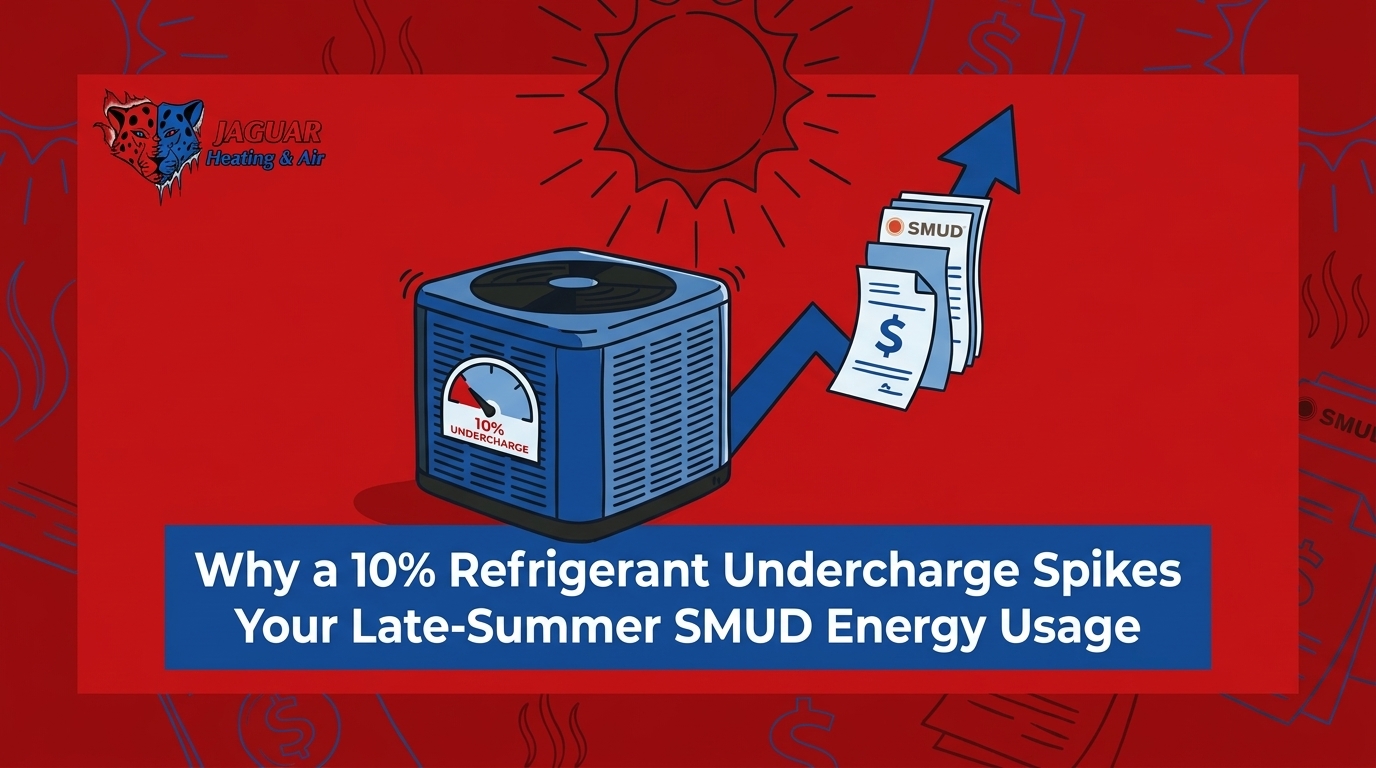
How Proper Refrigerant Charge Impacts Your Monthly SMUD Bill
Blaming lingering Sacramento heat for high September electricity usage? A minor 10% refrigerant undercharge forces your AC to run drastically longer, quietly multiplying your energy costs.
Why Your AC Vents Are Dripping Condensation Onto the Floor
Water pooling under your ceiling registers is a stressful surprise. Understand the physics behind sweating duct boots and know when to call a professional before drywall damage occurs.