.avif)
Does Closing Vents in Unused Rooms Actually Save on Sacramento Cooling Bills?
It seems logical that shutting AC registers in empty guest rooms would reduce your energy costs. However, restricting airflow increases static pressure and can permanently damage your system.
It seems logical that shutting AC registers in empty guest rooms would reduce your energy costs. However, restricting airflow increases static pressure and can permanently damage your system.

The Logical Trap: Why Closing Vents Seems Like a Good Idea
A persistent question we hear every summer is, does closing vents in unused rooms actually save on Sacramento cooling bills? The short answer is a definitive no. It is easy to see why this idea makes sense at first glance. If you leave a room, you turn off the light switch to save electricity. It seems perfectly logical that shutting the air conditioning register in an empty guest bedroom, a formal dining room, or a home office would do the exact same thing. Homeowners naturally assume that by blocking off one room, they are forcing the system to redirect that cold air into the living spaces they actually use, theoretically cutting down on utility costs.
To protect your air conditioning systems from unnecessary wear and tear, you need to look past this common myth and understand how your ductwork actually functions.
The concrete problem for homeowners across the Sacramento region is that attempting to save money this way inadvertently increases the system's static pressure. Central air conditioning is not designed to work like a series of independent light switches. You are faced with a crucial decision point: you can either keep vents shut for perceived savings, or you can open them to protect your expensive HVAC equipment from premature failure. The reality is that closing vents actively harms modern air conditioning systems, turning a well-intentioned savings strategy into a fast track for extensive AC repair.
The False Promise of Room-by-Room Cooling
Many homeowners believe that a central AC unit operates like a space heater or a window unit. With a window AC, the cooling is entirely localized. If you turn off the unit in the guest room, you stop using energy in that room. Central cooling is fundamentally different. The outdoor compressor and indoor air handler work together as a single, unified breathing machine. They are calibrated to push a specific, unchanging volume of air through your entire home. Shutting a vent does not tell the equipment to produce less cold air; it simply creates a roadblock.
The Physics of Airflow: How Central Cooling Actually Works
The Problem: Central cooling systems are designed to breathe in a very specific way. They require a precise volume of warm air entering the return vents and an equal volume of cold air exiting the supply vents. When you disrupt this delicate balance, you change the pressure dynamics throughout the entire home.
The Cause: To understand why this balance matters, you have to understand static pressure. In simple terms, static pressure is the resistance to airflow within your ductwork. Think of it like blowing air through a drinking straw. If the straw is clear, the air moves easily. If you pinch the end of the straw, you have to blow significantly harder to force the same amount of air through the opening. Your central AC system acts the same way. It is designed to operate against a specific, calculated amount of resistance.
The Solution: Maintaining open pathways is the only way to keep static pressure within safe operating limits. During the July peak summer heat, your system needs every available pathway to circulate air efficiently. When you close a vent, you are essentially pinching the straw.
Comparing Cooling Methods
• Window Units — Airflow Design: Localized, independent cooling for a single space. — Impact of Closed Vents: None. Turning the unit off saves energy directly.
• Central AC Systems — Airflow Design: Unified, whole-house distribution based on total volume. — Impact of Closed Vents: Increases static pressure, causing strain and potential failure.
• Mini-Split Systems — Airflow Design: Zoned cooling with independent air handlers. — Impact of Closed Vents: Safe to adjust temperatures per zone without harming other units.
Central systems distribute a fixed capacity of air. They cannot adapt to sudden roadblocks in the ductwork without suffering mechanical consequences. The moment you close a louver on a floor or ceiling register, the physics of your entire HVAC system change for the worse.
What Happens Inside Your Ductwork When Vents Are Closed
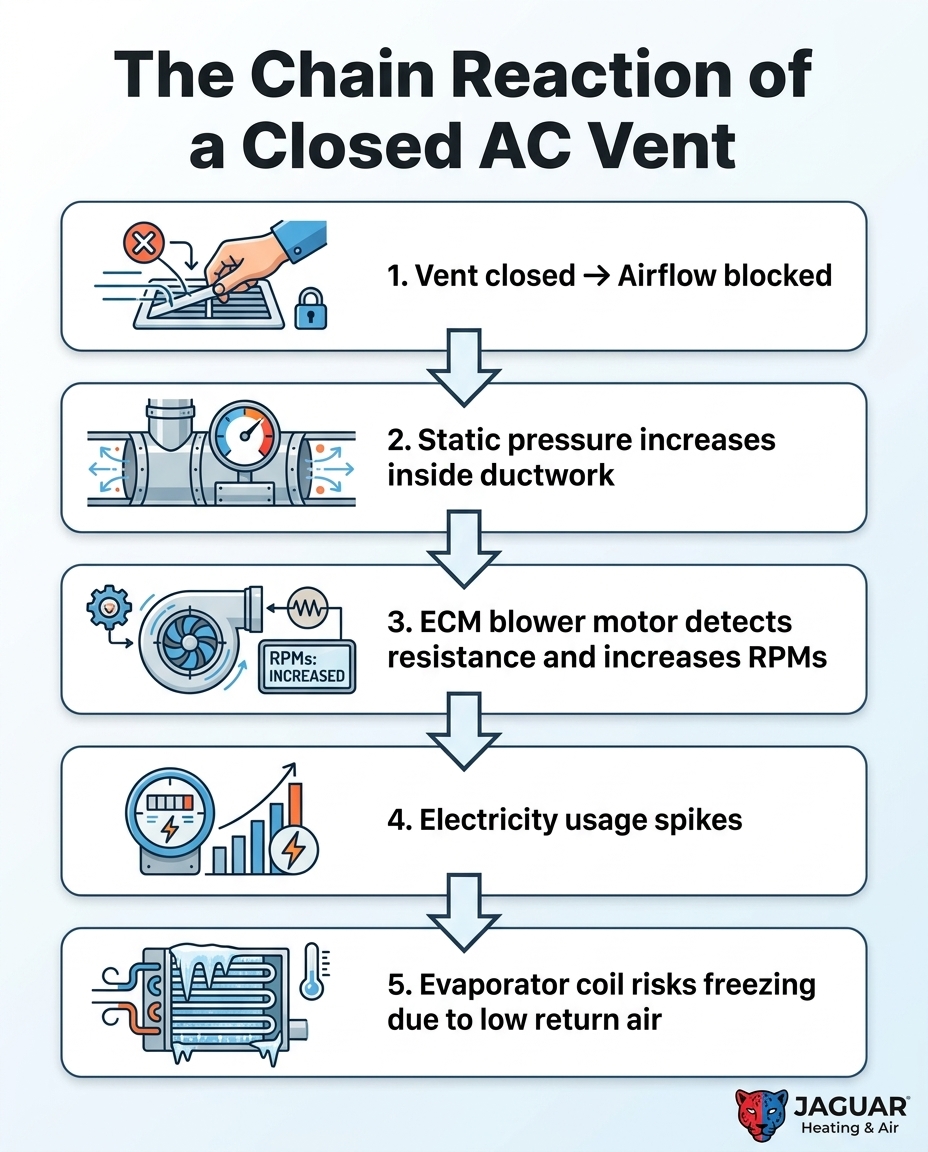
Closing a vent does not send a signal to the AC unit to power down or produce less cold air. The system continues to generate the exact same volume of conditioned air, but now that air has fewer places to exit. This creates a negative chain reaction inside your home's ductwork.
The blocked air immediately increases static pressure inside the ducts. Because the air cannot escape into the unused room, it pushes outward against the seams and joints of the sheet metal or flexible tubing. Most residential ductwork has tiny imperfections. The increased pressure forces your expensive, newly cooled air out through these tiny leaks and into unconditioned spaces like your attic, crawlspace, or behind your walls. You end up paying to air-condition your attic.
Furthermore, this restriction reduces the overall airflow returning to the indoor unit. When less warm air crosses the evaporator coil, the coil gets too cold. The condensation that naturally forms on the coil during the cooling process can quickly freeze into a solid block of ice. A frozen evaporator coil stops the cooling process entirely and can cause severe damage to the compressor. Clean, unobstructed ductwork is absolutely essential for proper system respiration, which is why professional duct cleaning and regular inspections are so important for maintaining healthy airflow across the Sacramento region.
The Hidden Cost: Blower Motor Strain and ECM Technology
The most expensive consequence of closing vents involves the heart of your indoor unit: the blower motor. Modern, high-efficiency HVAC systems are equipped with Electronically Commutated Motors (ECM). These smart motors are designed to adjust their speed to maintain a consistent volume of airflow throughout the house.
When an ECM senses increased static pressure from closed vents, its programming tells it that something is restricting the air. To compensate and deliver the required air volume, the motor automatically ramps up its RPMs (revolutions per minute) to try and push the air through the blockage. This means the motor actually consumes significantly MORE electricity when vents are closed, completely defeating the original goal of saving money on your utility bills.
Continuous high-RPM operation generates excessive heat. The motor is forced to work at maximum capacity for extended periods, leading to overheating and premature blower motor failure. A typical pattern we see involves sudden blower fan failures right when the weather is hottest. In one specific instance, a homeowner found that the blower fan on their house AC would not turn on late on a Friday night. A technician arrived the morning after the late-night call and repaired the AC blower fan within 20 minutes. While a fast repair is a relief, these rapid failures are often the direct result of long-term strain from restricted airflow. If your system is struggling, you might even notice that your AC blower motor sounds like a jet engine, which is a clear warning sign of dangerous static pressure.
Why Extreme Heat Multiplies the Danger for Your AC
The Problem: During extreme heat waves, AC systems run much longer cooling cycles with very little downtime. The equipment is already working at its absolute limit just to maintain a comfortable indoor temperature.
The Cause: A system that might tolerate the mild restriction of a closed vent during a temperate spring afternoon will be pushed past its breaking point when operating near maximum capacity. With Sacramento's triple-digit summer heat, AC systems already work overtime; adding static pressure during these months is a recipe for disaster. The combination of long, uninterrupted run cycles and high static pressure acts as a tipping point for catastrophic equipment failure.
The Solution: Ensuring completely unrestricted airflow is the only way to help the system survive peak summer demands. Systems struggling under these high-pressure conditions often fail to cool the house effectively, leaving homeowners uncomfortable and frustrated. Another common scenario we observe involves systems struggling under the weight of extreme heat combined with existing minor issues. For example, a homeowner might notice their AC is running low on Freon gas early in the season. A technician performs thorough tests, replaces the necessary parts, and recharges the AC, getting it running perfectly again. However, if that same system is later forced to push air against closed vents during the July peak summer heat, the added strain can cause the newly repaired components to fail all over again.
Honest Education: Preventing Avoidable System Failures
Many HVAC companies take a reactive approach, waiting for a blower motor to burn out or a compressor to fail before educating the homeowner on why it happened. At Jaguar Heating & Air, our commitment is to honest, preventative education that saves local homeowners from costly, avoidable blower motor replacements. Proactive education saves you from the stress, discomfort, and expense of sudden breakdowns.
Regular professional check-ups ensure that static pressure is balanced and the blower motor is operating within safe, manufacturer-specified parameters. Catching airflow issues early extends the lifespan of the entire cooling system. When you schedule professional AC maintenance, a technician does much more than just change a filter. They evaluate the entire respiratory system of your home.
What a professional airflow inspection includes:
• Static pressure testing: Measuring the exact resistance inside the supply and return ducts.
• Blower motor evaluation: Checking the amp draw and RPMs of the ECM motor to ensure it is not overworking.
• Evaporator coil inspection: Verifying that sufficient warm air is passing over the coil to prevent freezing.
• Ductwork assessment: Looking for leaks, kinks, or blockages that restrict air movement.
By keeping your vents open and having the system monitored regularly, you protect your investment and ensure reliable cooling across the Sacramento region all summer long.
Safe, Effective Alternatives to Balance Your Home's Temperature
If your goal is to save energy and improve the comfort of your home without damaging your air conditioner, there are several safe strategies you can implement. Instead of closing vents, follow these proven steps to optimize your cooling efficiency during the July peak summer heat:
1. Keep all supply and return vents fully open and unobstructed. Ensure that large pieces of furniture, heavy rugs, or long curtains are not blocking the registers. The air needs a clear path into the room and a clear path back to the return grille.
2. Leave interior doors open or slightly ajar. Central systems rely on a clear path for return air. If you close a bedroom door tightly, the air pumped into that room has a hard time making its way back to the main return vent in the hallway, which artificially increases pressure in that bedroom.
3. Utilize ceiling fans to create a wind-chill effect. Ceiling fans do not lower the temperature of the room, but they move air across your skin, making you feel cooler. This allows you to comfortably raise the thermostat a few degrees, which provides genuine energy savings without restricting airflow.
4. Consider professional zoning systems or smart thermostats. If certain rooms are consistently too cold or too hot, the answer is not closing vents. A professional zoning system uses mechanical dampers installed safely within the ductwork, coordinated with the blower motor, to direct air exactly where it is needed without causing dangerous static pressure spikes.
Frequently Asked Questions About AC Airflow and Vents
Does closing vents save money on AC?
No, closing vents does not save money on your cooling bills. It actually increases static pressure inside your ductwork, forcing the blower motor to work harder against the restriction. Modern ECM blower motors will automatically draw more electricity to try and overcome the blockage, which means you end up paying higher utility bills for reduced comfort.
Can closing vents damage your AC unit?
Yes, closing vents can cause significant damage to your central air conditioning system. The restricted airflow reduces the amount of warm air passing over the indoor evaporator coil, which can cause the coil to freeze over entirely. Additionally, the constant strain of pushing against high static pressure can lead to premature blower motor failure.
How many vents can I safely close in my house?
HVAC professionals strongly recommend keeping all vents fully open. Closing even one or two vents can disrupt the delicate balance of the system. If you absolutely must adjust airflow for comfort, never close a vent completely; leaving them at least 90% open is the safest approach, though keeping them fully open is always best for the equipment.
Does closing vents redirect cold air to other rooms?
Rarely, and not efficiently. While it might seem like the air is being pushed elsewhere, the increased pressure usually forces cold air out through tiny leaks in the ductwork instead. This means the cold air you are paying for ends up in unconditioned spaces like your attic or inside your walls, rather than in your living room.
Why does my AC blower motor sound louder when I close a vent?
A louder blower motor is a direct sign of increased static pressure. Modern variable-speed motors are designed to sense resistance. When you close a vent, the motor detects the blockage and increases its speed to force the air through, resulting in a loud, straining noise that indicates the system is overworking.
What is static pressure in an HVAC system?
Static pressure is the measurement of resistance to airflow within your ductwork. A well-designed system has a specific, balanced static pressure that allows air to flow freely. When vents are closed or filters are clogged, static pressure spikes, making it incredibly difficult for the system to circulate air properly.
Keep Your Airflow Strong and Your Cooling Bills Honest
The easiest way to protect your AC equipment and maintain long-term efficiency is simply to leave your vents alone. Keeping all supply and return registers fully open ensures that your central cooling system can breathe as intended, avoiding the dangerous spikes in static pressure that lead to expensive blower motor failures and frozen coils. By working with the physics of your system rather than against them, you guarantee a healthy, balanced system that cools your home effectively without unnecessary strain on the equipment.
If you find that your home is cooling unevenly, or if you are constantly tempted to close vents just to stay comfortable in certain rooms, the solution is not restricting airflow. Instead, encourage professional guidance to diagnose the root cause of the imbalance. Whether it is leaky ductwork, poor insulation, or a system that needs calibration, professional AC repair will resolve the underlying issue safely, keeping your home comfortable during the intense July peak summer heat.
Recent Posts
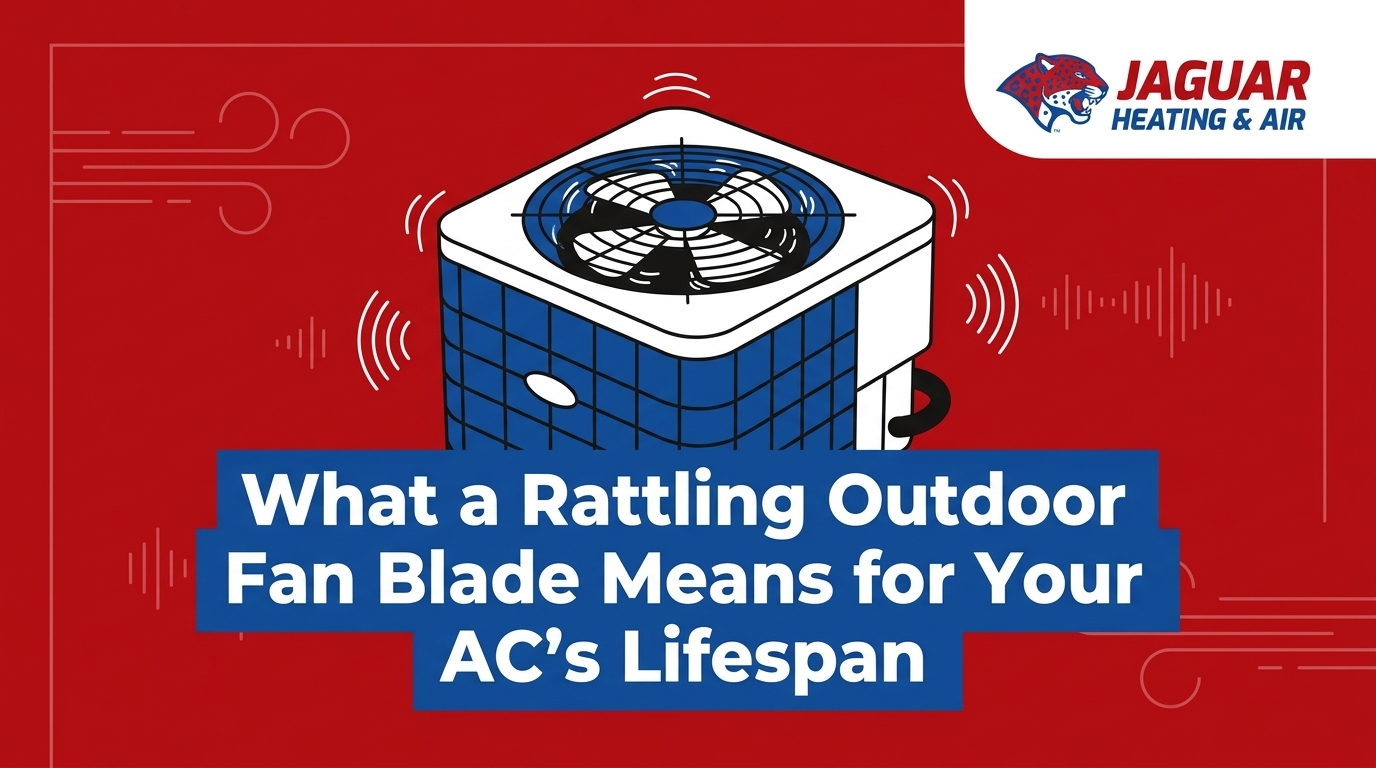
What a Rattling Outdoor Fan Blade Means for Your AC's Lifespan
A vibrating condenser fan creates micro-vibrations that act as a ticking time bomb for delicate copper lines. Find out why you shouldn't ignore this fall noise.
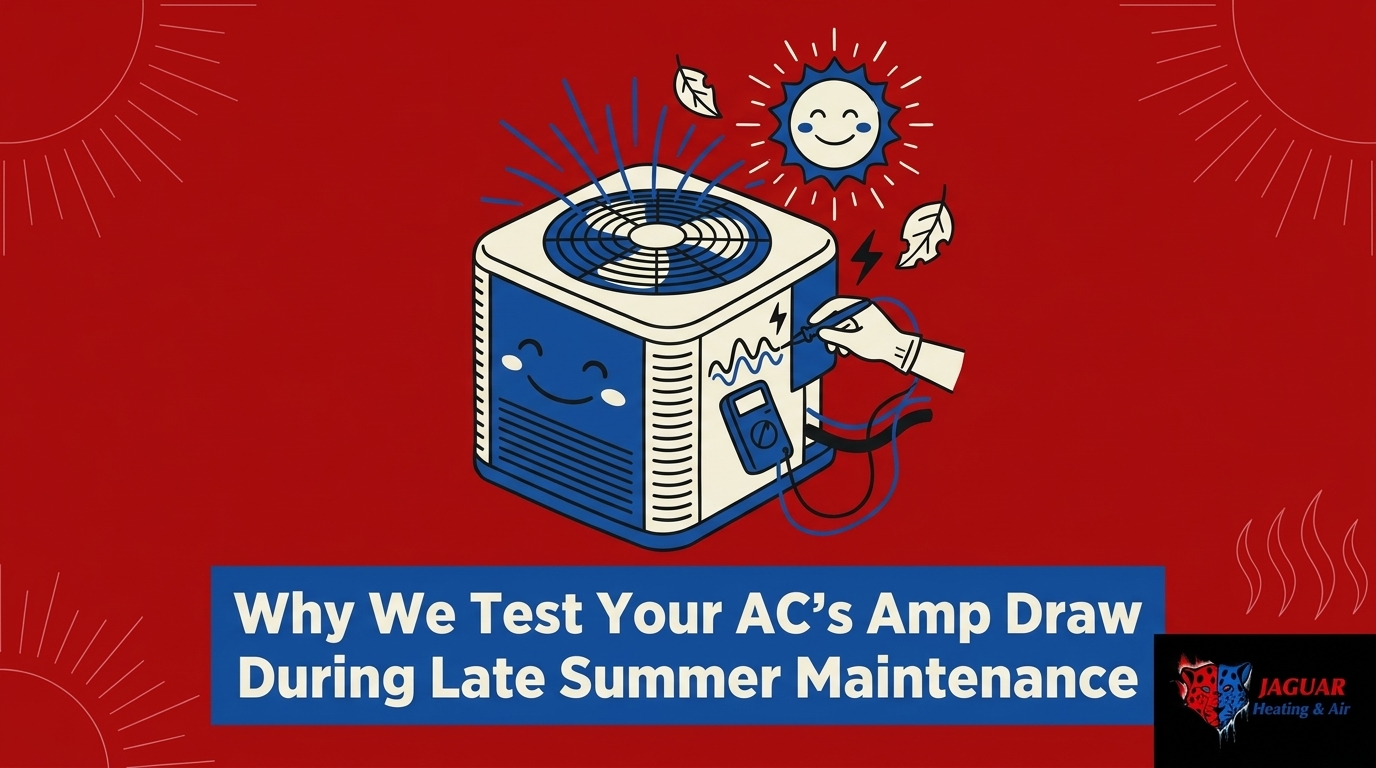
Why We Test Your AC's Amp Draw During Late Summer Maintenance
Even if your vents are blowing cold air, months of intense heat can push your compressor to the brink. We measure invisible electrical fatigue to catch stressed parts before a total breakdown.
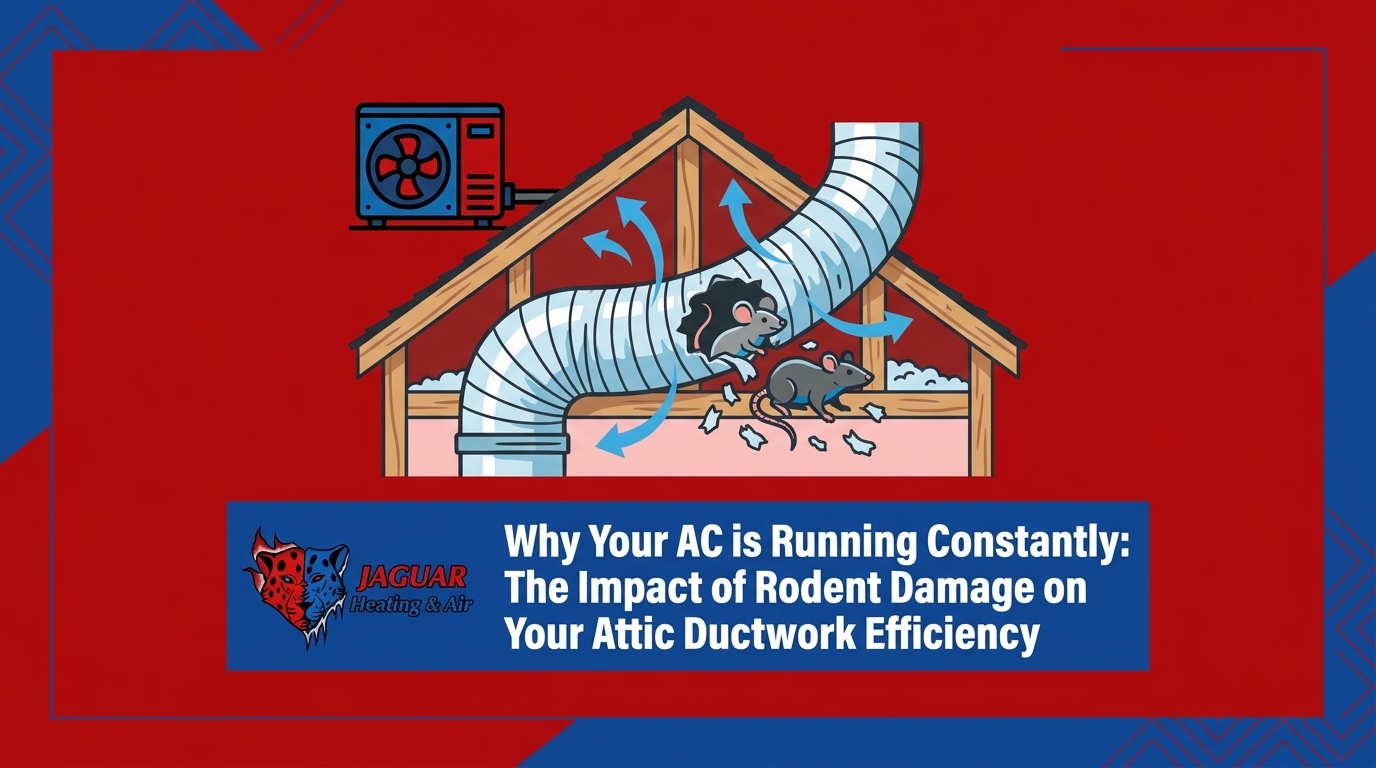
The Impact of Rodent Damage on Your Attic Ductwork Efficiency
If your cooling system runs constantly but your home stays warm, roof rats may have chewed through your flex ducts. See why a tape patch isn't enough to safely restore your system's airflow.