.avif)
What to Do When Your AC Blower Motor Sounds Like a Jet Engine
When your indoor AC starts roaring like a commercial aircraft, failing blower motor bearings are usually the culprit. Find out why shutting the system off immediately prevents catastrophic damage.
When your indoor AC starts roaring like a commercial aircraft, failing blower motor bearings are usually the culprit. Find out why shutting the system off immediately prevents catastrophic damage.

The Sudden Roar: Diagnosing a Jet Engine Sound from Your Indoor AC
Your thermostat reads 78 degrees, but the indoor air handler sounds like a commercial aircraft spooling up on the runway. The aggressive roaring, screeching, or grinding noise echoing through your vents is impossible to ignore. If you are frantically searching for what to do when your AC blower motor sounds like a jet engine, the short answer is this: turn the system off immediately. The deafening noise you hear is a mechanical cry for help, indicating that a crucial component inside your air handler has reached its breaking point.
During the July peak summer heat, shutting down your cooling system is an agonizing decision. You are forced to choose between surviving extreme indoor temperatures or keeping the aggressively loud AC running and risking catastrophic equipment damage. The primary culprit behind this intense wind-tunnel noise is almost always failing blower motor bearings. Fortunately, a rapid response can prevent a localized component failure from destroying your entire system. For comprehensive air conditioning services, securing professional AC repair immediately is the safest way to restore quiet cooling to your home.
Immediate Triage: 4 Steps to Take When the Noise Starts
When a mechanical failure triggers a deafening roar inside your home, every minute the system continues to run increases the risk of secondary damage. Homeowners in Sacramento often hope that a strange noise will resolve itself, but a jet engine sound indicates severe friction. Follow these immediate triage steps to protect your equipment:
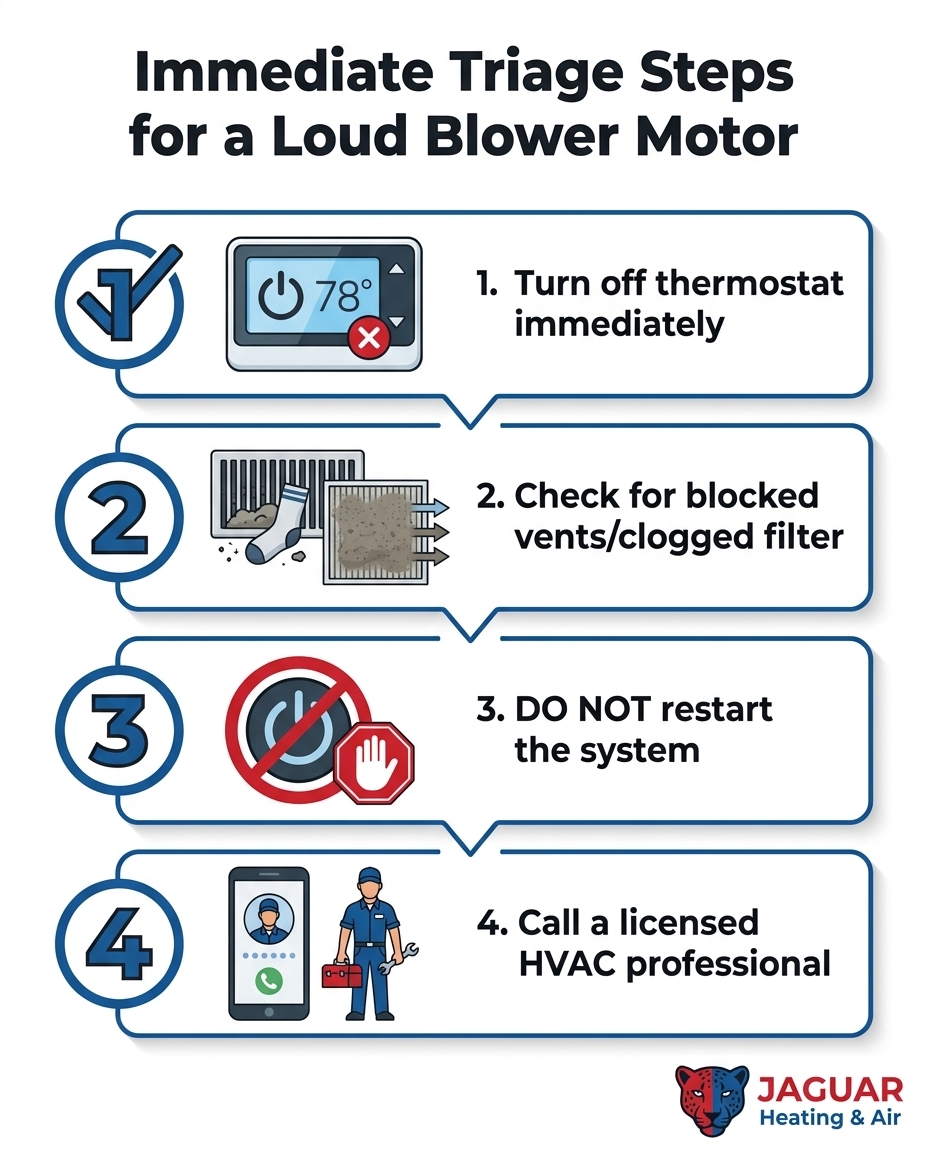
1. Turn off the thermostat immediately: Switch your thermostat from "cool" to "off." This stops the electrical draw and halts the mechanical friction grinding inside the air handler. Do not simply raise the temperature setting; ensure the system is completely powered down.
2. Check for severely blocked vents or a clogged filter: Once the system is off, perform the only safe DIY checks available. Inspect your return vents to ensure no furniture or rugs are blocking airflow. Pull your air filter and hold it up to the light. A severely clogged filter can choke the system, creating high static pressure that mimics a roaring sound.
3. Do not attempt to restart the system: Even if your house is rapidly warming up in the afternoon sun, resist the urge to turn the AC back on "just for a little bit." Restarting a motor with failing bearings forces it to pull massive amounts of electricity, which can fry delicate control boards.
4. Contact a licensed HVAC professional immediately: High-voltage components and spinning mechanical parts require specialized training to diagnose safely. Call a technician to assess the blower assembly before any further operation.
The Mechanical Cause: Why Failing Bearings Create a Wind Tunnel Noise
Understanding the root cause of the noise helps clarify why turning the system off is so critical. The indoor blower motor is responsible for pulling warm air from your home, pushing it over the cold evaporator coil, and distributing the chilled air back through your ductwork. To do this efficiently, the motor spins a heavy, cylindrical fan wheel at very high speeds.
The Anatomy of the Blower Assembly
The blower assembly consists of the electric motor, the fan wheel (often called a squirrel cage), and the bearings. Bearings are small, lubricated metal spheres or sleeves that sit between the spinning motor shaft and the stationary housing. Their sole job is to reduce friction. When they are fully lubricated and functioning properly, the motor spins effortlessly, creating nothing more than a gentle rushing sound as air moves through the vents.
When Lubrication Fails
Over time, the factory lubrication inside these bearings begins to dry out or degrade. This process accelerates during the July peak summer heat when the motor runs almost constantly. As the lubricant vanishes, metal grinds directly against metal. The progression usually starts as a mild hum or squeal, but as the bearings disintegrate, the motor struggles against immense physical resistance.
The "jet engine" roar you hear is the sound of the motor aggressively fighting this friction to rotate the heavy blower wheel. This specific failure cannot be fixed with a simple filter change. If you are curious about other acoustic warning signs, understanding why your air conditioner is making a strange noise can help you differentiate between various mechanical issues.
• High-pitched screeching or jet engine roar — Likely Mechanical Cause: Failing or dry blower motor bearings — Immediate Action Required: Turn system off immediately to prevent motor seizure.
• Loud rattling or clanking — Likely Mechanical Cause: Debris in the housing or a loose component — Immediate Action Required: Turn off to prevent physical damage to the fan blades.
• Heavy, rhythmic thumping — Likely Mechanical Cause: Severely imbalanced or broken blower wheel — Immediate Action Required: Turn off immediately; vibrations will tear the housing apart.
The Compounding Dangers of Ignoring Blower Motor Noise
Leaving a roaring AC unit running is one of the most expensive mistakes a homeowner can make. When bearings fail and friction increases, the blower motor requires significantly more electrical power to keep spinning. This excessive electrical draw, known as high amperage, creates a dangerous domino effect inside your HVAC system.
First, the high amperage generates intense heat along the wiring. As the motor pulls power well beyond its rated capacity, it can overheat and melt wire insulation. More critically, this electrical surge travels directly back to the system's control board. The control board is the highly sensitive "brain" of your HVAC unit. When it receives a massive spike in electrical current from a struggling motor, the board can short out and fry entirely, turning a localized motor repair into a major electrical overhaul.
Furthermore, if the bearings seize completely, the motor will stop spinning while the outdoor compressor continues to pump cold refrigerant inside. Without airflow to absorb the cold, your indoor evaporator coil will rapidly freeze into a solid block of ice. One local homeowner reached out late on a Friday night because their AC blower fan completely refused to turn on after making loud grinding noises earlier in the day. Because the system was left running, the motor had seized entirely. Fortunately, a technician arrived the following morning, diagnosed the seized bearings, and repaired the blower fan quickly before the frozen coil caused liquid refrigerant to flood back and destroy the outdoor compressor. Prompt action in Sacramento prevents these compounding disasters.
How Continuous Operation Accelerates Blower Failure
Mechanical wear and tear do not happen in a vacuum; they are directly tied to how hard and how long your system operates. HVAC systems operate on "duty cycles," which dictate how long the unit runs to reach your target temperature before resting. During mild spring weather, your system might run for ten minutes and rest for twenty. But extreme weather changes the equation entirely.
Sacramento's frequent 100+ degree summer days put maximum strain on residential cooling systems, forcing blower motors into continuous, non-stop duty cycles. When the system runs for hours on end to combat triple-digit heat, the internal temperature of the blower motor rises significantly. This sustained, intense heat rapidly degrades whatever bearing lubricant remains. Components that were already experiencing minor wear will quickly reach the point of catastrophic failure under this maximum load.
Waiting for the weather to cool down is not a viable strategy for mechanical failures. Once the bearings have scored the motor shaft and begun to grind, the physical damage is permanent. The July peak summer heat simply accelerates the inevitable, turning a minor squeak into a jet engine roar over the course of a single afternoon.
The Professional Diagnosis: What Technicians Look For
When you call a professional to investigate a deafening air handler, they follow a strict, safety-first diagnostic protocol. Accessing the high-voltage blower compartment requires specialized training, insulated tools, and an understanding of electrical load testing. This is never a DIY project.
Measuring Electrical Draw: The first step a technician takes is measuring the electrical amperage using a specialized multimeter. By testing the power wires leading to the motor, they can see exactly how hard the motor is working. If the motor's data plate rates it for 5 amps, but the meter reads 9 amps, the technician immediately knows the motor is straining against severe mechanical friction.
Inspecting the Blower Wheel: Next, the technician will visually and physically inspect the blower wheel (squirrel cage). They check for broken fins, heavy dust buildup that could cause an imbalance, and structural damage to the housing. Sometimes, a severely imbalanced wheel places so much torque on the motor shaft that it destroys the bearings prematurely.
Replacing Sealed Units: Most modern HVAC systems use sealed blower motors. This means the bearings cannot be individually accessed, re-lubricated, or swapped out. When the bearings fail, the entire motor must be replaced to ensure safe, balanced operation. Local technicians leverage their firsthand experience diagnosing bearing failures caused by heavy Sacramento summer workloads, allowing them to safely and properly replace the motor, calibrate the new component, and test the system's static pressure. For reliable Sacramento AC repair, relying on trained experts guarantees the high-voltage wiring is handled correctly.
Proactive Steps to Protect Your Replacement Blower Motor
Once your system has been repaired and quiet comfort is restored, your focus should shift to protecting the new investment. A replacement blower motor can last for over a decade if it operates in a clean, low-friction environment. Preventative care keeps electrical draw low and efficiency high, even during the July peak summer heat.
• Maintain a strict filter replacement schedule: A clean filter is the most effective way to protect your blower motor. When a filter clogs with dust and pet dander, the motor has to work twice as hard to pull air through the restricted material. Check your filter monthly and replace it the moment it looks gray and opaque.
• Keep return vents completely clear: Walk through your home and check every large return grate. Ensure no heavy drapes, area rugs, or large pieces of furniture are blocking the airflow. Starving the system of air increases static pressure and strains the motor bearings.
• Leave all supply registers open: Closing vents in unused rooms does not save energy; it actually forces the blower motor to push against a wall of trapped air, increasing internal friction and accelerating wear.
• Commit to seasonal tune-ups: The best defense against unexpected breakdowns is routine AC maintenance. During a professional tune-up, technicians check the motor's amperage draw long before it starts roaring. Catching a slight overdraw in the spring allows you to address the issue before it ruins your summer weekend.
Frequently Asked Questions About Loud Indoor AC Units
Why does my indoor AC sound like a wind tunnel?
A wind tunnel sound usually indicates severely high static pressure or failing blower motor bearings. When your air filter is completely clogged, the system struggles to pull air, creating a rushing, hollow noise. If the sound is accompanied by a harsh screech or roar, the internal bearings inside the motor have lost their lubrication and are grinding metal-on-metal.
Is it safe to run my AC if it's making a loud noise?
No, it is never safe to run an air conditioner that is producing a loud grinding, screeching, or roaring noise. Continuing to run the system forces the failing motor to draw excessive electrical amperage, which can easily overheat the wiring and permanently destroy the system's expensive control board. Shut the unit off at the thermostat immediately.
What does a bad AC blower motor sound like?
A failing AC blower motor typically produces a high-pitched screech, a heavy metallic grinding noise, or a deafening roar that resembles a jet engine. These sounds indicate severe friction inside the motor casing. You may also hear a loud electrical humming or buzzing if the motor is receiving power but has physically seized up and cannot spin.
What causes blower motor bearings to fail?
Blower motor bearings fail due to age, lack of maintenance, and continuous operation in extreme heat. Over time, the factory lubricant inside the bearings dries out. During the July peak summer heat, the motor runs constantly without adequate rest periods, causing the dry bearings to overheat, score the motor shaft, and eventually disintegrate.
Can I replace AC blower motor bearings myself?
Replacing blower motor bearings or the motor itself is a dangerous, complex task that should only be performed by licensed professionals. Modern motors are often sealed units requiring full replacement, and accessing them involves navigating high-voltage electrical connections and heavy, unbalanced mechanical parts. Incorrect installation can lead to electrical fires or immediate system failure.
Restoring Quiet Comfort to Your Home
A jet engine noise coming from your air handler is a clear, undeniable cry for help from your HVAC system. While the Sacramento heat makes it tempting to ignore the noise and keep the cool air flowing, doing so puts your entire system at risk of total mechanical and electrical failure. Reiterate the importance of keeping the system off to protect your control board, prevent your evaporator coil from freezing, and stop further damage to the blower assembly.
You do not have to endure the stress of a roaring air conditioner or the heat of a broken system. Seek a professional assessment immediately to diagnose the failing bearings, replace the compromised motor safely, and restore cool, quiet, and reliable airflow to your home.
Recent Posts
The Financial Math of Repairing vs. Replacing a Failed Compressor
A dead compressor on an aging AC system forces a tough choice. We break down the percentage-based lifespan math so you can confidently decide between a heavy repair and a full replacement.

How We Trace Elusive Refrigerant Leaks in Sacramento Attics
A slow summer leak can cause your AC to blow warm air when you need it most. We stop the cycle of endless top-offs by pinpointing the true root cause.
Deciding When to Stop Repairing a 15-Year-Old Air Conditioner
If your aging cooling system barely survived summer, you might wonder if another patch is worth it. We break down the sunk costs of ongoing repairs versus the reliability of a new system.