A Proactive Seasonal Home Maintenance Checklist for HVAC Systems
Why we prioritize October heating inspections. Use this seasonal home maintenance checklist to prevent sudden furnace failures. Schedule your checkup today.
Why we prioritize October heating inspections. Use this seasonal home maintenance checklist to prevent sudden furnace failures. Schedule your checkup today.

Preparing Your System for the Pre-Winter Transition
The calendar flips to October, the Sacramento evenings start carrying a distinct chill, and the immediate instinct is to switch the thermostat from cooling to heating. When building your seasonal home maintenance checklist, addressing the HVAC system's transition from cooling to heating is the top priority. Firing up a dormant furnace without a proper inspection carries significant risks. A system that has sat idle for months is highly susceptible to hidden issues, ignition failures, and poor performance right when you need it most.
Many homeowners assume that because their air conditioner ran perfectly all summer, their heating system will automatically do the same. However, the internal components responsible for heating face entirely different stresses. Proactive maintenance prevents sudden emergency no-heat calls when temperatures suddenly drop. By taking care of these essential steps during the October pre-winter transition, you ensure a safe, comfortable home environment. Establishing a relationship with a professional team through comprehensive HVAC maintenance plans offers far more value and reliability than waiting for a reactive, late-night repair call.
The Hidden Danger of Summer Dust Accumulation
Extreme dry heat and environmental dust accumulate inside HVAC units over the summer, creating specific hazards for heating systems. In the Sacramento Valley, the dry, scorching summer months bring heavy agricultural and environmental dust. This fine particulate matter gets pulled into your HVAC system, settling on critical heating components while the furnace sits unused.
This accumulation is more than just a nuisance; it heavily stresses the system. When dust coats the heat exchanger, burners, and flame sensors, it acts as an insulator. This forces the furnace to work harder to transfer heat, reducing efficiency and increasing wear and tear. Furthermore, dust buildup is a leading cause of furnace ignition failure. When a flame sensor is coated in grime, it cannot detect whether the gas has safely ignited, causing the system's safety controls to shut the furnace down completely.
Common components affected by summer dust:
• Flame sensors: Even a thin layer of dust can prevent the sensor from reading the burner flame, leading to immediate system lockouts.
• Burner assemblies: Clogged burners cause uneven heating and potential gas buildup.
• Blower motors: Dust buildup on motor bearings creates friction, leading to overheating and premature failure.
• Air filters: A clogged filter restricts airflow, suffocating the system and forcing it to run longer cycles.
Handling valley dust requires deep local expertise. A generic wipe-down is rarely enough. Proper AC maintenance at the end of the cooling season, paired with a thorough furnace cleaning, must be tailored specifically to handle extreme summer heat hangovers. Burning off settled dust during the first winter use also poses a minor combustion risk and significantly degrades indoor air quality, pushing a burnt, dusty smell through your air vents.
Core Items on a Safe Seasonal Home Maintenance Checklist
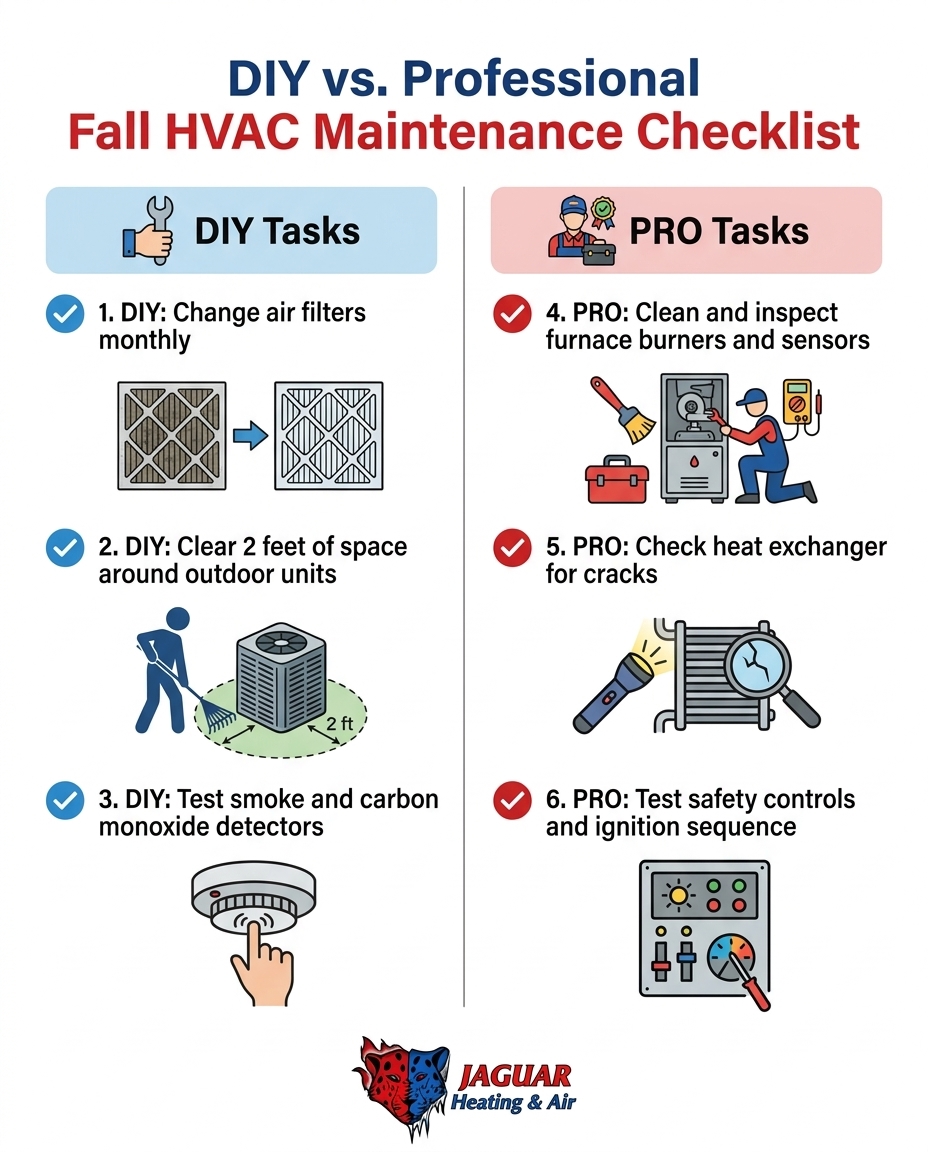
A proper pre-winter check involves a combination of simple homeowner tasks and complex technical evaluations. It is crucial to understand what you can do safely versus what requires a licensed professional. Following this checklist prevents expensive, sudden breakdowns and keeps your household safe.
Homeowner Responsibilities
There are several tasks you can safely handle to prepare your home for the colder months. These foundational steps ensure your system has the airflow and environmental safety it needs to operate correctly.
1. Replace air filters regularly: A clean filter is the most critical factor in ensuring proper airflow. Check your filter monthly and replace it when it appears gray or restricted.
2. Clear outdoor debris: Remove leaves, branches, and overgrown vegetation from around your outdoor heat pump or AC condenser. Aim for at least two feet of clearance on all sides.
3. Test safety alarms: Before the heating season begins, test all smoke and carbon monoxide detectors. Replace the batteries to ensure they are ready to alert you to any combustion issues.
4. Seal window drafts: Check weatherstripping around doors and windows to keep the warm air inside and reduce the workload on your heating system.
Professional Inspection Requirements
Opening the furnace cabinet, handling electrical components, or adjusting gas valves must always be left to experts. A professional tune-up involves highly technical safety checks that require specialized training and equipment.
1. Testing ignition sequences: Technicians verify that the gas valve opens correctly, the igniter glows at the right temperature, and the flame sensor registers the fire instantly.
2. Inspecting heat exchangers: A cracked heat exchanger can leak deadly carbon monoxide into your home. Professionals use specialized cameras to inspect these components for microscopic fractures.
3. Calibrating thermostats: Ensuring the thermostat communicates perfectly with the furnace prevents short-cycling and temperature swings.
4. Checking safety controls: Technicians test high-limit switches and draft safeguards to ensure the system will shut down automatically if an unsafe condition arises.
Preventing Dormant Furnace Ignition Failures
When a furnace remains inactive for several months, the internal sequence of operations can easily fall out of sync. A modern heating system relies on a precise, computerized sequence to start safely. If the thermostat calls for heat and the draft inducer motor fails to clear residual gases, or if the igniter fails to reach the proper temperature, the system's safety switches will lock out the ignition process entirely.
One Sacramento homeowner scheduled a routine checkup after a season of heavy AC use, seeking a thorough and honest inspection without aggressive upselling. The technician performed a detailed evaluation of both the cooling and heating components, verifying that the safety controls were functioning perfectly. This proactive approach provided complete peace of mind, ensuring the system was ready to transition safely into the colder months.
Understanding the difference between a normal startup and a failing one highlights the importance of professional heating maintenance.
• Thermostat Call — Normal Ignition Sequence: Sends signal to control board — Failing Ignition Sequence: Signal sent, but board detects a fault
• Draft Inducer — Normal Ignition Sequence: Spins up to clear combustion chamber — Failing Ignition Sequence: Fails to start or pressure switch remains open
• Igniter/Pilot — Normal Ignition Sequence: Glows brightly or sparks consistently — Failing Ignition Sequence: Igniter is weak, cracked, or fails to spark
• Gas Valve — Normal Ignition Sequence: Opens smoothly to supply fuel — Failing Ignition Sequence: Remains closed due to safety lockout
• Flame Sensor — Normal Ignition Sequence: Detects flame instantly and sustains operation — Failing Ignition Sequence: Coated in dust; fails to read flame, shutting down gas
The inconvenience and discomfort of a heating failure always seem to happen when the heat is needed most. A proactive check ensures the system fires up safely and reliably, preventing you from waking up to a freezing house.
Indoor Air Quality and Pre-Winter Preparation
Fall maintenance connects directly to the health and comfort of your indoor environment. As the weather cools during the October pre-winter transition, homes are sealed tightly against the cold. Windows stay shut, doors remain closed, and fresh air circulation drops significantly. Because of this, indoor air quality becomes a critical concern for your family's daily comfort.
Clearing out summer debris prevents allergens, dust mites, and pet dander from circulating endlessly through your ductwork. When a furnace kicks on for the first time, any dust resting on the heat exchanger or trapped in the blower compartment gets pushed directly into your living spaces. This sudden influx of airborne particulates can trigger allergies, asthma, and general respiratory irritation.
The EPA provides strict guidelines on maintaining clean indoor environments, emphasizing that source control and proper ventilation are key. Maintaining a clean HVAC system is the most effective way to manage optimal indoor air quality. Taking the time to ensure your filters are fresh, your blower motor is clean, and your ducts are unobstructed guarantees that you will have clean, fresh air during the long months spent indoors.
Evaluating System Upgrades and Efficiency
Routine maintenance often uncovers opportunities for beneficial system upgrades and improved energy efficiency. Aging systems may struggle with the transition between extreme temperatures. Moving from the intense heat of a Sacramento summer to the freezing nights of winter puts immense thermal stress on metal components, particularly the heat exchanger and the compressor.
A thorough inspection can reveal if a system is losing efficiency and costing more to run than it should. Technicians can track amp draws on motors and measure temperature rises across the heat exchanger. If your furnace is working twice as hard to produce the same amount of heat, your monthly energy bills will reflect that struggle. Sometimes, uncovering these inefficiencies allows you to make informed decisions before a catastrophic failure occurs.
In many cases, generic energy rebates, tax credits, or utility incentive programs may apply to proactive fall upgrades. Upgrading to high-efficiency equipment before the system completely fails allows you to take advantage of these programs without the pressure of an emergency replacement. For instance, evaluating Mitsubishi mini split pros and cons during a routine fall check can help you decide if zoned heating is a better fit for your home's layout. Always consult with a professional and verify current incentive programs with your utility provider or tax professional to understand what options are available to you.
The Value of Honest, Routine System Checks
Scheduling a professional check is fundamentally about safety and longevity, not high-pressure sales. The peace of mind that comes from a thorough, transparent evaluation is invaluable during the October pre-winter transition. A proper technician will take the time to educate the homeowner on how their system works, pointing out areas of wear and tear without using scare tactics.
Another local customer managing a rental property experienced a sudden cooling failure during the summer heat. A technician was dispatched, quickly diagnosed the system, and took the time to share preventive maintenance measures for the future. The unit was restored affordably and efficiently. This level of service demonstrates the importance of receiving clear guidance on preventive care. When technicians prioritize education over upselling, homeowners can make confident decisions about their property.
The ultimate goal is long-term reliability. Honest, routine system checks catch small issues—like a fraying belt, a weak capacitor, or a dirty flame sensor—before they cascade into major repairs. By partnering with a trustworthy professional, you ensure your equipment runs smoothly for years to come.
Common Questions About Fall HVAC Upkeep
What should be on a fall home maintenance checklist?
A comprehensive fall home maintenance checklist should prioritize preparing your home for colder weather and sealing out the elements. Key tasks include replacing your HVAC air filters, testing smoke and carbon monoxide detectors, and clearing debris from around outdoor AC or heat pump units. You should also check weatherstripping around doors and windows to prevent drafts. Finally, scheduling a professional furnace inspection is the most critical step to ensure safe, efficient heating all winter long.
How do I prepare my HVAC for winter?
Preparing your HVAC for winter starts with ensuring the system has proper airflow and a clean environment. Begin by replacing your air filter and ensuring all indoor vents are open and unobstructed by furniture or rugs. Next, clear away any leaves or branches from your outdoor unit. The most important preparation step is having a licensed technician inspect the internal heating components, test the ignition sequence, and verify that all safety controls are fully operational before the first freeze.
When is the best time for furnace maintenance?
The best time for furnace maintenance is in the early fall, typically during September or October, before you actually need to turn the heat on. Scheduling during this pre-winter transition period ensures your system is clean, safe, and ready to operate efficiently. It also allows you to secure an appointment before the first major cold snap, which is when HVAC companies experience a massive surge in emergency no-heat calls.
Why is it dangerous to turn on a furnace without inspecting it?
Turning on a dormant furnace without an inspection is dangerous because critical safety components may have failed or become compromised over the summer. Dust buildup on the heat exchanger or burners can cause ignition failures or minor combustion risks. More importantly, if the heat exchanger has developed a crack, running the furnace could leak deadly carbon monoxide into your home. A professional inspection verifies that the system is completely safe to operate.
How do I clear summer dust from my HVAC system?
Clearing summer dust from your HVAC system involves both homeowner maintenance and professional cleaning. You can start by replacing your indoor air filters and gently vacuuming the dust from your return air grilles and supply registers. However, clearing dust from the internal furnace components, such as the blower motor, flame sensor, and burner assembly, requires specialized tools and training. A licensed technician must perform this internal cleaning to prevent damage to sensitive parts.
Can regular maintenance really extend the lifespan of my heating unit?
Yes, regular maintenance significantly extends the lifespan of your heating unit. By keeping internal components clean and properly calibrated, the system does not have to work as hard to heat your home, reducing overall wear and tear. Routine checks also catch small issues, like a failing motor bearing or a weak igniter, before they cause catastrophic damage to the entire system. Consistent care is the most effective way to maximize your equipment investment.
Securing Peace of Mind Before the First Freeze
Addressing your seasonal home maintenance checklist proactively protects your investment and ensures your family's safety. A clear, expert fall heating inspection clears out summer dust, optimizes indoor air quality, and verifies that your system's safety controls are perfectly calibrated. Before the cold weather sets in permanently, take the time to schedule professional HVAC maintenance in Sacramento. Taking action now guarantees reliable warmth and complete peace of mind when the first freeze finally arrives.
Recent Posts

HVAC Maintenance & Replacement Options: Heat Pumps vs. Gas Furnaces in Sacramento
Deciding on a new heater? Review these options comparisons for homeowners to evaluate heat pumps vs. gas furnaces. Compare your system options before winter.

Troubleshooting HVAC Maintenance: Why Your Heater Smells Like Burning on Startup
Why we check the exact odor on fall startups. Use our home maintenance tips and troubleshooting criteria to safely tell harmless dust from a real fire hazard.
Fall Home Maintenance Tips and Troubleshooting
Smelling burning dust during your first fall heating cycle? See what is normal versus a safety risk with our home maintenance tips and troubleshooting.