Fall HVAC Maintenance Troubleshooting: Decoding Furnace Startup Smells and Sounds
Is that burning dust smell normal? See what happens inside your system during fall startup and find home maintenance tips and troubleshooting to stay safe.
Is that burning dust smell normal? See what happens inside your system during fall startup and find home maintenance tips and troubleshooting to stay safe.

That First Chilly October Morning: Is Your Furnace Supposed to Smell?
When looking for essential home maintenance tips and troubleshooting, knowing what to expect when you flip the thermostat from cooling to heating on that first chilly October morning can save you a lot of panic. Instead of an immediate rush of cozy warmth, your vents might start blowing out a distinct, alarming odor of burning dust, accompanied by unfamiliar clanks and pops from the utility closet. For many homeowners, this mid-fall heating startup brings unexpected sensory surprises that immediately trigger safety concerns. Effective equipment care requires knowing exactly how to interpret these signals, distinguishing between normal seasonal burn-off and a true mechanical hazard.
Transitioning a home's climate control system from months of air conditioning to active heating is a significant operational shift. The equipment has sat dormant since early spring, accumulating environmental debris while the blower motor worked exclusively with the air conditioner. When those gas burners or electric heating elements fire up for the very first time in months, the resulting smells and sounds can easily cause alarm. Understanding what happens inside your ductwork and heating chambers during this transition is the first step in ensuring your household remains safe and comfortable as the weather turns cold.
For comprehensive guidance and long-term protection, professional HVAC maintenance is your best defense against unexpected fall breakdowns.
The Anxiety of the Seasonal Switch
It is completely natural to feel anxious when a major household appliance produces a burning smell. Human instincts are wired to treat any smoke or burning odor as an immediate threat. However, the heating system is unique because it is designed to generate controlled, contained heat at extremely high temperatures. The challenge lies in identifying whether the odor is simply the system cleaning itself out through thermal burn-off, or if a component is actively failing. Proactive equipment care can eliminate many of these startup anxieties before the cold weather sets in, giving you confidence that your system is ready for the winter workload.
The Science Behind the Initial Burning Dust Odor
To understand why a furnace smells strange on its first run of the season, you have to look at what happens during its long summer hibernation. While your air conditioner was running, the heating components inside your unit were completely inactive. During these months of inactivity, household dust, pet dander, microscopic skin cells, and airborne particulates settle directly onto the furnace heat exchangers and burners. Even in homes with excellent air filtration, a fine layer of dust inevitably bypasses the filter and coats the internal metal surfaces.
When the system fires up for the mid-fall heating startup, the heat exchanger rapidly reaches temperatures of several hundred degrees. As the metal heats up, the accumulated particles resting on its surface undergo a harmless thermal burn-off process. The dust literally incinerates, turning into microscopic ash and releasing that distinct "burning dust" odor into the air stream. The blower motor then pushes this scented air through your ductwork and out into your living spaces.
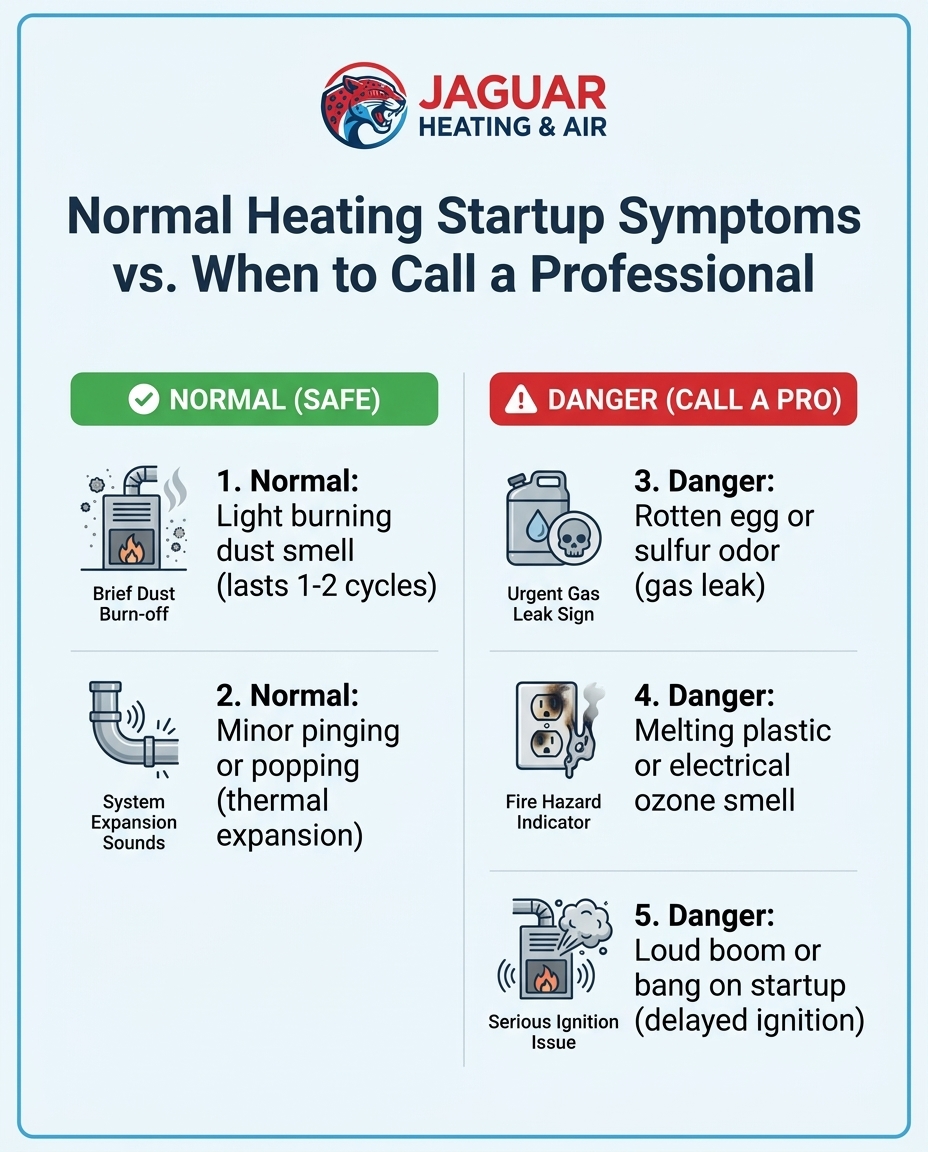
A standard dust burn-off odor typically dissipates completely after one to two complete heating cycles. Routine heating maintenance scheduled before the season begins physically removes this buildup from the components, significantly minimizing or entirely preventing the initial odor. By having a technician clean the heat exchanger and burners while they are still cold, there is simply no dust left to burn when you finally turn the thermostat up.
When to Wait and When to Act
Knowing how long to tolerate a burning smell is an important part of home safety. If you notice a dusty, slightly smoky odor on the first cold morning, follow these monitoring steps:
• Monitor the first hour: Keep a close eye on the system during its first 60 minutes of operation. The smell should be most intense during the first 10 minutes and gradually fade.
• Ventilate the space: Open a few windows to allow the harmless dust odor to ventilate out of the house. This prevents the smell from lingering in fabrics and carpets.
• Check the filter: Ensure your air filter is clean. A heavily clogged filter restricts airflow, which can cause the heat exchanger to run hotter than normal, intensifying the smell.
• Seek professional help: If the smell persists beyond the first day of active use, or if it returns every time the heater kicks on weeks later, it warrants a professional diagnostic.
Dangerous Startup Odors You Should Never Ignore
While burning dust is a normal nuisance, not all smells are harmless. Specific odors indicate acute mechanical or electrical failures that require an immediate response. If you detect any of the following scents during your mid-fall heating startup, shut off the system at the thermostat immediately.
• Rotten eggs or sulfur: This is a clear indicator of a natural gas leak. Utility companies add a chemical called mercaptan to natural gas specifically so it smells like rotten eggs, making leaks detectable. If you smell this, shut down the system, evacuate the home, and call your gas provider or a licensed professional immediately.
• Melting plastic: A sharp, chemical smell of burning plastic often means a foreign object has fallen into the ductwork near the heat exchanger, or a plastic component inside the furnace is failing.
• Electrical ozone or burning wire: A metallic, fishy, or sharp electrical scent suggests wiring issues, a failing capacitor, or an overheating blower motor. Running a system with electrical shorts can lead to severe equipment damage or a localized fire.
• Metallic odors: A heavy metallic smell can sometimes indicate that the heat exchanger itself is overheating or cracking, which poses a severe carbon monoxide risk.
Never attempt DIY investigations for gas or electrical odors. Poking around a live electrical board or a leaking gas valve without proper training and specialized diagnostic tools is highly dangerous. These situations require a licensed professional for safe, accurate resolution.
Troubleshooting Common Furnace Startup Noises
Just as your nose can alert you to trouble, your ears are excellent diagnostic tools during the mid-fall heating startup. At Jaguar Heating & Air, we always remind our customers that furnaces are large mechanical devices moving heavy volumes of air, so they will never be completely silent. However, distinguishing between normal thermal expansion sounds and dangerous mechanical noises can save you from a catastrophic breakdown.
Minor pinging or popping sounds are usually harmless. As the furnace pushes a sudden wave of hot air into cold metal ductwork, the sheet metal expands. The joints and seams of the ducts flex slightly, creating a popping or ticking noise. Once the ductwork reaches a steady operating temperature, these sounds typically stop.
A loud boom or bang upon startup is a severe warning sign. This noise usually indicates delayed ignition. In a healthy furnace, the gas valve opens and the burners ignite instantly. If the burners are dirty or the igniter is failing, gas can pool in the combustion chamber for several seconds before finally catching a spark. When it does ignite, the accumulated gas creates a small explosion, resulting in a loud boom. Over time, these concussive forces can crack the heat exchanger, leading to carbon monoxide leaks.
Squealing or grinding noises often point to mechanical friction. A high-pitched squeal usually means a failing blower motor bearing or, in older models, a slipped or frayed blower belt. Grinding sounds indicate metal-on-metal contact, meaning a moving part has broken loose and is actively destroying surrounding components.
Hissing or whistling sounds are all about air pressure. Just as a hissing sound near your indoor AC unit indicates a specific refrigerant issue, hissing near a furnace can indicate structural air leaks in the ductwork or severe static pressure problems caused by a blocked filter. If the system is struggling to pull enough air through a clogged filter, it will force air through tiny gaps in the cabinet, creating a high-pitched whistle.
Why Sacramento Valley Dust Demands Specific Seasonal Care
In our years of providing HVAC services across the region, the team at Jaguar Heating & Air consistently notices that the severity of your mid-fall heating startup symptoms is heavily influenced by local geography. In the Sacramento Valley, the long, dry summer season leads to significantly higher particulate accumulation inside idle heating equipment than in more humid or temperate climates. From May through September, the region experiences high heat, low humidity, and consistent winds that carry fine particulates across the valley floor.
Agricultural dust and valley soil are particularly invasive. Because the valley is surrounded by active agricultural operations, harvesting activities kick up ultra-fine dirt, pollen, and plant matter. These micro-particulates easily bypass standard one-inch fiberglass filters over time. Throughout the long cooling season, this fine dust gets pulled into the HVAC system and settles directly onto the cold furnace components.
This heavy regional accumulation makes the initial burn-off smell much more pronounced locally. When a Sacramento homeowner turns on their heater in October, there is often a thicker, more stubborn layer of baked-on dirt waiting on the heat exchanger compared to a system in a coastal city. Because this valley dust is so fine and dense, standard filter changes are insufficient to clear it. The dirt bonds to the metal surfaces, meaning the only way to prevent a strong, lingering odor is through direct, professional cleaning of the internal chambers before the heating season begins.
What a Comprehensive Pre-Season Inspection Actually Entails
A true professional tune-up involves much more than simply sliding a new filter into the rack and turning the thermostat up and down. To prevent strong startup odors and ensure safe operation, a technician must perform a detailed teardown and inspection of the system's core components. Transitioning from AC maintenance to heating preparation requires checking for hard water scale, summer wear-and-tear, and ensuring all safety lockouts are fully operational.
The value of this thorough approach is clear when you look at how professionals handle unexpected issues. For instance, when an AC unit went out at a local rental property during the peak summer heat, the responding technician didn't just diagnose and fix the immediate breakdown quickly; they took the time to fully explain the necessary preventive maintenance required to keep the system running reliably. That same dedication to long-term reliability and preventive education applies directly to winter preparations.
A comprehensive pre-season inspection generally follows these critical steps:
1. Heat Exchanger Scrutiny: Technicians safely clean the heat exchanger to remove the baked-on valley dust that causes strong startup odors. They also inspect the metal for microscopic cracks that could allow dangerous gases to escape into the home.
2. Ignition System Calibration: The team verifies the integrity of the ignition system, cleaning the flame sensor and adjusting the burners. This ensures the gas ignites instantly, preventing the dangerous delayed-ignition booms discussed earlier.
3. Airflow and Motor Testing: The blower motor is tested for proper amperage and voltage. Technicians check the bearings and wheel to ensure the system can move hot air efficiently without squealing or grinding.
4. Safety Control Verification: Every furnace has built-in safety switches, such as the high-limit switch, which shuts the system down if it gets too hot. A proper inspection tests these switches to guarantee they will trigger correctly in an emergency.
An honest, thorough inspection provides clarity without aggressive upselling, focusing entirely on system safety, efficiency, and protecting the equipment against the unique challenges of local dust and hard water.
Make Your Seasonal Transition Seamless and Safe
Don't let startup smells and alarming mechanical sounds turn the first cold morning into a stressful event. By understanding the difference between harmless thermal burn-off and genuine warning signs, you can protect your home and your equipment. A proactive approach ensures your system operates safely and efficiently all winter long, eliminating the guesswork from your seasonal transition.
Taking care of your equipment before the temperatures drop is the smartest way to guarantee a warm, comfortable home. Joining an HVAC maintenance membership guarantees your equipment is professionally prepped for every seasonal shift, offering true peace of mind when you finally switch that thermostat to "heat."
Frequently Asked Questions
Why does my heater smell like burning dust when I turn it on for winter?
The burning dust smell is a normal result of thermal burn-off. Over the summer, dust, pet dander, and airborne particles settle on the inactive heating components inside your furnace. When the system fires up for the first time in the fall, the heat exchanger reaches high temperatures and incinerates this accumulated debris, releasing a temporary dusty odor into your ductwork.
How long should a furnace smell like burning dust?
A standard dust burn-off odor typically lasts for only one to two complete heating cycles. You should notice the smell fading significantly within the first 60 minutes of operation. If the odor persists for multiple days, or if it returns every time the system turns on throughout the week, it is time to schedule a professional inspection to ensure there isn't a larger issue.
When should I call a professional for furnace noises?
You should call a professional immediately if you hear loud booms, bangs, grinding, or high-pitched squealing. While minor pinging and popping are just the normal sounds of metal ductwork expanding as it warms up, a loud boom indicates delayed gas ignition, which is highly dangerous. Grinding or squealing points to failing motor bearings that require immediate replacement before the motor burns out completely.
Is it normal for a furnace to smell like melting plastic?
No, a furnace should never smell like melting plastic or electrical ozone. These odors indicate a serious hazard, such as burning wire insulation, an overheating blower motor, or a foreign plastic object melting against the heat exchanger. If you detect a chemical or plastic burning smell, turn the system off immediately at the thermostat and contact a licensed technician.
Can I clean my furnace burners myself to stop the smell?
It is not recommended to clean internal furnace components yourself. Accessing the burners and heat exchanger requires removing safety panels and working around delicate gas valves and electrical sensors. Accidentally misaligning a burner or damaging the flame sensor can lead to gas leaks or system lockouts. Always rely on a trained professional to perform internal system cleaning safely.
How often should I schedule fall heating maintenance?
You should schedule professional heating maintenance once a year, ideally in early to mid-fall before the coldest weather arrives. Annual tune-ups allow a technician to clean away the summer dust buildup, verify that all safety switches are operational, and ensure the ignition system is firing correctly. This yearly routine prevents unexpected breakdowns and keeps the system running at peak efficiency.
Recent Posts
A Proactive Seasonal Home Maintenance Checklist for HVAC Systems
Why we prioritize October heating inspections. Use this seasonal home maintenance checklist to prevent sudden furnace failures. Schedule your checkup today.

HVAC Maintenance & Replacement Options: Heat Pumps vs. Gas Furnaces in Sacramento
Deciding on a new heater? Review these options comparisons for homeowners to evaluate heat pumps vs. gas furnaces. Compare your system options before winter.

Troubleshooting HVAC Maintenance: Why Your Heater Smells Like Burning on Startup
Why we check the exact odor on fall startups. Use our home maintenance tips and troubleshooting criteria to safely tell harmless dust from a real fire hazard.