HVAC Maintenance and Replacement Options: Comparing Heat Pumps vs. Gas Furnaces
Decide with confidence this fall. We break down heating options comparisons for homeowners choosing between a heat pump and gas furnace. See which is best.
Decide with confidence this fall. We break down heating options comparisons for homeowners choosing between a heat pump and gas furnace. See which is best.

Navigating Your Fall Heating Replacement Decision
That heavy, rattling clunk when your aging system kicks on is usually the first sign of trouble, making options comparisons for homeowners a top priority before the winter chill officially arrives. Nursing an unreliable unit through the final cold snaps of the previous year is a stressful experience that leaves many families dreading the upcoming season. If you spent last winter adjusting the thermostat constantly, dealing with uneven temperatures, or scheduling emergency repairs, you already know that hoping a failing system will survive another year is a risky strategy.
Early fall provides the perfect window to evaluate your home's setup without the intense pressure of a mid-winter breakdown. Scheduling an October pre-winter heating startup gives you time to make a calculated, informed decision about the future of your home's comfort. For comprehensive care, exploring professional HVAC maintenance and securing an ongoing HVAC maintenance membership ensures that whichever system you choose will perform reliably year after year.
The Hidden Cost of Waiting for a Breakdown
Most homeowners delay replacement until the equipment completely fails. The problem with this reactive approach is that heating systems rarely break down on a mild, sunny afternoon. They fail when they are working their hardest—typically during the coldest nights of the year. When you are forced into an emergency replacement, you lose the luxury of carefully weighing your options. You might end up settling for whatever equipment is currently sitting in the warehouse, rather than the unit that makes the most sense for your long-term energy goals.
By proactively assessing your setup in the fall, you open the door to a critical decision point: should you stick with a traditional gas furnace, or is it time to transition to a modern electric heat pump? Both systems have distinct operational profiles, different energy demands, and unique service requirements. Understanding how these two technologies function is the first step toward making a choice that will keep your home comfortable for the next decade.
How Mild Winters Shift the Heating Equation
To understand why certain systems outperform others, you have to look at the environment they operate in. Heat pumps do not burn fuel to create warmth. Instead, they extract ambient heat energy from the outside air, compress it to raise the temperature, and transfer that concentrated warmth inside your home. It is a brilliant piece of engineering, but it relies entirely on the availability of heat energy in the outdoor air. Because they are moving heat rather than generating it from scratch, these systems can deliver significantly more energy to a home than the electrical energy they consume.
However, this high-efficiency process has a specific temperature threshold. In regions that experience deep, sustained sub-zero freezes, there is very little ambient heat left in the air to extract. When temperatures plummet in those extreme climates, the system is forced to rely on electric auxiliary heat strips. These backup strips act like giant toaster coils, keeping the house warm but consuming a massive amount of electricity in the process.
The Local Climate Advantage
This is exactly where local geography completely changes the math for Sacramento CA homeowners. Because the valley's average winter lows comfortably hover around 39 to 41 degrees, the local climate hits the exact sweet spot for maximum efficiency. The deep freezes that force Midwest systems into expensive auxiliary heating modes rarely happen here.
Because our winters are mild but damp, an electric system can easily harvest enough ambient heat to keep a house perfectly comfortable without drawing excessive power. While national averages often point to gas furnaces as the heavy-duty standard for winter warmth, regional weather patterns make the heat pump an exceptionally efficient option locally. Homeowners in the area have a unique advantage, allowing them to utilize a highly efficient technology that might struggle in colder parts of the country.
Heat Pumps vs. Gas Furnaces: Core Operational Differences
When comparing your options, the most significant difference lies in how the heat is actually produced and delivered to your living spaces. Gas furnaces rely on combustion. They burn fossil fuels—typically natural gas—inside a sealed chamber. The resulting combustion gases heat up a large metal component called a heat exchanger. Your blower motor then forces indoor air over this hot metal, warming the air before pushing it through your ductwork. This process delivers high-temperature air directly at the register, providing a fast, intense blast of warmth that many homeowners are accustomed to.
Modern heat pumps operate on a completely different principle. Using a continuous refrigeration cycle, they absorb, compress, and release heat. Because they do not rely on combustion, the air delivered at the register is typically a lower, more consistent temperature. Instead of blasting hot air in short cycles, an electric system runs for longer, slower periods, providing a steady, even blanket of warmth that eliminates the hot and cold spots often associated with traditional furnaces.
The Seasonal Shift: Idle vs. Active Systems
Another major operational difference is the seasonal workload. A traditional gas furnace sits completely idle for half the year. Once the spring thaw arrives, the furnace shuts down and waits in the dark until the following autumn. A heat pump, however, is a two-way street. It operates year-round, reversing its flow in the summer to act as your primary air conditioning system.
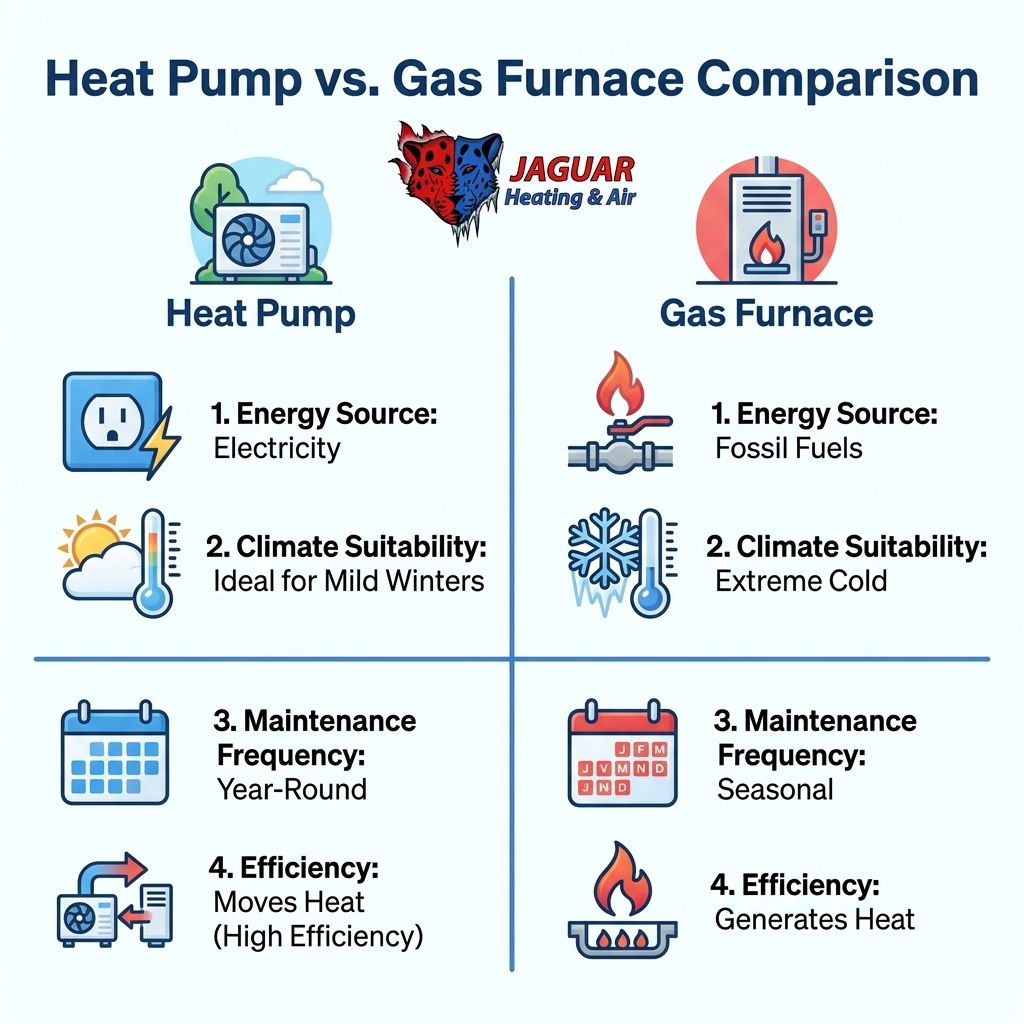
• Energy Source — Electric Heat Pump: Electricity (Moves Heat) — Gas Furnace: Natural Gas or Propane (Combustion)
• Climate Suitability — Electric Heat Pump: Ideal for Mild Winters (High Efficiency) — Gas Furnace: Preferred for Extreme Cold Climates
• Maintenance Frequency — Electric Heat Pump: Year-Round (Cooling and Heating) — Gas Furnace: Seasonal (Pre-Winter Only)
• Heat Delivery Style — Electric Heat Pump: Consistent, even, moderate-temperature air — Gas Furnace: Fast, intense, high-temperature air
The Impact of Valley Dust on System Longevity
Because an electric system operates 365 days a year—cooling your home in the summer and heating it in the winter—it accumulates wear and tear at a much faster rate than a seasonal furnace. This year-round operation means the outdoor unit is constantly pulling air across its internal coils to facilitate heat transfer. In our specific region, that constant airflow introduces a significant environmental challenge.
The intense summer dust and seasonal pollen specific to the Sacramento Valley are notorious for clogging HVAC systems. As the outdoor fan pulls air through the metal fins, airborne particulates stick to the condensation on the coils. Over a single summer, this creates a thick, insulating blanket of debris. When October arrives and the system needs to reverse its operation to absorb heat from the outside air, that layer of valley dust acts as a barrier, drastically reducing energy efficiency and forcing the compressor to work twice as hard.
How Debris Chokes System Efficiency
Sometimes, a system that appears to be failing doesn't actually need a full replacement—it just needs a thorough, professional cleaning to restore its performance. One local customer with a rental property experienced this firsthand when their cooling went out unexpectedly during the summer heat. A technician arrived the next day, quickly diagnosed that the system was heavily restricted by debris, and took the time to explain how preventive care keeps these units running. The unit was restored to full function at a reasonable rate, saving the property owner from an unnecessary panic.
This is why Jaguar Heating & Air focuses heavily on specialized local expertise in combating Sacramento Valley dust through comprehensive care plans. Knowing how local environmental factors stress the equipment allows for targeted, effective upkeep. Protecting the outdoor unit during the transition from summer cooling to winter heating requires meticulous AC maintenance and coil cleaning to ensure the system is ready to absorb ambient heat efficiently.
Navigating Efficiency Upgrades and Generic Incentives
Beyond the mechanical differences, the financial aspect of a replacement decision requires careful consideration. Upgrading an aging, inefficient unit to a modern, high-performance system is an investment in your home's long-term infrastructure. Data from the U.S. Department of Energy (DOE) and ENERGY STAR consistently highlight the long-term cost savings associated with high-efficiency equipment. Because modern systems utilize advanced variable-speed motors and improved heat exchangers, they consume significantly less energy to produce the same amount of comfort.
To encourage homeowners to adopt more efficient technologies, various programs exist at both the national and local levels. Generic federal tax credits and local utility rebates frequently apply to qualifying high-efficiency installations. These incentives are designed to offset the initial investment, making it easier for families to choose environmentally friendly, high-performance options that reduce strain on the local power grid.
Maximizing the Lifespan of Your Investment
Because these programs change frequently and have specific equipment requirements, it is always recommended to consult directly with your utility provider or a licensed tax professional to verify current programs and your exact eligibility. They can help you navigate the paperwork and ensure your chosen equipment meets the necessary efficiency ratings.
However, securing an initial rebate is only part of the financial equation. The true return on investment comes from longevity. Maximizing any system's lifespan requires strictly adhering to the manufacturer's recommended service schedule. Skipping seasonal check-ups voids warranties and guarantees that the equipment will slowly lose its efficiency over time. Whether you choose the intense heat of a gas combustion chamber or the steady efficiency of a heat pump, proactive care is the only way to protect your investment.
Why Proactive Care Outperforms DIY Fixes
When an HVAC system starts underperforming, it can be tempting to search online for quick fixes. Unfortunately, modern heating and cooling equipment is highly complex, and improper DIY methods often cause more harm than good. A typical pattern we see is homeowners attempting to clean their outdoor units using a high-pressure garden hose or power washer. The thin aluminum fins surrounding the coil are incredibly delicate. High-pressure water easily bends these fins flat, completely restricting the airflow the system desperately needs to function. This is exactly why we never recommend hose-washing your AC coils without proper training and specialized, low-pressure tools.
Furthermore, evaluating a system's true condition involves checking refrigerant pressures, testing high-voltage electrical capacitors, and inspecting heat exchangers for microscopic cracks. These are technical procedures that require licensed expertise, specialized gauges, and a deep understanding of thermodynamics.
Inside a Professional Pre-Winter Evaluation
The real value of professional care is the peace of mind that comes from an honest, pressure-free evaluation. During a routine spring inspection for another homeowner, a technician performed a thorough evaluation and provided honest, clear information about the system's condition—without trying to push unnecessary parts or aggressive sales tactics. That level of transparency allows you to make decisions based on facts, not fear.
A proper pre-winter tune-up is comprehensive. For a gas furnace, it involves cleaning the burners, inspecting the flue for safe venting, and verifying that the heat exchanger is intact so carbon monoxide cannot enter the home. For a heat pump, it involves testing the reversing valve, verifying the defrost cycle, and ensuring the refrigerant charge is exact. Scheduling professional heating maintenance ensures that every moving part is calibrated for the demanding season ahead.
Frequently Asked Questions About Heating Options
Is a heat pump better than a gas furnace?
The short answer is that it depends heavily on your local climate. In regions with mild winters, electric systems are generally much more energy-efficient because they move heat rather than generating it. However, a traditional gas furnace may be the preferred choice in extreme cold climates where ambient heat is scarce.
At what temperature does a heat pump become inefficient?
Older models typically begin to lose their efficiency as temperatures drop below freezing, but modern units are engineered to operate effectively in much lower temperatures. When the weather drops significantly below freezing, the system's auxiliary heat strips will usually engage to help maintain indoor comfort, though this uses more electricity.
What are the maintenance differences between heat pumps and furnaces?
Because an electric system provides both heating and cooling, it operates year-round and requires bi-annual inspections to manage wear and tear. A traditional gas furnace sits idle during the summer and typically only needs a single, thorough pre-winter inspection to ensure safe combustion.
Are there tax credits for upgrading to a heat pump?
Yes, generic federal tax credits and local utility rebates often apply when homeowners upgrade to qualifying high-efficiency electric systems. Because these programs have specific requirements and change periodically, homeowners should always verify the specifics with a tax professional or their local utility provider.
Do heat pumps work in cold weather?
Yes, they are designed to extract heat from the air even when it feels cold outside. While extreme sub-zero temperatures require supplemental heating from auxiliary strips, modern variable-speed systems are incredibly capable of keeping homes warm throughout standard winter conditions.
Making the Right Choice for Your Home's Comfort
Choosing between a traditional gas furnace and a modern electric heat pump ultimately comes down to understanding your local winter patterns and your home's year-round usage. Because Sacramento winters rarely bring deep, sustained freezes, electric systems offer exceptional efficiency here, yet many homeowners still default to gas furnaces out of habit rather than climate necessity.
Making this decision during an October pre-winter heating startup ensures a stress-free transition before the cold weather forces your hand. We encourage homeowners to seek an honest, professional evaluation of their current setup and to explore ongoing care plans that protect their investment. By prioritizing regular upkeep and understanding your equipment's unique operational needs, you can secure reliable, efficient comfort for your family for years to come.
Recent Posts

Fall HVAC Startup Checklist: Diagnosing Burning Smells and System Red Flags
Deciding if that burning dust smell is normal? See why this seasonal home maintenance checklist is critical for catching heating failures before winter hits.

Fall HVAC Maintenance Troubleshooting: Decoding Furnace Startup Smells and Sounds
Is that burning dust smell normal? See what happens inside your system during fall startup and find home maintenance tips and troubleshooting to stay safe.
A Proactive Seasonal Home Maintenance Checklist for HVAC Systems
Why we prioritize October heating inspections. Use this seasonal home maintenance checklist to prevent sudden furnace failures. Schedule your checkup today.