.avif)
Why We Never Recommend Hose-Washing Your AC Coils Without Disconnecting Power
Spraying your outdoor condenser with a garden hose seems like an easy late-summer cooling fix. Before you grab the hose, understand the severe electrical risks of washing a live 240-volt system.
Spraying your outdoor condenser with a garden hose seems like an easy late-summer cooling fix. Before you grab the hose, understand the severe electrical risks of washing a live 240-volt system.

The Quick-Fix Illusion: Why Hosing a Live AC is a Dangerous Idea
A quick spray with a garden hose seems like a harmless way to boost your air conditioner's efficiency, but here is why we never recommend hose-washing your AC coils without disconnecting power. Our dispatchers at Jaguar Heating & Air hear the same story every August: a persistent internet myth suggests that whenever your outdoor unit looks dirty, you can simply walk outside and blast it with water while it runs. The reality is far more complicated—and significantly more dangerous. During the peak of the August late-summer cooling season, your house feels warm, and you face a critical decision point: deciding to wash the outdoor condenser to improve airflow, but choosing to skip pulling the physical electrical disconnect box for convenience.
If you need help maintaining your system safely, exploring professional air conditioning services is the best first step. While clean coils are absolutely essential for proper heat transfer and energy efficiency, introducing water to an energized 240-volt system is a recipe for disaster. This common DIY shortcut often leads to severe electrical hazards, destroyed components, and a total loss of cooling right when you need it most. Rather than saving time, hosing down a live unit creates an immediate risk of electrical shock and catastrophic system failure.
Why Sacramento's Dry Summers Tempt Homeowners into Risky Maintenance
The Problem: Extreme heat causes your air conditioning unit to run continuously, pulling massive amounts of air through the condenser fins to release heat from your home. Along with that air comes a heavy load of environmental debris. Here in Sacramento CA, our technicians see firsthand how our dry, dusty summer climate leads to rapid dust, pollen, and agricultural debris accumulation on those outdoor coils. As this blanket of dirt thickens, airflow becomes severely restricted. Your system struggles to cool the home, runs longer cycles, and leaves you sweating in your own living room, prompting a desperate search for immediate DIY relief.
The Cause: The intent behind washing the coils is entirely correct. Air conditioners rely on the principle of heat transfer, and a layer of dust acts like a heavy winter sweater on your outdoor unit, trapping the heat inside. When Sacramento homeowners see this visible buildup during a late-summer heatwave, right as kids are heading back to school, the temptation to grab the nearest garden hose is overwhelming. The logic seems sound: the unit sits outside, it gets rained on, so a quick rinse should be perfectly fine. However, the execution of this idea is deeply flawed because it ignores the high-voltage electrical realities hidden just behind those metal panels.
The Solution: Bridging the gap between recognizing a dirty unit and handling it safely means understanding when to step back. True efficiency restoration requires proper chemical cleaners and verified electrical isolation. Scheduling professional AC maintenance ensures the unit is cleaned thoroughly without risking your safety or your equipment. The goal is to remove the restrictive dirt layer safely, restoring the system's ability to breathe without introducing pressurized water into sensitive electrical compartments.
The Crucial Difference Between Downward Rain and Pressurized Hoses
Over our years of repairing fried electrical panels across the region, our team has noticed a dangerous assumption drives most DIY coil-cleaning disasters: the belief that because an AC unit sits outside in the rain, it is entirely waterproof. This is a fundamental misunderstanding of how outdoor HVAC electrical panels are designed. Outdoor units are built to specific NEMA (National Electrical Manufacturers Association) enclosure ratings, which means they are engineered to shed downward rainfall safely. They utilize overlapping metal panels and basic weather stripping to guide falling water away from the internal electronics.
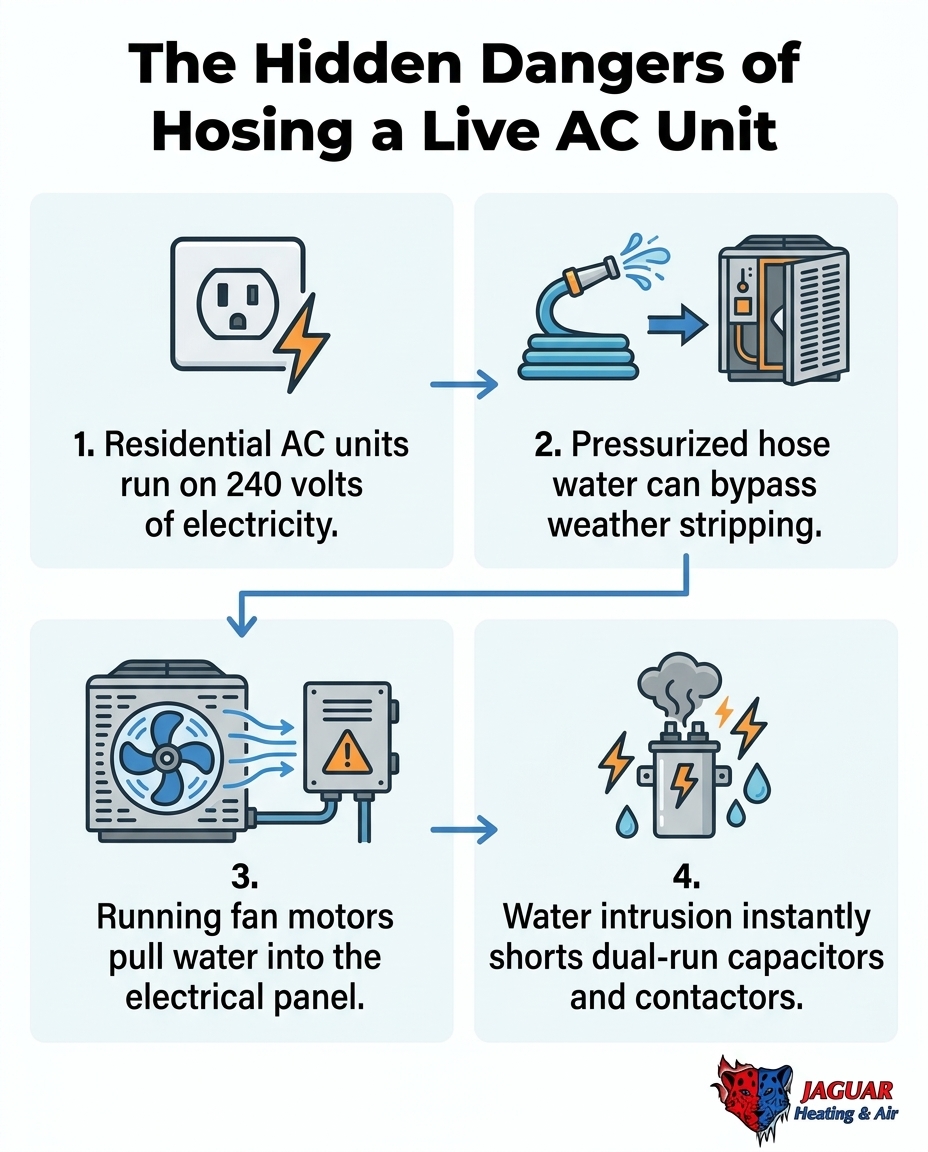
However, natural rain is entirely different from the pressurized, horizontal water stream of a standard garden hose. When you stand next to your unit and spray horizontally to push dirt out of the fins, that pressurized water easily bypasses the factory weather stripping. It forces its way into the seams of the electrical compartment where the high-voltage wiring lives.
• Natural Rainfall — Water Direction: Vertical / Downward — Pressure Level: Low (Gravity) — Electrical Intrusion Risk: Minimal (Shed by overlapping panels)
• Garden Hose Spray — Water Direction: Horizontal / Upward — Pressure Level: High (Pressurized) — Electrical Intrusion Risk: Severe (Bypasses weather stripping)
To make matters worse, if the unit is running while you spray it, the outdoor fan motor actively exacerbates the problem. The massive fan blade acts like a vacuum, pulling airborne water droplets directly into the electrical housing. If you have ever noticed that your AC blower motor sounds like a jet engine, you understand the sheer volume of air these systems move. That same suction pulls horizontal hose water straight into sensitive components. Weather-resistant simply does not mean waterproof under pressure, especially during the heavy usage of the August late-summer cooling season.
Thermostat 'Off' Does Not Mean the Power Is Disconnected
The Problem: Perhaps the most dangerous misconception in DIY HVAC maintenance is the belief that turning the indoor thermostat to the "off" position makes the outdoor unit safe to wash. We regularly dispatch technicians to homes in Sacramento CA where well-meaning homeowners have made this error, assuming that if the fan isn't spinning and the house isn't cooling, the outdoor condenser is completely dead and devoid of electricity.
The Cause: The indoor thermostat only controls a low-voltage (usually 24-volt) communication wire. When you turn the thermostat off, you are simply telling the system to stop sending the "turn on" signal. However, the outdoor condenser remains fully energized with high-voltage 240-volt electricity from your main breaker panel. The contactor—a heavy-duty mechanical switch inside the outdoor unit—still has live, lethal power sitting on its terminals, just waiting for the signal to engage.
The Solution: Introducing water to a unit that has not been isolated at the physical disconnect box risks an immediate, violent electrical arc. Water is an excellent conductor of electricity, and a stray spray across live 240-volt terminals will cause a catastrophic short. The unbreakable rule of coil cleaning is that you must never introduce water to the unit unless the physical disconnect—the gray box mounted on the exterior wall near the unit—has been properly pulled and the power verified dead by a professional. Relying on the indoor thermostat for safety is a gamble you will eventually lose.
The Immediate Casualties: Blown Fuses, Capacitors, and Contactors
When pressurized water breaches the electrical compartment of a live AC unit, our repair crews see instantaneous damage. Because residential AC condensers operate on heavy 220-240 volts, these failures happen in the blink of an eye. The components housed behind that thin metal panel are highly sensitive to moisture and are frequently destroyed by careless hosing during the August late-summer cooling season.
• The Dual-Run Capacitor: This component stores energy to give the compressor and fan motor the massive jolt they need to start. It resembles a silver metal cylinder with multiple exposed prongs on top. If water bridges the gap between these high-voltage prongs, the capacitor shorts out instantly, popping loudly and leaving your system unable to start.
• The Contactor: This is the mechanical relay that pulls high-voltage power into the compressor. It features exposed magnetic coils and contacts. Water entering the contactor can cause it to short out entirely, or worse, cause the electrical contacts to weld shut due to the intense arcing.
• Disconnect Fuses: Many outdoor disconnect boxes contain cartridge fuses. These act as the system's last line of defense against a catastrophic water-induced short. When water hits the live components, the resulting power surge will blow these fuses immediately, completely killing power to the unit to prevent a fire.
How a Simple Short Leads to Permanent Compressor Damage
The damage often extends far beyond a few burned wires. A water-damaged contactor is particularly dangerous because the arcing can cause the metal contacts to fuse together in the "closed" position. When this happens, the outdoor compressor receives continuous 240-volt power and runs non-stop, even if the indoor thermostat is turned off.
Because the indoor blower fan is not running to remove the cold air from the evaporator coil, the system falls out of balance. Liquid refrigerant floods back to the outdoor unit, forcing the compressor to work under immense thermal stress. The compressor rapidly overheats and can suffer permanent mechanical failure. Replacing a shorted contactor is a straightforward repair for our team; replacing a burned-out compressor is one of the most extensive and disruptive repairs your system can face.
The Safe Path to Restoring System Efficiency
The Problem: A dirty air conditioner absolutely needs to be cleaned to function properly, but the risks of a DIY hose-down are simply too high. Attempting to save time often results in destroyed electrical components, leaving your home sweltering in the Sacramento CA heat while you wait for emergency repairs.
The Cause: Dirt, grime, and cottonwood seeds embed themselves deep between the aluminum fins of the condenser coil. Plain water from a garden hose often just pushes this mud deeper into the center of the coil, compacting it rather than removing it. Without the proper chemical agents to lift the dirt out, you are risking electrical shock for a cleaning method that doesn't even work effectively.
The Solution: The only safe route is a professional coil cleaning process. When our certified Jaguar Heating & Air technicians arrive, we begin by physically pulling the disconnect and using a multimeter to verify the power is completely dead. We then apply specialized, non-acidic foaming cleaners that actively push dirt out from the inside of the fins. After the foam does the heavy lifting, the debris is safely rinsed away at low pressure.
During this process, our technicians also inspect for bent fins, failing capacitors, and other wear-and-tear hidden by the dirt. Jaguar Heating & Air prioritizes your safety and the longevity of your equipment, bringing the professional expertise needed to save homeowners from dangerous electrical hazards and costly accidental damage. One Sacramento homeowner reached out to us during the late-summer heat seeking a full AC replacement estimate because their system was failing to cool. Instead of pushing for a costly new unit, our technician realized the system was simply suffocating under a blanket of debris. We thoroughly and safely cleaned the existing unit, and no new AC was needed. Investing in proper maintenance prevents these desperate situations and avoids the need for premature AC repair caused by DIY errors.
Frequently Asked Questions About AC Coil Cleaning Safety
Understanding how to care for your system safely is the first step toward long-term reliability. For homeowners looking to keep their equipment in top shape year-round without the DIY risks, joining an HVAC maintenance membership ensures your coils are cleaned professionally every season. Here are the most common questions our team receives about washing outdoor units.
Can I spray water on my outside AC unit while it is running?
The short answer is absolutely not. Spraying water on a running AC unit introduces a high risk of electrical shock and catastrophic component failure. The spinning fan motor acts as a vacuum, actively pulling the water droplets directly into the high-voltage electrical panel. Even if you avoid a direct short, the pressurized water can bypass weather seals and damage the dual-run capacitor or contactor.
What happens if water gets into the AC electrical panel?
If water breaches the electrical panel while the unit is energized, it creates an immediate path for electricity to arc. This usually results in a loud pop as the dual-run capacitor shorts out, or the contactor welds itself shut. In most cases, the sudden surge in electrical current will blow the fuses in your disconnect box or trip the main breaker in your house, leaving you without cooling until the damaged parts are replaced.
Do I need to turn off the AC before hosing it down?
Yes, you must completely disconnect the power before introducing any water to the outdoor unit. However, simply turning the indoor thermostat to the "off" position is not enough, as 240-volt power remains live at the outdoor condenser. The physical electrical disconnect box mounted on the exterior wall must be pulled, and the power must be verified dead by a professional before any cleaning begins.
Is it safe to hose down an air conditioner?
It is only safe to rinse an air conditioner if the high-voltage power has been physically disconnected and you use a gentle, low-pressure stream of water. Using a high-pressure nozzle or a pressure washer will bend the delicate aluminum fins, permanently restricting airflow and ruining the unit's efficiency. Because of the electrical dangers and the risk of fin damage, we highly recommend leaving coil cleaning to trained technicians.
Why did my AC unit short out after washing it?
If your unit shorted out after washing, water likely bypassed the weather stripping and bridged the high-voltage terminals inside the electrical compartment. This commonly happens during the August late-summer cooling season when homeowners use pressurized hose nozzles to blast away stubborn dirt. The water causes an immediate electrical arc that destroys the capacitor, fries the contactor, or blows the disconnect fuses to prevent a fire.
Prioritize Safety Over a Quick DIY Rinse
The risk of electrical shock and severe component damage far outweighs the temporary benefit of a quick DIY hose-down. While a dirty condenser coil will certainly drive up your energy bills and make your home uncomfortable, attempting to clean it without properly isolating the 240-volt power supply usually ends in a broken system and a frustrated homeowner. True efficiency requires thorough, safely executed maintenance using the right tools and foaming agents.
After countless late-summer service calls across Sacramento CA, our crew at Jaguar Heating & Air knows exactly how hard the heavy dust and extreme heat make your system work. It must be cared for properly. Before you reach for the garden hose this summer, take a step back and prioritize your safety. Rely on our local experts to handle your cooling system needs, ensuring your home stays comfortable without putting your equipment—or yourself—at risk.
Recent Posts
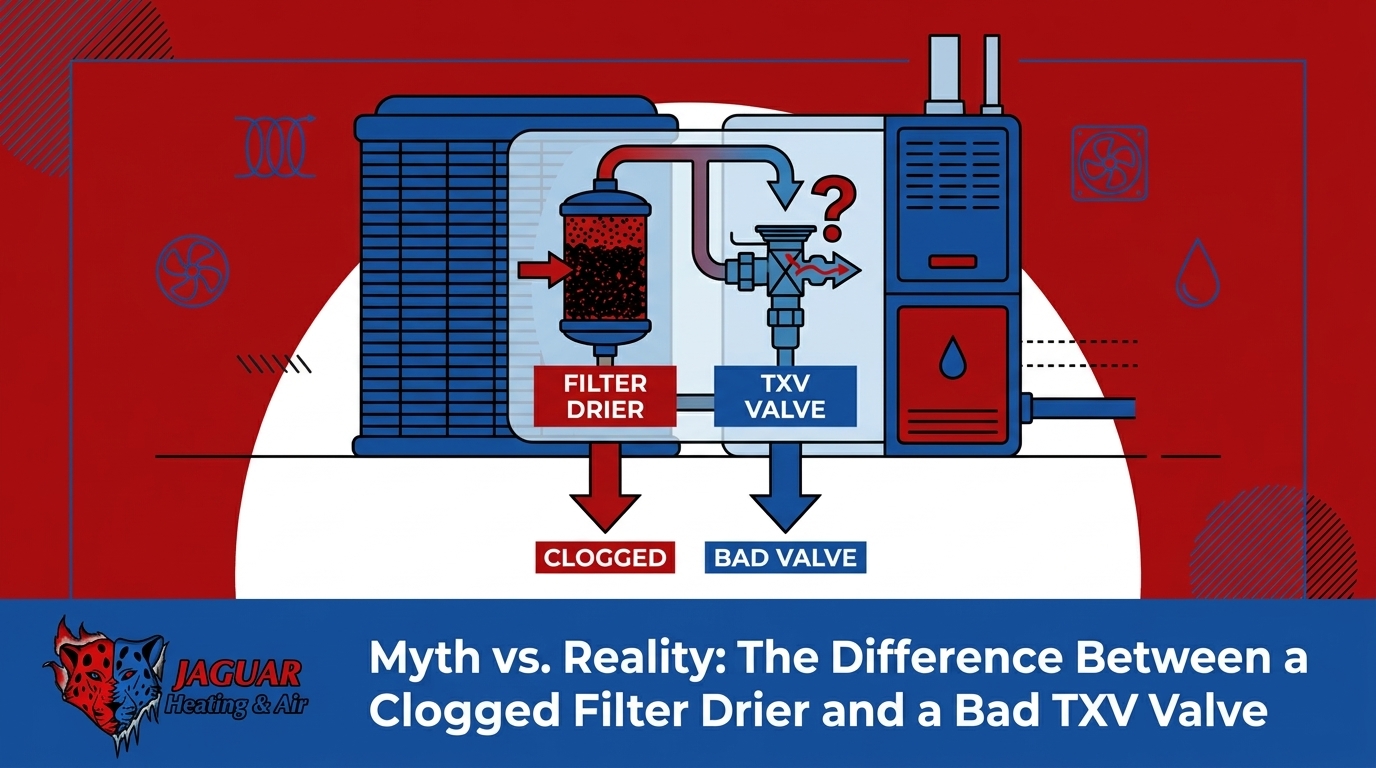
The Difference Between a Clogged Filter Drier and a Bad TXV Valve
An AC that blows warm air isn't always leaking refrigerant—it might be suffering from a flow restriction. Find out how technicians trace the bottleneck to restore your cooling.
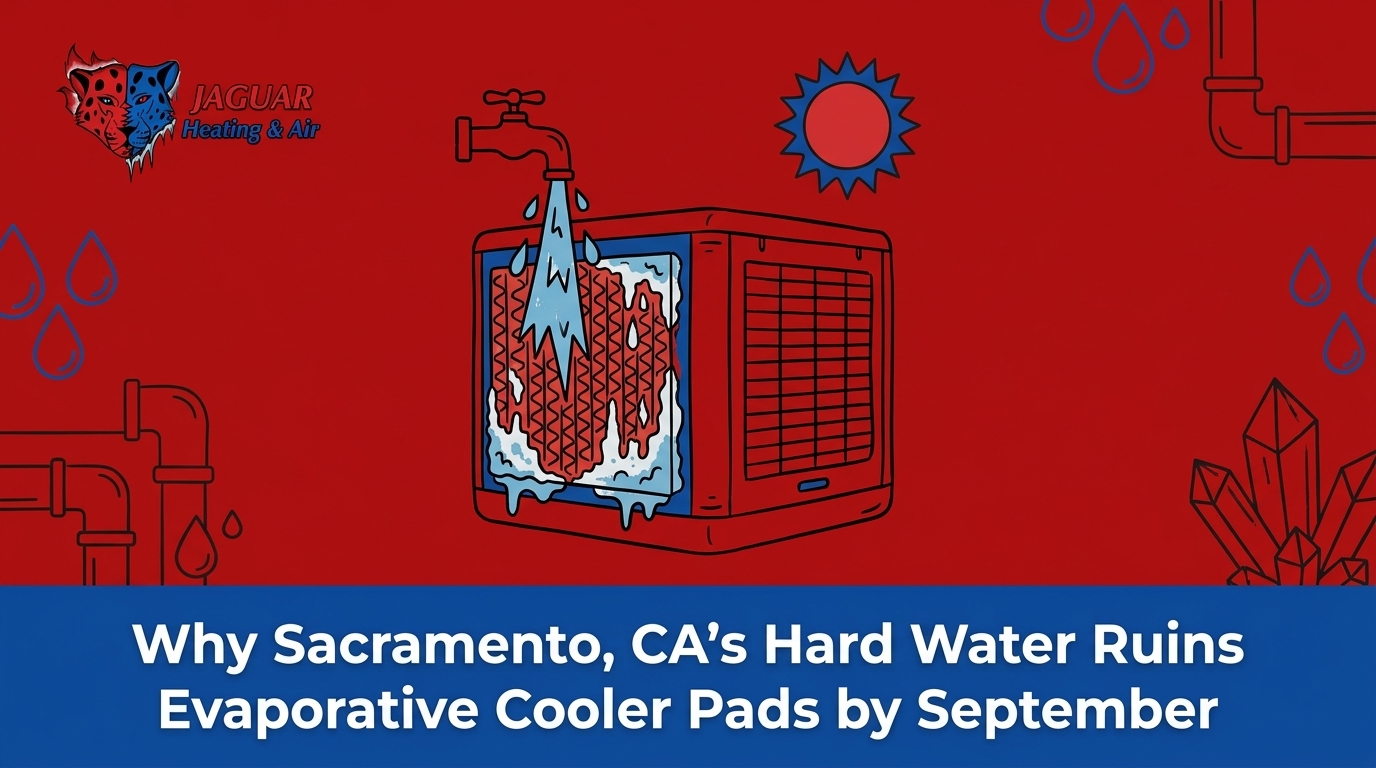
How Sacramento's Hard Water Affects Your Evaporative Cooler Pads
By September, Sacramento's heavy mineral content often turns swamp cooler pads into rock-hard blocks. See why airflow drops drastically and weigh your end-of-season options.
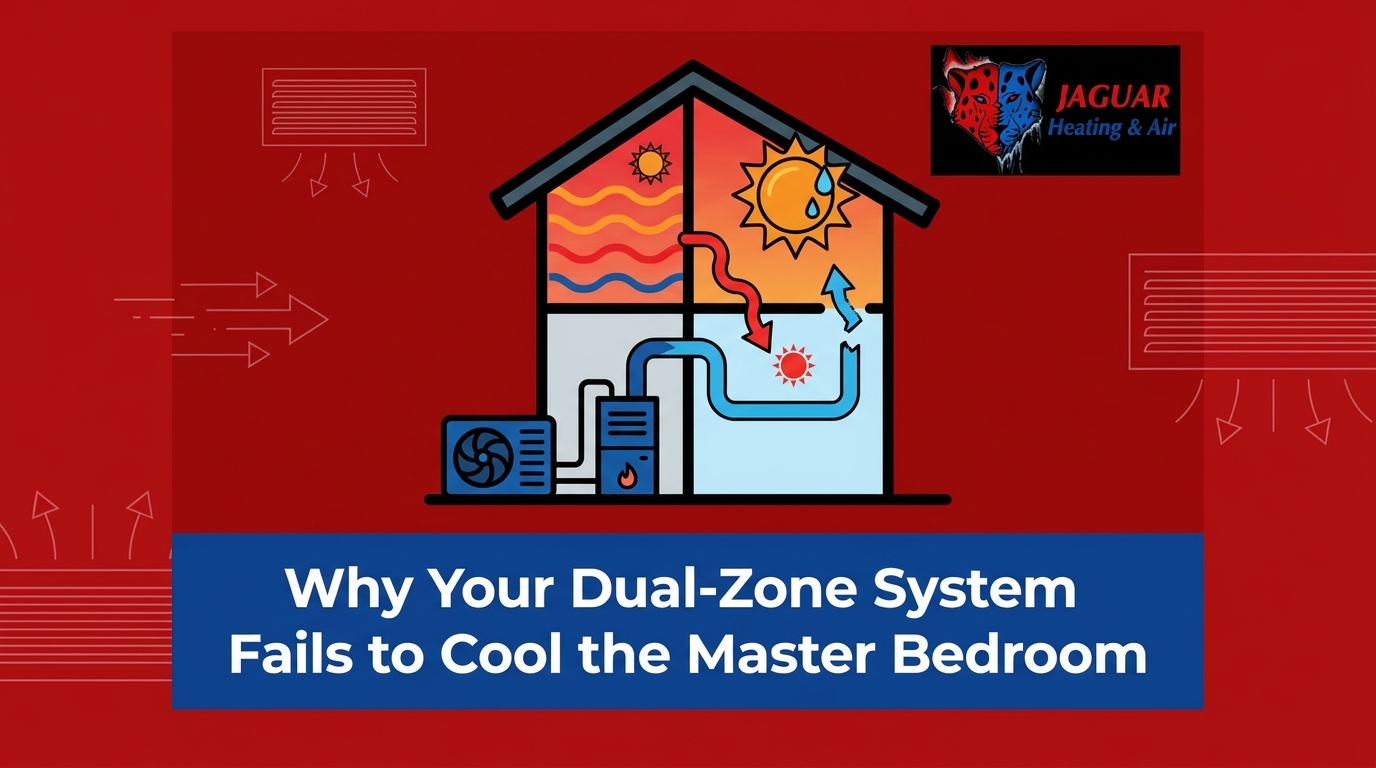
Why Your Dual-Zone System Fails to Cool the Master Bedroom
Persistent temperature imbalances in your master suite are rarely a main AC capacity issue. Discover how stuck motorized zone dampers disrupt airflow and why a pre-season diagnostic is crucial.