HVAC Maintenance Troubleshooting: Decoding the First Fall Heating Startup
Smelling burning dust during your fall startup? Why we rely on key home maintenance tips and troubleshooting to check your system. See what is safe.
Smelling burning dust during your fall startup? Why we rely on key home maintenance tips and troubleshooting to check your system. See what is safe.

The Chilly Morning Shock: Investigating That Sudden Burning Dust Smell
When homeowners ask our Jaguar Heating & Air team for reliable home maintenance tips and troubleshooting, we always warn them that the first chilly morning of the season often brings unexpected challenges. You switch your thermostat from cooling to heating, the blower engages, and instead of cozy warmth, your vents blast an alarming scent of burning dust through the house. After months of system inactivity, this sudden sensory shock can make any homeowner nervous about running their equipment.
If you are experiencing this during your mid-fall October startup, you are facing a common decision point: determining whether your system is experiencing harmless seasonal burn-off or a hazardous malfunction. The good news is that proper evaluation can quickly identify when your system is safe to operate and when you need professional HVAC services. By understanding the normal behaviors of your heating equipment, you can navigate this seasonal transition with confidence.
Why Summer Inactivity Leads to Fall Startup Odors
The underlying problem: Your heating components, including heat exchangers and heating elements, sit completely dormant for months during the cooling season. While your air conditioner works hard to keep your home comfortable, the heating side of your system remains untouched in the dark, gathering particulate matter.
The cause: The physics of dust accumulation are straightforward. As air circulates through your home, microscopic dust particles, pet dander, and airborne debris settle on the idle heating elements. When you finally ignite the system for the first time, these accumulated particulates are rapidly incinerated by the high heat. This incineration creates a distinct, temporary odor that travels through your ductwork and into your living spaces.
The solution: Understanding this process is the first step in alleviating panic. The burn-off process is a natural result of transitioning from heavy summer cooling demands to the necessity of preparing the heating side of the system. While you may have been diligent with your AC maintenance over the summer, the heating components still require their own period of adjustment.
The Role of Dry Climates in Dust Accumulation
In our years of serving the Sacramento Valley, our technicians have seen firsthand how the intensely long, dry, and dusty summer climate leads to heavier-than-average particulate accumulation on HVAC components. Dry air naturally increases the volume of airborne particulates in your home. Over a long summer, these fine particles can easily bypass minor filter gaps, settling thickly onto internal heating components. This regional factor makes the initial burn-off smell much more pronounced than it might be in more humid environments.
Decoding HVAC Smells: Harmless Dust vs. Safety Hazards
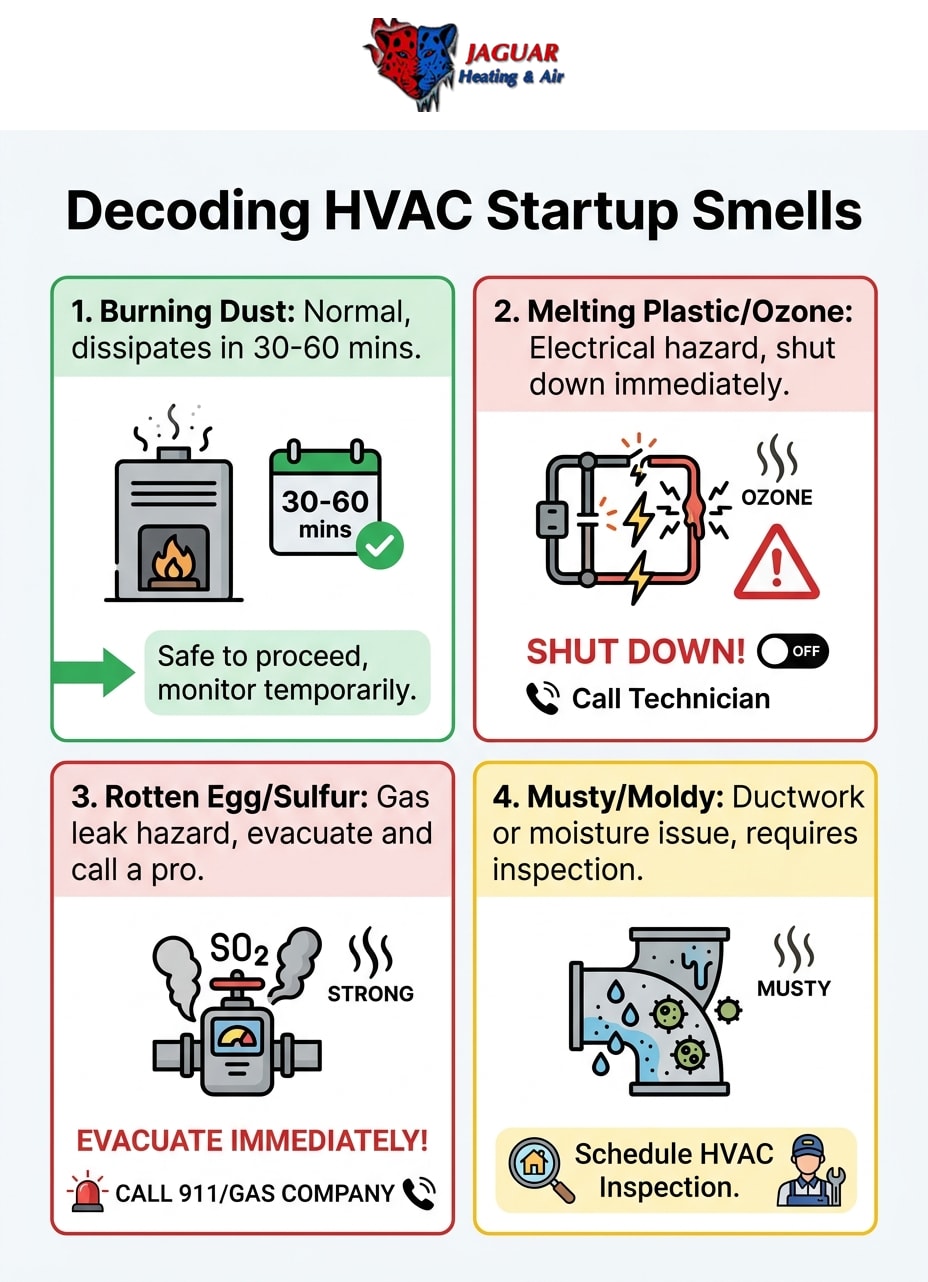
Providing clear sensory boundaries is critical for distinguishing between normal seasonal behavior and dangerous situations. During a mid-fall October startup, your nose is often your best diagnostic tool. You need to know exactly what a normal system smells like versus what indicates a serious mechanical or electrical failure.
• Warm, dusty radiator — Likely Cause: Normal seasonal dust burn-off — Required Action: Monitor; should dissipate in 30 to 60 minutes.
• Melting plastic or ozone — Likely Cause: Overheating electrical components or melting wire insulation — Required Action: Shut down system immediately and call a professional.
• Rotten eggs or sulfur — Likely Cause: Potential natural gas leak — Required Action: Evacuate home, leave doors open, call gas company and a technician.
• Musty or moldy — Likely Cause: Moisture buildup in ductwork or drain pans — Required Action: Schedule a system inspection and duct evaluation.
When to Shut Down the System Immediately
Always prioritize safety over comfort during the first seasonal transition. There are specific triggers that require immediate action. If you detect sulfur smells, see visible smoke coming from your vents, or notice persistent ozone odors that smell like an overheated electrical motor, do not wait to see if it improves.
Rule of Thumb: If an odor persists beyond the first hour of operation, or if it smells distinctly chemical or metallic, shut the heating system down at the thermostat and the breaker.
Auditory Troubleshooting: What Normal Operation Sounds Like
Just as smells provide clues about your system's health, sounds offer vital feedback during the first major heating cycle of the year. Evaluating the noises your HVAC system makes can help you identify underlying issues before they escalate into complete breakdowns. Here is what we tell our customers to listen for:
1. Normal startup sounds: A healthy system typically begins with a soft click from the thermostat, followed by a gentle whoosh of air as the blower motor engages. You should hear a steady, consistent rhythm without any harsh interruptions.
2. Problematic mechanical noises: Screeching, squealing, or grinding sounds are clear indicators of mechanical distress. These noises usually point to failing motor bearings, a loose blower belt, or unlubricated moving parts that have dried out over the summer.
3. Problematic combustion noises: If you hear a loud "boom" or a sharp bang upon startup, this is a serious issue known as delayed ignition. It means gas is pooling in the combustion chamber before igniting, which can crack the heat exchanger and create a severe safety hazard.
4. Short-cycling: Listen to the length of the heating cycle. If the system turns on, runs for a few minutes, and shuts off rapidly without actually heating the home, it points to severe airflow restrictions, dirty flame sensors, or an overheating safety switch tripping.
Understanding Ductwork Expansion
Every fall, our dispatchers field calls from worried Sacramento Valley homeowners who mistake harmless ductwork expansion for a mechanical failure. As hot air rushes into cold metal ducts for the first time in months, the metal rapidly expands. This causes harmless popping, pinging, or ticking sounds within your walls and ceilings. You can differentiate this normal duct expansion from mechanical system banging by noting where the sound originates; duct sounds happen throughout the house, while mechanical banging originates directly from the furnace or air handler unit.
Airflow and Thermostat Responsiveness During the Transition
Beyond smells and sounds, non-sensory troubleshooting is essential for evaluating system performance and control responsiveness during your mid-fall October startup. A system that sounds and smells fine can still fail to deliver comfort if the controls or airflow pathways are compromised. Use this checklist to verify your system's responsiveness:
• Check for weak airflow at the registers: Place your hand over the vents. Weak airflow often points directly to a clogged air filter that became heavily soiled from constant summer use. Replacing the filter is the easiest way to restore proper air volume.
• Verify thermostat settings: Ensure that the thermostat is explicitly set to "Heat" and that the fan is set to "Auto." Check that the ambient temperature reading matches the actual feel of the room.
• Evaluate thermostat programming: Outdated or incorrectly programmed thermostats can mimic total system failures simply by failing to trigger the heating cycle at the right times. If you have upgraded your controls, reviewing tips for using your smart thermostat efficiently can prevent frustrating scheduling conflicts.
• Check batteries and sensors: Wall units require fresh batteries to communicate effectively with the main system. Additionally, gently wiping dust away from the thermostat's internal sensors ensures it reads the room temperature accurately.
The Boundary Between Homeowner Checks and Professional Intervention
Establishing clear guidelines on what maintenance you can safely perform versus what requires a licensed technician is vital for your safety and the longevity of your equipment. While our team encourages proactive homeowner care, crossing the line into complex repairs can be dangerous.
Safe DIY tasks include replacing your indoor air filters every 30 to 90 days, ensuring that all supply and return vents are unblocked by rugs or furniture, and clearing fallen leaves and debris from around your outdoor heat pump units. These simple actions maintain proper airflow and reduce strain on the system.
Strict hands-off zones involve the internal mechanics of the equipment. You should never attempt opening sealed combustion chambers, handling highly pressurized refrigerant lines, or modifying electrical wiring. Tampering with these internal components can void your manufacturer warranties and create extreme safety hazards, including fire risks and carbon monoxide exposure.
The value of an honest, informative inspection cannot be overstated. A professional technician brings local expertise in knowing exactly what wear-and-tear patterns to look for after a harsh Sacramento Valley summer season. For example, one local homeowner recently called our team for a routine system check; a Jaguar Heating & Air technician performed a thorough inspection and provided informative details about the equipment's condition without pushing unnecessary sales. This kind of transparent assessment confirms your system's status and ensures you only pay for the HVAC maintenance in Sacramento that you actually need.
The Long-Term Value of Proactive Seasonal Tune-Ups
Moving from reactive troubleshooting to proactive, ongoing system care is the best way to protect your home comfort investment. Comprehensive pre-winter checks prepare your equipment to safely handle peak heating demands, especially after enduring months of intense summer operation.
Routine care directly extends the lifespan of your equipment and maintains its energy efficiency. When technicians clean burners, calibrate thermostats, and lubricate moving parts, the system uses less energy to heat your home, keeping utility bills manageable. Federal tax credits or local utility rebates may even apply to qualifying high-efficiency upgrades if your current system is failing. Furthermore, consistent care prevents the panic of unexpected mid-winter breakdowns when you need warmth the most.
We frequently see the benefits of this proactive approach. Just last season, another local customer reached out to us for morning service on a malfunctioning unit during a busy season. Our technician arrived promptly, diagnosed the underlying issue, and had the system fixed before noon. Satisfied with the quick resolution and clear explanation, the customer immediately signed up for a servicing plan. Enrolling in an HVAC maintenance membership provides the ultimate convenience and peace of mind, ensuring your mid-fall October startup goes smoothly year after year with comprehensive checks tailored to your system's specific needs.
Frequently Asked Questions About Fall Heating Transitions
Why does my heater smell like burning dust when I turn it on?
Your heater smells like burning dust because dust and debris settle on the internal heating elements while the system sits idle during the summer. When the furnace is turned on for the first time in the fall, those high temperatures incinerate the accumulated particles. This creates a distinct, temporary burning odor that circulates through your ductwork. It is a normal part of the seasonal transition.
How long does the heater burning smell last?
The normal burning dust smell typically lasts between 30 to 60 minutes during the first heating cycle of the season. Once the initial layer of settled dust is burned away, the odor should dissipate entirely. If the smell continues for several hours or returns during subsequent cycles, it may indicate a deeper issue requiring professional inspection.
Is it normal for a heater to smell when first turned on?
Yes, it is completely normal for a heater to emit a dusty, warm odor when first turned on after months of inactivity. However, it is not normal if the heater smells like melting plastic, electrical ozone, or rotten eggs. Knowing the difference between harmless dust burn-off and chemical or gas odors is essential for household safety.
Why is my heater short cycling in the fall?
Short cycling often occurs in the fall due to severely clogged air filters that restrict airflow and cause the system's internal safety limits to trip. It can also be caused by a dirty flame sensor that fails to detect combustion, shutting the system down prematurely as a safety precaution. Checking your filter is the first step; if the issue persists, a technician needs to evaluate the sensors.
When should I call a professional for HVAC smells?
You should call a professional immediately if you smell sulfur (rotten eggs), melting wire insulation, or ozone, as these indicate severe gas or electrical hazards. You should also contact a technician if the standard burning dust smell persists longer than an hour or is accompanied by visible smoke. Never ignore odors that make you feel physically ill or cause headaches.
Can a dirty air filter cause a burning smell in my house?
Yes, a heavily soiled air filter can cause a burning smell by severely restricting airflow, which forces the blower motor to overwork and overheat. Additionally, if the filter is completely clogged, excess dust can bypass the filter entirely and settle directly onto the heat exchanger, worsening the standard burn-off odor. Replacing the filter before the first heating cycle greatly reduces these issues.
Ensure a Safe Winter with Reliable Heating Support
As you apply these home maintenance tips and troubleshooting strategies, remember that while a little dust burn-off is completely normal, persistent chemical smells or loud grinding noises are not. Navigating the first cold morning in the Sacramento Valley doesn't have to be a stressful experience when you know exactly what to look and listen for. Prioritize your family's safety and peace of mind as the cold weather sets in. If your system is exhibiting unusual symptoms or you simply want the reassurance of a professional evaluation, connect with our local experts at Jaguar Heating & Air for a thorough pre-winter system check.
Recent Posts
Decoding the October Heating Startup Smell: A Safety Approach to HVAC Maintenance
Is that October heating smell normal dust or a hazard? Get clear answers using our local service expertise and area tips to keep your Sacramento home safe.
Navigating Heating Replacements in Sacramento: Heat Pumps vs. Gas Furnaces
Deciding between a heat pump and gas furnace? Review heating options comparisons for homeowners to make the right choice before winter. Compare your options.

Is a Burning Smell Normal During Fall Heating Startup? HVAC Maintenance FAQs Answered
Get clear answers on why your furnace smells like burning dust. We have common homeowner questions answered so you know when to wait and when to call a pro.