.avif)
The Impact of Sacramento Valley Dust on Your Condenser Fan Motor
Late-summer agricultural dust can coat your outdoor AC blades, causing severe imbalance. Recognize the early warning signs of a struggling motor before it burns out during peak August heat.
Late-summer agricultural dust can coat your outdoor AC blades, causing severe imbalance. Recognize the early warning signs of a struggling motor before it burns out during peak August heat.

The Hidden Threat of Late-Summer Dust to Your Cooling Equipment
It is a dry, dusty August, and the impact of Sacramento Valley dust on your condenser fan motor is likely the last thing on your mind as your outdoor unit runs non-stop to keep your home cool. By the time late summer arrives, your cooling equipment has already logged hundreds of hours of intense operation. In our years of providing cooling solutions throughout the area, our team at Jaguar Heating & Air often sees homeowners quick to blame old age, manufacturing defects, or sudden electrical power surges when their air conditioner suddenly stops working. However, we've found that environmental buildup is actually one of the leading culprits behind unexpected system failures.
If you are concerned about how this seasonal buildup affects your air conditioning system, understanding the mechanics of your outdoor unit can save you from a total breakdown. The specific component at the highest risk during these late-summer months is the condenser fan motor. This motor sits at the top of your outdoor unit, driving the large fan blades that pull heat out of the compressor and expel it into the air. When this component is compromised, the entire cooling cycle grinds to a halt.
The critical decision point: Recognizing the subtle, early signs of a struggling condenser fan motor before it completely burns out. Catching the strain early means the difference between a simple maintenance visit and a costly motor replacement during peak heat. When you know what to look for, you can protect your equipment from the harsh environmental realities of the season.
The Physics of Rotational Imbalance on Condenser Fan Blades
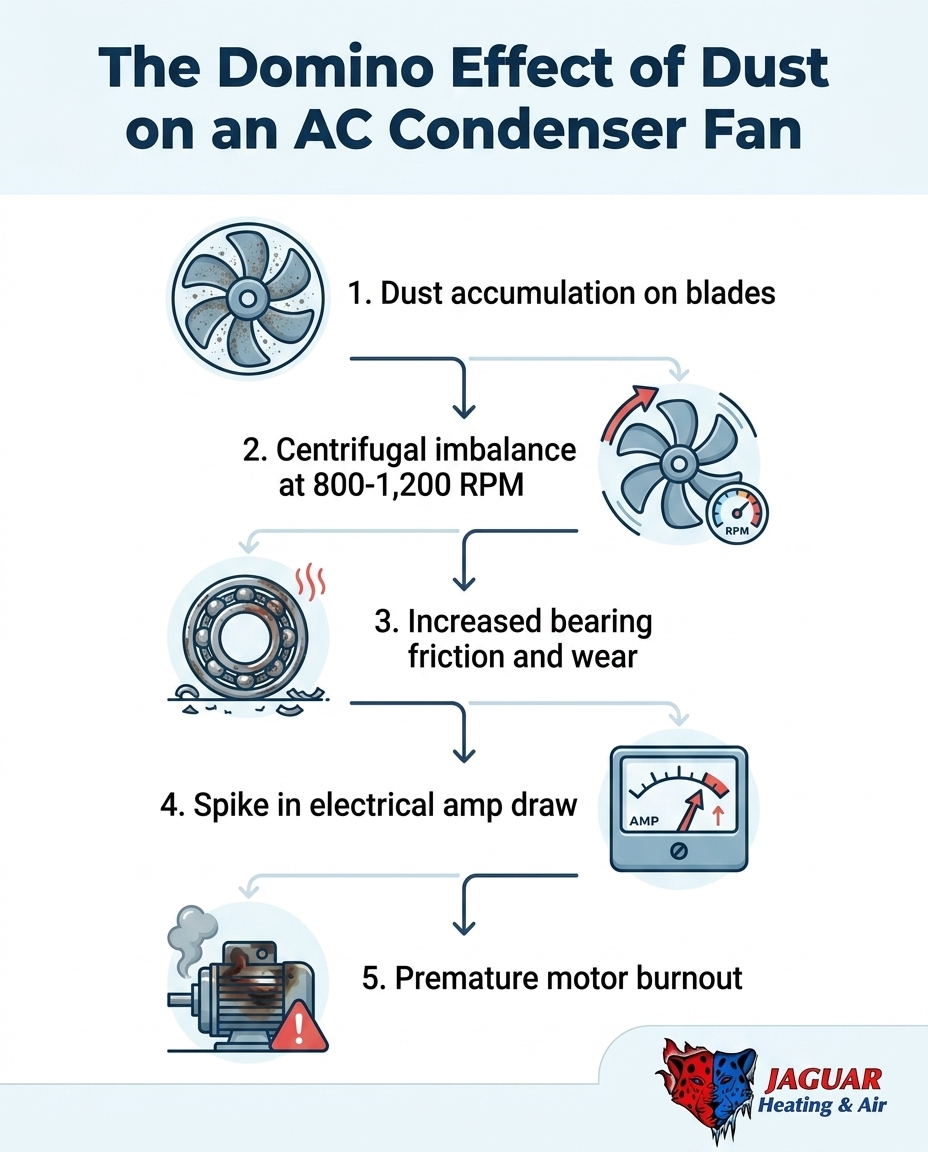
To understand why environmental debris is so destructive, we have to look at the mechanical physics of how your outdoor unit operates. A healthy condenser fan motor typically spins at incredibly high speeds, usually ranging from 800 to 1,200 revolutions per minute (RPM). At these speeds, precision is everything. The fan blades are carefully pitched and weighted at the factory to ensure a perfectly smooth, balanced rotation.
The Centrifugal Domino Effect
When even a few ounces of unevenly distributed dust accumulate on these blades, it creates a significant centrifugal imbalance. Think of a ceiling fan that wobbles violently because one blade is slightly heavier than the others. Now multiply that rotational speed by ten. As the unbalanced condenser blades spin, they generate an intense lateral force that pulls against the central motor shaft.
This constant, aggressive wobbling causes severe strain on the motor's internal bearings. The bearings are designed to support smooth rotational movement, not violent side-to-side jerking. As the bearing sleeves wear down from the friction, the motor faces higher mechanical resistance. To overcome this physical resistance and maintain its required RPM, the motor is forced to pull more electrical current.
The Path to Motor Burnout
This spike in electrical draw, known as high amperage, is where the real danger lies. The electrical components inside the motor begin to overheat as they process more current than they were designed to handle. If the system continues to run in this unbalanced, high-amperage state, the continuous thermal strain leads directly to premature motor burnout. Addressing this mechanical strain early is a vital part of effective AC repair in Sacramento, preventing a minor balancing issue from escalating into a catastrophic electrical failure.
Why the Local Climate Accelerates Outdoor Unit Wear
The mechanical physics of an unbalanced fan motor apply anywhere, but our technicians know firsthand that the specific geography and climate of the Sacramento Valley create a perfect storm for accelerated outdoor unit wear. The topography of the region acts as a natural basin, trapping airborne particulate matter closer to the ground where your HVAC equipment sits.
The Agricultural Dust Factor
During the late summer, the combination of dry agricultural fields, active harvesting operations, and the prevailing Delta breezes drastically increases the volume of airborne dust. This isn't just standard backyard dirt; it is an ultra-fine, highly concentrated agricultural dust that easily bypasses standard unit guards and settles directly onto the fan blades.
The Cement Effect
The real damage occurs during the transition from night to day. As temperatures drop overnight, morning condensation forms on the metal surfaces of your outdoor unit, including the fan blades. When the morning winds pick up, that ultra-fine Sacramento Valley dust blows onto the wet blades. As the sun rises and bakes the unit, the mixture of water and fine particulate matter hardens, caking onto the blades like cement.
Unlike generic, loose dirt found in less dusty climates, this hardened layer cannot simply blow off when the fan starts spinning. It clings stubbornly to the leading edges of the blades, building up layer by layer over the course of the summer. This unique mixture of late-summer agricultural dust and dry heat means that equipment in our region requires a much more vigilant approach to maintenance than systems located in milder, less dusty environments.
Early Warning Signs of Condenser Motor Strain
Because a dry, dusty August takes such a heavy toll on moving parts, knowing what to look and listen for is your best defense against a sudden breakdown. A failing condenser fan motor rarely dies in silence; it usually provides several clear warning signs before the electrical components completely overheat and fail.
Here are the primary symptoms that indicate your outdoor fan motor is struggling under an unbalanced load:
• Auditory cues: Listen for excessive humming, a harsh grinding sound, or a loud rattling noise coming from the top of the outdoor unit. A healthy fan should produce a smooth, consistent whooshing sound of rushing air.
• Physical cues: Look for visible shaking or severe vibration of the entire condenser cabinet while the system is running. If the metal housing is rattling against its own screws, the fan blades are out of balance.
• Behavioral cues: Watch the fan when the system kicks on. If the blades struggle to start, spin noticeably slower than usual, or if the system frequently trips your circuit breakers due to a high amp draw, the motor is actively failing.
It is also helpful to contrast these outdoor symptoms with indoor air handler issues so you can accurately report the problem to our technicians. For instance, if your outdoor unit is quiet but your indoor vents are roaring, the issue is inside. Just recently, our Jaguar Heating & Air team responded to a Friday night call where a local homeowner experienced a blower fan failure; we arrived the very next morning and repaired the indoor AC blower fan within 20 minutes. If your indoor airflow is loud and you suspect the AC blower motor sounds like a jet engine, the diagnostic approach will be entirely different than fixing an outdoor condenser fan.
The Critical Difference Between Coil Cleaning and Fan Balancing
A common misconception among homeowners is that spraying down the outside of the AC unit solves all environmental buildup problems. While many people know to gently hose off their condenser coils to improve airflow and heat transfer efficiency, this basic cleaning does not address the mechanical strain happening above the coils.
Cleaning the aluminum coil fins helps the system breathe, but it does absolutely nothing to resolve the hardened, cemented weight imbalance on the fan blades attached to the motor. These are two entirely different maintenance tasks requiring different approaches.
• Coil Cleaning — Primary Goal: Remove debris from aluminum fins — Impact on System: Restores airflow and heat transfer efficiency
• Fan Blade Balancing — Primary Goal: Remove hardened dust from blade edges — Impact on System: Prevents bearing wear and motor burnout
The danger of DIY repairs: You should never attempt to clean or balance the fan blades yourself. Accessing the condenser fan motor requires removing the top grille, which exposes you to high-voltage electrical capacitors that hold a lethal charge even when the power is turned off. Furthermore, the pitch of the fan blades is incredibly delicate. Bending a blade even a fraction of an inch while trying to scrub it will create a permanent mechanical imbalance that is worse than the dust buildup itself.
This is where Jaguar Heating & Air's deep local diagnostic experience makes a difference. Our technicians look well beyond basic filter changes and coil rinses. We utilize specialized diagnostic multimeters to measure the exact electrical amp draw of the motor and verify the structural health of the bearings, identifying hidden mechanical strains specific to the Sacramento Valley climate before they cause a failure.
Professional Interventions to Save Your Cooling System
When an outdoor unit has been compromised by heavy environmental dust, a professional intervention is necessary to safely restore the system's balance. A specialized tune-up for a dust-coated unit goes far beyond a visual inspection. Properly mitigating this damage involves a strict sequence of mechanical and electrical verifications.
Here is what a professional intervention entails for a dust-compromised condenser unit:
1. Precision Blade Cleaning: The technician safely isolates the high-voltage electrical components, removes the fan assembly, and meticulously cleans the hardened dust off each blade without altering the factory pitch or bending the metal.
2. Electrical Amp Draw Verification: Using a specialized multimeter, the technician measures the electrical current the motor pulls while running. This data confirms whether the motor is operating within its safe factory specifications or if the internal wiring has already sustained heat damage.
3. Bearing and Component Inspection: The technician manually checks the motor shaft for excessive play or grinding, verifying that the internal bearings still have adequate lubrication and structural integrity.
4. System Rebalancing: Once cleaned and verified, the assembly is reinstalled and tested to ensure the violent vibrations and rattling noises have been eliminated, restoring smooth, quiet operation.
Catching this imbalance early can save you the significant cost and hassle of a complete motor replacement. For example, our team recently assisted a property owner whose AC went out at a rental property during the back-to-school late-summer heat. We diagnosed the problem, explained the mechanical failure thoroughly, and fixed the unit at a reasonable price, offering preventive maintenance advice to stop the failure from repeating. Securing routine AC maintenance provides the long-term benefit of extending the lifespan of the entire condenser unit, giving you peace of mind that the system can handle the remaining weeks of intense heat in a dry, dusty August.
Protect Your Cooling System Through the End of Summer
Proactive care is always your best defense against the heavy environmental wear and tear native to the Sacramento Valley. While you cannot control the agricultural dust, the harvest schedules, or the Delta breezes, you can control how prepared your equipment is to handle them.
The key is to act on the early warning signs—rattling, humming, or excessive vibration—before a minor rotational imbalance becomes a major electrical breakdown. Don't wait for the fan motor to stop spinning completely. By scheduling a professional evaluation at the first sign of trouble, you protect your investment and ensure your home stays comfortable. For ongoing protection and priority service, consider enrolling in an HVAC maintenance membership. Regular, structured care guarantees that a qualified professional from our team is keeping an eye on your equipment, catching local dust buildup before it has the chance to destroy your condenser fan motor.
Frequently Asked Questions
Can dust cause an AC fan motor to burn out?
Yes, excessive dust can absolutely cause an AC fan motor to burn out. When fine dirt and debris cake unevenly onto the fan blades, it throws the heavy blades out of balance. This imbalance forces the motor to work much harder to maintain its speed, leading to severe bearing strain. Over time, the motor draws too much electrical current to overcome this resistance, causing the internal components to overheat and fail entirely.
Why is my outside AC unit vibrating so much?
Severe vibration in an outside AC unit is usually caused by an unbalanced condenser fan blade. This imbalance can occur from heavy, uneven dirt buildup, a bent fan blade, or worn-out motor bearings that allow the central shaft to wobble. If the entire metal cabinet is shaking or rattling loudly, the unit should be turned off immediately to prevent further mechanical damage to the motor and the surrounding refrigerant lines.
What does a failing condenser fan motor sound like?
A failing condenser fan motor typically produces a loud buzzing, humming, or grinding sound. If the internal bearings are wearing out, you might hear a harsh metal-on-metal screeching noise when the fan first starts up. Alternatively, if the motor is receiving power but cannot overcome the physical resistance to spin, it will emit a loud, continuous electrical hum until the internal safety switch trips or the breaker shuts it down.
What happens if the AC condenser fan is dirty?
If the AC condenser fan is dirty, the system suffers from both reduced efficiency and increased mechanical wear. A light layer of dust on the coils restricts the airflow needed to cool the hot refrigerant, forcing the compressor to run longer cycles. When that dirt hardens onto the fan blades themselves, it creates a centrifugal imbalance that drastically shortens the lifespan of the fan motor due to excessive vibration and heat.
How often should homeowners in agricultural areas schedule outdoor AC maintenance?
Homeowners in dusty, agricultural areas should schedule outdoor AC maintenance at least twice a year. The combination of dry fields, harvesting activities, and high winds creates a much heavier particulate load than standard urban environments. A pre-season check ensures the system is clean before the heat hits, while a late-summer inspection catches the heavy dust buildup that accumulates during the most demanding months of the year.
Recent Posts
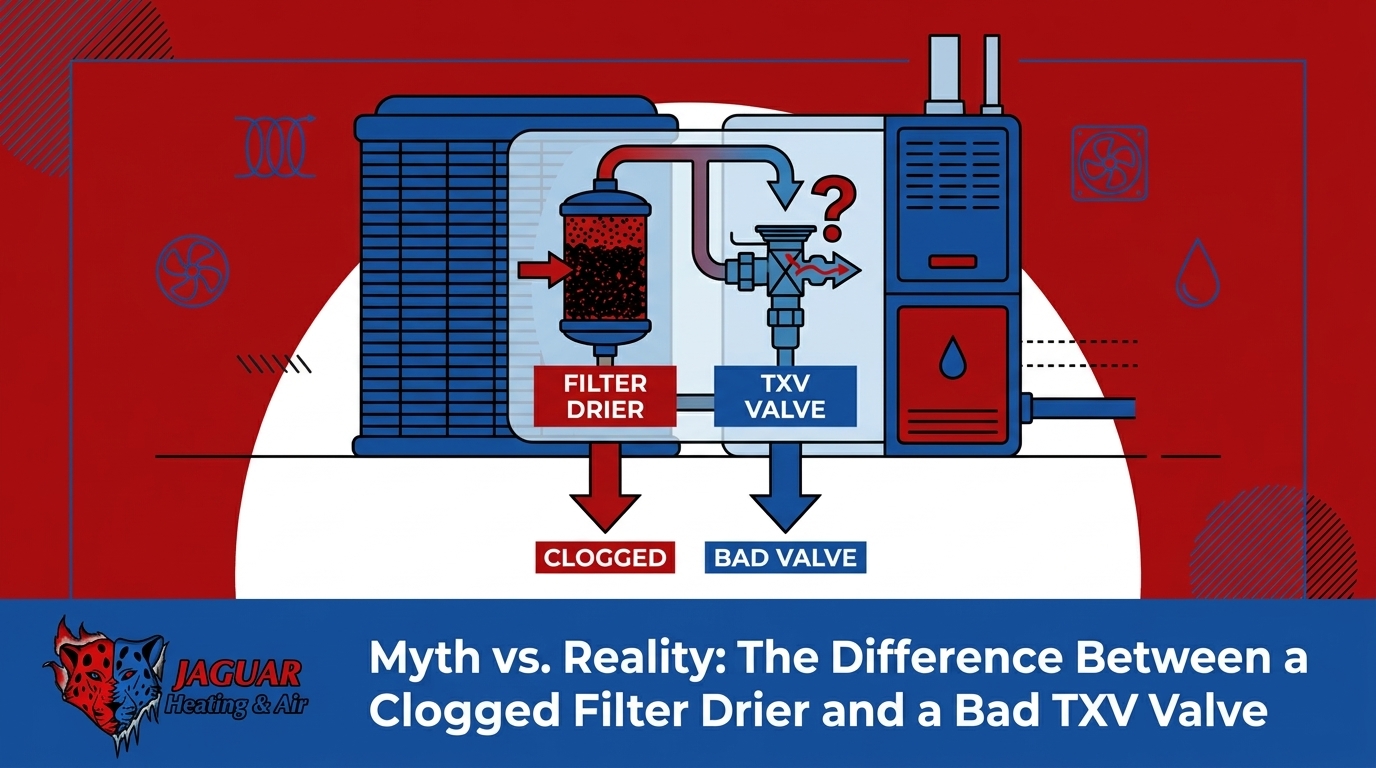
The Difference Between a Clogged Filter Drier and a Bad TXV Valve
An AC that blows warm air isn't always leaking refrigerant—it might be suffering from a flow restriction. Find out how technicians trace the bottleneck to restore your cooling.

How Sacramento's Hard Water Affects Your Evaporative Cooler Pads
By September, Sacramento's heavy mineral content often turns swamp cooler pads into rock-hard blocks. See why airflow drops drastically and weigh your end-of-season options.
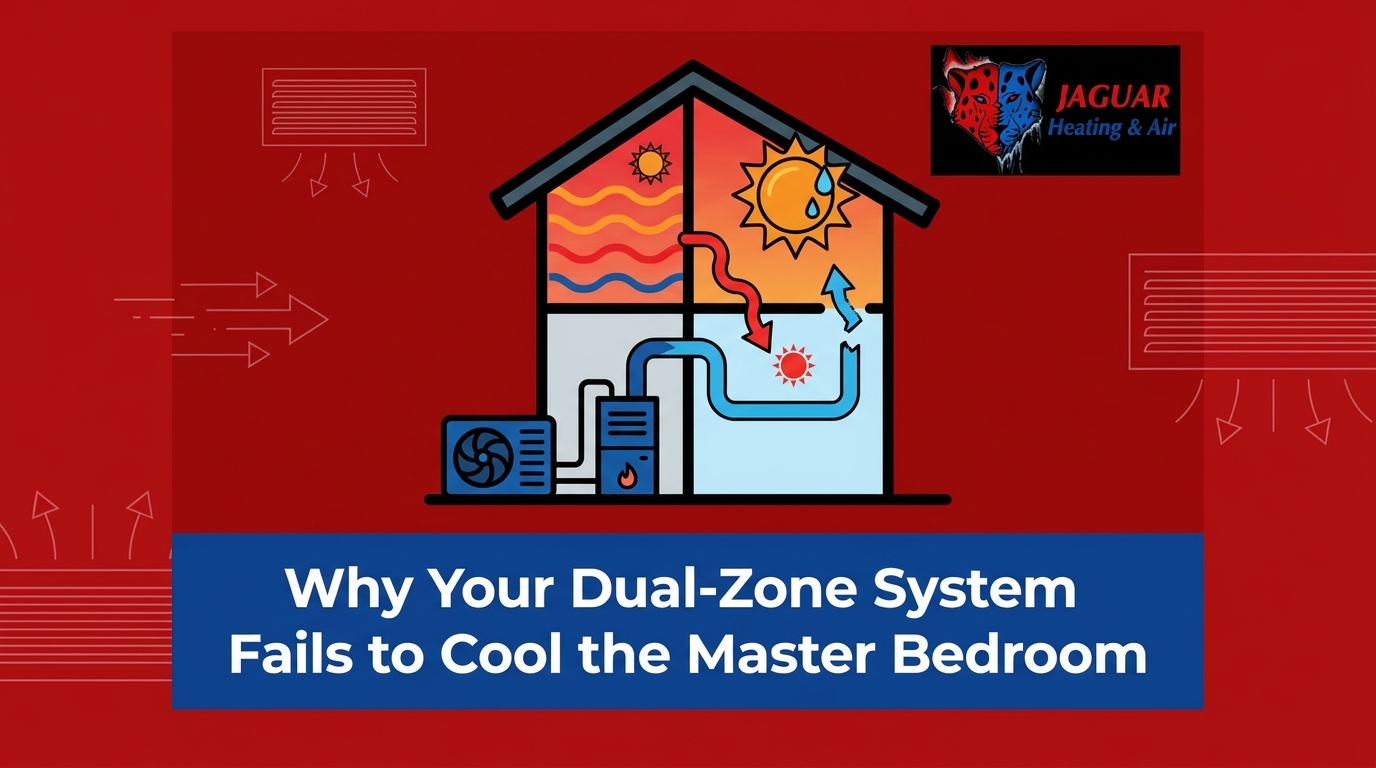
Why Your Dual-Zone System Fails to Cool the Master Bedroom
Persistent temperature imbalances in your master suite are rarely a main AC capacity issue. Discover how stuck motorized zone dampers disrupt airflow and why a pre-season diagnostic is crucial.