.avif)
The Great HVAC Efficiency Debate
Compare standard efficiency vs high efficiency HVAC: SEER2, AFUE, HSPF2 ratings, 2026 standards, savings & comfort for Sacramento homes.
Compare standard efficiency vs high efficiency HVAC: SEER2, AFUE, HSPF2 ratings, 2026 standards, savings & comfort for Sacramento homes.

Why the Standard Efficiency vs High Efficiency HVAC Comparison Matters for Your Home
The standard efficiency vs high efficiency hvac comparison is one of the most important decisions Sacramento homeowners face when replacing or upgrading their home comfort system. Get it right and you could save hundreds of dollars a year on energy bills. Get it wrong and you could pay more upfront than you ever recover.
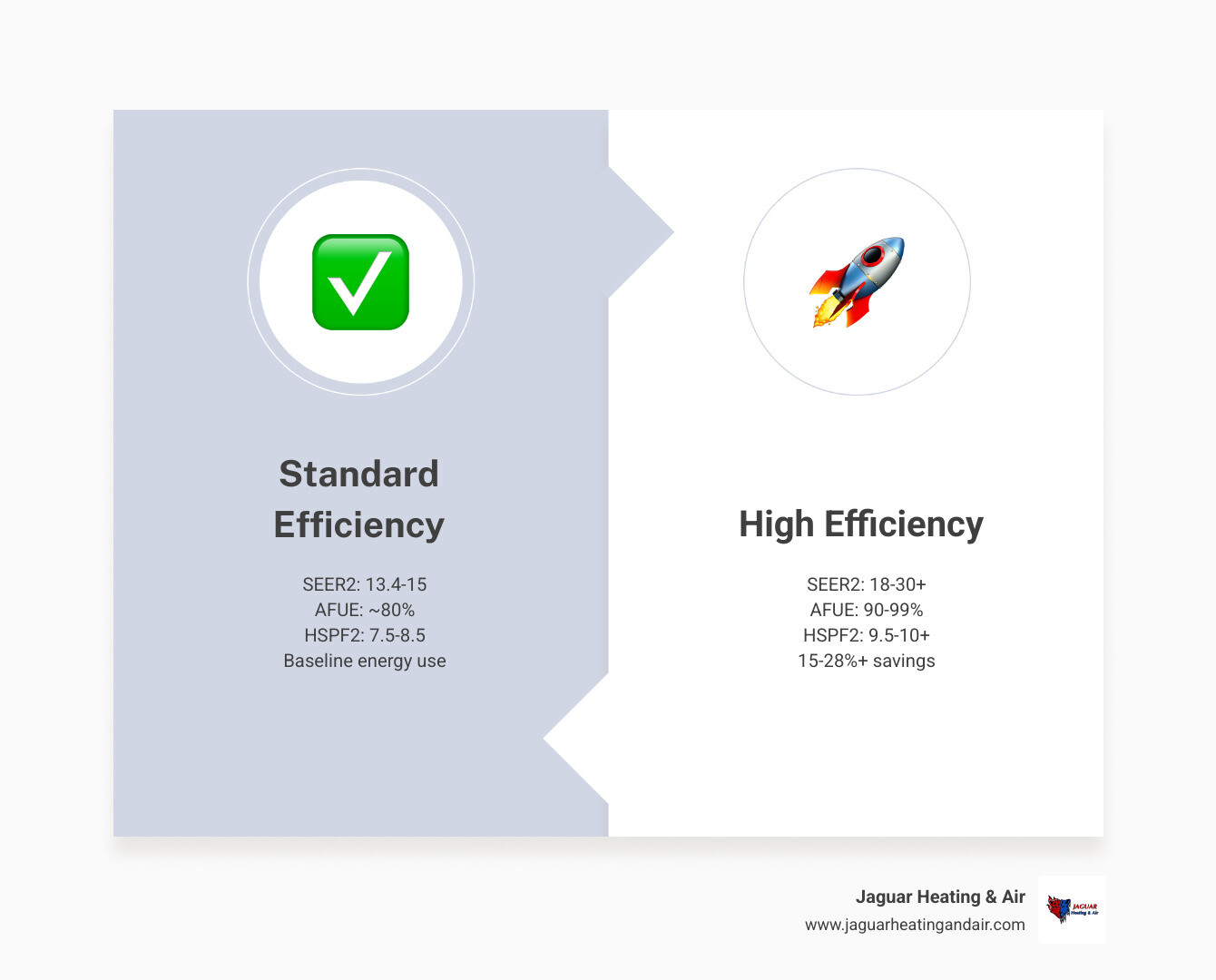
Here's a quick breakdown of the key differences:
| Feature | Standard Efficiency | High Efficiency |
|---|---|---|
| Cooling (SEER2) | 13.4-15 SEER2 | 18-30+ SEER2 |
| Furnace (AFUE) | ~80% AFUE | 90-99% AFUE |
| Heat Pump (HSPF2) | 7.5-8.5 HSPF2 | 9.5-10+ HSPF2 |
| Typical Energy Savings | Baseline | 15-28%+ vs. standard |
| Upfront Cost | Lower | Higher |
| Best For | Mild climates, tight budgets, short-term stays | Hot climates, high energy costs, long-term ownership |
Your HVAC system accounts for roughly half of your home's total energy use. In the Sacramento area, where summers push temperatures well past 100°F for weeks at a time, the system you choose has a real and lasting impact on both your comfort and your monthly utility bill.
In 2026, federal minimum efficiency standards have tightened. Every new air conditioner sold in the country must meet at least a 13.4 SEER2 rating, and California's own energy codes push that bar even higher. That means even "standard" systems today are more efficient than what many homeowners currently have running in their homes — and high-efficiency options have never been more capable.
This guide walks you through what separates these two categories, how each performs in the Sacramento climate, and how to figure out which one actually makes sense for your home.
Understanding the Metrics: SEER2, AFUE, and HSPF2
When we sit down with families in Elk Grove or Roseville to discuss a new system, we often see eyes glaze over when the acronyms start flying. It’s like an alphabet soup of efficiency. However, understanding these numbers is the only way to perform a real standard efficiency vs high efficiency hvac comparison.
As of April 2026, the industry has fully transitioned to the "2" series of metrics. These are more rigorous than the old ratings because they account for the external static pressure of a home's ductwork, making the numbers much more realistic for your actual living room rather than a sterile laboratory.
| Metric | What It Measures | Standard (2026) | High-Efficiency |
|---|---|---|---|
| SEER2 | Seasonal Energy Efficiency Ratio (Cooling) | 13.4 - 14.3 | 18 - 30+ |
| AFUE | Annual Fuel Utilization Efficiency (Heating) | 80% | 95% - 99% |
| HSPF2 | Heating Seasonal Performance Factor (Heat Pumps) | 7.5 | 9.5 - 12+ |
One thing we always emphasize is that AC Sizing Matter Sacramento CA. You can buy the most efficient unit on the planet, but if it’s sized incorrectly for your square footage, those efficiency ratings go right out the window.
Standard Efficiency vs High Efficiency HVAC Comparison: Cooling Ratings
In our neck of the woods, cooling is king. SEER2 measures how much cooling a system puts out for every unit of electricity it consumes. Think of it like the "miles per gallon" for your air conditioner.
The federal minimum for the North is 13.4 SEER2, but in the Southwest (which includes California), split-system air conditioners must meet a higher bar, typically between 13.8 and 14.3 SEER2 depending on the system's capacity.
A high-efficiency unit—something in the 18 to 20+ SEER2 range—uses significantly less electricity to achieve the same temperature. In fact, an 18 SEER2 unit uses approximately 28% less electricity than a 14 SEER2 model. If you’re tired of those "sticker shock" utility bills in August, these ratings are where you should look first. We also recommend checking out these Tips Boost HVAC Efficiency to ensure your high-SEER unit isn't working harder than it has to.
Heating Efficiency and Fuel Utilization
While Sacramento isn't exactly the Arctic, we still need reliable heat during those damp winter nights in Folsom and Citrus Heights. This is where AFUE comes in. AFUE is a percentage that tells you how much of the fuel you pay for actually turns into heat for your home versus how much escapes up the flue.
A standard efficiency furnace (80% AFUE) wastes 20% of its energy. Essentially, for every dollar you spend on gas, 20 cents is just floating away into the atmosphere. High-efficiency furnaces, often called "condensing furnaces," reach 95% to 99% AFUE. They are so efficient they barely lose any heat at all. When you look at the HVAC Features Looking Today, you'll see that modern heat pumps are also a massive part of this conversation, often reducing energy use by up to 50% compared to traditional electric heating.
Technical Differences and Comfort Features
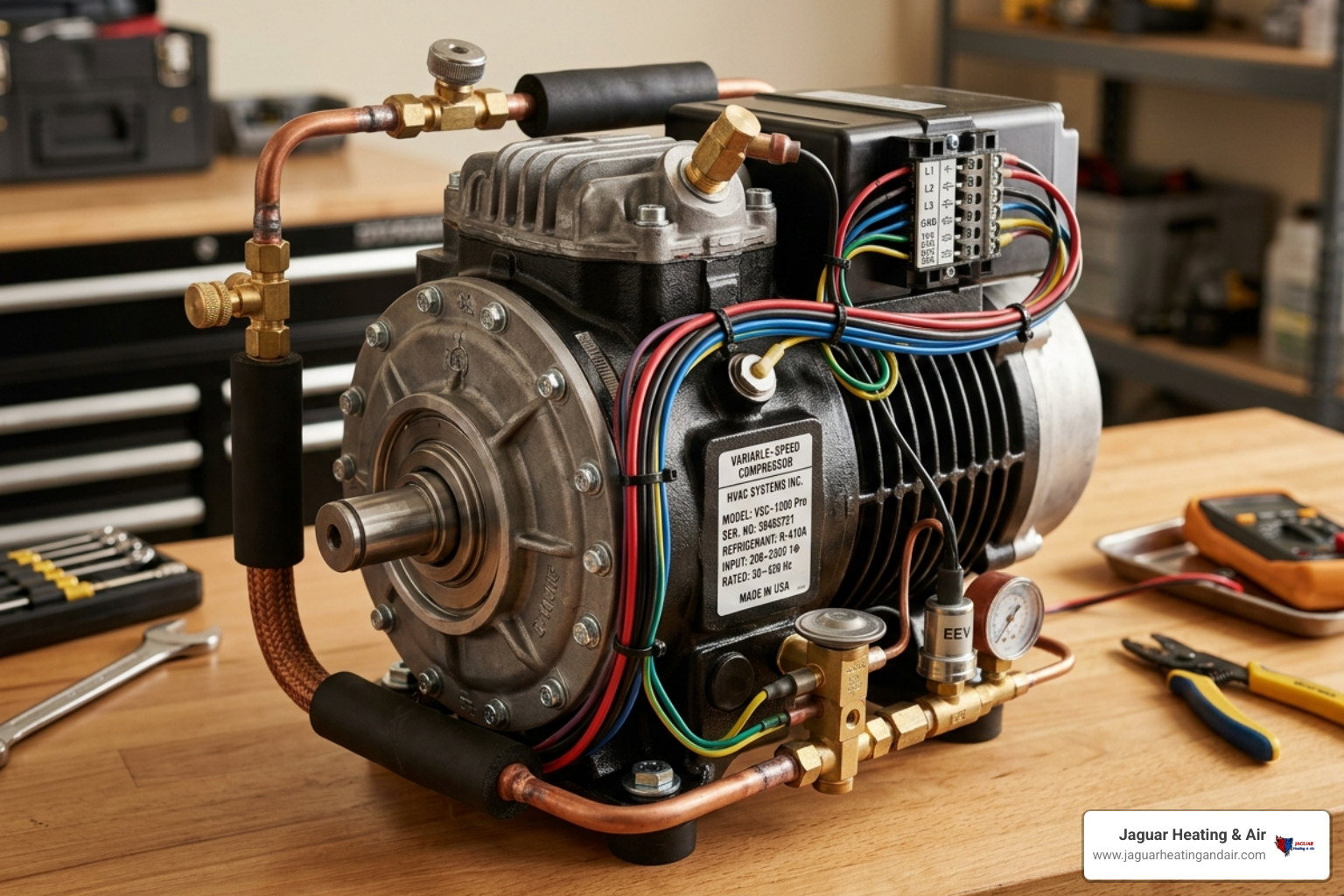
The real magic of a high-efficiency system isn't just in the numbers; it’s in the hardware. Most standard systems are "single-stage." This means they are either 100% on or 100% off. Imagine a car that only has two speeds: stopped and floor-it. It’s not very comfortable, and it’s certainly not efficient.
High-efficiency systems use variable-speed technology. These systems can adjust their output in tiny increments—sometimes down to 15% of their total capacity. This allows the system to "sip" electricity and maintain a perfectly steady temperature. If you are interested in the gold standard of this technology, we often point our clients toward Mitsubishi High Efficiency Systems for their incredible inverter-driven performance.
Standard Efficiency vs High Efficiency HVAC Comparison: Heating Components
The physical build of a high-efficiency furnace is fundamentally different from a standard one. To get that 95%+ AFUE rating, these units utilize a secondary heat exchanger.
In a standard furnace, the hot exhaust gases are vented out through a metal pipe. In a high-efficiency unit, those gases are sent through a second exchanger where they are cooled until the water vapor in the exhaust condenses into liquid. This process releases even more heat that is captured and sent into your home.
Because the exhaust is so cool by the end of this process, high-efficiency units don't need metal chimneys; they use PVC venting. They also feature "sealed combustion," meaning they pull fresh air from outside for the burner rather than using the conditioned air inside your home. This is a huge win for safety and efficiency. To see how this fits into a larger home strategy, you might want to read about Understanding Zoned HVAC to see how these components work in a multi-zone setup.
Comfort, Noise, and Humidity Control
One of the biggest complaints we hear about standard systems is the "noise and the draft." Standard systems kick on with a roar, blast you with cold air until the thermostat is satisfied, and then shut off. This leads to temperature swings and "hot spots" in rooms further from the unit.
High-efficiency systems, because they run for longer cycles at lower speeds, provide much more consistent comfort. They are also whisper-quiet. Because the fan is usually running at a lower speed, you won't hear that jet-engine sound every time the AC starts up.
Furthermore, humidity control is vastly superior in high-efficiency models. In places like Mather or Rancho Cordova, where summer humidity can occasionally creep up, a variable-speed system is much better at pulling moisture out of the air because it runs longer. Even the best system can be hampered by poor air distribution, so keep in mind How Dirty Ductwork Decreases HVAC Efficiency Rocklin CA when planning your upgrade.
Making the Choice: A Standard Efficiency vs High Efficiency HVAC Comparison
So, which one is right for you? It isn't always a "more is better" situation. The best value depends on your specific home and how long you plan to live there.
In Sacramento, our cooling season is long and intense. This typically tips the scales in favor of high-efficiency cooling. However, if you live in a small, well-insulated condo in Granite Bay and you only plan to stay there for another two years, a standard efficiency system might be the more pragmatic financial choice.
Installation and Maintenance Requirements
High-efficiency systems are more complex to install. If you are switching from an 80% furnace to a 95% model, we have to install that PVC venting and a condensate drain line. High-efficiency furnaces produce a slightly acidic liquid (the condensate) that must be safely pumped away or drained.
Maintenance is also non-negotiable for these high-tech units. While standard units are hearty, high-efficiency systems rely on sensitive sensors and electronics to maintain their peak performance. We recommend regular HVAC Maintenance Sacramento CA to keep everything humming. This isn't just about efficiency; it's about protecting your investment. We also have a guide on How Keep HVAC Warranty Place because many manufacturers of high-efficiency equipment require proof of annual service to honor their 10-year or 12-year warranties.
Don't forget that the quality of the install is just as important as the unit itself. We can't overstate the Importance Correct HVAC Installation when it comes to long-term reliability.
Incentives and Long-Term Value
The "payback period" is the time it takes for your energy savings to cover the extra upfront cost of a high-efficiency system. In cold climates, a 95% furnace might pay for itself in 5 to 7 years. In Sacramento, the payback for a high-efficiency furnace might be closer to 10 to 12 years because our winters are shorter.
However, the payback for a high-SEER2 air conditioner or a high-efficiency heat pump is often much faster here. When you factor in utility rebates from local providers and federal tax credits, the "premium" for high-efficiency often shrinks significantly. These incentives are designed to make the choice easier for homeowners looking to reduce their carbon footprint.
Upgrading also adds property value. A home in El Dorado Hills with a documented high-efficiency HVAC system and a history of HVAC Service Sacramento CA is a much more attractive prospect for buyers than one with a 15-year-old standard unit.
Frequently Asked Questions about HVAC Efficiency
What is the minimum SEER2 rating required in 2026?
As of 2026, the federal minimum is 13.4 SEER2 in the North and 14.3 SEER2 in the South/Southwest (including California) for most residential split-system air conditioners. However, local California energy codes (Title 24) often set a higher practical bar for new installations and major renovations.
Do high-efficiency HVAC systems require more maintenance?
They don't necessarily need more frequent maintenance, but the maintenance they do need is more specialized. Because they have secondary heat exchangers, condensate pumps, and variable-speed motors, have a NATE-certified technician inspect them annually to ensure all sensors and drainage systems are clear.
How do heat pumps compare to traditional air conditioners in efficiency?
A heat pump is essentially an air conditioner that can run in reverse. In the summer, its cooling efficiency (SEER2) is comparable to a standard AC. However, in the winter, it is significantly more efficient than electric resistance heating and can even rival high-efficiency gas furnaces in moderate climates like ours, often reducing heating energy use by 50%.
Conclusion
Choosing between standard and high efficiency doesn't have to be a headache. At Jaguar Heating & Air, we believe in giving you the facts so you can make the best decision for your family’s budget and comfort. Whether you’re in Lincoln, Woodland, or Fair Oaks, our team of NATE-certified technicians and Trane Comfort Specialists is here to help you navigate the standard efficiency vs high efficiency hvac comparison.
We offer everything from same-day service to flat-rate pricing, ensuring that your transition to a more efficient home is as smooth as possible. If you’re ready to see the difference that a premium system can make, we invite you to learn more about Mitsubishi High Efficiency Systems or contact us today for a personalized home energy consultation. Let’s make your home the most comfortable place it can be!
Recent Posts
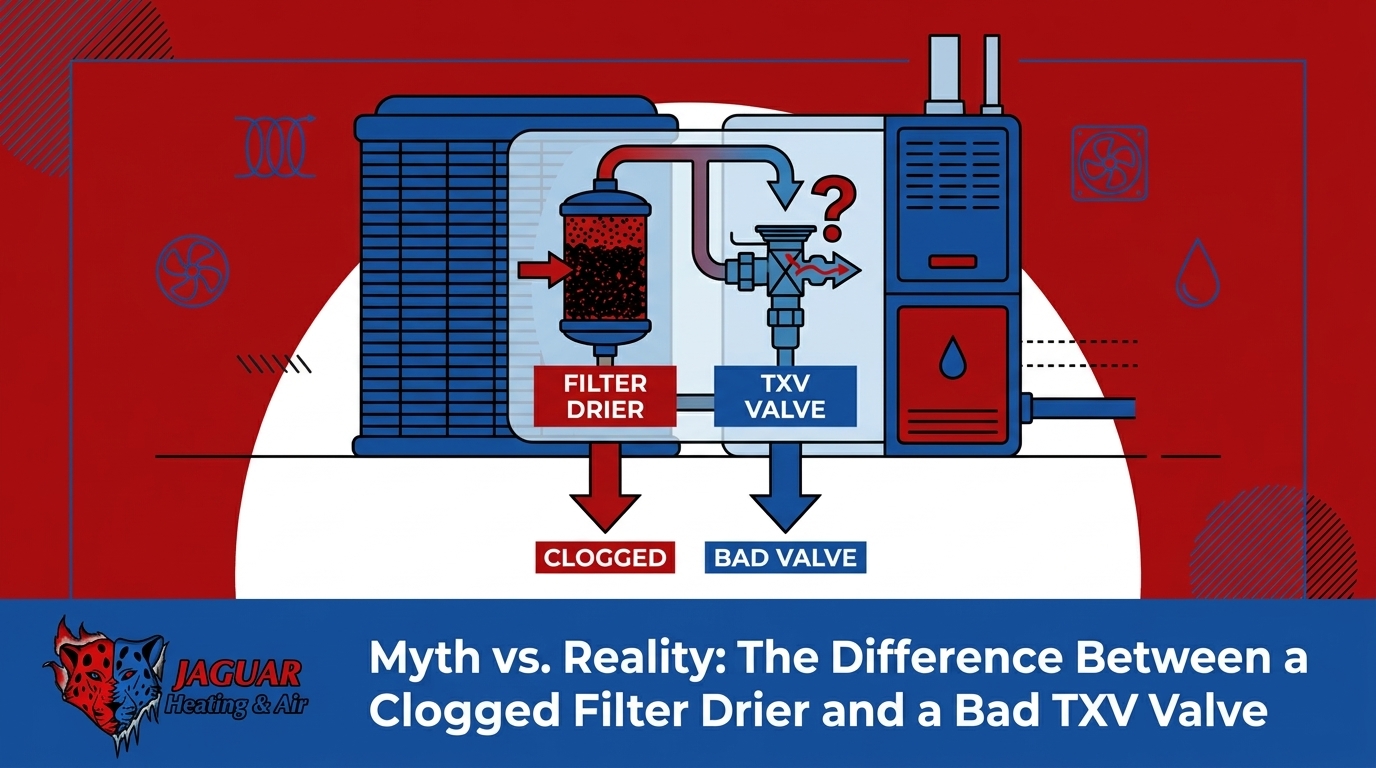
The Difference Between a Clogged Filter Drier and a Bad TXV Valve
An AC that blows warm air isn't always leaking refrigerant—it might be suffering from a flow restriction. Find out how technicians trace the bottleneck to restore your cooling.
How Sacramento's Hard Water Affects Your Evaporative Cooler Pads
By September, Sacramento's heavy mineral content often turns swamp cooler pads into rock-hard blocks. See why airflow drops drastically and weigh your end-of-season options.
Why Your Dual-Zone System Fails to Cool the Master Bedroom
Persistent temperature imbalances in your master suite are rarely a main AC capacity issue. Discover how stuck motorized zone dampers disrupt airflow and why a pre-season diagnostic is crucial.