.avif)
DIY HVAC: How to Keep Your System Happy and Healthy
Learn how to maintain your heating and cooling system: DIY filters, seals, safety checks & pro tips for efficiency in Sacramento.
Learn how to maintain your heating and cooling system: DIY filters, seals, safety checks & pro tips for efficiency in Sacramento.

Why Knowing How to Maintain Your Heating and Cooling System Saves You Money and Headaches
Knowing how to maintain your heating and cooling system is one of the most practical things you can do as a homeowner — especially in the Sacramento area, where summers are scorching and you need your system to perform when it matters most. The average home spends nearly $1,900 a year on energy, with close to half of that going straight to heating and cooling. Skipping regular maintenance doesn't just risk a breakdown — it quietly drains your wallet every single month.
Here's a quick overview of the core steps to maintain your HVAC system:
- Change or clean air filters every 1–3 months (more often with pets or allergies)
- Clear debris from around your outdoor condenser unit and maintain at least 2 feet of clearance
- Flush the condensate drain line every 3 months to prevent clogs and water damage
- Inspect visible ductwork for leaks and seal them with mastic sealant or foil-backed tape
- Test carbon monoxide detectors and check your furnace flame color before heating season
- Upgrade to a smart or programmable thermostat to reduce energy use by 8–15%
- Schedule a professional tune-up each spring (for cooling) and each fall (for heating)
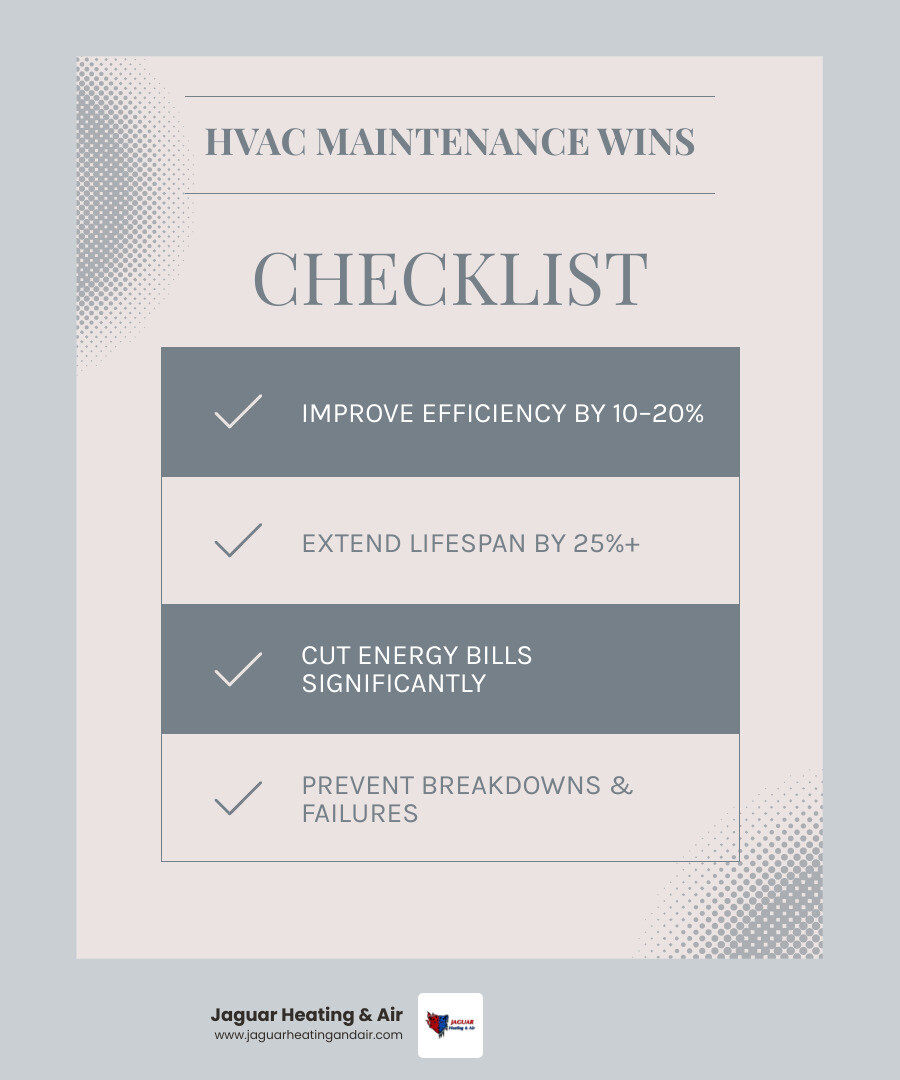
The good news? Most of these steps are simple enough to do yourself. A little consistency goes a long way — routine maintenance can improve your system's efficiency by 10–20% and extend its lifespan by 25% or more. Skipping it, on the other hand, is one of the top causes of HVAC failure.
Whether you're trying to avoid a surprise breakdown, lower your utility bills, or just get more years out of your equipment, this guide walks you through every key DIY maintenance task — and tells you clearly when it's time to call in a pro.
Essential DIY Steps for How to Maintain Your Heating and Cooling System
Taking care of your HVAC system doesn't require a degree in mechanical engineering. In fact, some of the most impactful HVAC maintenance tasks homeowner perform are quite simple. By staying on top of these chores, you optimize airflow and significantly reduce the amount of dust circulating through your rooms in Roseville or Elk Grove.
One of the biggest tips boost HVAC efficiency is simply keeping the system clean. Dirt and neglect are the leading causes of system failure. When your system is choked by dust, it has to work harder, which uses more electricity and puts unnecessary strain on the motor.

Best Practices for How to Maintain Your Heating and Cooling System Filters
The air filter is your system's first line of defense. Its job is to catch hair, dust, and fibers before they can reach the sensitive internal coils of your unit. For residents seeking AC maintenance Sacramento CA, we recommend checking your filter every single month.
- MERV Ratings: Filters are rated on the Minimum Efficiency Reporting Value (MERV) scale. For most homes, a MERV 8 to MERV 12 filter is ideal. Higher ratings (like MERV 13) capture smaller particles like bacteria and viruses but can restrict airflow if your system isn't designed for them.
- The Pet Factor: If you have dogs or cats, their dander and fur will clog a filter much faster. In a busy household with pets, you might need to swap that filter every 30 to 45 days.
- Allergy Prevention: If you suffer from seasonal allergies—common in the Central Valley—using a high-efficiency pleated filter can drastically improve your indoor air quality.
Cleaning and Clearing the Outdoor Condenser Unit
Your outdoor unit (the condenser) needs to "breathe" to release the heat it pulls from inside your home. If it’s buried under leaves or surrounded by overgrown bushes, it can't do its job. Part of knowing how get air conditioner ready spring is ensuring the area around this unit is pristine.
Start by removing any tall grass, weeds, or fallen branches. We recommend maintaining at least a 2-foot clearance on all sides of the unit. You can also gently use a garden hose to wash away dirt and pollen from the exterior fins. Be careful not to use a pressure washer, as the high pressure can bend the delicate aluminum fins. If you do notice bent fins, you can use a "fin comb" to carefully straighten them out, which restores proper airflow.
Maximizing Efficiency with Smart Technology and Sealing
In April 2026, home automation is no longer just a luxury; it’s a primary tool for energy conservation. Modern thermostats provide energy reports and remote access, allowing you to adjust your home’s climate from your phone while you're out in Folsom or Rocklin.
| Thermostat Type | Features | Potential Savings |
|---|---|---|
| Manual | Basic dial or buttons; requires manual adjustment. | 0% (Dependent on user) |
| Programmable | Sets schedules for weekdays/weekends. | 5–10% |
| Smart | Learns habits, Wi-Fi enabled, provides energy reports. | 8–15% |
Understanding these key benefits AC maintenance through technology helps you realize that small upgrades pay for themselves quickly through lower utility bills.
Sealing Ductwork to Prevent Energy Loss
Did you know that in a typical house, about 20 to 30 percent of the air that moves through the duct system is lost due to leaks, holes, and poorly connected ducts? That is conditioned air you’ve already paid for, simply escaping into your attic or crawlspace.
There are several reasons maintain homes HVAC system, but stopping energy waste is near the top. You can inspect accessible ductwork in your garage or attic. Look for gaps or "telltale" dust streaks, which indicate air is blowing out of a seam.
- Pro Tip: Never use standard "duct tape" for this; it actually dries out and fails quickly. Instead, use professional mastic sealant or foil-backed tape to create a permanent, airtight seal.
Clearing the Condensate Drain Line
Your air conditioner doesn't just cool the air; it removes moisture (humidity). This moisture collects in a pan and flows out through a condensate drain line. Over time, algae and mold can grow inside this pipe, leading to a nasty clog.
A clogged line can cause the drain pan to overflow, resulting in water damage to your ceiling or floors. To prevent this, perform a simple AC maintenance step: flush the line. Every three months, pour about a cup of distilled white vinegar down the drain line to kill any developing algae. If you notice water pooling around your indoor unit, it’s a sign the line is already blocked.
Safety Checks and Seasonal Timing for How to Maintain Your Heating and Cooling System
Safety should always be your number one priority. While many tasks are DIY-friendly, anything involving natural gas or high-voltage electricity requires a cautious eye. Before the winter chill hits Sacramento, knowing how get heating system ready winter involves a few critical safety checks.
Seasonal Timing for How to Maintain Your Heating and Cooling System
Timing is everything. You don't want to wait until the first 100-degree day in July to find out your AC is struggling.
- Spring (March/April): Focus on your cooling system. Clean the outdoor unit and change the filters.
- Fall (September/October): Focus on the heating system. This is when you should consider the reasons not neglect spring HVAC maintenance Lincoln CA and apply that same proactive logic to your furnace or heat pump.
In our Northern California climate, our systems work incredibly hard during the summer. A system that isn't prepped in the spring is much more likely to fail during a heatwave—a situation 42% of homeowners have unfortunately experienced.
Essential Safety Inspections for Homeowners
When you begin your heating maintenance routine, start with your detectors. Carbon monoxide (CO) is an odorless, colorless gas that can be deadly if your furnace has a cracked heat exchanger.
- Test CO Detectors: Press the test button on every unit in your home. Change the batteries annually.
- Check the Flame: If you have a natural gas furnace, look at the burner flame. It should be a crisp, steady blue. A yellow or orange flame suggests incomplete combustion and could indicate a dangerous CO leak or a dirty burner.
- Visual Electrical Check: Look for any frayed wires or signs of melting on the control board. If you see anything suspicious, do not touch it—call a professional.
Recognizing When to Call a Professional Technician
While DIY steps are vital, they don't replace the need for an expert eye. There are some tasks—like handling refrigerant or testing internal capacitors—that are strictly for the pros. If you hear loud screeching, clanking, or if you smell an electrical burning odor, shut the system off immediately.
Investing in an HVAC maintenance membership is often the most cost-effective way to ensure your system stays under warranty and runs at peak performance.
What a Professional Tune-Up Includes
A professional heating maintenance Sacramento CA visit is much more than just a quick glance. When our NATE-certified technicians arrive, they perform a comprehensive multi-point inspection designed to catch "small" problems before they become "engine-replacement" problems.
There are many reasons HVAC maintenance agreement good choice, including:
- Lubrication: We oil all moving parts to reduce friction and electricity consumption.
- Electrical Calibration: We tighten all connections and measure voltage and current on motors.
- Coil Cleaning: We use specialized chemicals to clean the evaporator and condenser coils, which can improve efficiency by up to 15%.
- Refrigerant Check: We ensure your system has the exact amount of refrigerant needed for optimal cooling.
Frequently Asked Questions about How to Maintain Your Heating and Cooling System
How often should I change my HVAC air filters?
For most homes in the Sacramento area, we recommend changing your filter every 1 to 3 months. If you have multiple pets, live in a particularly dusty area, or have family members with severe allergies, checking them once a month is the safest bet.
What are the signs that my HVAC system needs professional repair?
Watch out for "the three S's": Sounds, Smells, and Spikes. Strange banging or squealing noises, musty or burning smells, and sudden spikes in your utility bills are all red flags that your system is struggling and needs an expert's touch.
How does regular maintenance reduce my monthly energy bills?
When your system is clean and well-lubricated, it moves air more easily. Dirty coils and clogged filters force the blower motor to run longer and harder to reach your desired temperature. By keeping things clear, you can improve efficiency by 10% to 20%, which translates directly to savings on your monthly bill.
Conclusion
At Jaguar Heating & Air, we know that your home is your sanctuary. Whether you are in Citrus Heights, Granite Bay, or Rancho Cordova, a well-maintained HVAC system is the heartbeat of your home's comfort. By following these DIY steps and staying proactive, you are protecting one of your home's most expensive investments.
However, even the most diligent DIYer needs a professional partner. There are 3 benefits of signing up for an HVAC maintenance membership that go beyond simple cleaning, including priority service and peace of mind.
If you’re ready to ensure your system is prepared for whatever the California weather throws our way, we’re here to help. More info about our professional maintenance services is just a click away. Let us help you keep your home "Jaguar-fast" and reliably cool all year long.
Recent Posts
What a Rattling Outdoor Fan Blade Means for Your AC's Lifespan
A vibrating condenser fan creates micro-vibrations that act as a ticking time bomb for delicate copper lines. Find out why you shouldn't ignore this fall noise.
Why We Test Your AC's Amp Draw During Late Summer Maintenance
Even if your vents are blowing cold air, months of intense heat can push your compressor to the brink. We measure invisible electrical fatigue to catch stressed parts before a total breakdown.
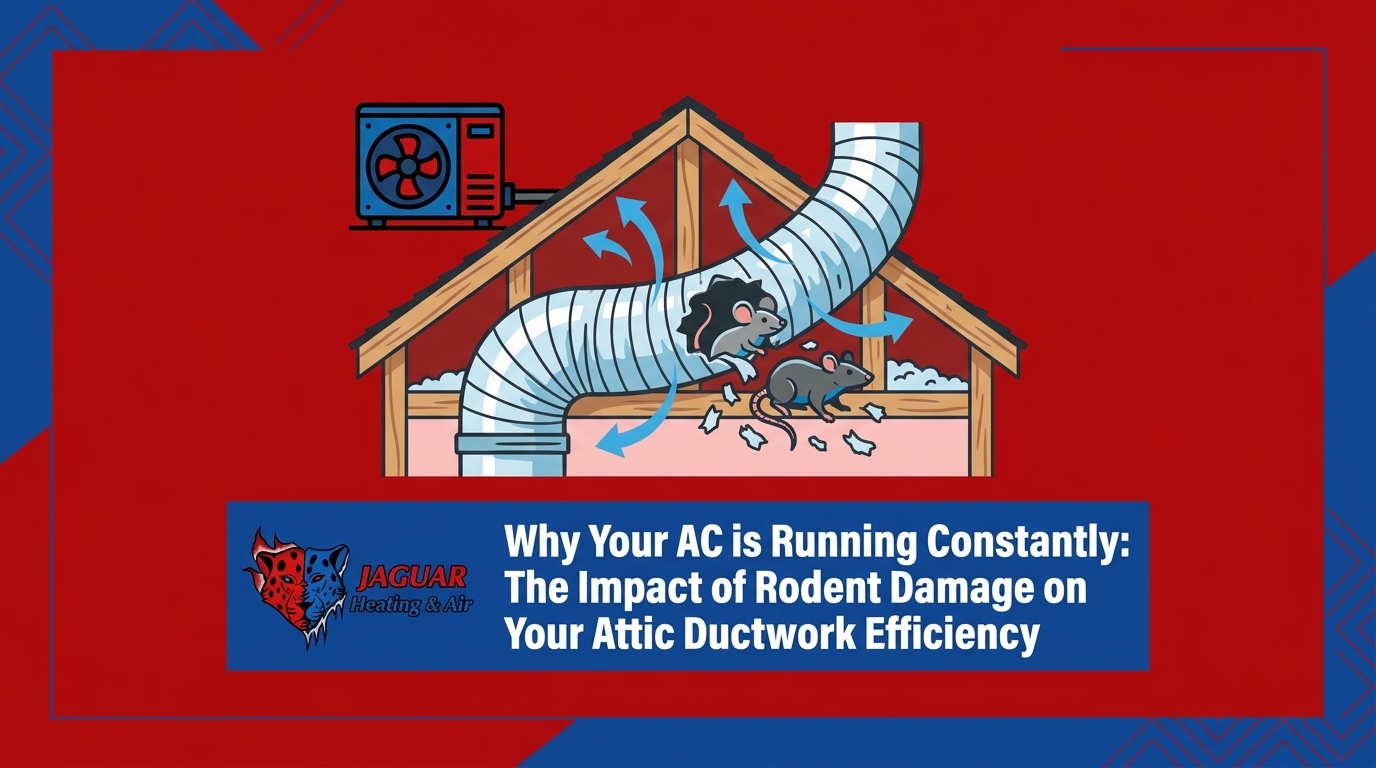
The Impact of Rodent Damage on Your Attic Ductwork Efficiency
If your cooling system runs constantly but your home stays warm, roof rats may have chewed through your flex ducts. See why a tape patch isn't enough to safely restore your system's airflow.