.avif)
Beating the Heat: The Best HVAC Setup for Sacramento Area Weather
Discover how Sacramento climate affects your HVAC system. Optimize for heat waves, fog & breezes with top systems & maintenance tips.
Discover how Sacramento climate affects your HVAC system. Optimize for heat waves, fog & breezes with top systems & maintenance tips.

Why Sacramento's Climate Is One of the Hardest on HVAC Systems in California
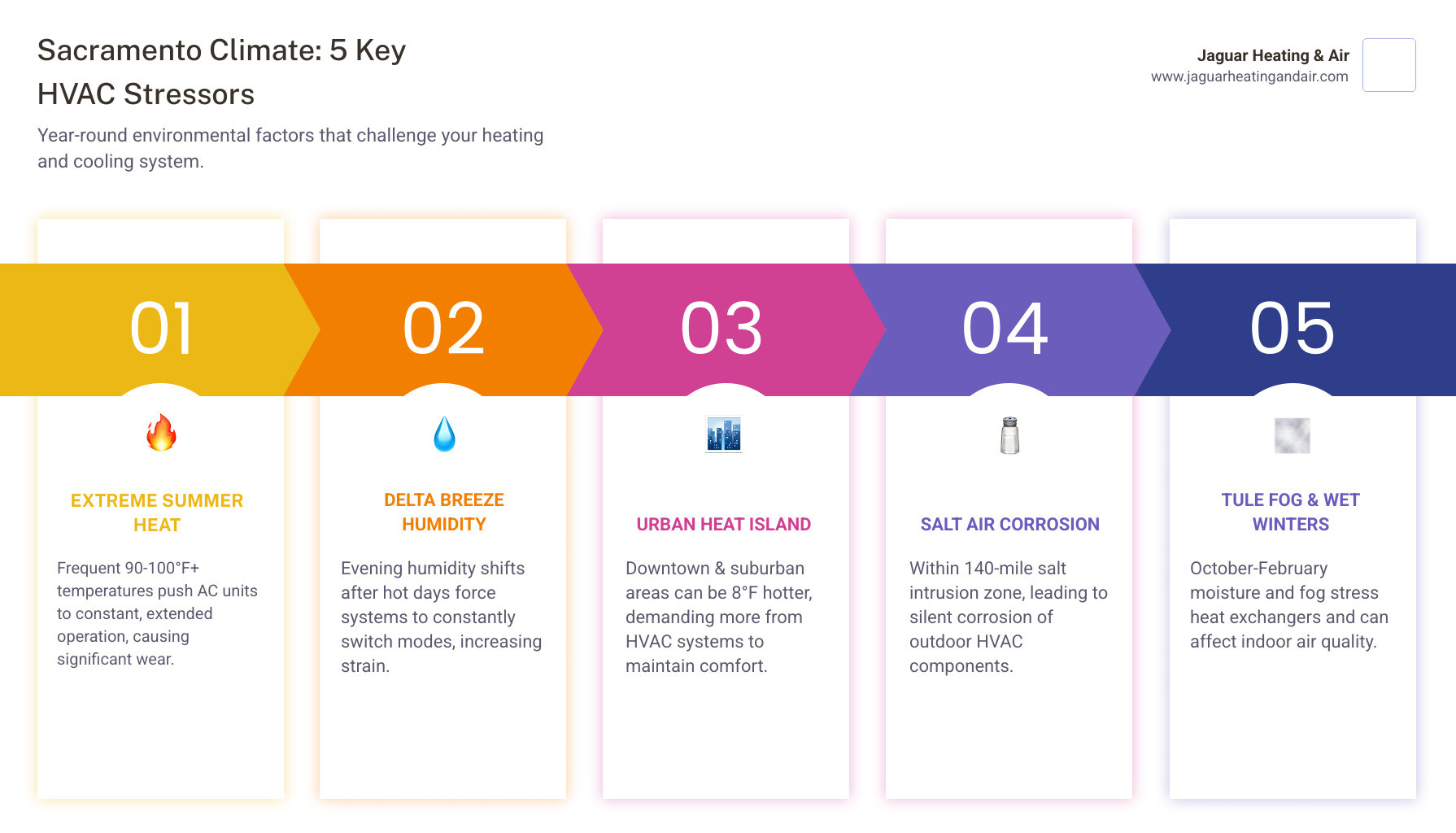
How Sacramento climate affects your HVAC system comes down to four key stressors that work against your equipment year-round:
- Extreme summer heat — Averages of 93–100°F with triple-digit spikes push AC units to run longer, harder, and more often than in most U.S. cities
- Delta breeze humidity shifts — Evening moisture swings after scorching days force your system to switch between dehumidification and cooling modes
- Urban heat island effect — Downtown and suburban Sacramento temperatures can run up to 8°F hotter than surrounding rural areas, increasing cooling load on undersized systems
- Coastal salt air corrosion — Sacramento sits within the 140-mile salt intrusion zone from the Pacific, which quietly corrodes outdoor HVAC components year after year
- Tule fog and wet winters — October through February brings dense fog and moisture that stresses heat exchangers, clogs filters, and degrades indoor air quality
Sacramento's Mediterranean climate sounds pleasant on paper — sunny summers, mild winters. But for your HVAC system, it means running at full capacity for months on end, then switching gears for a damp, foggy heating season. Most HVAC systems are built to handle about 20°F of cooling below the outdoor temperature. When Sacramento hits 109°F — as it has in recent heat waves — that ceiling gets tested fast. Add salt-driven corrosion that can cut an outdoor unit's lifespan from 15 years down to just six or seven without proper maintenance, and you can see why Sacramento homeowners face some of the most demanding HVAC conditions in the state.
This guide breaks down exactly what Sacramento's weather does to your heating and cooling equipment, and what you can do about it.
Understanding How Sacramento Climate Affects Your HVAC System
When we talk about Air Conditioning and Heating in Sacramento, CA, we are dealing with a climate that is vastly different from our neighbors in the Bay Area or the Sierra Nevada foothills. Sacramento is characterized by a 3.7-month "hot season" where daily highs consistently exceed 86°F, though any local will tell you that 90°F to 100°F is the more common reality in July and August.
The sheer duration of this heat puts an incredible "cooling load" on your system. Unlike milder climates where an AC might cycle on and off once or twice an hour, Sacramento units often run for 40 to 50 minutes out of every hour just to keep up. This extended runtime isn't just about energy bills; it’s about mechanical wear. Every extra hour of operation brings your system closer to its eventual retirement.
How Sacramento Climate Affects Your HVAC System During Heat Waves
During a triple-digit heat wave, many homeowners notice their AC seems to be "struggling." It’s important to understand the 20-degree rule: most standard HVAC systems are designed to cool the indoor air to about 20 degrees lower than the outdoor temperature. When it is 105°F in Roseville or Citrus Heights, your system is working at its absolute physical limit to maintain a 75°F indoor environment.
This extreme temperature differential causes refrigerant pressures to skyrocket. If your evaporator coils are even slightly dusty, the system can’t shed heat efficiently, leading to "short-cycling" or, worse, a frozen coil. This is why we emphasize getting your air conditioner ready in the spring before the first heat wave hits. A pre-season check ensures your refrigerant levels are precise and your coils are clean enough to handle that 20-degree-plus demand.
Impact of the Delta Breeze on Cooling Cycles
Sacramento’s famous Delta breeze is a blessing for our evening comfort, but it creates a unique challenge for HVAC automation. As the sun sets, the breeze pulls in cooler, moister air from the San Francisco Bay. While the temperature drops, the relative humidity often spikes.
If you leave your AC running at the same setting all night, your system may struggle with these humidity shifts. High humidity makes the air feel warmer than it actually is—a phenomenon where 3 degrees of relative humidity can feel like a 1-degree temperature increase. To stay comfortable and save energy and money in your California home, we often recommend using the Delta breeze to your advantage by turning off the AC and using a whole-house fan or open windows, but only once the outdoor temperature has dropped below your indoor setting.
The Urban Heat Island Effect and Salt Air Corrosion
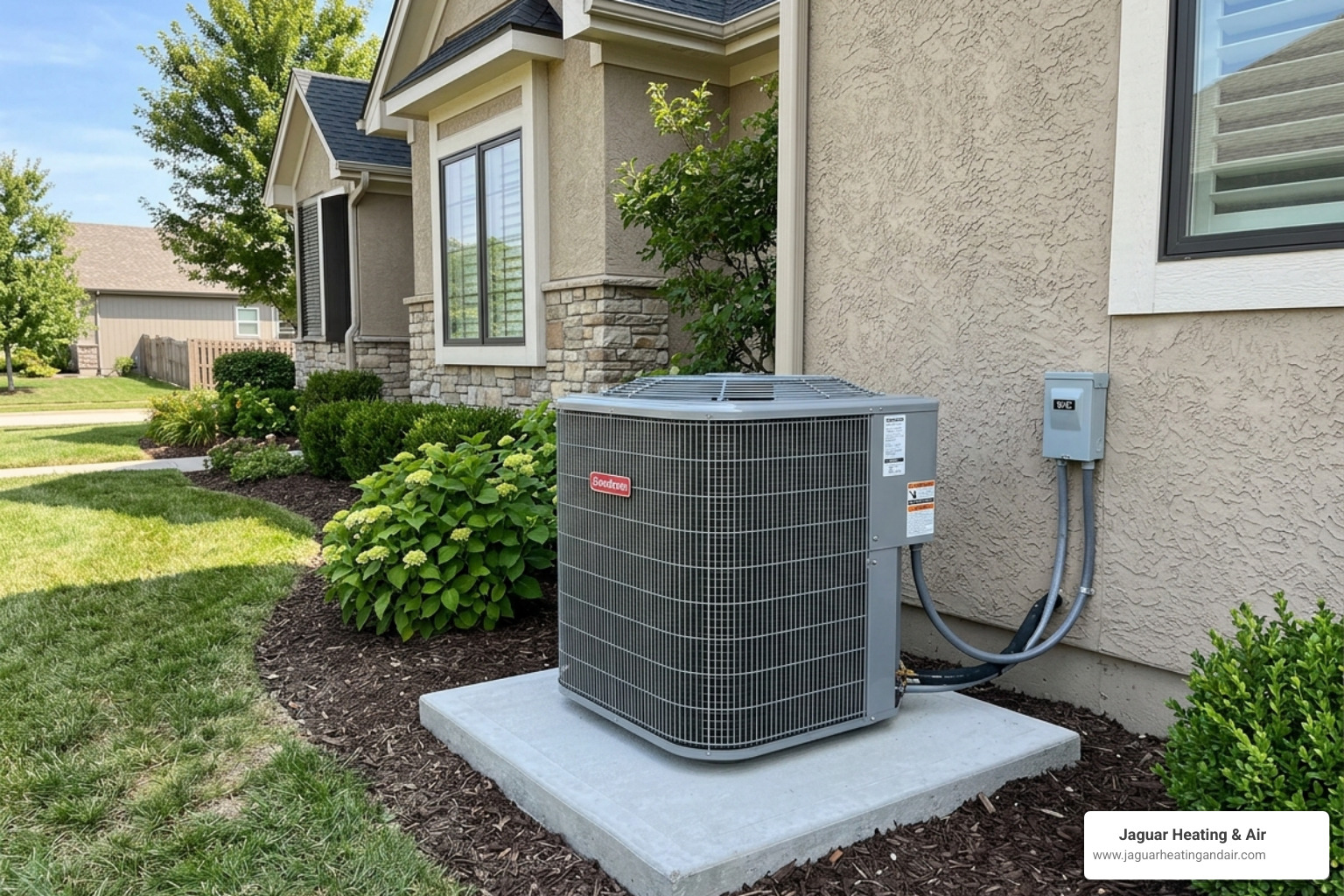
If you live in downtown Sacramento, Midtown, or even parts of Elk Grove, you are likely experiencing the "Urban Heat Island Effect." This occurs when asphalt, brick, and concrete soak up solar radiation all day and radiate it back out at night. This effect can boost local temperatures by up to 8°F compared to rural areas like Wilton or Galt. For your HVAC system, this means the "outdoor" air it is trying to use to cool your home is significantly hotter than the official weather report might suggest. This often requires larger or more efficient units to compensate for the lack of nighttime cooling.
Perhaps the most surprising factor in how Sacramento climate affects your HVAC system is salt air. Even though we are roughly 70 miles from the coast, Sacramento sits well within the 140-mile "salt intrusion zone." Microscopic salt particles travel inland on the breeze and settle on your outdoor condenser coils. Over time, this leads to "pitting" and corrosion. Without regular rinsing and professional maintenance, this salt can cause a unit to fail in less than a decade. If you've noticed your energy bills are too high in Elk Grove, an energy audit might reveal that your outdoor unit is working overtime because corroded coils can't transfer heat.
Winter Performance: Tule Fog and Mild Wet Seasons
Sacramento winters are famously damp. From October through February, we see the arrival of Tule fog—a thick, ground-level mist that forms after heavy rains. While our winter nights usually stay in the 38–42°F range, the high moisture content in the air creates a specific type of stress for heating systems.
Moisture and cold air are a recipe for frost. When you run a heat pump in the winter, the outdoor coil can actually freeze over. The system then has to enter a "defrost cycle," which temporarily reverses the system to melt the ice. If your system is poorly maintained, these cycles happen too frequently, skyrocketing your energy usage and putting unnecessary stress on the heat exchanger.
How Sacramento Climate Affects Your HVAC System in the Winter
The combination of Tule fog and valley air patterns often traps pollutants and allergens near the ground. This means your HVAC filters are working twice as hard to maintain indoor air quality during the winter months. Moisture accumulation in the ductwork or near the air handler can also lead to mold growth if the system isn't draining correctly.
We always suggest that homeowners schedule an energy savings audit before turning on the heater for the season. This ensures that the ignition system is safe, the drain lines are clear of summer debris, and the heat exchanger is free of cracks that could allow carbon monoxide into your home.
Best HVAC Systems for the Sacramento Valley
Given the unique demands of our region, not all HVAC systems are created equal. In California, the minimum efficiency standard is 14.3 SEER2. However, for a climate that regularly sees 100°F+, we generally recommend looking at units with a 17 SEER2 rating or higher. Not only do these units handle the heat more gracefully, but they often qualify for significant federal tax credits.
FeatureCentral AC + FurnaceAir-Source Heat PumpCooling EfficiencyHigh (Up to 20+ SEER2)High (Up to 20+ SEER2)Heating MethodGas CombustionElectric Heat TransferBest ForOlder homes with gas linesModern, eco-friendly homesSacramento FitGreat for peak summerPerfect for mild winters/hot summers
For many, a heat pump installation is perfect for Californian homeowners because it handles both heating and cooling using electricity. Since our winters are rarely "freezing," heat pumps are incredibly efficient here, often reducing heating costs by 30% to 60% compared to traditional furnaces. If you're new to the technology, check out our beginner’s guide to heat pumps for Sacramento homeowners.
Benefits of Ductless Mini-Splits and Zoned Cooling
If you live in an older neighborhood like East Sacramento, Land Park, or Midtown, your home might have "hot spots" that a central system just can't reach. This is where ductless mini-splits and zoned cooling shine. These systems allow you to cool specific rooms—like a home office or a second-story bedroom—without wasting energy cooling the whole house.
Zoning is also a great solution for the urban heat island effect. If the front of your house faces the afternoon sun in Roseville, that zone can be set lower while the rest of the house remains at a more energy-efficient temperature. We often identify these opportunities during our energy saving audits, helping you find the "sweet spot" between comfort and cost.
Maintenance Strategies to Extend System Lifespan
Because the how Sacramento climate affects your HVAC system is so intense, a "set it and forget it" mentality will eventually lead to an expensive breakdown. To keep your system running for its full 15-to-20-year lifespan, we recommend a proactive approach:
- Monthly Filter Checks: During wildfire season or heavy Tule fog, filters can clog in just 30 days. We recommend MERV 13 filters to capture smoke and fine valley dust.
- Clear the Perimeter: Keep at least two feet of space around your outdoor unit. Sacramento's fast-growing spring vegetation can quickly choke off the airflow your AC needs to "breathe."
- Rinse the Coils: Gently rinsing your outdoor coils with a garden hose can help remove the salt and dust buildup that leads to corrosion.
- Professional Tune-Ups: You should have your AC serviced in the spring and your heater in the fall.
Starting the year off right with an energy savings audit is the best way to catch small issues—like a failing capacitor or a slow refrigerant leak—before they turn into a mid-July emergency. For our neighbors in the south valley, understanding why you need to schedule an energy savings audit in Elk Grove is especially important due to the higher dust levels from nearby agricultural activity.
Frequently Asked Questions about Sacramento HVAC
What is the ideal summer thermostat setting for Sacramento?
We generally recommend 78°F when you are home. While many prefer it cooler, every degree below 78°F can increase your energy usage by up to 8%. Use ceiling fans to make 78°F feel like 74°F. When you're away, bumping it up to 85°F helps prevent the system from working too hard when no one is there to enjoy it.
How does the Delta breeze affect my air conditioner?
The breeze provides natural cooling, but it also increases humidity. If your AC has a "dry" mode or a variable-speed compressor, it will handle these shifts better. If not, you may find yourself lowering the thermostat just to get the humidity out of the air—a whole-home dehumidifier can be a great addition for these nights.
Is a heat pump effective for Sacramento's wet winters?
Absolutely. In fact, Sacramento has one of the best climates in the country for heat pumps. Because our temperatures rarely stay below freezing for long, the heat pump can extract warmth from the outdoor air very efficiently. It’s a sustainable, cost-effective alternative to gas.
Conclusion
At Jaguar Heating & Air, we live and work in the same Sacramento heat that you do. We know that a broken AC isn't just an inconvenience; in 105-degree weather, it's a safety issue. As a family-owned company and a Trane Comfort Specialist, we pride ourselves on having the NATE-certified expertise to handle the unique challenges of the Sacramento Valley.
Whether you are in Folsom, Roseville, or Elk Grove, our team is committed to 100% customer satisfaction and same-day service. Don't let the Sacramento climate dictate your comfort. From high-efficiency heat pump installations to precision tune-ups that fight off salt air corrosion, we have the solutions to keep your home cozy all year long.
Contact our team for expert HVAC services today and ensure your system is ready for whatever the Sacramento sky throws at it!
Recent Posts
Why We Test Your AC's Amp Draw During Late Summer Maintenance
Even if your vents are blowing cold air, months of intense heat can push your compressor to the brink. We measure invisible electrical fatigue to catch stressed parts before a total breakdown.
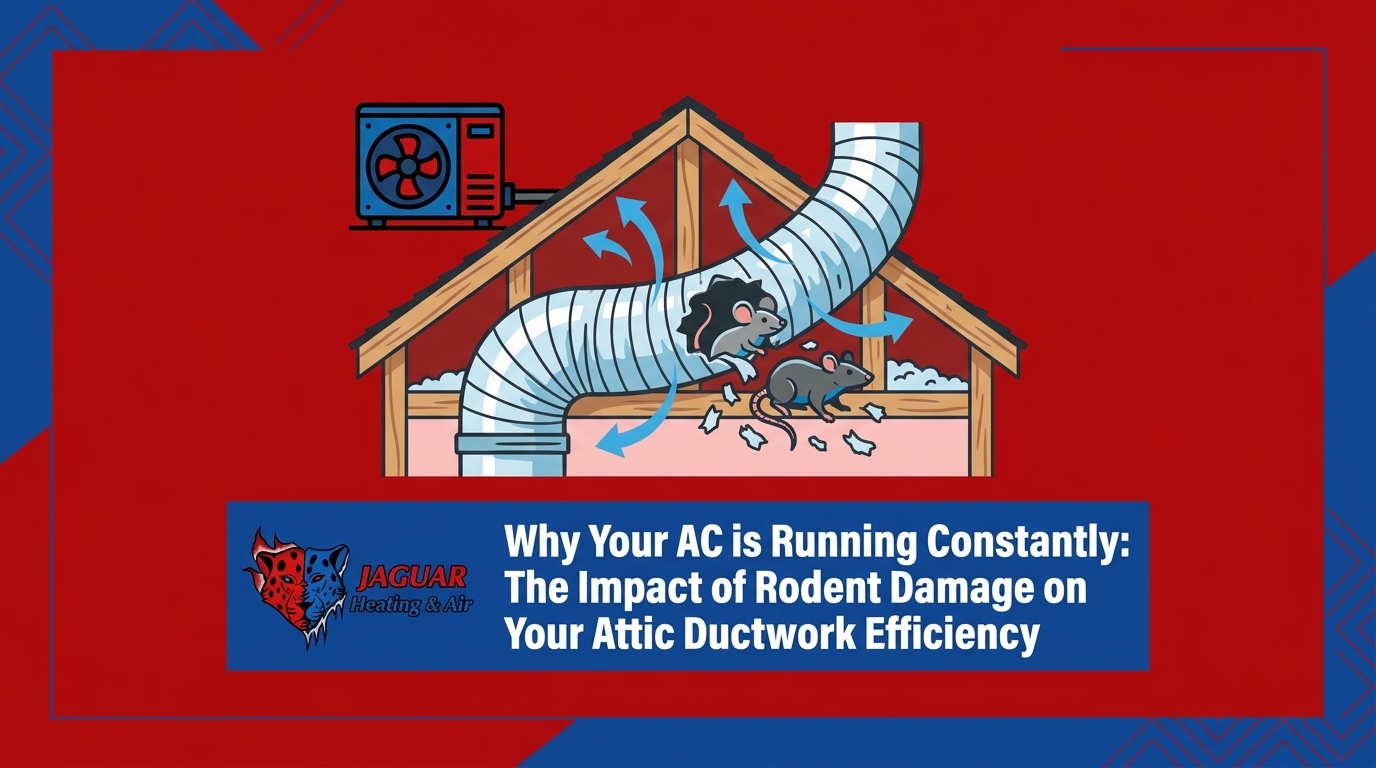
The Impact of Rodent Damage on Your Attic Ductwork Efficiency
If your cooling system runs constantly but your home stays warm, roof rats may have chewed through your flex ducts. See why a tape patch isn't enough to safely restore your system's airflow.
How Proper Refrigerant Charge Impacts Your Monthly SMUD Bill
Blaming lingering Sacramento heat for high September electricity usage? A minor 10% refrigerant undercharge forces your AC to run drastically longer, quietly multiplying your energy costs.