.avif)
Signs Your HVAC Needs Replacing: The Complete Guide
Discover the key signs your HVAC needs replacing not just fixing to restore comfort and efficiency in your Sacramento home.
Discover the key signs your HVAC needs replacing not just fixing to restore comfort and efficiency in your Sacramento home.

Is Your Sacramento HVAC System Telling You It's Time to Move On?
Knowing the signs your HVAC needs replacing not just fixing can save you from throwing money at a system that's already past its prime. Here are the most common indicators that replacement — not another repair — is the right call:
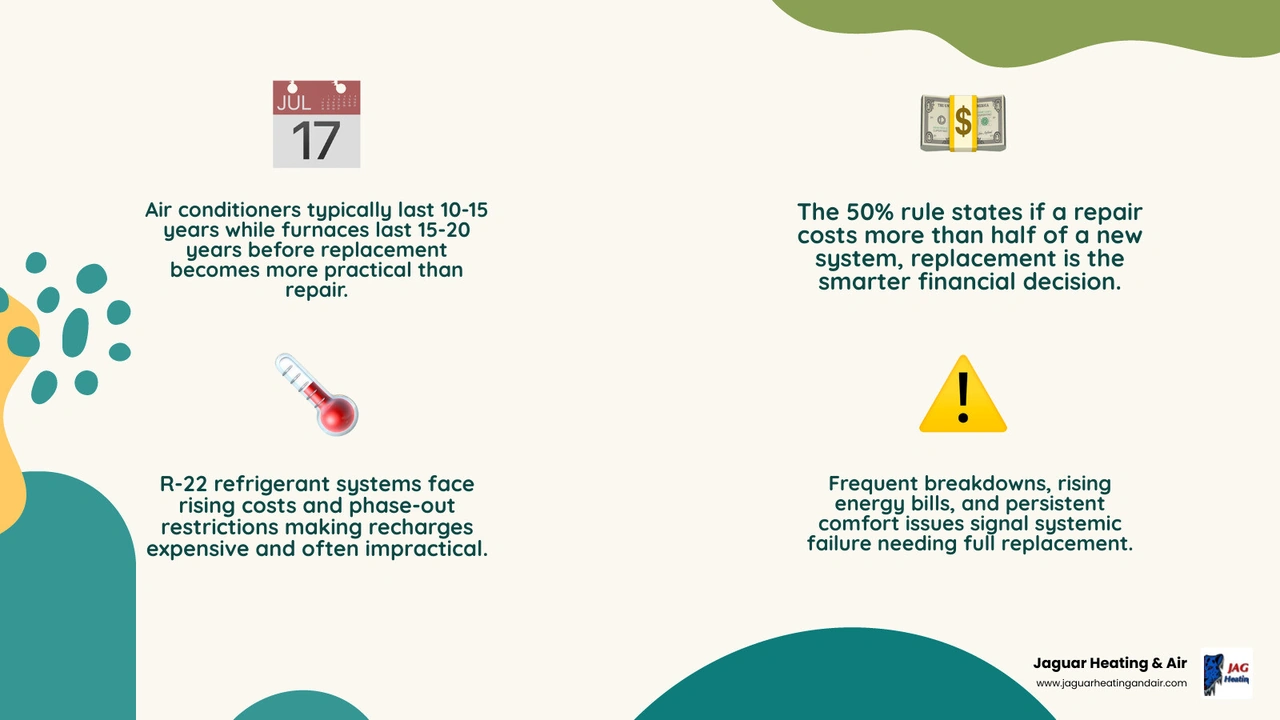
- System age: Air conditioners over 10–15 years old and furnaces over 15–20 years old are prime replacement candidates
- The 50% rule: If a repair costs more than 50% of what a new system would cost, replace it
- Frequent breakdowns: Two or more repairs per year signals systemic decline
- Rising energy bills: A 15–25% increase in utility costs without a change in usage habits
- R-22 refrigerant: If your system still uses R-22 (phased out in 2020), recharging it is costly and often impractical
- Uneven temperatures: Hot and cold spots throughout your home that repairs haven't resolved
- Strange noises or smells: Grinding, banging, burning odors, or a yellow furnace flame
- Short cycling: The system turns on and off too frequently without reaching your set temperature
- Humidity problems: Your home feels muggy in summer or overly dry in winter despite the system running
Most HVAC systems are designed to last 10–20 years depending on the equipment type. But here in Sacramento, where summers routinely push past 100°F and systems run hard for months at a time, that wear can add up faster than the calendar suggests. By the time a system starts showing multiple warning signs at once, another repair is rarely the answer.
The sections below break down each of these signs in detail — so you can make a confident, informed decision about your home's comfort and your budget.
The Age Factor: When Your System is Past Its Prime
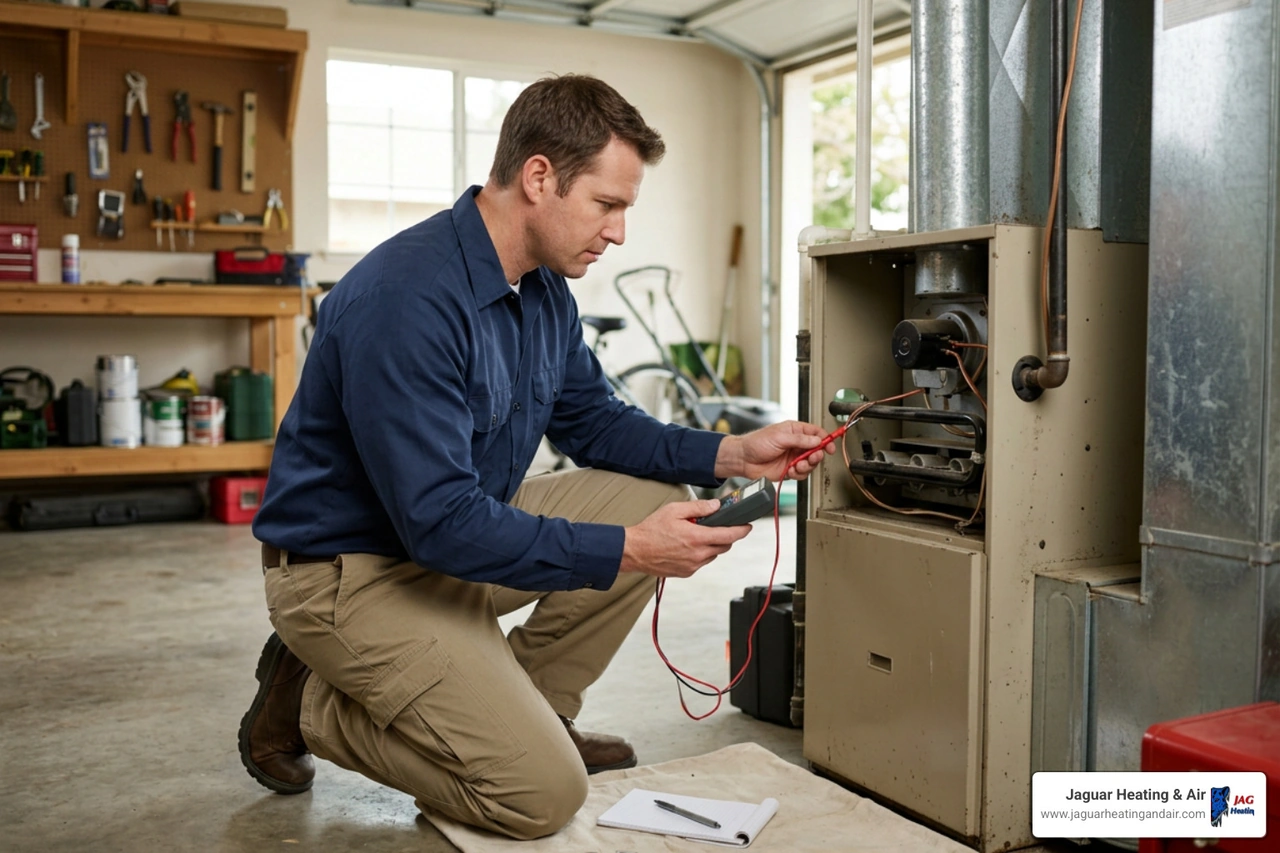
Like any hard-working mechanical system, your heating and cooling equipment has a finite operational lifespan. While regular maintenance keeps things running smoothly for years, time eventually wins. Understanding how age impacts your system's components is the first step in deciding whether to call for a quick fix or plan for a complete system upgrade.
When you are constantly patching up an old unit, you aren't really solving the problem—you are just delaying the inevitable. To understand where your system stands on its timeline, check out our guide on When to Repair vs Replace Your HVAC System.
Lifespan expectations for Sacramento heating and cooling systems
In a moderate climate, heating and cooling equipment might stretch its limits. However, in our Northern California service areas—from Elk Grove and Sacramento up to Roseville, Rocklin, and Lincoln—our systems face intense seasonal demands.
- Air Conditioners: Typically last 10 to 15 years.
- Heat Pumps: Generally have a lifespan of 10 to 15 years because they work year-round to provide both heating and cooling.
- Gas Furnaces: Usually last 15 to 20 years before the heat exchanger and burner assemblies show significant wear.
If your system is operating within or beyond these age brackets, major components like the compressor or the blower motor are likely approaching the end of their reliable service. Even if an older unit seems to be running, it may be operating on borrowed time. For a deeper look at how age influences this choice, read our article on Should I Repair or Replace My HVAC System.
Why older units struggle with modern efficiency standards
In July 2026, energy efficiency is more important than ever. Older air conditioning systems manufactured over a decade ago typically operate on older SEER (Seasonal Energy Efficiency Ratio) standards, often ranging from 10 to 13 SEER. Modern systems must meet strict SEER2 standards, which mandate much higher baseline efficiencies.
As systems age, they naturally lose efficiency due to internal wear, motor degradation, and minor refrigerant leaks. An older 14 SEER unit might operate at the equivalent of only 10 SEER after 15 years of service, leading to a 20% to 30% drop in operating efficiency. This decline means your system must run longer and work harder to achieve the same indoor comfort, directly increasing your monthly utility bills. Upgrading to a modern, high-efficiency system instantly lowers your energy footprint and adds tangible value to your home. Discover how this transition works by reading about The Connection Between Energy Efficient HVAC and Your Home Value.
The Financial Math: Evaluating Repair Frequency and the 50% Rule
Deciding whether to repair or replace your system does not have to be a guessing game. By looking at the pattern of your recent service calls and applying simple financial guidelines, you can determine if a replacement is the smarter long-term investment.
| Factor | Repair Option | Replacement Option |
|---|---|---|
| System Age | Under 10 years old | Over 10–15 years old |
| Repair Frequency | Rare, isolated issues | 2+ service calls per year |
| Operating Efficiency | Stable utility bills | Creeping or spiked energy bills |
| Refrigerant Type | Eco-friendly R-410A or newer | Outdated R-22 (Freon) |
| Component Health | Minor electrical or fan issues | Failed compressor or cracked heat exchanger |
| Warranty Status | Covered by manufacturer | Out of warranty |
If you find yourself frequently scheduling service visits just to keep your home habitable during a Citrus Heights or Folsom heatwave, you are likely caught in a constant repair cycle. To see why breaking this cycle is beneficial, explore Why HVAC Replacement is a Smart Investment.
Applying the 50% rule to major component failures
The 50% rule is a straightforward financial benchmark used by HVAC professionals. If the cost of a single repair exceeds 50% of the cost of installing a brand-new system, a replacement is almost always the more economical choice.
This rule is particularly relevant when dealing with critical component failures, such as:
- A failed compressor in your outdoor AC unit
- A cracked heat exchanger in your gas furnace
- A severely leaking evaporator coil
Investing heavily in a major component replacement for an out-of-warranty system does not reset the clock on the remaining older parts. The fan motor, electrical relays, and control boards are still the same age and remain prone to failure. Additionally, if your original unit was not properly matched to your home's needs, it may have been under extra strain. Learn more about this by reading How Improperly Sized Systems Shorten Equipment Life.
The $5,000 rule and signs your hvac needs replacing not just fixing
Another reliable financial calculation is the $5,000 Rule. To use this formula, multiply the age of your HVAC system by the estimated cost of the recommended repair. If the resulting number is greater than $5,000, you should replace the system. If it is less, a repair may still be a reasonable option.
- Example A: A 12-year-old air conditioner requires a major repair. Because the calculation exceeds the $5,000 threshold, the formula suggests replacement is the wiser financial decision.
- Example B: A 6-year-old unit requires the same repair. The calculation is well below $5,000, indicating that repairing the system is still a practical option.
Using this formula helps you avoid sinking funds into a system that is already nearing retirement.
Performance Red Flags: Comfort, Efficiency, and Environmental Triggers
Sometimes, the signs your HVAC needs replacing not just fixing are not found on a repair bill—they are felt directly in your living room. When a system struggles to maintain consistent comfort or consumes excessive energy to do so, it is signaling that its internal components are failing. Upgrading your system resolves these issues and delivers benefits that go far beyond basic temperature control. Learn more about these advantages in our article on New HVAC Benefits Beyond Comfort.
Inconsistent temperatures and weak airflow
If your home in Roseville or Rancho Cordova has drafty rooms, hot spots, or weak airflow from the registers, your HVAC system may no longer be able to distribute air effectively. This performance drop can stem from a degrading blower motor, failing system compressors, or poorly designed ductwork.
In some cases, the system itself may be improperly sized for your home's layout. This is common in older homes or properties that have added square footage over time. To ensure your home receives the perfect balance of airflow and temperature control, check out our guide on Getting the Right Size HVAC for the Sacramento Area Homes.
The R-22 refrigerant phase-out dilemma
If your air conditioner or heat pump was installed before 2010, there is a strong chance it operates on R-22 refrigerant (commonly known as Freon). To protect the ozone layer, the U.S. Environmental Protection Agency (EPA) fully banned the production and import of R-22 on January 1, 2020.
Because of this phase-out, the remaining supply of R-22 is extremely scarce and highly regulated. If your older system develops a refrigerant leak, recharging it is incredibly expensive and serves only as a temporary fix. Investing in a modern system that uses environmentally friendly, readily available refrigerants is the only permanent, cost-effective solution. For a comparison of operating costs, read The Price of Cool Air Compared.
Safety Risks and Critical Signs Your HVAC Needs Replacing Not Just Fixing
While performance issues and high energy bills are frustrating, some warning signs represent direct safety hazards to your household. If your heating or cooling system exhibits any of the following symptoms, it requires immediate professional attention and likely a complete system replacement.
Cracked heat exchangers and combustion safety
In a gas furnace, the heat exchanger is the metal chamber that keeps toxic combustion byproducts—such as carbon monoxide—separated from the air distributed throughout your home. Over time, the constant expansion and contraction of the metal can cause it to crack.
A cracked heat exchanger is a severe safety hazard that can allow carbon monoxide to leak into your living spaces.
- The Flame Test: A healthy furnace burner should produce a steady, bright blue flame. If you notice a flickering yellow or orange flame, it indicates incomplete combustion, which is a primary sign of a cracked heat exchanger or burner failure.
- Our Recommendation: If a technician detects a cracked heat exchanger, the system must be shut down immediately for safety. Because replacing a heat exchanger is an extensive and costly repair, replacing the furnace entirely is almost always the safest and most practical choice.
Strange noises and smells that indicate systemic failure
An HVAC system should operate relatively quietly. While some clicking at start-up is normal, persistent unusual sounds indicate mechanical distress:
- Screeching or squealing: Suggests a worn blower motor belt or failing bearings.
- Grinding or metal-on-metal clanging: Indicates loose components or a failing compressor.
- Loud rattling or banging: Often points to a broken fan blade or motor mount.
Unusual odors are equally concerning. A musty, damp smell can indicate mold growth inside your evaporator coil or ductwork. A distinct burning or electrical odor suggests overheating wires or a failing motor. If you ever smell gas or rotten eggs, shut down your system immediately, leave the house, and call emergency services.
Maximizing Your Investment with Modern Upgrades and Incentives
Replacing an outdated HVAC system is a significant home improvement project, but modern technology makes the transition highly rewarding. Today's systems feature variable-speed compressors and smart thermostat compatibility, allowing them to adjust their output precisely to your home's real-time needs. Instead of blasting on and off at 100% capacity, they run at lower, energy-sipping speeds to maintain a perfectly consistent indoor climate.
To help make these high-efficiency upgrades more accessible, several financial incentives are available. You can learn how to maximize your savings by reading Don't Leave Money on the Table with These Federal HVAC Credits.
Navigating rebates and signs your hvac needs replacing not just fixing
When you decide to replace your older, inefficient system with a modern ENERGY STAR® certified unit, you may qualify for substantial financial incentives. Homeowners in California can take advantage of state-specific energy rebates, local utility programs, and federal tax credits designed to promote energy-efficient home upgrades.
These incentives help offset the upfront cost of your new installation, making high-efficiency heat pumps and air conditioners a highly practical choice. To learn how to navigate these programs and find out what incentives your new system might qualify for, check out our guide on How to Get Paid to Upgrade Your California Homes HVAC.
Frequently Asked Questions about HVAC Replacement
Should I replace my furnace and air conditioner at the same time?
Yes, in most cases, replacing both units together is highly recommended. Your indoor furnace (which often houses the blower motor) and your outdoor air conditioner are designed to work together as a matched system. If you connect a brand-new, high-efficiency AC to an old, deteriorating furnace, the system will not achieve its rated efficiency or performance. Replacing both at the same time also saves you money on labor and ensures your entire system is covered under a single manufacturer's warranty.
What is the best time of year to schedule an HVAC replacement in Sacramento?
The ideal times to schedule a replacement are during the "shoulder seasons"—spring (March to May) and fall (September to November). During these months, the weather is mild, meaning your system will not be running constantly. Additionally, HVAC technicians are less busy with emergency repair calls, giving you greater scheduling flexibility and a smoother installation process.
How do I find the manufacture date of my current HVAC unit?
You can find the age of your system by looking at the metal rating plate attached to the side of your outdoor condenser unit or the front of your indoor furnace. Look for a line that says "MFR DATE" or "Date of Manufacture." If only a serial number is listed, you can write it down and look up the brand online; most manufacturer websites have a simple tool to decode the manufacture year and week from the serial number.
Conclusion
When your home's heating and cooling system begins to fail, continuing to pay for frequent repairs can quickly become a financial burden. Recognizing the signs your HVAC needs replacing not just fixing—whether it is an aging system, rising utility bills, or safety concerns like a yellow furnace flame—helps you make the right choice for your home and your budget.
At Jaguar Heating & Air, we are proud to be your local Sacramento HVAC experts. As a family-owned company and a certified Trane Comfort Specialist, our NATE-certified technicians are committed to keeping families comfortable across Sacramento, Elk Grove, Folsom, Roseville, and the surrounding areas. We offer same-day service, flat-rate pricing, and a 100% customer satisfaction guarantee.
If your system is showing signs of wear, do not wait for a complete breakdown during the next heatwave. Schedule your professional system evaluation today and let our friendly team help you find the perfect, high-efficiency comfort solution for your home.
Recent Posts

Why Your Furnace Smells Like Burning Dust: Essential HVAC Maintenance Questions Answered
Smelling burning dust this fall? Have common homeowner questions answered about your furnace. Decide with confidence on when to call a pro before winter.

Why Your Furnace Smells Like Burning Dust: A Guide to Fall HVAC Maintenance
Does your furnace smell like burning dust? Review our home maintenance tips and troubleshooting to see what we found inside a typical fall heating startup.
HVAC Maintenance: Decoding the Burning Smell During Your First Fall Startup
Smelling burning dust on the first chilly morning? Apply our home maintenance tips and troubleshooting to decide if it's normal burn-off or a safety hazard.