.avif)
How Improperly Sized Systems Shorten Equipment Life
Discover how improperly sized systems shorten equipment life in Sacramento homes and learn why proper Manual J sizing prevents premature HVAC failure.
Discover how improperly sized systems shorten equipment life in Sacramento homes and learn why proper Manual J sizing prevents premature HVAC failure.

What Does "Improperly Sized" HVAC Mean and How is Capacity Measured?
When we talk about HVAC sizing, we are not referring to the physical dimensions of the outdoor condenser unit or the indoor furnace cabinet. Instead, "size" refers to the system’s heating and cooling capacity—its ability to move heat into or out of your home over a set period.
This capacity is measured using two primary units:
- BTUh (British Thermal Units per Hour): A BTU is the amount of heat energy required to raise the temperature of one pound of water by one degree Fahrenheit. In HVAC, we measure how many BTUs of heat a system can add or remove per hour.
- Tonnage: One "ton" of air conditioning capacity is equivalent to 12,000 BTUh. The term comes from the historical practice of measuring the cooling power of a ton of ice melting over a 24-hour period. Therefore, a 3-ton air conditioner can remove 36,000 BTUs of heat from your home every hour.
One of the most persistent myths in the home services industry is the square footage rule of thumb. Many homeowners—and unfortunately, some inexperienced contractors—believe that you can accurately size a system simply by matching its tonnage to the square footage of a house (for example, "one ton per 500 square feet").
This approach is highly inaccurate and frequently leads to incorrect sizing. It completely ignores critical variables such as:
- Sensible Load: The heat energy that causes a change in indoor temperature (such as heat radiating through windows or warm outdoor air entering through drafts).
- Latent Load: The moisture content or humidity of the indoor air. Removing humidity requires dedicated runtime, which is a major factor in our hot, dry Sacramento summers and occasionally humid transitional seasons.
- The quality of your insulation, the orientation of your windows relative to the sun, ceiling heights, local microclimates in places like Folsom or El Dorado Hills, and the condition of your existing ductwork.
To truly understand how to match a system to your home's unique thermal profile, you can read our detailed guide on getting the right size HVAC for the Sacramento area homes. Relying on guesswork is the first step toward premature equipment failure, which is why understanding why AC sizing matters in Sacramento, CA is crucial before making any purchasing decisions.
Why Improperly Sized Systems Shorten Equipment Life: Oversized vs. Undersized
To visualize exactly how improperly sized systems shorten equipment life, it is helpful to look at the mechanical toll in numbers. The table below outlines the stark differences in runtimes, cycling, and expected lifespans between properly sized, oversized, and undersized systems.
| System Sizing Status | Average Daily Cycles | Average Cycle Length | Daily Runtime (Peak Weather) | Expected System Lifespan |
|---|---|---|---|---|
| Properly Sized | 6 to 8 cycles | 10 to 20 minutes | 8 to 12 hours | 15 to 20 years (AC) / 20+ years (Furnace) |
| Oversized Unit | 30 to 50 cycles | 3 to 7 minutes | 4 to 6 hours (highly inefficient) | 8 to 10 years |
| Undersized Unit | 1 to 2 cycles | Hours to continuous | 18 to 24 hours | 8 to 10 years |
As the data shows, an incorrectly sized system cuts the expected life of your investment by roughly 50%. This occurs because the equipment is forced to operate outside of its engineered design parameters.
According to the Department of Energy, over 60% of residential HVAC systems in the United States are incorrectly sized, with the average residential system being up to three times larger than necessary. Finding that perfect middle ground is essential, a concept we explore in our article Goldilocks and the HVAC: Finding the Just Right Size.
How Short Cycling Acts as a Catalyst for How Improperly Sized Systems Shorten Equipment Life
An oversized air conditioner or heat pump is like a high-performance sports car forced to drive in heavy stop-and-go traffic on the Capital City Freeway. It starts up, accelerates rapidly, and is immediately forced to slam on the brakes. This phenomenon is known as short cycling.
When an HVAC system is too large, it dumps a massive volume of conditioned air into the home, satisfying the thermostat in a matter of 3 to 7 minutes. It then shuts down. Ten minutes later, as the indoor air warms up slightly, it fires back up again. This cycle repeats 30 to 50 times a day, representing a massive 400% to 600% increase in start-and-stop wear events compared to a properly sized system.
The mechanical and electrical damage from short cycling is severe:
- Inrush Current Stress: Every time an electric motor starts up, it experiences "inrush current" (or startup current), which is 6 to 10 times higher than its normal running current. This surge of electricity generates intense heat within the motor windings, slowly baking the insulation and leading to premature electrical shorts.
- Lubrication Failure (Oil Migration): The compressor inside your outdoor unit relies on refrigerant to carry lubricating oil through the system and return it to the compressor housing. If a cycle only lasts 5 minutes, the oil never has enough time to circulate back. Over time, the compressor runs dry, causing internal friction, metal shavings, and eventual mechanical seizure.
- Humidity Control Failure: An air conditioner must run continuously for at least 10 to 15 minutes for the evaporator coil to become cold enough to condense water vapor out of the air. When an oversized system shuts off after 5 minutes, it leaves the air cold but incredibly humid. Homeowners often respond by lowering the thermostat even further, forcing the system to short-cycle even more in a desperate attempt to stay comfortable.
To learn more about maximizing your system's longevity, check out our tips for extending the lifespan of your AC system in Lincoln, CA.
How Continuous Operation and Overheating Prove How Improperly Sized Systems Shorten Equipment Life
On the other side of the spectrum is the undersized system. An undersized unit is like a marathon runner forced to sprint at top speed for 24 hours straight.
During a typical 100-degree summer afternoon in Roseville or Elk Grove, an undersized air conditioner will run continuously without ever reaching the set temperature on your thermostat. It is not uncommon for undersized systems to run 18 to 24 hours straight during peak heat waves.
This constant operation leads to several failure mechanisms:
- Thermal Overload: Electric motors and compressors rely on periods of rest to cool down. Continuous operation causes heat to build up in the compressor shell and fan motor housings. When temperatures exceed safe limits, internal thermal overload switches trip to shut the system down, but repeated overheating permanently degrades the electrical insulation of the motor windings.
- Frozen Evaporator Coils: Undersized systems often suffer from restricted airflow or inadequate refrigerant velocity. If the indoor coil drops below freezing, moisture from the indoor air freezes onto the copper fins. This ice block completely chokes off airflow, forcing the system to work even harder while delivering zero cooling.
- Liquid Slugging: When an evaporator coil freezes or fails to absorb enough heat because the system is running flat-out under abnormal pressures, liquid refrigerant can escape the coil and travel back down the suction line. Compressors are designed to compress gas, not liquid. When liquid refrigerant enters the compressor chamber—a phenomenon known as liquid slugging—it can instantly shatter the internal valves and pistons.
- Skyrocketing Utility Bills: Because the system never shuts off, your electricity meter spins constantly, driving up energy costs by 25% to 30% compared to a properly sized, efficient system.
If you are replacing an old system, choosing the correct capacity is non-negotiable. Read more about selecting the right heating equipment in our guide on buying a new furnace sized correctly.
Vulnerable Components: The Hard Mechanical Toll of Incorrect Sizing
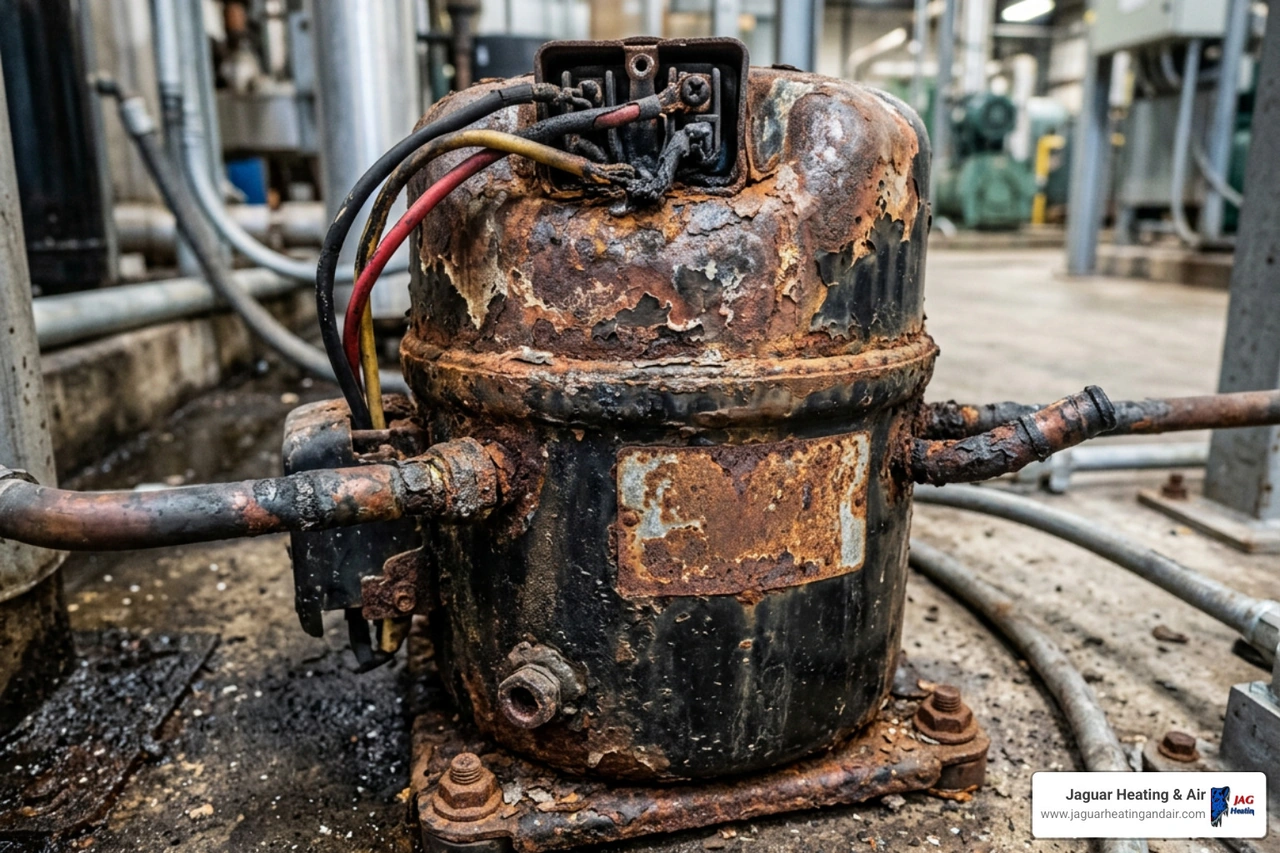
When a system is improperly sized, the physical damage is concentrated on several critical, high-dollar components.
1. The Compressor
Often referred to as the heart of the HVAC system, the compressor is the most expensive component to replace. In an oversized system, the constant mechanical shock of starting up 50 times a day under high pressure degrades the internal bearings. In an undersized system, constant running overheats the compressor oil, causing it to lose its viscosity. Once the oil breaks down, internal metal-on-metal grinding occurs, sending metallic debris throughout the refrigerant lines and permanently destroying the compressor.
2. Contactors and Capacitors
Contactors are the electrical switches that close to send high-voltage power to the compressor and fan motors. Capacitors act as temporary batteries to provide the electrical boost needed to start these motors. Because contactors have a finite number of physical connections they can make before the electrical contacts pit and burn out, short cycling destroys them rapidly. Capacitors, subjected to constant high-current start surges, quickly overheat and fail, leaving your system unable to start.
3. Blower Motors
The indoor blower motor is responsible for circulating air through your ductwork. When an oversized system is paired with existing ductwork designed for a smaller unit, it creates high static pressure—essentially "clogged arteries" for your HVAC system. The blower motor must work significantly harder to push air through restrictive ducts, leading to motor fatigue, bearing failure, and electrical burnout.
4. Heat Exchangers (Furnaces)
In a gas furnace, the heat exchanger is the metal chamber where combustion gases heat the indoor air. If a furnace is oversized, it heats up incredibly fast and then shuts down, causing the metal to rapidly expand and contract. This extreme thermal cycling leads to metal fatigue, eventually causing cracks in the heat exchanger. A cracked heat exchanger is a severe safety hazard, as it can leak deadly carbon monoxide gas into your home's airstream.
If your system is already experiencing frequent breakdowns due to these issues, you may face a difficult decision. We have put together comprehensive resources to help you decide whether to invest in repairs or opt for a replacement. Take a look at our articles on should I repair or replace my HVAC system and when to repair vs. replace your HVAC system to help guide your next steps.
The Solution: Manual J Load Calculations and Professional Sizing
How do we prevent these premature failures and ensure your system lives a full, efficient 15-to-20-year life? The answer lies in precise engineering calculations rather than guesswork.
The industry standard for proper HVAC sizing is a three-step process established by the Air Conditioning Contractors of America (ACCA):
- Manual J (Load Calculation): This is a detailed mathematical assessment of your home's heat gain in the summer and heat loss in the winter. A proper Manual J calculation takes into account your home's geographic location (such as the hot summer design temperatures in Sacramento or Rocklin), insulation values, window types and orientations, ceiling heights, air leakage rates, and even the number of occupants and heat-producing appliances.
- Manual S (Equipment Selection): Once the exact heating and cooling loads are calculated, Manual S is used to select equipment that matches those loads. This ensures we don't install a system that is too large or too small for your home’s specific thermal dynamics.
- Manual D (Duct Design): A perfectly sized air conditioner is useless if the ductwork cannot handle the required airflow. Manual D ensures the duct system is engineered to distribute the proper volume of air quietly and at the correct static pressure.
Finally, proper system commissioning must be performed after installation. This involves verifying that the refrigerant charge is precise and that the blower motor speed is adjusted to deliver the correct cubic feet per minute (CFM) of airflow across the coils.
Skipping these steps does not just lead to comfort issues; it can directly void your manufacturer's warranty. Most major brands require documented proof that the equipment was sized and installed according to ACCA standards to honor warranty claims on major components like compressors and heat exchangers.
To understand why professional installation is the single most important factor in your system’s long-term health, read about the importance of correct HVAC installation. Additionally, you can learn how to protect your investment with our guide on how to keep your HVAC warranty in place.
Frequently Asked Questions about HVAC Sizing
What are the most common warning signs of an improperly sized system?
If your system is oversized, the most common signs include:
- Short cycling: The outdoor unit turns on and off every few minutes (especially cycles lasting under 10 minutes).
- High indoor humidity: The air feels cold but "clammy" or sticky because the system doesn't run long enough to remove moisture.
- Uneven temperatures: Certain rooms are freezing cold while others remain warm.
If your system is undersized, you will notice:
- Continuous operation: The system runs nonstop for hours on end, especially during hot afternoons in Sacramento or Roseville.
- Inability to reach the set temperature: The thermostat is set to 74°F, but the indoor temperature hovers at 79°F.
- Weak airflow and rapidly rising energy bills.
Can regular maintenance fix or mitigate the damage of an improperly sized system?
While regular professional maintenance is incredibly important, it cannot fix a sizing issue. Maintenance can clean the coils and ensure electrical connections are tight, which temporarily reduces operational stress. However, it cannot change the physical capacity of the unit.
Using maintenance to solve a sizing problem is like putting premium fuel into a car with a broken transmission—it might help the engine run a bit smoother, but the core mechanical issue remains. Replacing the improperly sized equipment with correctly sized units is the only permanent solution.
How does improper sizing impact manufacturer warranties and rebates?
Manufacturers design their equipment to operate within highly specific parameters. If a compressor fails prematurely and the manufacturer's representative determines that the failure was caused by severe, unaddressed short cycling from gross oversizing, they may deny the warranty claim.
Furthermore, utility rebates and federal tax credits often require documented proof of an AHRI-certified matched system and a proper Manual J load calculation to qualify for energy efficiency incentives.
Conclusion
At Jaguar Heating & Air, we understand that a new heating and cooling system is a major investment in your family's comfort and financial well-being. We are proud to serve communities across the greater Sacramento region, including Elk Grove, Folsom, Roseville, El Dorado Hills, Lincoln, Rocklin, Woodland, Carmichael, Citrus Heights, Fair Oaks, Granite Bay, Mather, Orangevale, and Rancho Cordova.
As a Trane Comfort Specialist with NATE-certified technicians, we never rely on outdated rules of thumb or guesswork. We perform comprehensive Manual J load calculations to ensure your new system is sized perfectly for your home’s unique needs, guaranteeing dependable comfort and maximizing your equipment's operational lifespan.
Don't let a poorly sized system quietly destroy itself while driving up your utility bills. Schedule a professional sizing assessment with Jaguar Heating & Air today to protect your investment.
Recent Posts
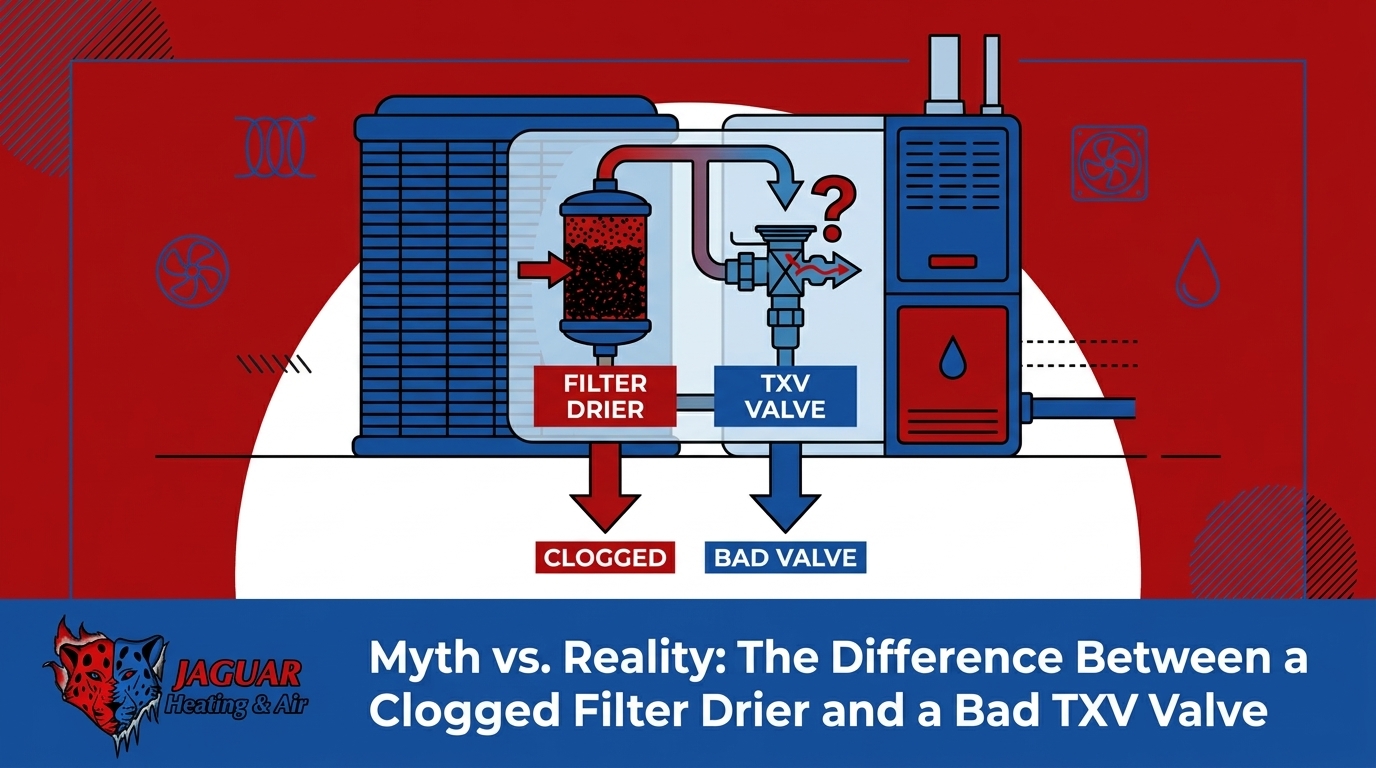
The Difference Between a Clogged Filter Drier and a Bad TXV Valve
An AC that blows warm air isn't always leaking refrigerant—it might be suffering from a flow restriction. Find out how technicians trace the bottleneck to restore your cooling.
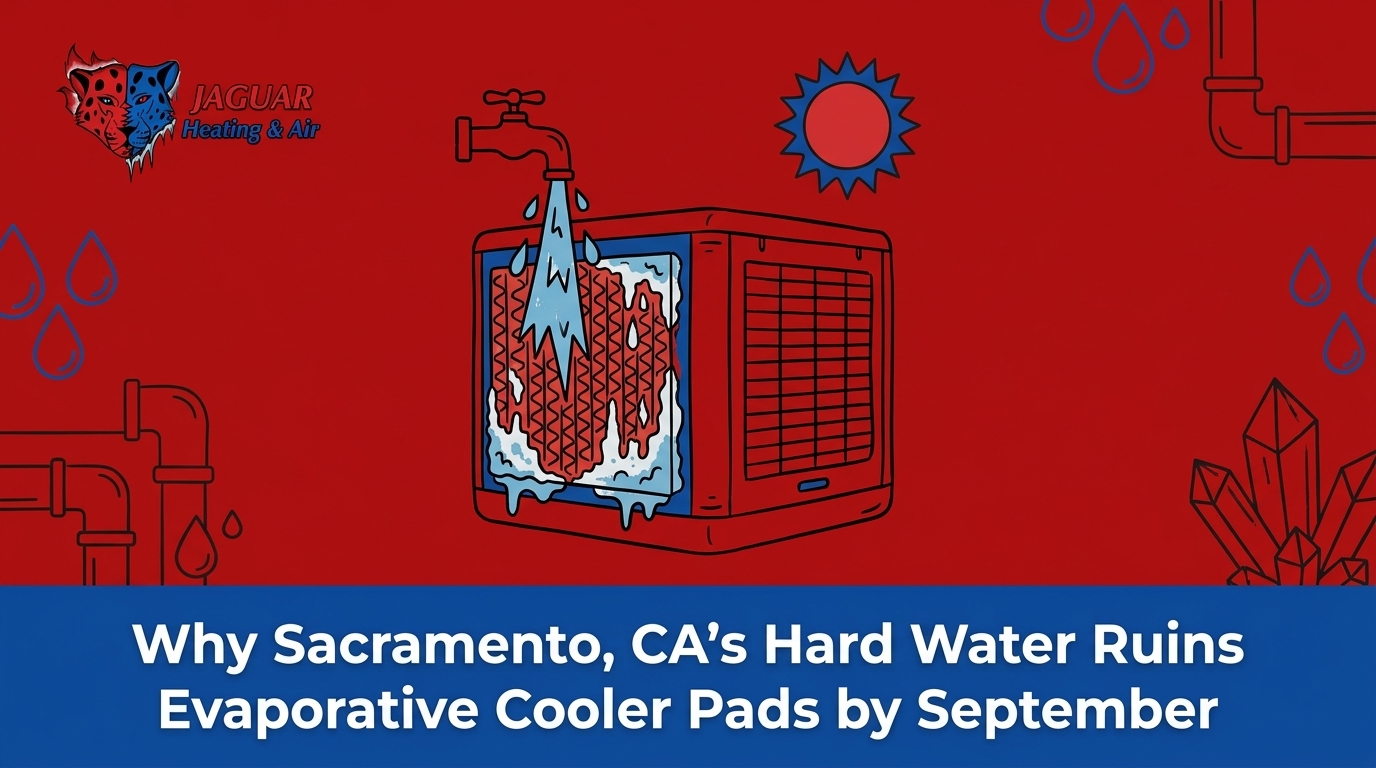
How Sacramento's Hard Water Affects Your Evaporative Cooler Pads
By September, Sacramento's heavy mineral content often turns swamp cooler pads into rock-hard blocks. See why airflow drops drastically and weigh your end-of-season options.
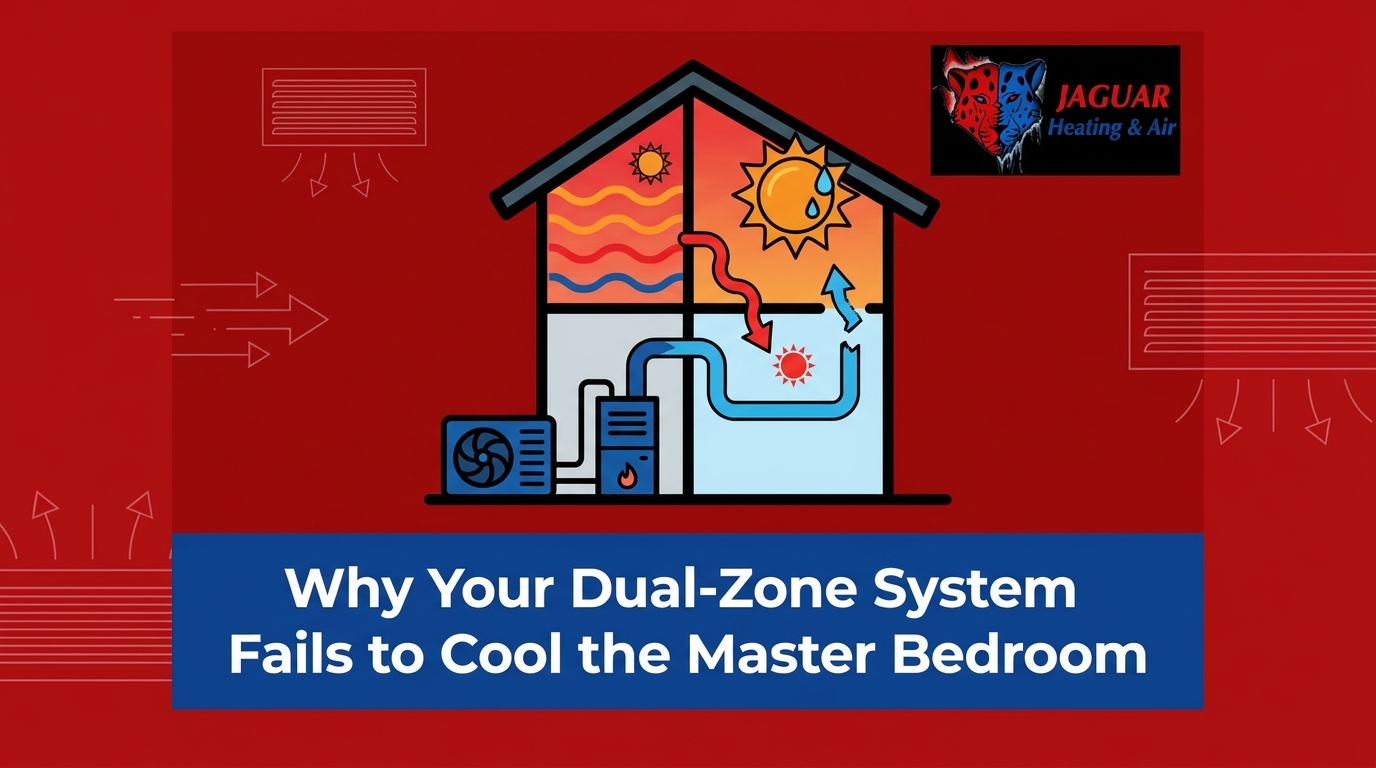
Why Your Dual-Zone System Fails to Cool the Master Bedroom
Persistent temperature imbalances in your master suite are rarely a main AC capacity issue. Discover how stuck motorized zone dampers disrupt airflow and why a pre-season diagnostic is crucial.