.avif)
When a Mitsubishi System Is Better Than Central Air
Understanding the Core Differences: Ductless vs. Central Air : A Quick Answer for Sacramento Homeowners When a Mitsubishi system is better than central air c…
Understanding the Core Differences: Ductless vs. Central Air : A Quick Answer for Sacramento Homeowners When a Mitsubishi system is better than central air c…

Understanding the Core Differences: Ductless vs. Central Air
: A Quick Answer for Sacramento Homeowners
When a Mitsubishi system is better than central air comes down to a handful of clear situations that many Sacramento-area homeowners run into every year.
Here is a quick breakdown:
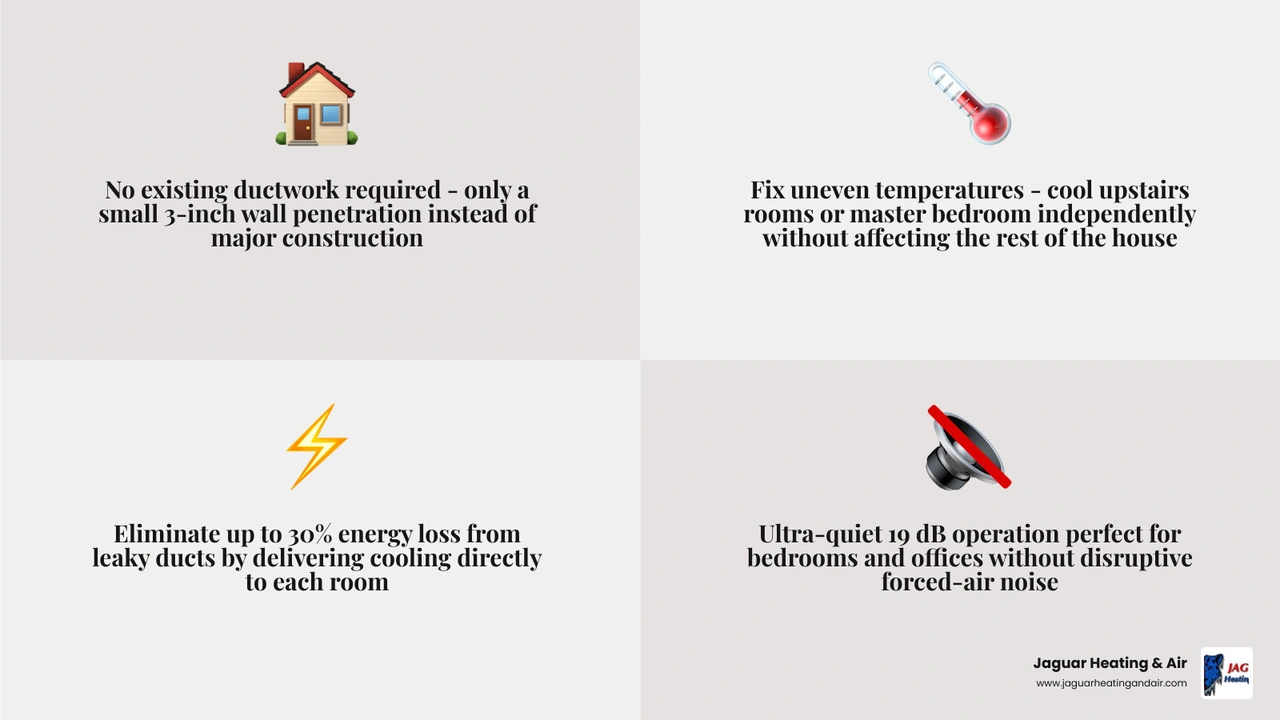
• No existing ductwork - Ductless installation requires only a small 3-inch wall penetration instead of tearing open walls and ceilings
• Uneven temperatures - If upstairs rooms or a master bedroom stay hot while the rest of the house is comfortable, a ductless zone solves it directly
• Home additions, sunrooms, or garage conversions - Spaces where extending existing ducts is impractical or too costly
• High energy bills from duct losses - Leaky ducts can waste up to 30% of your cooling energy; ductless systems eliminate that loss entirely
• Room-by-room control - Each indoor unit runs independently, so you only condition the spaces you actually use
• Older or historic homes - Where invasive ductwork installation would damage original walls, floors, or ceilings
• Noise-sensitive spaces - Mitsubishi indoor units can operate as quietly as 19 decibels, far quieter than forced-air systems pushing air through ducts
Central air is still a strong choice when your existing ductwork is in good condition and you want consistent whole-home cooling from a single thermostat. But for many homes in Elk Grove, Folsom, Roseville, Sacramento, and surrounding Northern California communities, a Mitsubishi ductless system solves problems that central air simply cannot.
The bottom line is this: neither system is universally better. The right answer depends on your home's layout, existing infrastructure, and comfort goals. The sections below walk through each scenario in detail so you can make a confident, informed decision.
Must-know when a mitsubishi system is better than central air terms:
• how much does a mitsubishi ductless system save
• is a mitsubishi ductless system worth the investment
To truly understand when a mitsubishi system is better than central air, it helps to look at how these two systems handle the job of keeping your home comfortable. While both systems are designed to cool and heat your living space, they take entirely different structural approaches to moving air.
Standard central air conditioning is a forced-air system that relies on a single central air handler connected to a complex network of ductwork hidden behind your walls, ceilings, or attic. A Mitsubishi ductless mini-split system, on the other hand, bypasses the need for ducts entirely. Instead, it pairs a compact outdoor condenser with one or more sleek indoor air handlers mounted directly inside the rooms you want to condition.
If you are trying to weigh these two designs, our guide on Is a Mini Split Better Than Central Air for You offers an excellent foundation for comparing their basic mechanics.
How Traditional Central AC Works
A traditional central AC system is built around a single-point control system—usually one thermostat located in a central hallway. When that thermostat registers that the indoor temperature has risen above your setpoint, it signals the entire system to turn on.
The outdoor condenser and indoor evaporator coil work together to cool the air, which is then forced by a large, high-pressure blower fan through a sprawling network of sheet metal or flexible ducts. This conditioned air is pushed out of vents located in every room of the house simultaneously. At the same time, return vents pull warm air back into the system to be cooled again.
While this whole-home approach is highly effective at maintaining a uniform temperature across a standard, open-concept layout, it cools the entire house regardless of which rooms are actually occupied.
How Mitsubishi Ductless Technology Works
Mitsubishi ductless technology completely rethinks this design by bringing the cooling and heating elements directly into individual rooms. Rather than using massive, centralized blowers, a ductless system connects its outdoor unit to individual indoor units via small, flexible copper refrigerant lines, electrical wiring, and a condensate drain line. These lines require only a small, unobtrusive 3-inch hole through an exterior wall.
Each indoor unit is equipped with its own thermostat and operates independently. At the heart of this system is Mitsubishi’s advanced inverter-driven compressor technology. Unlike traditional central AC compressors that turn completely on and off (like a noisy, energy-gulping light switch), a Mitsubishi inverter compressor behaves more like a dimmer switch. It constantly adjusts its speed to match the precise cooling or heating load of the room in real time.
For a deep dive into how this highly responsive engineering works to keep your home perfectly comfortable, you can read our Ultimate Mitsubishi Ductless Guide 2026.
When a Mitsubishi System Is Better Than Central Air for Home Layouts
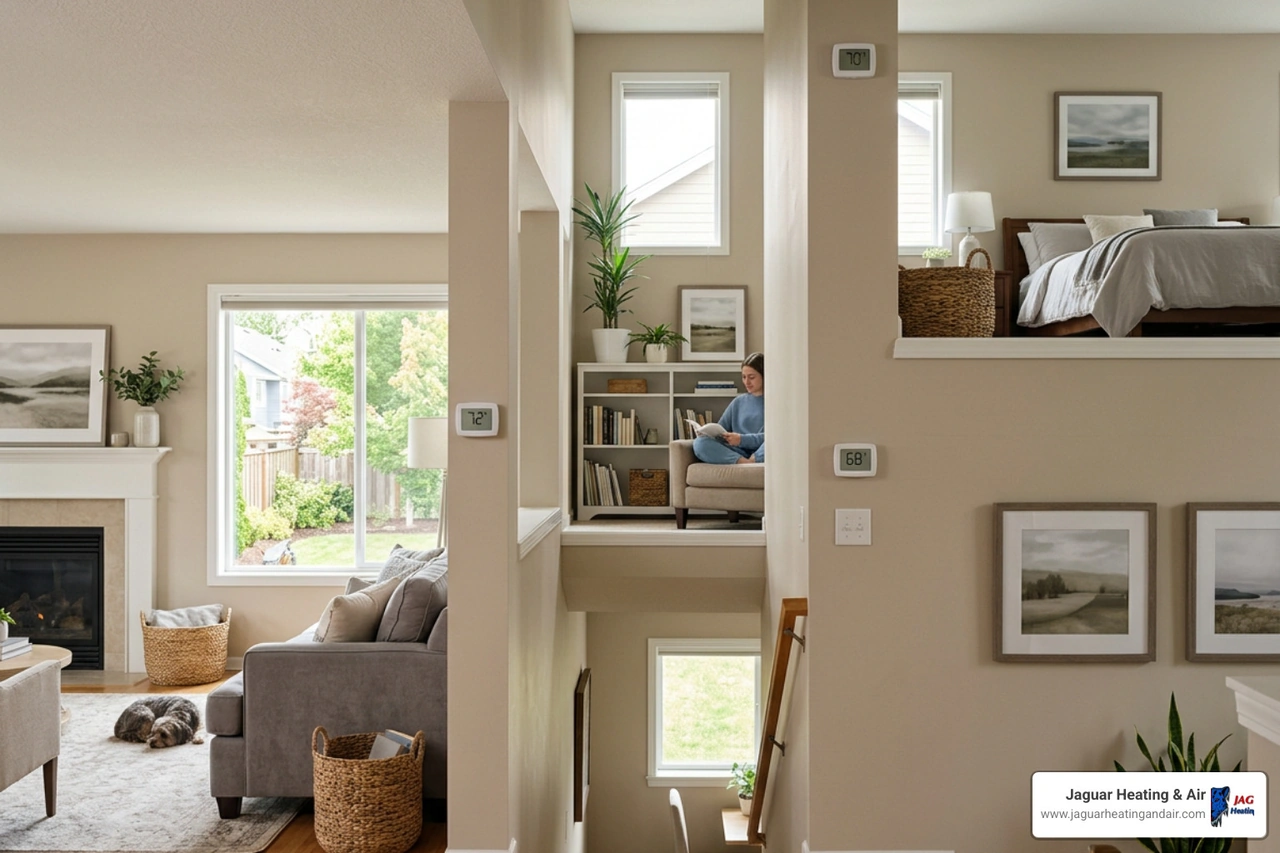
Every home has its own unique architectural personality, but some layouts present serious challenges for traditional central HVAC systems. From historic properties in Sacramento to modern home additions in Folsom, a home’s physical layout is often the single biggest factor in deciding when a mitsubishi system is better than central air.
If you are dealing with a complex layout, historic plaster walls, or a finished garage that never seems to stay cool, a ductless system offers unmatched architectural flexibility. You can read more about how these layout challenges play out locally in our Sacramento HVAC Showdown Central Air vs Mini Split analysis.
Homes Without Existing Ductwork
For older homes built before the advent of modern air conditioning—or homes built on slab-on-grade foundations with minimal attic or crawlspace—installing central air is a massive undertaking. Adding a full network of ducts to a home that does not have them requires invasive construction. Contractors must tear open plaster walls, drop ceilings, and build bulky soffits that eat into your valuable living space.
This level of construction is not only messy and disruptive, but it can also add up to $18,000 in structural renovation costs on top of the price of the actual heating and cooling equipment.
A Mitsubishi ductless system completely eliminates this headache. Because the indoor units connect to the outdoor condenser through a thin bundle of lines, our team can perform a clean Ductless Installation with virtually zero cosmetic damage to your home’s interior. This makes it the ideal choice for preserving the beautiful, historic character of older properties in communities like Sacramento and Woodland.
Solving Uneven Temperatures in Multi-Story Homes
Have you ever noticed that the upstairs bedrooms in your home feel like a sauna in the middle of a July afternoon, while the downstairs living room feels like a refrigerator? This common issue is caused by a combination of rising heat and the physical limits of traditional central air systems, which struggle to push balanced airflow to the furthest reaches of a multi-story house.
Trying to solve this with a single central thermostat is nearly impossible. If you lower the thermostat to make the upstairs comfortable, the downstairs becomes freezing cold—and your utility bills skyrocket.
A Mitsubishi mini-split allows you to target these troublesome temperature imbalances directly. By placing an independent indoor unit in a hot master bedroom or an upstairs loft, you can deliver dedicated cooling exactly where it is needed most. We regularly help local families resolve these exact comfort issues; you can learn more about this simple fix in our guide to how Ductless AC Mini Split Installation in Folsom Made Easy can restore balance to your home.
Energy Efficiency and Operating Performance
When it comes to lowering your monthly utility bills, the efficiency difference between ductless systems and traditional central air is staggering. Because Mitsubishi systems utilize cutting-edge inverter technology and deliver air directly to each room, they operate with a level of efficiency that central AC systems simply cannot match.
While high-end central air systems typically top out around 26 SEER2, premium Mitsubishi ductless systems can achieve industry-leading efficiency ratings of up to 35 SEER2. This difference in ratings translates directly into lower energy consumption month after month.
Eliminating Energy Loss from Leaky Ducts
One of the best-kept secrets of the HVAC industry is just how much energy is wasted by traditional ductwork. According to the U.S. Department of Energy, the average central air system loses up to 30% of its cooling energy through small leaks, cracks, and poorly sealed joints in the duct network.
This waste is even worse in Northern California, where residential ductwork is frequently run through unconditioned attic spaces. In the heat of summer, attic temperatures can easily climb past 130°F. When your central AC pushes cold air through ducts sitting in that blistering environment, the air warms up before it ever reaches your living room, forcing your system to work twice as hard.
Because a Mitsubishi system delivers conditioned air directly from the indoor unit straight into your room, there is 0% duct-related energy loss. This structural advantage alone makes a ductless setup incredibly efficient.
Precise Zoning and Room-by-Room Control
Think about how you use the lighting in your home. You would never install a single light switch that turns on every single light bulb in your house at the exact same time—so why do the same with your air conditioning?
Traditional central air is an "all-or-nothing" solution. Whether you are sleeping in the master bedroom or working in a home office, you are paying to cool the empty guest rooms, formal dining areas, and hallways.
A multi-zone Mitsubishi ductless system allows you to create up to eight independent comfort zones from a single outdoor condenser. Each room has its own thermostat, meaning you can turn off the cooling in unoccupied guest rooms while keeping your bedroom perfectly chilled at night. This precise level of control can reduce your household energy use by 30% to 40% compared to a traditional central air system.
If you are looking to make a smart, long-term upgrade to your property, check out why homeowners find that Ductless Mini Splits Good Investment Folsom CA is a highly rewarding choice for both comfort and energy savings.
Humidity Control and Indoor Air Quality in Humid Climates
While Northern California is known for its beautiful Mediterranean climate, summer afternoons can still bring uncomfortable warmth, and managing indoor air quality is a year-round priority for local families. True comfort is about more than just lowering the temperature on a thermostat; it is about managing relative humidity and keeping the air you breathe clean and healthy.
A Mitsubishi system excels in both of these areas, offering advanced climate-control features that traditional central air units struggle to replicate.
Dehumidification: When a Mitsubishi System Is Better Than Central Air
To remove moisture from the air, an air conditioner must run long enough for water vapor to condense on its cold evaporator coils. Traditional central AC systems, which operate on short, high-blast cycles, often cool a room so quickly that they turn off before they have a chance to pull significant moisture out of the air. This can leave your home feeling cold and clammy.
Because Mitsubishi systems utilize variable-speed inverter compressors, they can run on continuous, ultra-low capacity cycles. Instead of shutting off, the system ramps down to a gentle whisper, continuously pulling air across the cooling coils to extract moisture without over-cooling your living space.
Additionally, Mitsubishi units feature a dedicated "Dry Mode" designed specifically to maximize moisture removal on those sticky, humid days. This continuous operation keeps your indoor relative humidity in the ideal 40% to 50% range, which is crucial for preventing mold growth and reducing dust mites. You can read more about keeping your home perfectly balanced in The Elk Grove Guide to Staying Cool with Ductless Mini Split Installation.
Advanced Filtration for Cleaner Indoor Air
Traditional central air systems rely on a single, centralized air filter. While these filters do a decent job of catching larger dust particles, they require the system’s blower fan to run constantly to circulate air through the entire house. Furthermore, if your ductwork has any leaks, it can actually pull dusty, unconditioned air from your attic or crawlspace directly into your breathing air.
Mitsubishi ductless units feature a sophisticated, multi-stage filtration system built directly into every single indoor wall unit. These systems typically include:
• A washable anti-allergen pre-filter to capture large dust and pet dander
• A deodorizing filter to neutralize household odors and smoke
• An electrostatic enzyme filter designed to trap microscopic particles, pollen, and allergens
Because each room unit filters its own air locally, you get targeted purification without the risk of circulating allergens from one side of the house to the other. To keep these advanced filtration systems running at peak performance, regular upkeep is key. Explore our comprehensive Mini Split Services to see how simple it is to maintain pristine indoor air quality.
Installation, Noise Levels, and Hybrid Comfort Solutions
When comparing HVAC upgrades, it is important to look at the practical, day-to-day experience of living with the system. This includes how noisy the equipment is, how disruptive the installation process will be, and whether a combination of technologies might actually be the best path forward for your home.
• Indoor Noise Level — Mitsubishi Ductless Mini-Split: Whisper-quiet (as low as 19 dB) — Traditional Central Air: Noticeable (typically 50–60 dB)
• Ductwork Required — Mitsubishi Ductless Mini-Split: None (uses small refrigerant lines) — Traditional Central Air: Full network of hidden ducts
• Zoning Flexibility — Mitsubishi Ductless Mini-Split: High (independent room-by-room control) — Traditional Central Air: Low (single thermostat whole-house)
• Installation Disruption — Mitsubishi Ductless Mini-Split: Minimal (completed in 1-2 days) — Traditional Central Air: High (requires wall/ceiling construction)
• Energy Efficiency — Mitsubishi Ductless Mini-Split: Ultra-high (up to 35 SEER2) — Traditional Central Air: Moderate (typically up to 26 SEER2)
If you are looking for a highly rated team to help you navigate these choices, read about Folsom's local experts in Best in Show Folsom's Highest Rated Mini Split Installers.
Whisper-Quiet Operation for Bedrooms and Offices
If you are sensitive to noise, a traditional central air conditioner can be a constant source of disruption. The loud "clunk" of the system turning on, followed by the roaring sound of air rushing through metal ducts, can easily interrupt a peaceful night's sleep or a quiet work-from-home meeting.
Mitsubishi ductless systems are engineered to operate at near-silent levels. The indoor units feature larger fan blades and low-pressure, variable-speed motors that allow them to move air with minimal friction. Many Mitsubishi indoor models operate at sound levels as low as 19 decibels—which is literally quieter than a whisper or rustling leaves.
Because the noisy compressor and condenser fan are located entirely outdoors, you can enjoy a perfectly peaceful indoor environment. If you ever run into performance issues or want to keep your system running silently, our Ductless Mini Splits Roseville CA Troubleshooting Guide is a fantastic resource to keep on hand.
Supplemental Cooling: When a Mitsubishi System Is Better Than Central Air
Choosing a new HVAC system does not have to be an "either-or" decision. In fact, for many larger homes in the Sacramento area, a hybrid approach is the absolute best solution.
If your home already has a functional central air conditioning system that keeps the main living areas comfortable, you do not need to replace the whole thing just to fix a few problem areas. Instead, you can install a supplemental Mitsubishi mini-split to handle specific spaces that your central system struggles to reach, such as:
• A newly finished attic guest room
• A converted garage gym or workshop
• A sunroom with floor-to-ceiling windows
• A home office that gets hot from computer equipment
By pairing your existing central system with a targeted ductless unit, you get the best of both worlds: reliable whole-home coverage and precise comfort where you need it most. If you are ready to explore how this setup could work in your home, our team specializes in Mini Split Installation Sacramento CA to help you design the perfect custom comfort solution.
Frequently Asked Questions about Ductless vs. Central Air
What is the main difference between a Mitsubishi ductless system and central air?
The primary difference is how they distribute air. Central air uses a single, centralized air handler to push conditioned air through a network of hidden ducts to cool the entire home at once. A Mitsubishi ductless system bypasses ducts entirely, using individual, wall- or ceiling-mounted indoor units connected to an outdoor condenser via small refrigerant lines to cool specific rooms directly.
Can I replace my entire central air system with Mitsubishi mini-splits?
Yes! A whole-home ductless conversion is a highly popular option for homeowners looking to maximize their energy efficiency and eliminate hot or cold spots. By pairing a multi-zone outdoor condenser with several indoor units, you can replace your aging central AC and furnace with a highly efficient, fully zoned comfort system that gives you independent temperature control over every room.
How long does it take to install a Mitsubishi ductless system?
Because ductless systems do not require extensive duct construction, the installation process is remarkably fast. A single-zone system (one indoor unit and one outdoor unit) can typically be installed in just a few hours. Even a complex, multi-zone whole-home system can usually be completed within one to two days, causing minimal disruption to your daily routine.
Conclusion
When deciding when a mitsubishi system is better than central air, the choice ultimately comes down to your home’s unique architectural needs, your personal comfort goals, and how much control you want over your energy bills. Whether you are preserving a historic home in Sacramento, adding a sunroom in Elk Grove, or trying to fix a hot upstairs bedroom in Folsom, a Mitsubishi ductless system offers a level of efficiency, quiet operation, and targeted control that traditional central air simply cannot match.
At Jaguar Heating & Air, we are proud to be a family-owned HVAC company serving our neighbors across Sacramento, Roseville, Rocklin, and the surrounding communities. As a Trane Comfort Specialist with NATE-certified technicians, we are dedicated to providing flat-rate pricing, same-day service, and a 100% customer satisfaction guarantee.
If you are ready to experience the unmatched comfort of a customized ductless setup, we invite you to Schedule a consultation for a Mitsubishi high-efficiency system with our expert team today!
Recent Posts
HVAC Maintenance Guide: Comparing Heating Replacement Options Before Winter
Before winter hits, make sure your furnace can handle the cold. Compare your options with these objective heating options comparisons for homeowners.

HVAC Maintenance: Troubleshooting the Fall Heating Startup
Why does your furnace smell like burning on that first chilly morning? Use our home maintenance tips and troubleshooting to know when to call a pro this fall.

HVAC Maintenance: Home Maintenance Tips and Troubleshooting for Fall Heating Startup
Why some systems smell burning during fall startup, and how these home maintenance tips and troubleshooting steps help you decide when to call a professional.