.avif)
Why Does My Heater Smell Like Burning Dust? Common Homeowner Questions Answered & A Fall Guide to AC Repair in Sacramento, CA
Why does your heater smell like burning dust? With common homeowner questions answered, see what we found causes this fall odor and when to call a pro.
Why does your heater smell like burning dust? With common homeowner questions answered, see what we found causes this fall odor and when to call a pro.

The October HVAC Shift: From Cooling to Heating in the Sacramento Valley
Your air conditioner has been running nonstop for months, but as the evening air finally cools down, you switch the thermostat to heat—only to be met with an alarming burning smell spreading through the house. Of all the common homeowner questions answered during the fall season, that strange, dusty odor is usually at the top of the list. The sudden temperature drops that mark the mid-fall October heating startup often catch homeowners off guard, especially when their first attempt to warm the house results in a foul smell instead of cozy comfort.
If you are looking for reliable air conditioning services to help you navigate this seasonal transition safely, our team is ready to help.
The climate factor: To understand why this happens, you have to look at what your system goes through during the summer. The dry Sacramento summer air, combined with fine agricultural dust blowing through the Central Valley, leads to significant particulate accumulation inside your HVAC unit. While your air conditioner is running, the heating components sit completely dormant. Over those long, hot months, layers of dust, pet dander, and airborne debris settle quietly over the furnace burners and the heat exchanger.
When you finally initiate that first heating cycle, the system has to wake up from its summer hibernation. The burners ignite, and the heat exchanger rapidly warms up to transfer heat into your ductwork. Any dust that has settled on those metal surfaces is instantly incinerated. This process produces a distinct, slightly singed odor that travels through your vents and into every room of your home. While it can be startling, local experts understand these specific regional HVAC challenges and can assure you that a brief burning dust smell is a normal part of the seasonal shift.
Late-Season Heat Waves and Unexpected AC Breakdowns
October in the Sacramento Valley is notoriously unpredictable. While the nights begin to cool down into the 40s and 50s, the daytime hours can still bring unexpected heat spikes that demand reliable cooling. Months of continuous, heavy summer operation leave air conditioning systems highly vulnerable to late-season failure. When a heat wave strikes just as you thought summer was over, an overworked system can easily be pushed past its breaking point.
During a late-season heat wave last summer, one homeowner in the Sacramento Valley reached out because their system was blowing ambient air while outside temperatures climbed into the triple digits. Our technician arrived promptly, diagnosed the overworked components, and clearly explained the underlying problem and available options. By addressing the strain directly, the house was cooling down again the same day, preventing a much larger mechanical failure.
The importance of prompt action: Ignoring a struggling air conditioner in the fall is a risky gamble. When your system blows warm air instead of cooling, it is usually a sign of a failing component that requires immediate AC repair in Sacramento. Addressing these cooling issues now prevents larger, more expensive mechanical failures when you try to turn the system back on next spring. As a trusted local team with fast response times, we prioritize getting your system stabilized before the weather shifts again.
Common Late-Season Cooling Failures
After enduring the strain of triple-digit summer heat, several specific components are prone to failing just as the season ends. Here is what we typically see during the mid-fall October heating startup window:
• Refrigerant leaks: Tiny pinhole leaks that developed slowly over the summer can finally deplete the system's charge by October, resulting in warm air blowing from the vents.
• Overworked blower motors: Pushing air through dirty, dust-clogged filters for months causes the blower motor to overheat and eventually seize up.
• Capacitor failures: Prolonged exposure to extreme heat degrades the electrical capacitors that jump-start your compressor, leaving the outdoor unit completely unresponsive.
The First Chilly Morning: Why Your Heater Smells Like Burning Dust (Common Homeowner Questions Answered)
When you wake up to that first chilly morning and turn on the heat, the resulting odor can cause immediate panic. Getting these common homeowner questions answered requires a closer look at the actual mechanics of your heating system. The problem begins long before you touch the thermostat.
The Problem: You turn on the heat for the first time in months, and within minutes, a smell resembling burning hair or scorched dust fills your living space. The odor is strong enough to make you worry about an electrical fire or a failing furnace.
The Cause: During the dormant summer months, your furnace acts as a passive tunnel for your air conditioner's airflow. Because the heat exchanger is not actively burning fuel or getting hot, it becomes a resting place for dust, pollen, and airborne particles. The region's dry climate significantly exacerbates this buildup, as there is very little ambient moisture to weigh the dust down. When the mid-fall October heating startup finally occurs, the burners ignite and the metal heat exchanger rapidly reaches hundreds of degrees. The accumulated debris is instantly burned off the metal surfaces.
The Solution: In most cases, the best course of action is simply to let the system run. Open a few windows to ventilate the home, and allow the heating cycle to complete its work. This specific odor is a completely normal part of the fall transition. Once the initial layer of dust is incinerated, the smell will naturally dissipate, leaving you with clean, warm air for the rest of the winter season.
Normal Burn-Off vs. Warning Signs of Danger
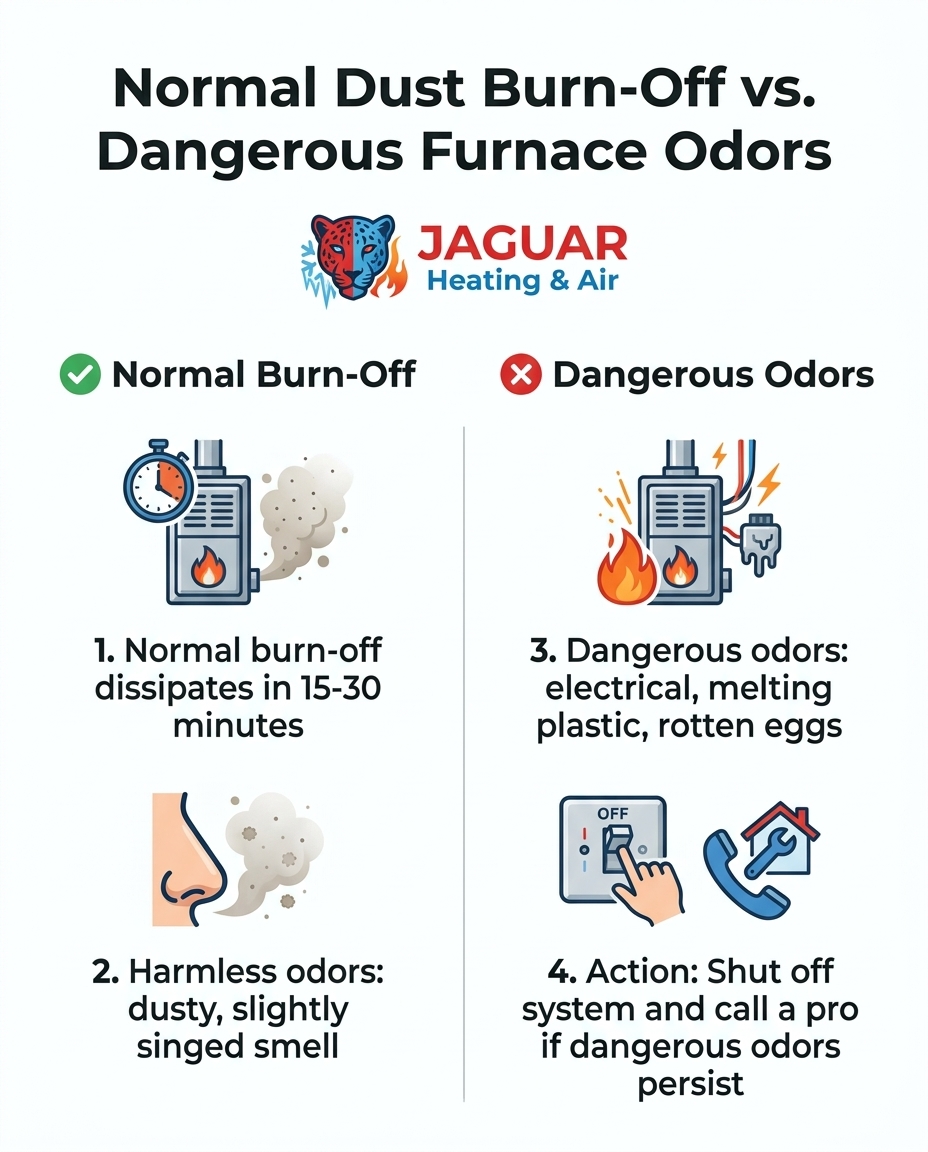
While a dusty odor is expected, not all smells coming from your vents are harmless. Providing authoritative, data-backed guidance on how to tell the difference is crucial for your family's safety. A typical dust burn-off smell should dissipate within 15 to 30 minutes of the first heating cycle. If the odor lingers for hours, or if it changes in character, you may be dealing with a serious mechanical or electrical hazard.
It is vital to differentiate the smell of burning dust from dangerous odors like melting plastic, electrical burning, or the distinct scent of rotten eggs. A professional pre-winter inspection is the best way to rule out these serious hazards before the cold weather sets in permanently across the Sacramento Valley.
• Singed dust or burning hair — Likely Cause: Normal summer dust accumulation burning off the heat exchanger. — Required Action: Wait 15 to 30 minutes. Open windows for ventilation. The smell should fade.
• Melting plastic or rubber — Likely Cause: A foreign object (like a toy) in the ductwork, or melting wire casings. — Required Action: Shut off the system immediately at the thermostat and call a professional.
• Electrical burning or ozone — Likely Cause: An overheating blower motor, a failing circuit board, or frayed wiring. — Required Action: Turn off the power at the breaker panel and schedule an emergency inspection.
• Rotten eggs or sulfur — Likely Cause: A natural gas leak near the furnace or gas lines. — Required Action: Evacuate the home immediately, leave the doors open, and call your gas provider.
When to Shut Down Your System
If you are ever in doubt about the safety of your heating equipment, err on the side of caution. You should shut down your system completely if you notice any of the following warning signs:
• Lingering odors: Any burning smell that lasts longer than 45 minutes without fading.
• Acrid smells: Chemical, electrical, or metallic odors that irritate your eyes or throat.
• Visible smoke: Actual smoke or dark soot blowing out of the supply registers.
Protecting Your Indoor Air Quality During the Fall Transition
The odors associated with the mid-fall October heating startup are directly connected to broader indoor air quality (IAQ) concerns. When you turn on the heat, the sudden change in temperature and airflow can dislodge trapped summer allergens, circulating them throughout every room in your home. If you suffer from allergies or asthma, this sudden influx of dust and dander can cause significant respiratory discomfort.
As an honest educator that prioritizes homeowner health and peace of mind over quick sales, we believe in proactive care. Taking a few simple steps before the first major cold front arrives can drastically improve the air you breathe and extend the lifespan of both your heating and cooling components.
1. Inspect your current air filter: Pull out the filter you used during the summer. If it is coated in a thick layer of gray dust, it is actively restricting airflow and contaminating your ductwork.
2. Install a fresh, high-quality filter: Replace the dirty filter with a clean one before running the heater for the first time. This ensures that any loose dust kicked up by the blower motor is captured before it reaches your living spaces.
3. Clear the area around the furnace: Ensure that boxes, cleaning supplies, and flammable materials are moved far away from the heating cabinet to prevent accidental fires and improve ambient airflow.
4. Schedule a professional tune-up: Routine routine AC maintenance and heating inspections clear away particulate buildup before it has a chance to burn, ensuring a clean, odor-free startup.
By staying ahead of this seasonal shift, you protect your home's air quality while ensuring your equipment operates at peak efficiency.
Evaluating Summer Wear: Maintenance vs. System Upgrades
Heavy summer usage takes a massive toll on older HVAC systems. By the time October arrives, many units are barely limping across the finish line. It is crucial to evaluate whether your aging system actually survived the summer intact, or if it is time to consider a replacement before the harsh winter weather sets in. Ignoring the signs of lost efficiency—such as uneven temperatures from room to room, strange grinding noises, or steadily rising utility bills—only delays the inevitable.
Earlier this spring, a Sacramento Valley homeowner contacted our team after struggling with a failing air conditioning unit that could no longer keep up with the changing temperatures. After evaluating the extensive wear on the equipment, we determined that minor repairs would only act as a temporary bandage. We recommended and installed a new air conditioning unit and evaporator coil. The new system was up and running smoothly, providing reliable comfort and peace of mind long before the extreme weather arrived.
Making the right call: A thorough fall inspection can definitively determine if your unit needs a few minor tweaks or if you should explore AC replacement options. Addressing failing equipment in the fall is always a smarter financial decision than waiting for an emergency breakdown in the middle of a freezing winter night. Upgrading on your own terms allows you to research your options, improve your home's energy efficiency, and avoid the stress of panic-buying a new system.
DIY Mistakes to Avoid When Prepping Your HVAC for Fall
When the burning dust smell hits, some homeowners are tempted to take matters into their own hands to clean the system out. However, modern HVAC systems are complex, high-voltage machines that require specialized knowledge to service safely. We strongly warn against opening the furnace cabinet to clean internal components without a proper license. Poking around the heat exchanger or the burner assembly with a vacuum attachment can easily damage delicate sensors, misalign the gas valves, or create a dangerous carbon monoxide hazard.
The dangers of improper cleaning: Another major mistake is the use of water or improper chemical cleaners around sensitive electrical parts. Spraying household cleaners inside the cabinet can introduce flammable fumes that ignite when the burners turn on. Furthermore, exterior condenser units also require specialized care. Aggressive DIY washing can bend the delicate aluminum fins, severely restricting airflow and causing the compressor to overheat. This is exactly why we never recommend hose-washing your AC coils yourself.
Professional maintenance remains the safest, most effective route to a clean, odor-free system. A licensed technician during the mid-fall October heating startup has the correct tools to safely dismantle the housing, clean the heat exchanger, test the safety switches, and ensure that your system is thoroughly prepped for winter without risking accidental damage.
Schedule Your Pre-Winter HVAC Inspection Today
As the seasons change in the Sacramento Valley, knowing that your system is safe, efficient, and ready to handle the temperature shifts provides invaluable peace of mind. Whether you need to address late-season air conditioning wear or want to ensure a safe, odor-free heating startup, proactive care is the best investment you can make in your home's comfort.
If you want more common homeowner questions answered or need to schedule a comprehensive professional inspection, do not wait for the first freezing night to discover a problem. Reach out to our experienced team today to secure your appointment and step into the winter season with total confidence.
Frequently Asked Questions
Why does my heater smell like burning dust?
Your heater smells like burning dust because particles settle on the heat exchanger during the dormant summer months. When you turn the furnace on for the first time in the fall, the heat exchanger gets incredibly hot and instantly incinerates that accumulated dust. This is a normal part of the seasonal transition and is simply the system burning off harmless debris.
How long is it normal for a heater to smell like burning?
A typical dust burn-off smell should dissipate within 15 to 30 minutes of the first heating cycle. If you open a few windows to ventilate the house, the odor will clear out quickly. However, if the burning smell lasts longer than 45 minutes or grows stronger, you should shut the system down and contact a professional.
Can a dusty furnace cause a house fire?
While the initial layer of standard household dust burning off the heat exchanger is not a severe fire hazard, extreme neglect can be dangerous. If a furnace is completely choked with heavy debris, pet hair, or flammable materials stored too close to the cabinet, the risk of fire increases significantly. Routine professional maintenance ensures the cabinet remains clean and safe.
When should I call an HVAC tech for a smelling furnace?
You should call an HVAC technician immediately if the smell coming from your vents resembles melting plastic, burning electrical wires, or rotten eggs. You should also call for service if a standard dusty smell persists for more than an hour without fading. These are warning signs of mechanical failure, overheating wiring, or a potential gas leak.
Why does my house smell dusty when the heat comes on?
Your house smells dusty because the blower motor is pushing air through ductwork that has been sitting idle or accumulating particles all summer. If you haven't changed your air filter before the fall startup, the system will blow trapped allergens back into your living spaces. Upgrading to a fresh filter before turning on the heat greatly reduces this dusty odor.
Do I still need AC maintenance if I'm switching to heating in Sacramento?
Yes, late-season AC maintenance or a combined fall inspection is highly recommended. Because Sacramento experiences long, intense summers, your air conditioner endures significant wear and tear that needs to be addressed before it sits idle all winter. A thorough inspection ensures both your cooling and heating components are clean, safe, and ready for the shifting weather.
Recent Posts
Decoding Fall HVAC Startups: Your Guide to Maintenance and AC Repair in Sacramento, CA
Navigating the October Shift: When Sacramento Weather Demands Both Cooling and Heating October in the Central Valley brings a sudden, sharp transition in weathe
Decoding the October Heating Startup: AC Repair and Fall Maintenance in Sacramento, CA
Burning dust smells on the first chilly night? Use this seasonal home maintenance checklist to see what is normal and when to call a pro on this startup.
Why Your Thermostat Blanking Out Might Just Be a Blown Low-Voltage Fuse
A completely dead thermostat screen right as fall begins often triggers panic. See why a blown 3-amp low-voltage fuse is actually protecting your furnace control board.