Furnace Heat Exchanger Failure Signs: Why Rust Requires Mandatory Carbon Monoxide Testing
Why we treat rust as a major hazard. See the furnace heat exchanger failure signs that point to carbon monoxide leaks, and when to call a pro for testing.
Why we treat rust as a major hazard. See the furnace heat exchanger failure signs that point to carbon monoxide leaks, and when to call a pro for testing.

Is That Rust on Your Furnace a Cosmetic Flaw or a Major Safety Hazard?
The November pre-winter heating season is just around the corner, and as you prepare your home for colder weather, knowing the critical furnace heat exchanger failure signs can make the difference between a safe winter and a hazardous one. When prepping for the cold, homeowners often look for visible issues on their equipment. One of the most common discoveries during this time is a patch of rust on the exterior of the furnace cabinet or near the burner area. It is incredibly easy to dismiss this orange, flaky buildup as normal cosmetic wear and tear, especially on an older unit.
However, rust on your heating equipment is rarely just a surface blemish. At Jaguar Heating & Air, our team recognizes rust as one of the very first physical symptoms of a cracked heat exchanger. This is the component responsible for keeping the toxic gases created by burning fuel completely separate from the clean air blowing into your living room. When that component fails, it begins leaking dangerous combustion moisture—and potentially carbon monoxide—directly into your home.
Deciding whether to ignore that rust or call a professional is a critical decision point. Dismissing it can put your household at serious risk of carbon monoxide exposure as the unit runs daily. If you spot rust or corrosion on your system, reaching out for professional heating services is the only way to confirm whether you need a basic tune-up or urgent furnace repair. The right next step is always to halt usage and schedule professional carbon monoxide testing to ensure your family's safety.
Understanding Your Heating System: What Does a Heat Exchanger Do?
To understand why rust is such a severe warning sign, it helps to understand the foundational mechanics of your heating system. The heat exchanger is arguably the most important component inside your furnace. It acts as a critical metal shield, a physical barrier that separates the breathable air circulating through your home from the toxic byproducts of burning natural gas or propane.
Here is a step-by-step breakdown of how this vital component operates during a standard heating cycle:
1. Combustion begins: When your thermostat calls for heat, the furnace ignites the gas burners inside the combustion chamber.
2. Gases enter the exchanger: The extremely hot, toxic combustion gases (which include carbon monoxide) are drawn into the hollow metal tubes or clamshell-shaped chambers of the heat exchanger.
3. Heat transfer occurs: As these hot gases travel through the metal chambers, the metal itself becomes incredibly hot.
4. Air circulation: Your blower motor pushes cold indoor air over the outside of these hot metal chambers. The air absorbs the heat and is then pushed through your ductwork into your rooms.
5. Exhaust venting: The toxic gases, having given up their heat, are safely vented out of your home through the flue pipe.
Because the breathable air and the toxic exhaust gases never touch, your home stays warm and safe. However, this metal shield undergoes extreme temperature fluctuations every single time the furnace cycles on and off. Over years of expanding and contracting, the metal can experience fatigue, leading to microscopic cracks. When this barrier is breached, specialized Carbon monoxide (CO) parts per million (PPM) detection is absolutely required to identify leaks, as these gases are entirely invisible to the naked eye.
The Chemical Reality: How Escaping Combustion Moisture Causes Rust
Most homeowners associate rust with water damage from a leaky pipe or a damp basement. But when rust appears on a furnace, the source of the moisture is usually chemical, not environmental. Understanding the scientific connection between a cracked heat exchanger and the formation of rust is crucial for recognizing the severity of the problem.
The Problem: Condensation in the Combustion Process
When natural gas burns, it undergoes a chemical reaction that produces heat, carbon dioxide, and water vapor. Under normal operating conditions, this water vapor remains hot and turns into a gas, traveling safely out of the flue pipe along with the other exhaust fumes. However, if the combustion process is incomplete, or if the heat exchanger has a hairline crack, the dynamics change entirely.
The Cause: Escaping Acidic Moisture
When a crack develops due to metal fatigue, the pressurized air from your blower motor can alter the draft inside the heat exchanger. This allows the combustion gases—and the moisture they carry—to escape the contained area and enter the furnace cabinet. Furthermore, the water vapor produced by burning gas is not pure water; it is highly acidic. When this acidic moisture escapes and settles on the cooler metal components of your furnace exterior or burner assembly, it triggers a rapid oxidation process.
The Result: Chemical Oxidation (Rust)
The rust you see on your furnace is the direct result of this acidic moisture eating away at the metal. It is a chemical indicator that flue gases are escaping their designated path. Because these flue gases contain carbon monoxide, rust is a giant red flag.
• Location — Normal Environmental Wear: Bottom feet of the unit (if in a damp basement) — Internal Chemical Rust (Warning Sign): Near the burners, draft inducer, or exterior cabinet seams
• Appearance — Normal Environmental Wear: Light surface discoloration — Internal Chemical Rust (Warning Sign): Flaky, deep orange crust, often accompanied by white acidic residue
• Progression — Normal Environmental Wear: Takes years to develop — Internal Chemical Rust (Warning Sign): Can appear rapidly over a single heating season
Because this rust points directly to escaping exhaust, staying on top of routine heating maintenance is the best way to catch these chemical reactions before they pose a severe threat to your home. A professional technician uses Carbon monoxide (CO) parts per million (PPM) detection tools to confirm if the rust is indeed caused by a breached exchanger.
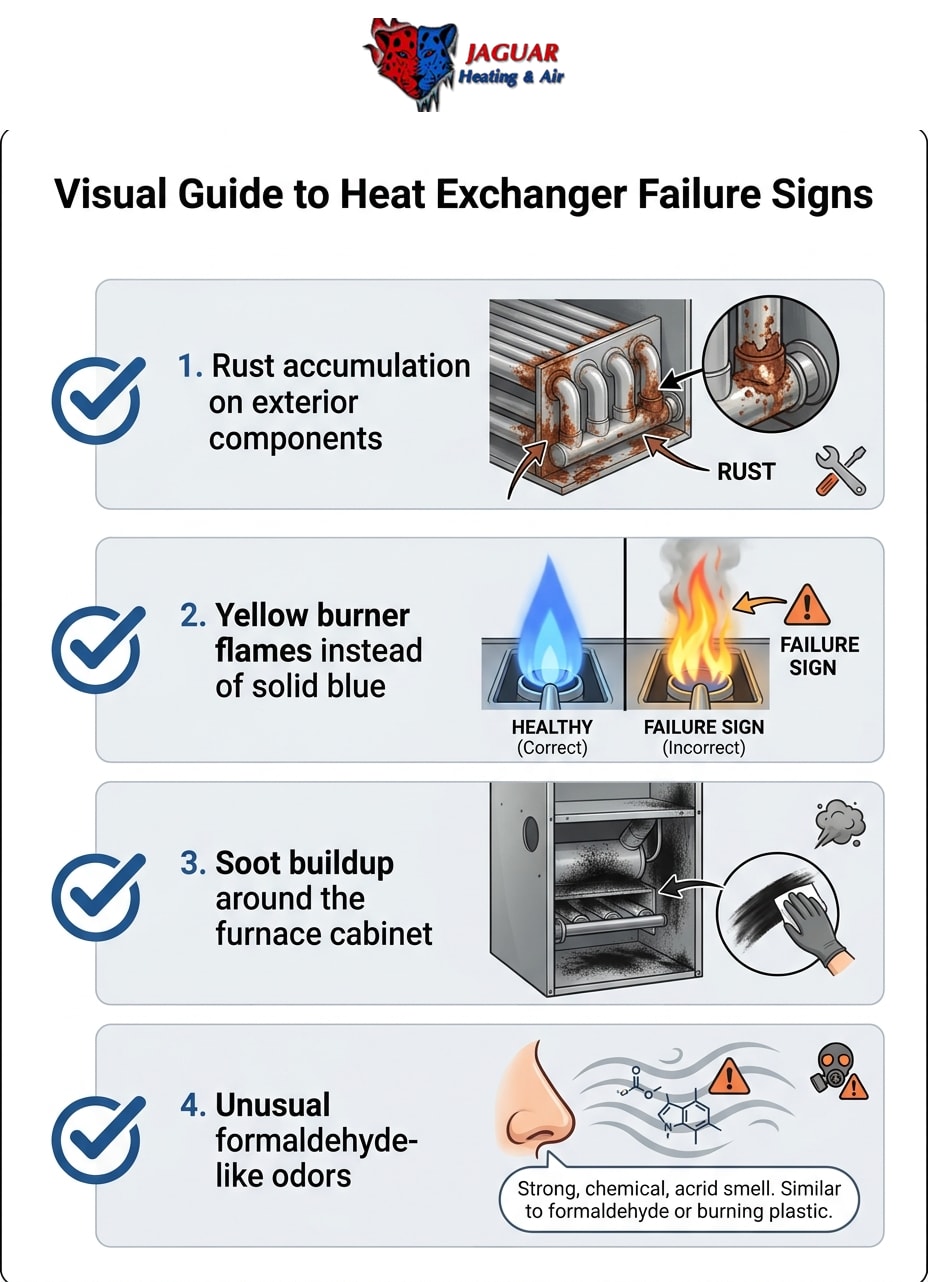
Key Furnace Heat Exchanger Failure Signs to Watch For
While rust is a primary visual indicator, it is rarely the only symptom of a failing heating system. As you start your system during the November pre-winter heating season, paying close attention to visual and sensory warnings can help you catch a compromised heat exchanger early.
Visual Warning Signs:
• Rust buildup: As discussed, any flaking or orange discoloration on the metal components, particularly near the burners or exhaust flue, is a major red flag.
• Yellow burner flames: A healthy gas furnace should produce a crisp, solid blue flame with perhaps a tiny tip of yellow. If the flame is entirely yellow, orange, or dancing wildly, it indicates incomplete combustion and a lack of oxygen, often caused by a cracked heat exchanger altering the airflow.
• Soot accumulation: Black, powdery soot around the furnace cabinet, registers, or on the walls near the unit means the fuel is not burning cleanly, and exhaust is escaping into the living space.
Sensory Warning Signs:
• Unusual Odors: Carbon monoxide itself is completely odorless. However, the other combustion gases escaping alongside it are not. If you notice a sharp, formaldehyde-like smell, or an unusual metallic odor when the system starts up, it is a sign of escaping exhaust. This is distinctly different from the standard October heating startup smell (which is just burning dust).
• Physical Symptoms: If family members experience frequent headaches, nausea, dizziness, or flu-like symptoms that miraculously clear up when they leave the house, this is a severe medical emergency and a sign of active CO poisoning.
A Critical Safety Warning: Never attempt to dismantle, remove panels, or physically inspect the heat exchanger yourself. The heat exchanger is buried deep inside the furnace cabinet, and improper handling can inadvertently cause a gas leak, worsen a crack, or expose you to live electrical components. Only a licensed professional has the training and tools to diagnose this safely.
How Sacramento's Winter Climate Masks Moisture Issues
In many parts of the country, indoor moisture is easy to spot because the winter air is bone dry. However, regional climate factors can make detecting internal furnace leaks much more difficult for local homeowners.
The Valley Fog Factor
Having served Sacramento homeowners for years, our team at Jaguar Heating & Air knows firsthand how our chilly, damp winter nights and thick, lingering valley fog affect local HVAC systems. This persistent environmental dampness naturally increases the humidity around your home. Because the outside air is already wet and heavy, we frequently see homeowners dismiss a little bit of moisture or surface rust on their garage or attic furnace as a natural byproduct of the local climate. They assume the damp fog is just taking a toll on the metal over time.
Longer Heating Cycles Increase Risk
This assumption is dangerous. When the damp chill sets into the valley, your heating system is forced to run for much longer cycles to maintain a comfortable temperature inside. If your heat exchanger has a hairline crack, these extended heating cycles mean that toxic combustion gases are being pumped into your home for hours at a time, drastically increasing the risk of prolonged carbon monoxide exposure.
Because the local weather can so easily mask the signs of internal mechanical failure, it is vital to treat any indoor furnace moisture or rust as a potential internal failure rather than a weather-related anomaly. Maintaining excellent indoor air quality during the damp winter months means ensuring that your heating system is completely sealed and venting properly. Never assume that rust is just "the Sacramento weather"—always have it investigated during the November pre-winter heating season.
Why Professional CO Testing Is a Non-Negotiable Safety Response
When rust or other failure signs are present, relying solely on basic sensory checks or a visual glance is not enough. At Jaguar Heating & Air, our strict internal safety standard treats any sign of rust not as a "repair eventually" issue, but as a definitive trigger for immediate, professional evaluation.
The Limits of Store-Bought Detectors
Every home should have functioning, store-bought carbon monoxide detectors installed near sleeping areas. However, it is important to understand their limitations. Most standard residential CO alarms are designed to sound only when carbon monoxide reaches highly dangerous, life-threatening levels (usually around 70 to 400 PPM) to prevent false alarms. They are not designed to detect low-level, chronic leaks (under 30 PPM) that can still cause severe long-term health issues, especially for children, the elderly, or pregnant women.
The Necessity of Professional PPM Detection
This is why professional Carbon monoxide (CO) parts per million (PPM) detection equipment is an absolute necessity. Licensed HVAC technicians use highly sensitive combustion analyzers that can detect even the slightest trace of carbon monoxide in the ambient air, inside the ductwork, and directly at the exhaust flue.
If rust is present on your heating system, a professional PPM test is a mandatory safety protocol before the system can be cleared for continued use. This protocol is rooted in a commitment to prioritizing life-safety over quick, temporary fixes. A cracked heat exchanger cannot be patched, taped, or welded safely; once it fails, the only safe response is to replace the component or the entire furnace.
Frequently Asked Questions About Heat Exchanger Safety
When homeowners discover a problem with their heating system, they naturally have a lot of questions about the risks involved. Here are the most common inquiries regarding heat exchanger failures.
What happens when a heat exchanger goes bad?
The short answer is that metal fatigue causes cracks, holes, or complete fractures in the metal barrier. When a heat exchanger goes bad, the toxic combustion gases that are supposed to be vented outside are allowed to mix with the home's breathable indoor air. As a result, the furnace's heating efficiency drops significantly, and the safety risks to the household rise exponentially due to escaping exhaust.
Can a furnace run with a cracked heat exchanger?
Technically, a furnace can still turn on and blow warm air even if the heat exchanger is cracked, but it is highly dangerous to allow it to do so. Running a compromised system risks pumping carbon monoxide directly into your living space every time the blower motor kicks on. Upon the discovery of a crack, immediate shutdown of the unit is required by safety codes until the equipment is replaced.
Why does a cracked heat exchanger cause carbon monoxide leaks?
The heat exchanger acts as a physical, airtight barrier between the fire in the combustion chamber and the air circulating in your ductwork. Cracks breach this barrier, allowing toxic exhaust gases (which naturally contain carbon monoxide) to escape their designated flue path. The blower motor, which operates under high pressure, then catches these escaping gases and distributes them through the ductwork into every room of the house.
Is a cracked heat exchanger dangerous?
Yes, a cracked heat exchanger is considered a severe life-safety hazard. Carbon monoxide is a colorless, odorless, and tasteless gas, making it impossible to detect without specialized equipment. Prolonged exposure to even low levels of CO can lead to severe health consequences, including neurological damage, and high levels can be fatal.
How do professionals test for carbon monoxide leaks?
Professionals begin with a thorough visual inspection, looking for rust, soot, and improper flame color. They then perform a combustion analysis using specialized, calibrated equipment. This involves using precise Carbon monoxide (CO) parts per million (PPM) detection wands in the ambient air, around the furnace cabinet, and inside the supply ductwork to definitively confirm if any gases are escaping the system.
Prioritize Your Family's Safety Before Peak Winter Hits
In our experience serving the Sacramento area, discovering rust on your furnace is not a cosmetic issue to brush off—it is a clear, chemical indicator of potential combustion moisture and serious carbon monoxide risks. As we enter the November pre-winter heating season, acting early is the best way to protect your household from the dangers of a failing heating system.
Do not wait for a store-bought alarm to sound or for physical symptoms to appear before taking action. If you notice rust, soot, or unusual odors around your heating equipment, prioritize definitive safety testing over assumptions. Reach out to our licensed professionals for a comprehensive evaluation and precise carbon monoxide testing to ensure your home remains a safe, warm haven all winter long.
Recent Posts

Why a Mini Split for a Detached Garage is the Ultimate Pre-Winter Upgrade
Why we recommend a mini split for detached garage heating. See how a ductless system transforms your chilly workspace before winter. Decide with confidence.

Symptoms of a Cracked Heat Exchanger: Why Fall Heating Inspections Are About Safety
Yellow flames or soot can be symptoms of a cracked heat exchanger. See what fall safety inspections reveal and when to call a pro on this winter hazard.

Furnace Limit Switch Troubleshooting: Why Your System Shuts Off Early
Is your heat shutting off after just a few minutes? Begin your furnace limit switch troubleshooting to find out why it trips and when to call a pro on this.