.avif)
HVAC Maintenance: Troubleshooting the Fall Heating Startup
Why does your furnace smell like burning on that first chilly morning? Use our home maintenance tips and troubleshooting to know when to call a pro this fall.
Why does your furnace smell like burning on that first chilly morning? Use our home maintenance tips and troubleshooting to know when to call a pro this fall.

That First Chilly Morning: Why Your Heater Smells Like Burning
You wake up on the first genuinely cold day of the season, bump up the thermostat, and suddenly find yourself searching for home maintenance tips and troubleshooting because your vents are pumping out a strange, alarming burning odor. The mid-fall October heating startup often brings a few unwelcome surprises, leaving you wondering if your system is operating normally or if there is a serious safety hazard developing in your attic or garage.
That initial anxiety is completely understandable. Strange grinding noises, lukewarm airflow, or an acrid smell coming from the registers are all common symptoms when a furnace or heat pump wakes up from a long summer hibernation. The key to protecting your home is knowing how to distinguish a harmless seasonal transition from a mechanical red flag that requires immediate attention.
Taking a proactive approach to your heating system ensures safe, reliable warmth when nighttime temperatures begin to plummet. By understanding what happens inside your equipment during that first cycle, you can make informed decisions about your comfort. Securing an HVAC maintenance membership is one of the most effective ways to keep these seasonal transitions smooth, but there are several things you should understand about how your system behaves right now.
Understanding Normal Dust Burn-Off vs. Hazardous Warning Signs
A burning smell during the first heating cycle is the single most common reason homeowners panic in the fall. In most cases, this is a normal physical reaction caused by simple dust accumulation. However, it is critical to know exactly what is happening inside the cabinet so you can step in if the situation crosses the line into a safety hazard.
If you determine that the odors you are experiencing are outside the bounds of normal operation, shutting the system down immediately is your best defense against catastrophic damage. Scheduling professional HVAC maintenance in Sacramento ensures that any hazardous conditions are resolved safely before the deep winter freeze sets in.
The 30-Minute Rule for Initial Startups
Throughout the summer, your furnace sits idle while the air conditioning runs. During these months, tiny particles of household dust, pet dander, and airborne debris settle directly onto the heat exchanger or the electric heating elements. When you trigger that mid-fall October heating startup, those components rapidly heat up to hundreds of degrees. The settled particulate matter instantly singes and vaporizes, creating a distinct "dusty" burning smell that travels right through your ductwork.
The standard timeline: This normal burn-off odor should dissipate entirely within 15 to 30 minutes of the first cycle. To help clear the air faster, you can temporarily open a few windows to improve ventilation while the system runs through its initial paces.
Odors That Require Immediate Shutdown
While singed dust is harmless, other odors indicate a failing component or a dangerous leak. If you detect any of the following smells, go straight to your thermostat, switch the system to "Off," and do not attempt to run it again until it has been inspected.
• Acrid, melting plastic — Likely Cause: Overheating electrical wires or a failing capacitor — Required Action: Turn off immediately at the thermostat and breaker
• Sharp, metallic grinding — Likely Cause: Seizing blower motor bearings — Required Action: Turn off to prevent complete motor burnout
• Rotten eggs or sulfur — Likely Cause: Natural gas leak (mercaptan additive) — Required Action: Evacuate the home and call the gas company/HVAC pro
• Musty, dirty socks — Likely Cause: Bacterial growth on the indoor coil — Required Action: Schedule a thorough coil cleaning and sanitization
How Summer Environmental Strain Impacts Fall Heating Performance
It is easy to view your heating and cooling systems as two completely separate entities, but they share the exact same air handler, blower motor, and ductwork. Because of this shared infrastructure, the heavy strain placed on your equipment during the summer directly impacts how well it performs in the fall.
The Sacramento Valley is known for its long, dry, and intensely hot summers. Over several months, the local environment pushes heavy volumes of valley dust, pollen, and environmental debris through your system's filtration. Even if you only ran the air conditioner, your indoor blower motor has been working overtime pulling air across the indoor coil. If that coil became packed with debris, the airflow restriction is still there waiting for you when you switch the thermostat to heat.
Poor air quality days create a compounding effect. When environmental particulates are thick in the air, your filters clog faster and debris bypasses the media, settling deep inside the blower wheel. Understanding how wildfire ash clogs condenser coils and coats indoor components illustrates just how much environmental stress the system absorbs. When the sudden transition to chilly weather arrives, you are asking a dirty, stressed blower motor to push hot air through an already restricted system, which often leads to overheating and short-cycling.
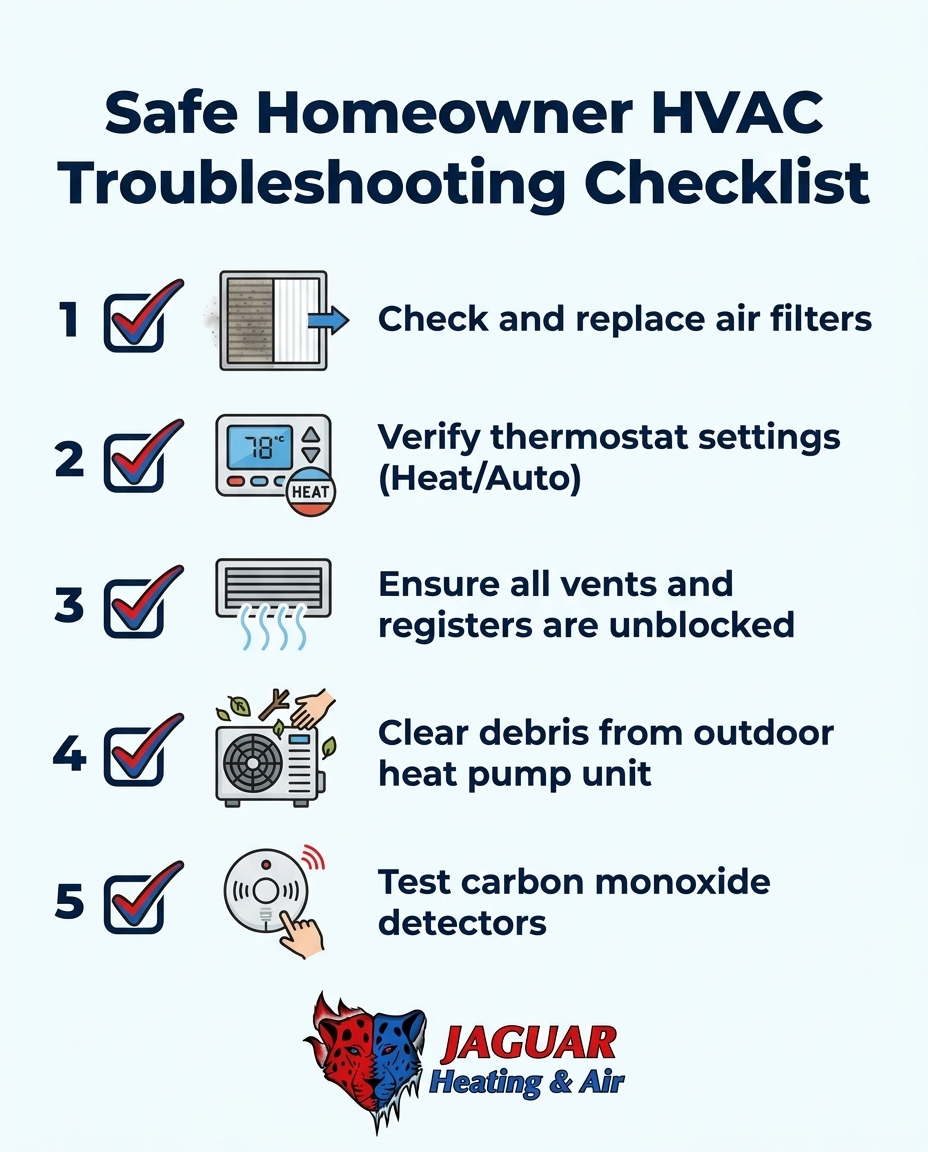
Safe Homeowner Troubleshooting: A Step-by-Step Checklist
Before you call for a professional diagnostic, there are several safe, straightforward steps you can take to rule out the most common and easily fixable heating issues. Following this mid-fall October heating startup checklist can save you a service call and get your home comfortable faster.
1. Check and replace dirty air filters: This is the single most important step. A clogged filter creates severe airflow restriction, which causes the heat exchanger to overheat and trip the system's high-limit safety switch. Replacing a dirty filter can also decrease your system's energy consumption by up to 15 percent.
2. Verify thermostat settings: Ensure the switch is explicitly set to "Heat" rather than "Cool" or "Off." Additionally, check that the fan setting is on "Auto" so it only blows when the burners are actively heating the air. If the fan is set to "On," it will blow cold air between heating cycles.
3. Ensure all vents and registers are unblocked: Walk through every room and verify that supply and return vents are fully open. Closing vents in unused rooms actually harms your system by increasing static pressure and forcing the blower motor to work against heavy resistance. Move any rugs, furniture, or curtains blocking the airflow.
4. Clear debris from the outdoor unit: If you have a heat pump, the outdoor compressor is responsible for extracting heat from the outside air. Clear away any fallen autumn leaves, overgrown branches, or debris within a two-foot radius of the unit to ensure it can breathe properly.
5. Test carbon monoxide detectors: Before running a natural gas or propane furnace for the season, press the test button on all carbon monoxide detectors in the home. Replace the batteries if you haven't done so in the last six months.
If you complete these steps and the system is still struggling, it is time to schedule professional heating system maintenance to investigate the internal components.
The Limits of DIY: When It's Time for Professional Diagnostics
While changing filters and clearing vents are excellent homeowner habits, modern HVAC systems are highly complex pieces of machinery. There is a strict boundary between basic upkeep and tasks that require the specialized training of a licensed professional. Crossing that line can void your manufacturer warranty, damage the equipment, or create severe safety hazards.
Never open sealed combustion chambers. The area where natural gas ignites to create heat must remain perfectly calibrated. Attempting to clean burners or adjust gas valves without the proper manometers and testing equipment can lead to delayed ignition (a small explosion inside the cabinet) or carbon monoxide leaks into your living space.
Avoid handling high-voltage electrical components. If your system is making strange grinding or squealing noises, it usually points to a failing blower motor or a bad capacitor. The capacitors inside your HVAC cabinet store lethal amounts of electricity, even when the power is turned off at the breaker. A professional has the tools to safely discharge these components and test their microfarad readings.
If your heat pump or furnace is blowing persistently lukewarm air after the initial startup, it rarely resolves itself. In heat pumps, this often points to a refrigerant issue or a malfunctioning reversing valve. In gas furnaces, lukewarm air usually means the burners are failing to ignite, leaving the fan to blow unheated air through the house. A professional diagnostic in the Sacramento Valley aims to pinpoint the exact root cause of these symptoms, correcting the underlying problem so you don't face a catastrophic, freezing breakdown in the middle of January.
Beyond the Basics: What a Technical Tune-Up Actually Includes
A common misconception is that professional maintenance is just a glorified filter change. In reality, a proper technical evaluation dives deep into the invisible metrics that dictate how efficiently and safely your system operates. When a technician arrives for a mid-fall October heating startup inspection, they are performing preventative diagnostics that most homeowners cannot do themselves.
Working with a dedicated team means receiving comprehensive, technical inspections that go far beyond the basics. A proper tune-up involves testing the exact amp draws on all motors to ensure they aren't overworking and pulling too much electricity. Technicians also evaluate the static pressure inside the ductwork to guarantee optimal airflow, and they inspect the mastic seals around the plenum to ensure you aren't losing valuable heat into your attic before it ever reaches your living room.
The goal is always transparency and preventative care. For example, one local homeowner recently requested a routine checkup for their system to ensure it was ready for the changing seasons. The technician arrived, performed an informative and thorough inspection of the unit, and clearly explained the system's current condition. The result was total peace of mind for the homeowner, completely free from the pressure of unnecessary upselling. This is the standard you should expect when booking air conditioning maintenance or heating tune-ups.
Ensuring Reliable Comfort Before Winter Arrives
Understanding the difference between the normal dust burn-off of a mid-fall October heating startup and the warning signs of mechanical failure brings incredible peace of mind. You don't have to spend the first chilly morning of the year worrying about every click and hum coming from your vents.
By addressing minor airflow issues, clearing away summer debris, and knowing when to call in a professional, you can stop small inefficiencies from turning into major mid-winter emergencies. Relying on local experts for an honest, thorough evaluation ensures that your home remains a warm, safe refuge no matter how far the temperature drops outside. Take the time to schedule a comprehensive technical tune-up now, and protect your home comfort investment for the long months ahead.
Frequently Asked Questions
Why does my heater smell like burning when I turn it on?
A temporary burning smell is usually just accumulated summer dust burning off the heat exchanger or heating elements. This is completely normal for the first fall startup and should dissipate within 15 to 30 minutes. If the smell resembles melting plastic, electrical burning, or rotten eggs, turn the system off immediately and call a professional.
How do I safely troubleshoot my HVAC system?
Start by replacing your air filter, as severe clogs are the most common cause of heating failures. Next, verify your thermostat is set to "Heat" and the fan is on "Auto." Finally, ensure all interior vents are open and unblocked, and clear any outdoor debris away from your heat pump.
When should I call a professional for furnace issues?
You should call a licensed technician if your system is making loud grinding or squealing noises, blowing persistently cold air, or emitting hazardous odors. Additionally, if you have changed the filter and verified the thermostat settings but the system still short-cycles or fails to turn on, a professional diagnostic is required.
What HVAC maintenance can I do myself?
Homeowners can safely replace air filters every 30 to 90 days, keep supply and return vents unblocked, and gently clear leaves and debris from the exterior of the outdoor unit. You should also routinely test and replace the batteries in your home's carbon monoxide detectors.
How long should the burning dust smell last during the first fall startup?
The smell of singed dust should clear out of your home within 15 to 30 minutes of the heater running its first complete cycle. Opening a few windows temporarily can help ventilate the space faster. If the smell persists for hours, it warrants a professional inspection.
Can a dirty air filter cause my heater to blow lukewarm air?
Yes, a severely dirty filter restricts airflow, which can cause the furnace's heat exchanger to overheat and trigger a safety shutdown of the burners. When the burners shut down but the fan keeps running to cool the system, you will feel lukewarm or cold air coming out of your vents.
Recent Posts
HVAC Maintenance: Home Maintenance Tips and Troubleshooting for Fall Heating Startup
Why some systems smell burning during fall startup, and how these home maintenance tips and troubleshooting steps help you decide when to call a professional.
The Fall Seasonal Home Maintenance Checklist: Decoding Heating Startup Smells and Sounds
What that burning dust smell means for your furnace, and how to use this seasonal home maintenance checklist to decide when to call a pro this fall.
Why Does My Heater Smell Like Burning Dust? Common Homeowner Questions Answered & A Fall Guide to AC Repair in Sacramento, CA
Why does your heater smell like burning dust? With common homeowner questions answered, see what we found causes this fall odor and when to call a pro.