.avif)
The Fall Seasonal Home Maintenance Checklist: Decoding Heating Startup Smells and Sounds
What that burning dust smell means for your furnace, and how to use this seasonal home maintenance checklist to decide when to call a pro this fall.
What that burning dust smell means for your furnace, and how to use this seasonal home maintenance checklist to decide when to call a pro this fall.

That First Fall Startup: Why Your Heater Smells Like Burning Dust
You wake up to the first chilly October morning, walk over to the thermostat, and finally switch the system from cooling to heating. Within minutes, the vents push out warm air, but it carries a strong, alarming scent of burning dust. Your immediate reaction is probably a mix of frustration and worry. Is something catching fire inside the ductwork? Should you turn it off right away? Tackling this anxiety is the very first step on any reliable seasonal home maintenance checklist. Knowing what is happening inside your walls helps you decide whether you are dealing with a harmless seasonal quirk or a serious hazard.
Just as reliable air conditioning services keep your home comfortable through the blistering summer months, a safe and predictable heating startup is critical in the fall. During the long dormant period between spring and autumn, your furnace or heat pump sits quietly, collecting airborne particles. When those components finally fire up, they create a very specific sensory experience. You might hear the metal ductwork expand with a loud pop, feel a rush of slightly stale air, and then notice that distinct, dusty odor spreading through the hallways.
While some of these symptoms are completely harmless and simply part of the seasonal transition, others require immediate attention from a licensed professional. Ignoring a genuinely dangerous smell or a grinding mechanical noise can lead to total system failure right when the weather turns freezing. The goal is to decode these early warning signs so you can protect your home, your equipment, and your family's comfort before winter truly sets in.
The Science Behind the 'Burning Dust' Phenomenon
The problem: Every time you turn on your heat for the first time in autumn, that unmistakable burning smell fills the house, leaving you wondering if a component is melting or overheating.
The cause: The mechanics behind this odor are actually quite simple. Inside your furnace, there is a crucial component called a heat exchanger. If you have a heat pump or an electric furnace, you have electric heating elements. For months, these parts sit completely idle. Because the Sacramento area experiences long, dry, and dusty summers, a significant amount of household dust, pet dander, and airborne particulate matter settles directly onto these cold heating components. When you finally demand heat, the burners ignite or the electric coils glow red hot. The sudden spike in temperature instantly incinerates the layer of dust that has gathered over the summer. That burning dust smell is literally the scent of microscopic particles turning to ash and blowing through your vents.
The solution: The most effective way to handle this is simply to let the system run while monitoring it closely. A normal dust burn-off odor should dissipate on its own within 30 to 60 minutes. Opening a few windows to let fresh air circulate can help clear the smell faster. However, if you want to minimize this buildup in the future, adopting better indoor air quality practices over the summer makes a massive difference. Upgrading your air filters, scheduling regular duct inspections, and investing in professional AC repair to fix leaky return ducts will drastically reduce the amount of dust that reaches your heat exchanger in the first place.
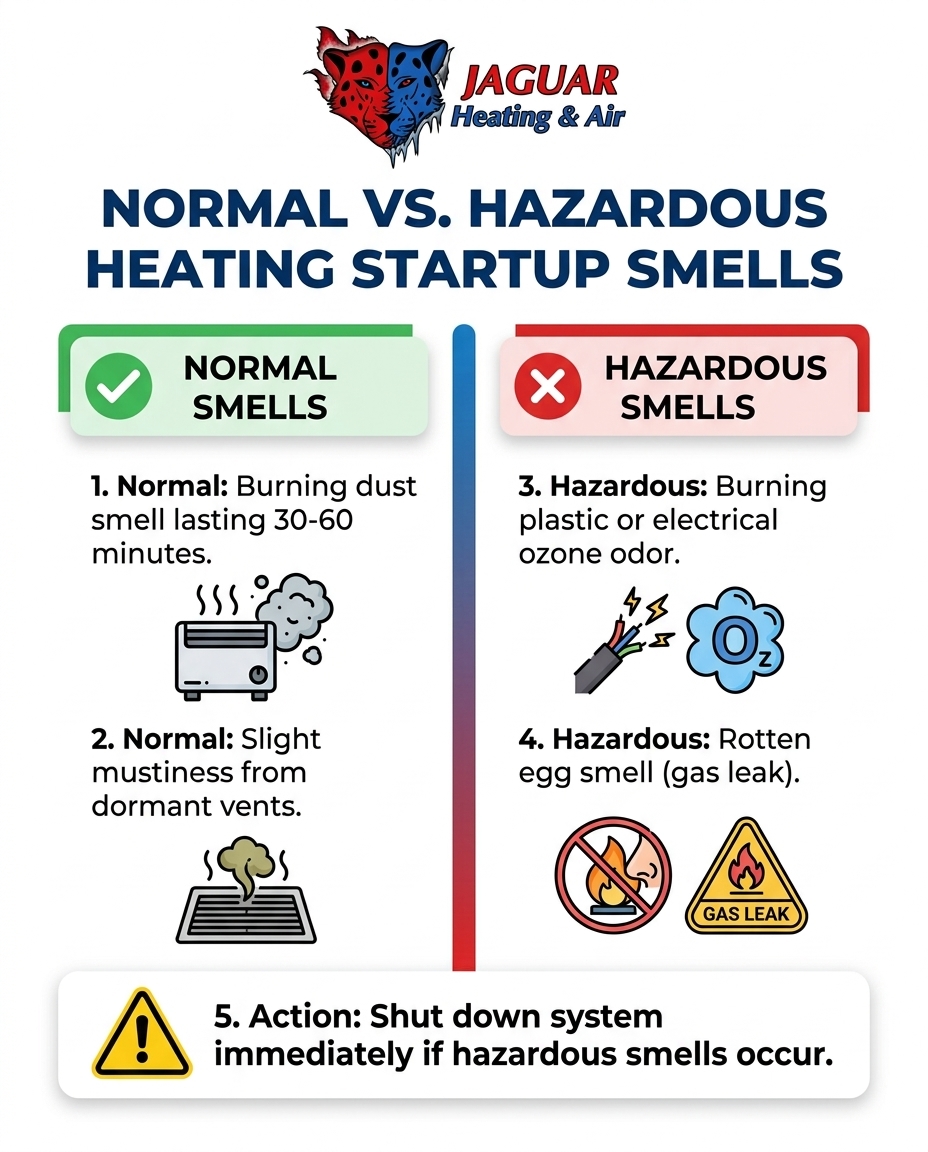
Normal Seasonal Quirks vs. Immediate Safety Hazards
Distinguishing between a harmless dust burn-off and a dangerous component failure is vital. As a homeowner, you need a clear, non-alarmist framework to evaluate the odors coming from your vents on that first chilly October morning. Our team prioritizes early safety checks over mid-winter emergency repairs because catching a hazard in autumn is always safer and less expensive than dealing with a breakdown in January.
• Brief burning dust — Likely Cause: Incinerating settled summer dust on the heat exchanger. — Action Required: Monitor for 30-60 minutes. Open windows.
• Slight mustiness — Likely Cause: Dormant air in the ductwork being pushed out. — Action Required: Allow the system to run; should clear quickly.
• Melting plastic — Likely Cause: Overheating electrical wires or a failing capacitor. — Action Required: Shut down immediately at the thermostat.
• Electrical ozone — Likely Cause: Failing blower motor or severe electrical arcing. — Action Required: Shut down immediately and call a professional.
• Rotten egg smell — Likely Cause: Mercaptan additive indicating a natural gas leak. — Action Required: Evacuate, leave doors open, and call the gas company.
When to Wait It Out
You can generally allow the system to keep running if the odor is strictly a dusty smell that begins to fade shortly after the heat kicks on. If the smell dissipates completely within an hour, you have nothing to worry about. Additionally, you should verify that there is no visible smoke coming from the vents and no electrical sparking sounds near the indoor unit. Finally, check your thermostat to ensure the system is successfully reaching the set temperature. If the house is warming up and the smell is fading, your heater is functioning normally.
When to Shut It Down
Certain smells are immediate red flags that require you to turn the system off right away. If the smell resembles melting plastic, burning rubber, or scorching wires, an electrical component is actively failing. If your carbon monoxide detectors trigger an alarm at any point during the heating cycle, shut the system down, open windows, and evacuate the home. Furthermore, if a dusty odor persists for multiple heating cycles over several days, it means the system is either severely clogged with debris or something is overheating. Diagnosing electrical faults or gas-related odors is strictly a job for a licensed professional—never attempt to DIY a repair on a gas valve or a high-voltage circuit.
Decoding Clanks, Rattles, and Weak Airflow
Smells are not the only warning signs during a fall heating startup. The sounds your system makes, along with the physical force of the air coming from the registers, provide crucial clues about the health of your equipment. A heater that turns on but struggles to push air is wasting energy and driving up your utility bills.
Rattling and clanking noises: If your furnace sounds like a dryer with a shoe tumbling inside, you likely have loose internal components. Rattling often indicates that access panels are not secured tightly, or that debris has made its way into the blower motor housing. Sometimes, a loose screw or a degrading fan blade will create a distinct clanking noise that speeds up as the blower motor spins faster.
Squealing and screeching sounds: A high-pitched squeal usually points directly to a moving part that lacks lubrication or is beginning to tear. In older belt-driven systems, a squealing sound means the blower belt is slipping or fraying. In newer direct-drive systems, a screeching noise often means the motor bearings are grinding together and desperately need professional lubrication or replacement.
Weak or lukewarm airflow: If the system sounds fine but the air coming out of the vents feels weak, the most common culprit is a heavily soiled air filter blocking the return air. Weak airflow can also be caused by blocked return vents (often covered by furniture or rugs over the summer) or a failing blower motor that cannot reach its full operating speed. Ignoring these early warning sounds and airflow issues often leads to total system failure when temperatures drop further. If you notice these symptoms, reaching out for AC services in Folsom and the greater Sacramento area ensures a technician can secure loose parts before they cause permanent damage.
How Summer Cooling Stress Creates Fall Heating Failures
The problem: Homeowners are often baffled when their heater fails on the very first chilly October morning. They assume that because the heater hasn't been used since last winter, it should be in perfect condition.
The cause: The reality is that your heating and cooling systems share many of the same core components. Heat pumps, by design, work year-round to both cool and heat your home. Even if you have a separate gas furnace and central AC, they almost always share the same indoor blower motor and ductwork. The intense, triple-digit summer heat of the Central Valley forces these shared components to run relentlessly for months. A blower motor that spent July and August fighting through a dirty filter to push cold air is already exhausted by the time autumn arrives. Summer cooling stress creates deep component fatigue. A strained electrical capacitor or a worn blower motor bearing might barely survive the final days of summer, only to finally give out during the first heavy heating demand of the fall.
The solution: Understanding this compounding effect of deferred maintenance changes how you approach seasonal care. You cannot treat heating and cooling as entirely separate systems. The wear and tear carry over. If you want to understand the deep mechanics of this shared fatigue, learning why your AC compressor overheats provides great insight into how stress on one side of the system impacts the other. The best solution is a comprehensive pre-winter inspection that evaluates the shared electrical components, ensuring they have enough life left to handle the winter workload.
Your Essential Pre-Winter HVAC Maintenance Checklist
Transitioning your home for the colder months requires a proactive approach. Following a structured checklist ensures you catch small issues before they escalate into major safety hazards. Here is what every homeowner in the Sacramento area should prioritize before the cold weather sets in for good:
• Check and replace the air filter: Do this before the very first heating cycle. A clean filter ensures maximum airflow, prevents the heat exchanger from overheating, and reduces the strain on the blower motor.
• Test carbon monoxide detectors: Heating season is carbon monoxide season. Press the test button on every detector in your home and replace the batteries immediately. Ensure you have a detector on every sleeping level of the house.
• Clear debris from the outdoor unit: If you rely on a heat pump, the outdoor unit needs to breathe. Clear away fallen autumn leaves, overgrown branches, and summer dust from the fins. The unit needs at least two feet of clearance on all sides.
• Schedule a professional inspection: Routine maintenance prevents up to 95% of unexpected winter heating breakdowns. A licensed technician can test gas pressures, measure electrical draws, and inspect the heat exchanger for microscopic, dangerous cracks.
• Evaluate system replacement options: If your system is over 15 years old and struggling, upgrading to a high-efficiency heat pump may qualify for generic federal tax credits or utility incentives. Always verify current programs with a tax professional, but upgrading early often prevents a mid-winter emergency replacement.
Checking off these items is the core of routine AC maintenance and heating preparation, ensuring your equipment operates safely and efficiently all season long.
Frequently Asked Questions About Fall Heating Startups
Why does my heater smell like burning dust?
The burning dust smell happens because dust and airborne particles settle on your system's heat exchanger or heating elements over the summer. When you turn the heat on for the first time, those components get extremely hot and instantly incinerate the settled dust. The resulting ash is pushed through your ductwork, creating a distinct, temporary odor that is completely normal for a fall startup.
How long is it safe for a heater to smell after turning it on?
A normal dust burn-off smell should begin to fade within 30 to 60 minutes of the system running continuously. If the smell persists for several hours, or if it returns every time the heater cycles on over the course of a few days, it is no longer a normal burn-off. Persistent odors require a professional inspection to ensure a component isn't overheating.
Is it normal for a heater to blow cold air at first?
Yes, it is entirely normal for a heater to blow cold or lukewarm air for the first minute or two. The blower motor is pushing out the cold, dormant air that has been sitting in your ductwork. Additionally, a gas furnace takes a moment for the burners to fully heat the heat exchanger before the blower engages to distribute the warmth.
When should I call a professional for a noisy furnace?
You should call a professional immediately if you hear loud grinding, screeching, or violent rattling noises. These sounds typically indicate failing motor bearings, a slipping belt, or loose internal components that could cause severe damage if left running. Popping sounds from expanding metal ductwork are normal, but mechanical grinding is always a cry for help.
What should I check before turning on my heat for the first time?
Before switching your thermostat to heat, always check and replace your indoor air filter to ensure unrestricted airflow. Next, walk around your home and ensure all supply and return vents are fully open and unblocked by furniture or rugs. Finally, test your carbon monoxide detectors to ensure they are fully operational before any gas appliances begin running regularly.
Can a dirty air filter cause my heater to smell?
Yes, a severely clogged air filter can absolutely cause strange odors. A dirty filter restricts airflow, which traps heat inside the furnace cabinet and causes the system to run much hotter than designed. This overheating can produce a strong, dusty, or even slightly metallic burning smell as the components struggle to shed their excess heat.
Ensure a Safe, Warm Winter for Your Home
Navigating the transition from summer cooling to winter heating doesn't have to be stressful. While a brief burning dust smell on that first chilly October morning in the Sacramento area is completely normal, you should never ignore persistent odors, melting plastic smells, or violent mechanical noises. These are clear cries for help from an HVAC system that is struggling to operate safely. Early detection is the absolute key to preventing mid-winter emergencies.
By paying close attention to the sounds and smells of your initial heating startup, you take control of your home's comfort and safety. If you ever feel unsure about an odor, or if your system is rattling and struggling to push warm air, the safest choice is always to schedule a professional inspection. A thorough pre-winter check provides a clear, safety-focused explanation of your system's health, ensuring you can enjoy a warm, predictable, and worry-free winter season.
Recent Posts
Why Does My Heater Smell Like Burning Dust? Common Homeowner Questions Answered & A Fall Guide to AC Repair in Sacramento, CA
Why does your heater smell like burning dust? With common homeowner questions answered, see what we found causes this fall odor and when to call a pro.
Decoding Fall HVAC Startups: Your Guide to Maintenance and AC Repair in Sacramento, CA
Navigating the October Shift: When Sacramento Weather Demands Both Cooling and Heating October in the Central Valley brings a sudden, sharp transition in weathe
Decoding the October Heating Startup: AC Repair and Fall Maintenance in Sacramento, CA
Burning dust smells on the first chilly night? Use this seasonal home maintenance checklist to see what is normal and when to call a pro on this startup.