.avif)
The Complete Guide to HVAC Maintenance Tips for Sacramento & Elk Grove Homeowners
Get expert HVAC tips for Sacramento and Elk Grove homeowners to prevent breakdowns, boost efficiency, and keep your system running reliably all year.
Get expert HVAC tips for Sacramento and Elk Grove homeowners to prevent breakdowns, boost efficiency, and keep your system running reliably all year.

Why HVAC Maintenance Matters for Sacramento and Elk Grove Homeowners
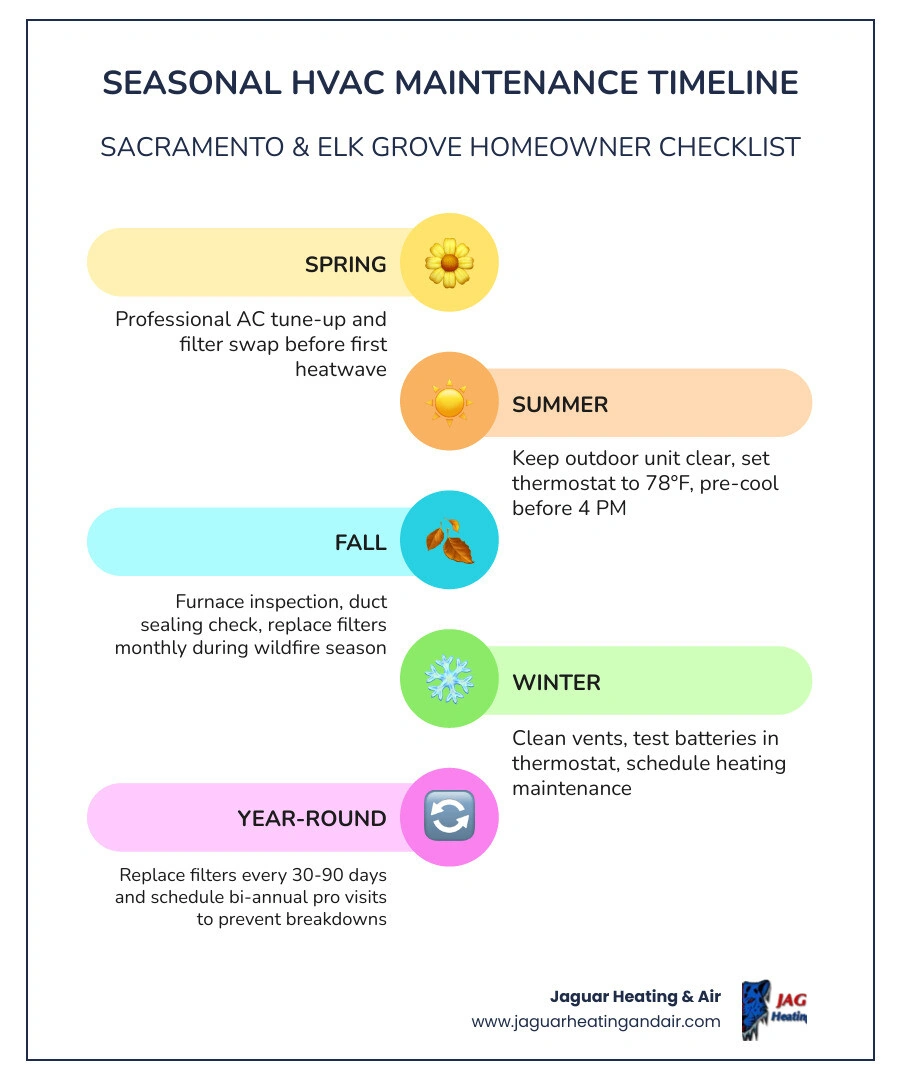
If you're looking for hvac tips for sacramento and elk grove homeowners, here's a quick summary of the most important steps you can take right now:
- Schedule professional tune-ups twice a year — spring for your AC, fall for your heating system
- Replace air filters every 30–90 days — monthly during peak summer heat
- Keep outdoor units clear of debris with at least two feet of clearance
- Set your thermostat to 78°F when home and pre-cool before 4 PM to avoid SMUD peak rates
- Seal leaky ducts — they can waste 20–30% of your conditioned air before it reaches your rooms
- Watch for warning signs — rising energy bills, uneven cooling, strange noises, or weak airflow
- Consider a heat pump upgrade — SMUD rebates of up to $3,000 are available for qualifying installations
Sacramento and Elk Grove summers are no joke. Temperatures routinely climb past 100°F from June through September, and the Sacramento Valley's combination of extreme heat and the famous Delta Breeze creates unique demands on your home's HVAC system. Unlike many parts of the country, systems here work harder and longer — which is why local HVAC systems typically last only 12–18 years, well short of the 20–25 years often quoted nationally.
That kind of strain adds up fast. Without regular attention, a neglected system doesn't just run inefficiently — it runs toward an expensive breakdown, often at the worst possible moment. In fact, about 19% of central AC systems installed between 2009 and 2024 experienced at least one significant problem, and nearly a quarter of those stopped working properly altogether.
The good news? Most of those failures are preventable. Whether your home is a newer build in Elk Grove or an older ranch-style house in Sacramento, a consistent maintenance routine makes a measurable difference in comfort, energy costs, and how long your system lasts.
Hvac tips for sacramento and elk grove homeowners terms to remember:
- how extreme heat and wildfire smoke stress your system
- how sacramento climate affects your hvac system
- how temperature swings affect your heating and cooling
Essential HVAC Tips for Sacramento and Elk Grove Homeowners to Prevent Breakdowns
Living in Northern California means dealing with a climate of extremes. From bone-dry summers with sustained triple-digit heatwaves to chilly, damp winter nights, our heating and cooling systems rarely catch a break. To keep your system running efficiently year-round, you need a proactive strategy.
A dirty condenser coil alone can increase your system's energy use by 30%. When you combine that with dirty air filters and clogged condensate lines, your system has to work twice as hard to deliver the same amount of cool air. This extra strain is why we emphasize seasonal maintenance. By performing a few simple tasks ourselves and partnering with professionals for deeper inspections, we can extend the life of our heating and cooling systems by up to 40%.
For comprehensive protection, homeowners should look into professional seasonal tune-ups. If you want to make sure your system is fully prepared for the upcoming season, booking a thorough checkup through our HVAC Service Sacramento, CA page is the easiest way to guarantee peace of mind.
DIY HVAC Tips for Sacramento and Elk Grove Homeowners
While some HVAC tasks require specialized diagnostic tools, there are several simple maintenance steps you can handle on your own to protect your equipment:
- Change Your Air Filters Regularly: During the dusty summer months and the active wildfire seasons we often face in the Sacramento Valley, check your filter every 30 days. At a minimum, replace it every 1 to 3 months. For standard homes, a MERV 8 to 11 filter balances effective particle filtration with optimal system airflow.
- Maintain Outdoor Unit Clearance: Your outdoor condenser unit needs to breathe. Keep a minimum of two feet of clear space around the unit. Clear away dry leaves, weeds, branches, and summer dirt.
- Gently Clean the Condenser Fins: Turn off the power to your outdoor unit at the breaker. Use a standard garden hose to gently wash away dirt and pollen from the exterior fins. Never use a pressure washer, as the high pressure will bend and damage the delicate aluminum fins.
- Keep Supply Vents Open: It is a common misconception that closing vents in unused rooms saves energy. In reality, closing vents disrupts the system's balanced airflow, increases pressure in your ductwork, and can lead to a frozen evaporator coil or a cracked heat exchanger. Keep at least 80% of your home's registers open at all times.
- Inspect and Replace Thermostat Batteries: If your thermostat uses batteries, replace them annually. A dead battery can cause your heating and cooling system to shut down unexpectedly, mimicking a major hardware failure.
Professional HVAC Tips for Sacramento and Elk Grove Homeowners
While DIY care keeps the dust at bay, a professional technician has the training to inspect internal electrical and mechanical components that you should never touch. High-voltage connections, volatile refrigerants, and complex fan assemblies require expert handling.
When a professional technician visits your home, they perform a comprehensive multi-point inspection designed to catch small issues before they trigger a system-wide breakdown:
- Electrical Connection Inspection: Technicians measure voltage and tighten all electrical connections. Loose wiring can cause components to draw too much current, leading to burned-out contactors or failed capacitors—which are among the most common causes of sudden system failures during peak summer heat.
- Refrigerant Charge Verification: Operating with too little refrigerant forces the compressor to work overtime, drastically lowering efficiency and eventually destroying the compressor itself. A professional technician will measure refrigerant levels and check for leaks. Remember: if your system is low on refrigerant, it means there is a leak that must be repaired. Simply "topping off" the system annually is not a permanent solution.
- Blower Motor Lubrication and Calibration: Technicians inspect the blower wheel, clean the fan blades, and lubricate moving parts to reduce friction. This keeps airflow strong and consistent throughout your home.
If you live in the southern portion of the county, scheduling these professional tune-ups in early spring and late fall is the best way to prevent emergency calls during triple-digit heatwaves. You can schedule your seasonal tune-up directly through our Elk Grove, CA Service Area page to ensure your system is handled by local, NATE-certified experts.
Maximizing Summer Energy Efficiency and Lowering Utility Bills
Air conditioners in an average-sized home use more than 2,000 kilowatt-hours of electricity per year. In our region, managing that energy use is closely tied to how we navigate utility rate structures. Both SMUD and PG&E utilize Time-of-Use (TOU) rate plans, where electricity costs significantly more during peak hours—typically late afternoon and early evening when the grid is under the most stress.
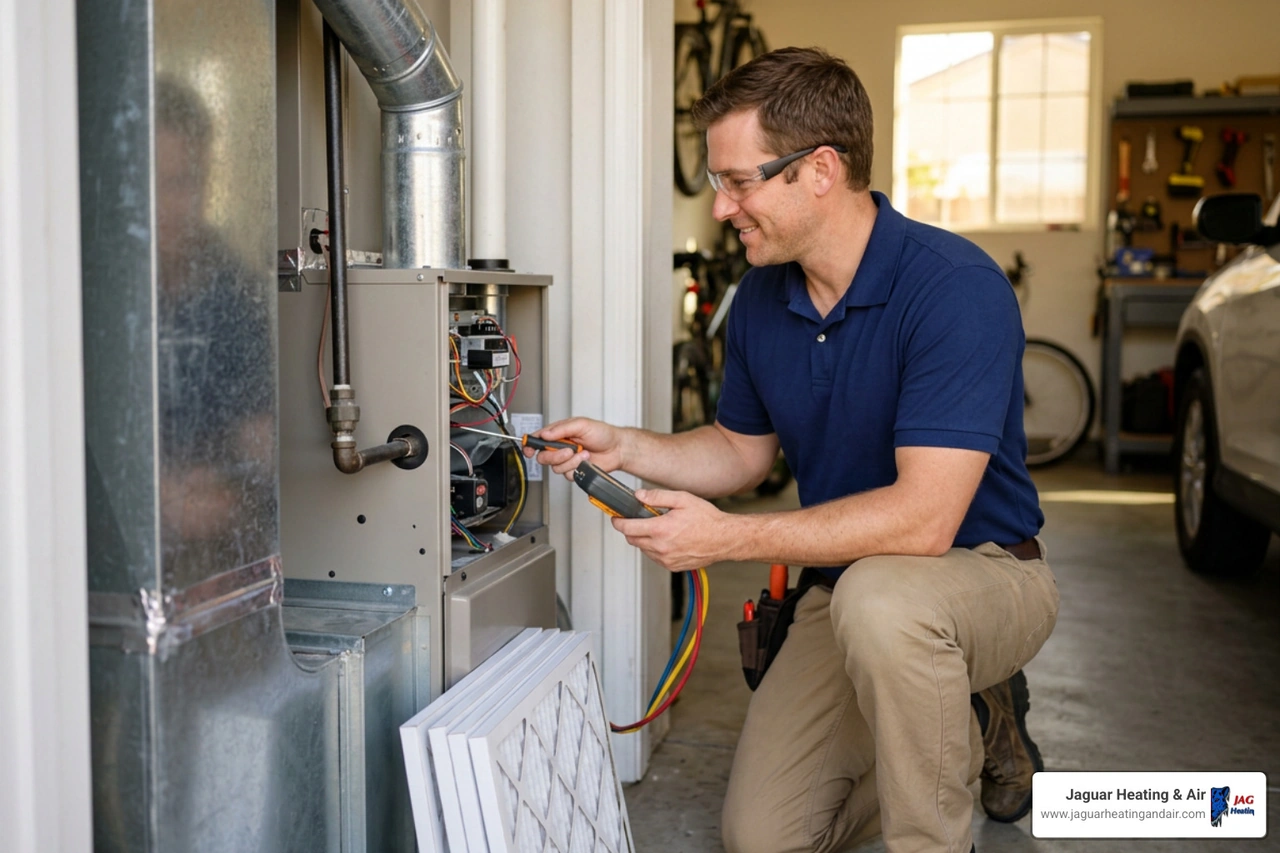
To keep your utility bills manageable without sacrificing comfort, we recommend implementing these strategic, energy-saving habits:
- Embrace the Power of Pre-Cooling: "Thermal banking" is one of the most effective strategies for Sacramento homeowners. Set your smart thermostat to cool your home a few degrees below your normal preference during the morning and early afternoon hours when electricity rates are lowest. When peak hours arrive (typically 4 PM to 9 PM), raise your thermostat to 78°F or higher. Your home will remain comfortable because the structural mass of the house has already been cooled.
- Raise the Thermostat When You're Away: Setting your thermostat 7 to 10 degrees warmer for 8 hours a day can save you up to 10% annually on cooling costs. Don't worry—your system won't have to work "harder" to cool the house back down later; it simply runs at its normal pace for a shorter duration.
- Set Ceiling Fans Correctly: In the summer, verify that your ceiling fans are rotating counterclockwise to push a cooling breeze straight down. This wind-chill effect makes the room feel up to 4 degrees cooler than it actually is, allowing you to raise your thermostat setting without losing comfort. Remember: fans cool people, not rooms, so turn them off when you leave the room.
- Block Out Solar Heat Gain: Windows can account for up to 30% of your home's summer heat gain. Use blackout curtains, cellular shades, or solar screens on south- and west-facing windows to block direct sunlight before it heats up your living space.
For a deeper look into designing the ultimate system setup for our unique local weather patterns, read our comprehensive guide on Beating the Heat: The Best HVAC Setup for Sacramento Area Weather.
The Role of Ductwork Maintenance and Sealing in Home Comfort
Many homeowners focus entirely on the outdoor compressor or the indoor furnace, forgetting about the miles of ductwork hidden behind their walls and in their attics. Your duct system is the respiratory system of your home. If those ducts are damaged, dirty, or poorly sealed, your comfort and energy efficiency will suffer.
This is especially true in single-story homes throughout the Sacramento Valley, where ductwork is typically routed through unconditioned attics. In July and August, attic temperatures can easily climb past 140°F. If your attic ducts have even minor leaks, they will pull in superheated, dusty attic air and distribute it directly into your living spaces.
Consider how duct issues impact your home:
- Conditioned Air Waste: Studies show that leaky ducts can waste 20% to 30% of the conditioned air moving through them. That means nearly a third of the air you are paying to cool or heat is escaping into your attic or crawlspace.
- Uneven Temperatures: Do you have one bedroom that always feels like a sauna in the summer and an icebox in the winter? This is often caused by leaky flex duct connections or sagging ducts that restrict airflow to the furthest rooms.
- Poor Indoor Air Quality: When ducts leak in an attic or crawlspace, the negative pressure pulls in dust, pollen, insulation fibers, and outdoor allergens, blowing them directly into your bedrooms and living areas.
Sealing and insulating your ductwork keeps your conditioned air inside the ducts where it belongs, ensuring your system performs exactly as intended. If you are experiencing uneven temperatures or dusty air in your home, visit our Sacramento, CA Service Area page to schedule a professional ductwork inspection and pressure test.
Repair vs. Replace: Navigating HVAC Decisions in the Central Valley
When an older heating and cooling system starts acting up, every homeowner faces the same dilemma: is it better to invest in repairs, or is it time to plan for a complete system replacement? Because of the intense summer heat in the Central Valley, making this decision at the right time can prevent a catastrophic breakdown on a triple-digit afternoon.
To help you evaluate your options, we've put together a quick comparison table of key decision factors:
| Decision Factor | Lean Toward Repair | Lean Toward Replacement |
|---|---|---|
| System Age | Under 10 years old | Over 12–15 years old |
| Refrigerant Type | Modern R-410A or R-454B | Outdated R-22 (phased out) |
| Frequency of Repairs | Rare, minor issues | Multiple breakdowns over the last two years |
| Utility Bills | Stable and predictable | Rising steadily without explanation |
| Cost of Current Repair | Well under 30% of system value | Approaches or exceeds 30% of system value |
| Overall Comfort | Consistent, even temperatures | Inconsistent cooling; struggles on hot afternoons |
Age is a critical indicator. Because local systems work so hard, an air conditioner approaching its 15th year is nearing the end of its reliable lifespan. Additionally, older systems that rely on R-22 refrigerant are increasingly difficult and expensive to service due to environmental phase-outs. Upgrading to a modern, high-efficiency system using eco-friendly refrigerants is often the most sensible long-term financial decision.
When replacing a system, accurate sizing is everything. A system that is too large will cycle on and off rapidly (short-cycling), which wastes energy and wears out components. A system that is too small will run constantly, driving up your utility bills while failing to keep you cool.
We never rely on generic "rules of thumb" based on square footage alone. Instead, we perform a detailed Manual J load calculation that accounts for your home's layout, insulation levels, window orientation, and local climate. To learn more about how we determine the perfect system size for your home, check out our guide on Getting the Right Size HVAC for Sacramento Area Homes.
Upgrading to High-Efficiency Heat Pumps
If you are planning to replace an older air conditioner and gas furnace, upgrading to an electric heat pump is one of the smartest moves you can make in our climate. Heat pumps do not create heat; instead, they move heat from one place to another. In the summer, they pull heat out of your home and dump it outside. In the winter, they reverse the process, extracting heat from the outdoor air and transferring it indoors.
Because our winters are relatively mild, heat pumps operate at peak efficiency throughout the year. They offer several distinct advantages:
- Year-Round Comfort in One System: A heat pump replaces both your air conditioner and your furnace, simplifying your home maintenance and saving indoor closet space.
- Incredible Efficiency: Modern variable-speed heat pumps can be up to 3 to 4 times more efficient than traditional gas furnaces, significantly lowering your winter heating bills.
- Exceptional Utility Rebates: SMUD offers rebates up to $3,000 for qualifying residential heat pump installations, making the transition from gas to electric highly cost-effective.
- Safer Operation: By transitioning to an electric heat pump, you eliminate the risks associated with gas combustion in your home, such as carbon monoxide leaks.
Frequently Asked Questions about Sacramento Valley HVAC Care
How often should I schedule professional HVAC maintenance in Sacramento and Elk Grove?
We recommend scheduling professional maintenance twice a year: once in the spring for your cooling system and once in the fall for your heating system. Regular, bi-annual maintenance is often required by manufacturers to keep your equipment warranty active. More importantly, pre-season tune-ups allow technicians to identify and resolve minor issues—like a weakening capacitor or a slightly clogged drain line—before they turn into expensive emergency repairs during extreme weather.
What are the signs that my air conditioner needs immediate repair?
You should call for professional service immediately if you notice any of the following warning signs:
- Weak or Warm Airflow: If your vents are blowing weak or warm air when the thermostat is set to cool, your compressor or blower motor may be failing.
- Strange Noises: Squealing, banging, clanking, or hissing noises indicate loose belts, failing motor bearings, or a refrigerant leak.
- Frequent Cycling: If your system turns on and off every few minutes, it is short-cycling, which places immense strain on the compressor.
- Unusual Odors: Musty smells point to mold or bacteria growth inside your ductwork or evaporator coil, while burning smells suggest electrical issues.
- Water Leaks: A pool of water around your indoor unit indicates a clogged condensate drain line, which can cause significant water damage to your home if left unaddressed.
How do SMUD utility rebates affect the decision to replace an HVAC system?
SMUD rebates make upgrading to high-efficiency equipment incredibly attractive. By offering up to $3,000 in rebates for qualifying residential heat pump installations, SMUD significantly offsets the initial purchase price of a premium, variable-speed system.
To qualify for these rebates, the installation must be completed by a licensed contractor who is registered as an approved SMUD trade ally. Our team handles the complex paperwork and ensures your new system meets all efficiency requirements, making the rebate process simple and stress-free.
Conclusion
Protecting your home's comfort in the Sacramento Valley requires a reliable heating and cooling system, a solid seasonal maintenance routine, and a trusted local partner. By combining simple DIY tasks like monthly filter checks with professional bi-annual tune-ups, you can keep your utility bills low, prevent unexpected breakdowns, and ensure your system lasts for years to come.
As a family-owned HVAC company serving Sacramento, Elk Grove, Folsom, Roseville, and the surrounding communities, Jaguar Heating & Air is here to help you stay comfortable in every season. As a Trane Comfort Specialist with NATE-certified technicians, we guarantee 100% customer satisfaction, flat-rate pricing, and same-day service you can count on.
Whether you need a quick repair, a seasonal tune-up, or a high-efficiency heat pump installation, our friendly team is ready to help. Visit our Schedule Professional HVAC Services page today to book your appointment and experience the Jaguar difference!
Recent Posts
HVAC Maintenance Guide: Comparing Heating Replacement Options Before Winter
Before winter hits, make sure your furnace can handle the cold. Compare your options with these objective heating options comparisons for homeowners.
HVAC Maintenance: Troubleshooting the Fall Heating Startup
Why does your furnace smell like burning on that first chilly morning? Use our home maintenance tips and troubleshooting to know when to call a pro this fall.
HVAC Maintenance: Home Maintenance Tips and Troubleshooting for Fall Heating Startup
Why some systems smell burning during fall startup, and how these home maintenance tips and troubleshooting steps help you decide when to call a professional.