.avif)
New HVAC Benefits Beyond Comfort: Health Guide
Discover new HVAC benefits beyond comfort with energy savings, cleaner air, and higher home value in Sacramento.
Discover new HVAC benefits beyond comfort with energy savings, cleaner air, and higher home value in Sacramento.

Why New HVAC Benefits Beyond Comfort Matter for Sacramento Homeowners
The new HVAC benefits beyond comfort are something most Sacramento homeowners don't discover until after they upgrade — and many are genuinely surprised by what they find. A new system doesn't just keep your home cooler in July or warmer in January. It can lower your energy bills, clean the air your family breathes, and even raise your home's resale value.
Here's a quick look at what a modern HVAC upgrade actually delivers:
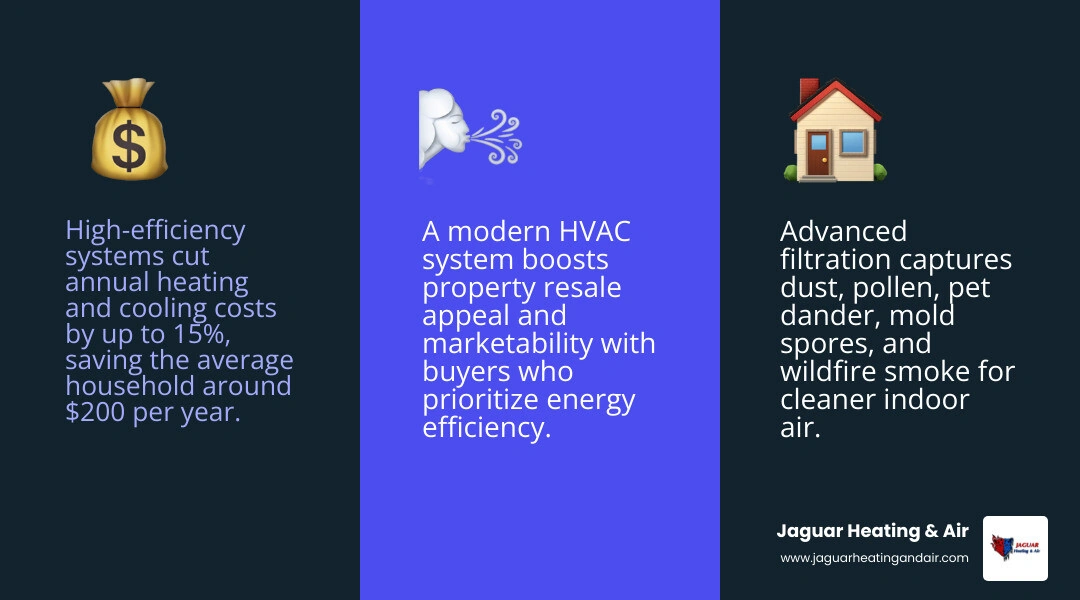
- Lower energy bills - High-efficiency systems can cut annual heating and cooling costs by up to 15%, saving the average household around $200 per year
- Cleaner indoor air - Advanced filtration captures dust, pollen, pet dander, mold spores, and even wildfire smoke — a real concern across Northern California
- Higher home value - A modern system can boost your property's resale appeal and marketability with buyers who prioritize energy efficiency
- Quieter operation - Newer systems run significantly quieter than aging equipment, supporting better sleep and fewer work-from-home distractions
- Smarter controls - Programmable and smart thermostats can reduce utility costs by an additional 10–20% through automated scheduling and remote monitoring
- Environmental impact - Modern systems use eco-friendly refrigerants and consume far less energy, reducing your home's carbon footprint
- Long-term reliability - A professionally installed system can last 15–25 years with routine maintenance, making it a sound long-term investment
In May 2026, with energy costs continuing to rise across California and air quality remaining a seasonal concern, these advantages carry real weight for families in Sacramento, Elk Grove, Folsom, Roseville, and surrounding communities. The sections below break down each benefit in plain terms so you can decide what matters most for your home.
New hvac benefits beyond comfort helpful reading:
1. Financial Windfalls: New HVAC Benefits Beyond Comfort
When most people think about a new heating and cooling system, they think about the immediate relief of a cold breeze on a blistering 105-degree Sacramento afternoon. But the financial ripple effects of a modern upgrade go far deeper than just keeping your sweat glands in check.
Older HVAC systems typically rely on single-stage compressors. These outdated units operate on a binary system: they are either running at 100% capacity (and drinking electricity like a thirsty racehorse) or they are completely turned off. This constant on-and-off cycling creates massive energy spikes.
Modern high-efficiency systems, by contrast, utilize variable-speed technology. These systems adjust their output incrementally, running at lower, highly efficient speeds for longer periods. This prevents the energy-guzzling startup spikes common in older equipment.
By upgrading to a high-efficiency system, you can cut your energy consumption by up to 40% compared to traditional, outdated equipment. This direct drop in energy usage is a key reason why so many local families are looking into How Homeowners California Save Energy Money Home to combat rising utility rates.
To understand how these savings are calculated, it helps to look at the standardized ratings used across the industry. When comparing systems, you will encounter ratings like SEER2 (Seasonal Energy Efficiency Ratio) for cooling and HSPF2 (Heating Seasonal Performance Factor) for heating. Modern systems can achieve cooling efficiencies up to 19.0 SEER2 and heating efficiencies up to 10.0 HSPF2.
If you want to understand what these numbers mean for your monthly budget, check out our guide on Efficiency Ratings Explained for Homeowners. Upgrading from a standard-efficiency system to a high-efficiency model is a strategic move that pays dividends month after month, as detailed in our Standard Efficiency vs High Efficiency HVAC Comparison.
Smart Thermostats and Advanced Controls
One of the most convenient ways to unlock the new HVAC benefits beyond comfort is by pairing your new system with a smart thermostat. If you are still using a manual slide-bar thermostat, you are likely wasting a significant amount of energy heating or cooling an empty house.
Smart thermostats can reduce utility costs by 10% to 20% for dedicated users. They achieve this through several advanced features:
- Automated Scheduling: You can set custom temperature profiles tailored to your family's daily routine.
- Occupancy Sensors: Many smart controls detect when the home is empty and automatically shift into an energy-saving "away" mode.
- Remote Monitoring & Control: Forgot to turn off the AC before heading out to Folsom Lake? You can easily adjust the temperature from your smartphone.
- Energy-Use Reports: These systems track your consumption patterns and provide actionable insights on how to save even more.
Heat Pump Efficiency and Eco-Friendly Refrigerants
As we navigate May 2026, California's environmental regulations continue to shift toward cleaner, electric-focused technologies. This makes heat pumps an incredibly attractive option for homeowners in Elk Grove, Roseville, and Rocklin.
Unlike traditional systems that burn fossil fuels to generate heat, a heat pump simply moves heat from one place to another. In the summer, it pumps heat out of your home; in the winter, it extracts heat from the outdoor air and moves it indoors.
Because they transfer heat rather than create it, heat pumps are incredibly efficient. Furthermore, modern heat pumps are engineered to operate in extreme temperatures, providing reliable heating down to -10°F and cooling up to 125°F. They also utilize eco-friendly, climate-safe refrigerants like R-32 or R-454B, which have a significantly lower global warming potential than the older refrigerants currently being phased out.
If you are considering making the switch, you can learn more about the financial and environmental perks by reading about the Benefits Investing Heat Pump Installation. For a deeper look at how these systems support a sustainable lifestyle, explore how to Enjoy Efficiency Eco Friendliness New Heat Pump.
2. Enhanced Indoor Air Quality and Long-Term Health
It is a startling fact, but the Environmental Protection Agency (EPA) has found that indoor air pollutant concentrations can be two to five times higher than outdoor air. Between cooking fumes, pet dander, cleaning chemicals, and dust mites, our homes can trap a massive volume of airborne irritants.
For those managing respiratory conditions like asthma or seasonal allergies, a modern HVAC system serves as the first line of defense for your long-term health.
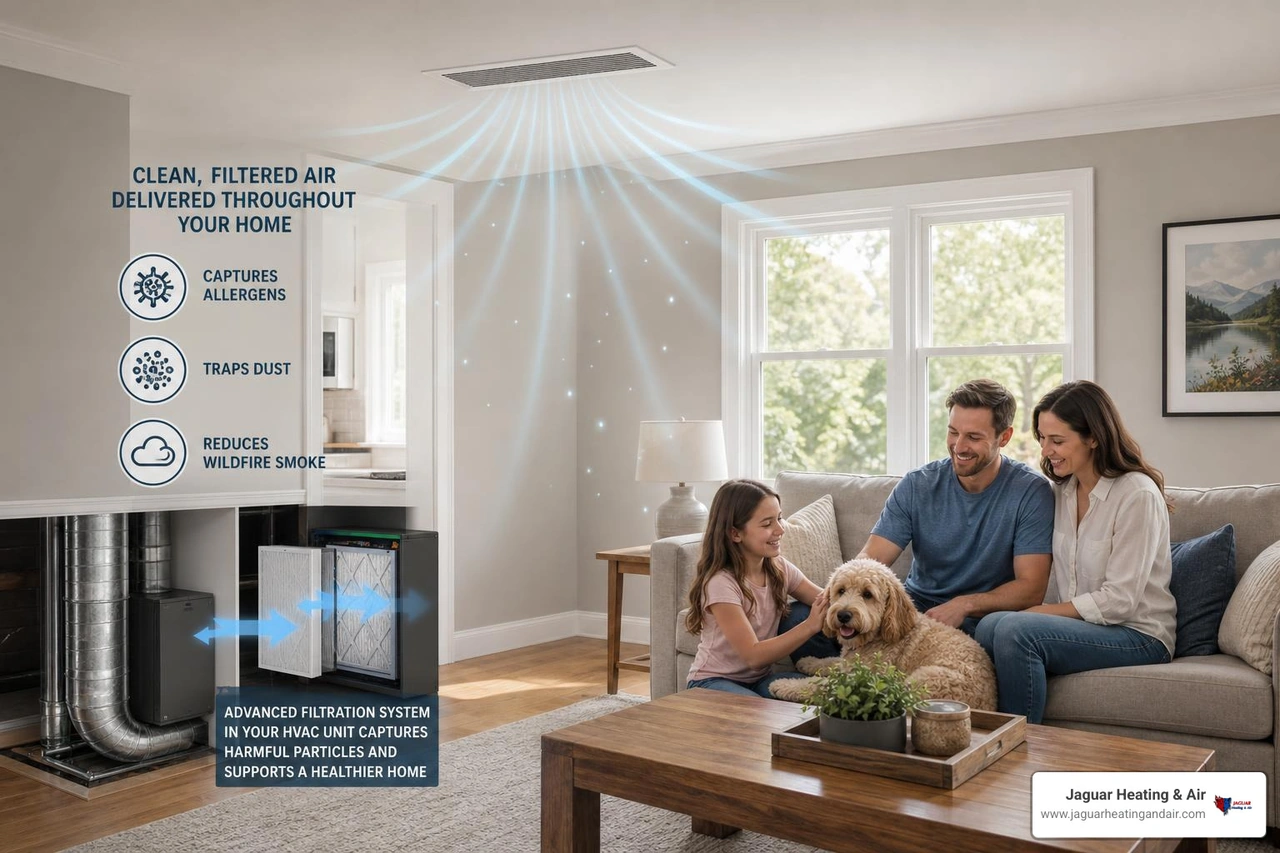
When you upgrade your home's comfort system, you aren't just getting a new metal box outside; you are upgrading your entire home's respiratory tract. Modern systems are designed to work seamlessly with advanced air purification technologies that address the two-thirds of indoor air pollution that standard filters miss.
By integrating modern air scrubbers, UV lamps, and high-efficiency filtration, you can dramatically reduce the presence of airborne viruses, bacteria, and allergens. For a look at the latest tools available, check out our guide on the Top Technologies Help Improve Air Quality Home.
Advanced Filtration and the New HVAC Benefits Beyond Comfort
Most older HVAC systems are restricted to thin, basic 1-inch fiberglass filters. These are designed primarily to keep large dust bunnies from damaging the machinery, doing very little to clean the air you actually breathe.
Newer systems are built to accommodate thicker, high-efficiency media filters with high MERV (Minimum Efficiency Reporting Value) ratings, or even medical-grade HEPA filters. These advanced filters are highly effective at capturing:
- Wildfire Smoke: A persistent seasonal challenge for families in Mather, Orangevale, and Rancho Cordova.
- Microscopic Dust Mites: Which thrive in carpets and bedding.
- Pet Dander: Preventing it from constantly recirculating through your living areas.
Humidity Control and Mold Prevention
Balanced humidity is a cornerstone of indoor health. When indoor air is too humid, it becomes a breeding ground for mold spores and dust mites. Conversely, when the air is too dry, it can irritate your nasal passages, throat, and skin, making you more susceptible to respiratory infections.
Older, single-stage air conditioners often short-cycle. They turn on, blast the home with cold air quickly, and shut off before they have run long enough to pull excess moisture out of the air. This leaves you with a cold, clammy indoor environment.
Because modern high-efficiency systems run for longer, more consistent cycles at lower speeds, they act as highly effective dehumidifiers. By maintaining a balanced relative humidity level (ideally between 30% and 50%), you protect your home's structural integrity, prevent mold growth in hidden wall cavities, and breathe much easier.
3. Boosting Your Home’s Property Value and Marketability
If you plan to stay in your home in Sacramento, Roseville, or El Dorado Hills for the next decade, a new HVAC system is a great investment in your personal comfort. But if you think you might sell your home in the next few years, an upgrade is a powerful way to boost your property's marketability and overall value.
Today's home buyers are highly focused on energy efficiency, low maintenance, and predictable operational costs. When a buyer walks through a home and sees a shiny, modern, high-efficiency heating and cooling system, it provides instant peace of mind. They know they won't have to face an emergency replacement or high repair bills shortly after moving in.
In fact, modernizing your home's HVAC system can make your property stand out in a competitive market, helping it sell faster and potentially at a premium. You can read more about this relationship in our article on The Connection Between Energy Efficient HVAC and Your Home Value.
Investing in your home's infrastructure is almost always a smarter financial move than cosmetic fixes, as outlined in our analysis of Why HVAC Replacement is a Smart Investment.
Buyer Priorities and Long-Term Functionality
To maximize the impact of your upgrade on your home's value, it is highly recommended to start with a professional home energy assessment. This evaluation looks at your home as a complete system, checking ductwork integrity, insulation levels, and air leakage.
Addressing these details ensures that your new system is sized perfectly and operates at peak efficiency. To see how an audit can uncover hidden savings, read about The Bright Side of Energy Audits to Uncover Savings and Sustainability.
4. Noise Reduction and Lifestyle Improvements
One of the most immediate and pleasant surprises of upgrading your heating and cooling system is the quiet. If your current outdoor unit sounds like a jet engine taking off every time it starts, you are likely dealing with worn-out components and outdated engineering.
Modern units are engineered from the ground up to operate quietly, which can have a surprisingly positive impact on your daily lifestyle, sleep quality, and productivity.
Variable-Speed Technology and Quiet Operation
Older systems typically run at a single speed, meaning they operate at full blast. This results in a loud, sudden "clunk" when the system kicks on, followed by a loud rush of air through the vents.
Because modern systems utilize variable-speed motors, they adjust their output gradually. They spend most of their time running at lower, whisper-quiet speeds. Some modern outdoor units operate at noise levels as low as 42 to 57 decibels — which is quieter than a normal conversational voice.
If you work from home in Citrus Heights, Fair Oaks, or Granite Bay, or if you have light sleepers and young children in the household, this reduction in background noise makes your home a much more peaceful and productive environment.
Zoned Comfort and the New HVAC Benefits Beyond Comfort
Traditional HVAC systems heat or cool the entire house to a single temperature, regardless of which rooms are actually being used. This often leads to dramatic temperature imbalances — such as an icy downstairs and a hot upstairs.
Modern zoned systems and ductless mini-splits solve this problem by dividing your home into distinct comfort zones. Each zone has its own thermostat, allowing you to heat or cool only the areas you are currently using.
This customization is incredibly convenient and prevents energy waste in empty guest rooms or formal dining areas. To see how these systems compare to older setups, read about the Heat Pump Advantages Over Traditional HVAC.
Frequently Asked Questions About Modern HVAC Upgrades
How does a new HVAC system improve indoor air quality?
A new HVAC system improves indoor air quality by utilizing advanced, multi-stage filtration that captures microscopic particles like dust, pollen, pet dander, and mold spores. Because newer systems run for longer, more consistent cycles at lower speeds, they pass your home's air through the filter more frequently. Additionally, they maintain balanced relative humidity levels, which prevents mold growth and keeps dust mite populations in check.
Will upgrading my HVAC system really increase my home's resale value?
Yes. Modern home buyers prioritize energy efficiency, low maintenance, and reliable home infrastructure. A new, professionally installed HVAC system with high SEER2 and HSPF2 ratings is a major selling point that can increase your home's marketability, help it sell faster, and reassure buyers that they won't face unexpected utility spikes or emergency replacement costs.
What common mistakes should I avoid when upgrading my HVAC system?
The most common mistakes include:
- Improper Sizing: Installing a system that is too large or too small for your home's actual square footage and insulation levels, which leads to short-cycling and premature wear.
- Neglecting Ductwork: Hooking up a brand-new, high-efficiency system to old, leaky, or uninsulated ducts, which wastes a significant amount of energy.
- Skipping Professional Installation: Relying on uncertified installers, which can void manufacturer warranties and lead to poor system performance.
Conclusion
Upgrading your heating and cooling system is a strategic investment that pays dividends far beyond simple temperature control. From substantial utility savings and improved long-term health to increased property value and a quieter, more peaceful home, the new HVAC benefits beyond comfort are clear.
At Jaguar Heating & Air, we are proud to be a family-owned Trane Comfort Specialist serving Sacramento, Elk Grove, Folsom, Roseville, El Dorado Hills, Lincoln, Rocklin, Woodland, Carmichael, Citrus Heights, Fair Oaks, Granite Bay, Mather, Orangevale, and Rancho Cordova. Our NATE-certified technicians are committed to providing reliable service, flat-rate pricing, and a 100% customer satisfaction guarantee.
If you are ready to explore how a modern system can transform your home's comfort, health, and efficiency, we invite you to check out our Jaguar Heating & Air Services or contact us today to schedule your consultation!
Recent Posts

Fall HVAC Startup Checklist: Diagnosing Burning Smells and System Red Flags
Deciding if that burning dust smell is normal? See why this seasonal home maintenance checklist is critical for catching heating failures before winter hits.

Fall HVAC Maintenance Troubleshooting: Decoding Furnace Startup Smells and Sounds
Is that burning dust smell normal? See what happens inside your system during fall startup and find home maintenance tips and troubleshooting to stay safe.

A Proactive Seasonal Home Maintenance Checklist for HVAC Systems
Why we prioritize October heating inspections. Use this seasonal home maintenance checklist to prevent sudden furnace failures. Schedule your checkup today.