.avif)
A Practical Guide to Why HVAC Replacement Is a Smart Investment
Discover why HVAC replacement is a smart investment for Sacramento homeowners seeking dependable comfort and energy savings.
Discover why HVAC replacement is a smart investment for Sacramento homeowners seeking dependable comfort and energy savings.

Why HVAC Replacement is a Smart Investment for Sacramento Homeowners
Why HVAC replacement is a smart investment is a question every Sacramento-area homeowner eventually faces — especially when energy bills keep climbing and the repair calls keep coming. The short answer: replacing an aging HVAC system delivers real, measurable returns through lower energy costs, stronger home value, and fewer surprise breakdowns.
Here is a quick look at why HVAC replacement pays off:
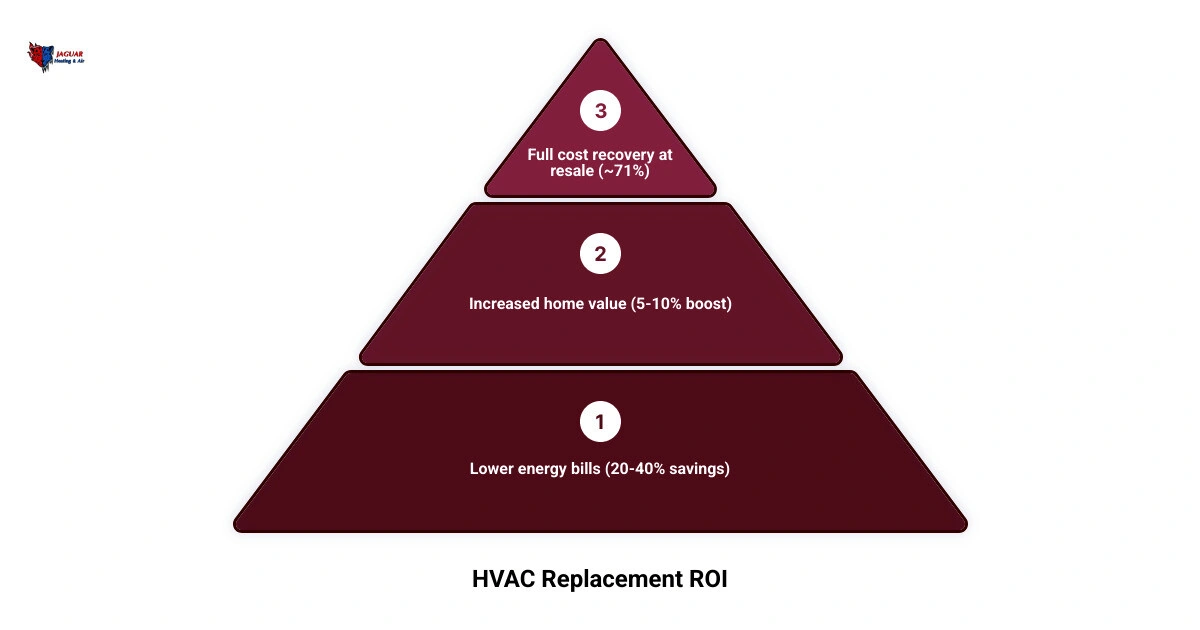
- Home value boost: A new system adds an estimated 5%–7% to your home's value on average, and up to 10% in hot climates like Sacramento's Central Valley
- Cost recovery at resale: Homeowners recover roughly 71% of HVAC upgrade costs when selling, according to National Association of Realtors data
- Energy savings: High-efficiency systems save 20%–40% on heating and cooling costs compared to older models
- Faster sale: Homes with new HVAC systems attract more buyers and spend less time on the market
- Reduced repair costs: A modern system under warranty means fewer emergency service calls and lower maintenance expenses
- Better indoor comfort and air quality: New systems include advanced filtration, humidity control, and smart thermostat integration
Most homeowners think of HVAC replacement purely as an expense. But when you factor in energy savings, appraisal adjustments, and buyer confidence, it starts to look a lot more like a financial decision than a maintenance one. One way to think about it: a new system does not just add a feature to your home — it removes a major worry from a buyer's mind.
In this guide, we break down exactly how and where that return shows up, from your monthly utility bill to your final sale price.
Living in Northern California means our heating and cooling systems work overtime. From the sweltering triple-digit July afternoons in Roseville to the damp, chilly mornings in Elk Grove, we rely on our HVAC systems for more than just "luxury" — they are essential for health and safety.
As we move through May 2026, the technology behind home comfort has reached a peak of efficiency. If your current unit is more than 10 to 15 years old, it is likely operating on outdated standards and potentially using phased-out refrigerants like R-22. This makes every repair more expensive and every utility bill higher than it needs to be.
When we talk to our neighbors about why hvac replacement is a smart investment, we often focus on "peace of mind." There is a specific kind of stress that comes with wondering if the AC will quit on a Saturday afternoon when it’s 105 degrees outside. A new installation eliminates that anxiety. Furthermore, modern systems are designed for the long haul, often lasting 15 to 25 years with proper care. By choosing to replace a struggling unit now, you are essentially locking in your home’s comfort and financial predictability for the next two decades.
Strategic Planning for Long-Term Gains
Investing in a new system isn't just about reacting to a breakdown; it’s about proactive financial planning. In the Sacramento climate, an inefficient system can account for nearly 50% of your total energy use. By upgrading, you aren't just spending money; you are redirecting money that would have otherwise gone to the utility company or a series of endless repairs.

How much does a new system increase my home's value in Roseville or Elk Grove?
If you are planning to list your home in Roseville, Elk Grove, or Rocklin, you might be looking at your aging outdoor unit and wondering if it’s worth the trouble to replace it. The data suggests a resounding "yes."
A new HVAC system typically adds between $5,000 and $10,000 in appraised value to a home. In our specific region, where reliable cooling is a non-negotiable requirement for buyers, that value boost can reach up to 10%. Buyers in 2026 are more savvy than ever; they look at the age of the roof and the HVAC system before they even look at the kitchen countertops.
Buyer Negotiation Power and Marketability
When a buyer sees a brand-new, high-efficiency unit, it changes the entire psychology of the negotiation.
- Removes the "Fear Factor": Buyers often overestimate the cost of a new HVAC system. If they see an old unit, they might ask for a massive price reduction to cover a "future" replacement.
- Increases Confidence: A new system signals that the home has been well-maintained. Buyers assume that if you took care of the expensive "unseen" systems, you likely took care of the rest of the house too.
- Reduces Time on Market: Energy-efficient homes are simply more attractive. A home that promises lower monthly bills will almost always sell faster than a comparable home with an aging, energy-hogging unit.
According to National Association of Realtors data, homeowners can expect a cost recovery of about 71% upon resale. When you combine that with the energy savings you enjoy while still living in the home, the investment often pays for itself entirely. For more details on this, you can explore The Connection Between Energy Efficient HVAC and Your Home Value.
Why HVAC replacement is a smart investment for property appraisals
Appraisers use a standard comparison form to determine what your home is worth. If the "comps" (comparable homes) in your neighborhood have 20-year-old systems and yours is brand new, the appraiser will make a "positive adjustment" to your home’s value.
This helps combat "functional obsolescence." An old HVAC system that can't keep the upstairs cool in a Folsom summer is considered functionally obsolete. By modernizing the equipment, you ensure your home meets the current market standards, preventing a downward adjustment in your appraisal.
I want to lower my monthly energy bills; is a high-efficiency upgrade the answer?
We often hear from homeowners in Citrus Heights and Orangevale who are tired of seeing their utility bills spike every summer. The reality is that older units — even those that are "running fine" — are often incredibly wasteful.
The industry has moved to SEER2 (Seasonal Energy Efficiency Ratio 2) standards, which are much more stringent and accurate than the ratings used 10 or 15 years ago. A system from the early 2010s might have a SEER rating of 10 or 13. Modern high-efficiency systems can reach 18, 20, or even higher.
| System Age | Typical SEER Rating | Estimated Energy Savings with Upgrade |
|---|---|---|
| 15+ Years Old | 8 - 10 SEER | 40% - 50% |
| 10 - 12 Years Old | 13 SEER | 20% - 30% |
| New (2026) | 16 - 22+ SEER2 | Baseline for 2026 Standards |
Upgrading to a high-efficiency model is often the single most effective way to lower your monthly overhead. You can learn more about how these numbers work in our guide on Efficiency Ratings Explained for Homeowners.
Why HVAC replacement is a smart investment for lowering utility bills
The magic behind these savings usually comes down to two things: variable-speed motors and heat pump technology.
Traditional systems are either "on" or "off." They blast air at 100% capacity until the thermostat is satisfied, then shut down. This constant cycling is like driving a car in stop-and-go traffic; it eats up fuel (electricity). Modern variable-speed motors can run at lower, more consistent speeds, using only the exact amount of energy needed to maintain the temperature.
Furthermore, many Sacramento residents are switching to heat pumps. These systems don't "create" heat; they move it. In the summer, they move heat out of your house. In the winter, they pull heat from the outside air and move it in. This process is incredibly efficient, often providing a payback on the investment in as little as three to five years through bill reductions alone. Check out the Benefits of Investing in Heat Pump Installation to see if this is right for your home.
Can a new HVAC system improve the air quality in my Folsom home?
Indoor air quality (IAQ) has become a top priority for families in Folsom and El Dorado Hills. Between seasonal pollen and the occasional NorCal wildfire smoke, the air inside your home needs to be a sanctuary.
Older HVAC systems were designed primarily to control temperature, not to clean the air. Their blowers often aren't powerful enough to push air through high-efficiency filters (like MERV 13 or HEPA) without straining the motor. Modern systems, however, are built with IAQ in mind.
A new HVAC investment provides:
- Advanced Filtration: Captures smaller particles, including allergens, dust, and even some viruses.
- Humidity Control: Modern units are better at removing moisture from the air, which prevents mold growth and makes the "dry heat" of Sacramento feel more comfortable.
- Smart Integration: Many systems now include sensors that monitor air quality in real-time and adjust filtration levels automatically.
- UV Lights and Ionizers: Some modern installations include built-in air purifiers that neutralize bacteria and odors before the air ever reaches your vents.
If you are considering a full home comfort upgrade, our Complete Guide to Heat Pump Installation covers how these systems integrate with modern air quality technology.
Frequently Asked Questions about HVAC Upgrades
Does a new HVAC system increase the appraised value of a home?
Yes, it absolutely does. Appraisers look for "capital improvements" that extend the life and functionality of the property. A new HVAC system is a major capital improvement. To maximize this value, we recommend keeping a "Home Health Folder." This should include your installation contract, warranty information, and proof of your first year of maintenance. When an appraiser sees that the home has a brand-new, professionally installed Trane system, they are much more likely to provide a positive adjustment compared to a home with a 20-year-old "mystery" unit.
Are there tax credits or rebates available for new installations in 2026?
In 2026, there are still significant financial incentives available through the Inflation Reduction Act. Homeowners can often claim a federal tax credit of up to 30% for high-efficiency heat pump installations (capped at specific amounts, usually around $2,000). Additionally, local utility providers like SMUD or PG&E often offer their own rebates for ENERGY STAR-certified equipment. These incentives can significantly lower the net cost of your investment, making the ROI even more attractive.
Should I choose a ductless system to increase my home’s value?
Ductless mini-splits are a fantastic way to increase home value, especially if you have a "bonus" space like a converted garage, an attic office, or a sunroom. Because these systems don't require ductwork, they allow you to add "conditioned square footage" to your home. In the eyes of an appraiser, a garage that is heated and cooled is often worth significantly more than a standard garage. They offer multi-zone cooling, meaning you only pay to cool the rooms you are actually using.
Conclusion
At the end of the day, why hvac replacement is a smart investment comes down to the numbers and your quality of life. Whether you are looking to slash your utility bills in Sacramento, increase your home's resale value in Roseville, or simply breathe cleaner air in Folsom, a modern HVAC system is one of the few home improvements that pays you back every single month.
At Jaguar Heating & Air, we understand the unique demands of the Northern California climate. As a family-owned company and a Trane Comfort Specialist, our NATE-certified technicians are dedicated to helping you find the system that fits your home and your financial goals. We pride ourselves on dependable comfort, fast response times, and the local expertise you need to make an informed decision.
Don't wait for your old system to fail during the next heat wave. Take control of your home's comfort and value today.
Schedule your professional HVAC services today and let us help you turn your HVAC system into your home's best investment.
Recent Posts
HVAC Maintenance Guide: Comparing Heating Replacement Options Before Winter
Before winter hits, make sure your furnace can handle the cold. Compare your options with these objective heating options comparisons for homeowners.
HVAC Maintenance: Troubleshooting the Fall Heating Startup
Why does your furnace smell like burning on that first chilly morning? Use our home maintenance tips and troubleshooting to know when to call a pro this fall.
HVAC Maintenance: Home Maintenance Tips and Troubleshooting for Fall Heating Startup
Why some systems smell burning during fall startup, and how these home maintenance tips and troubleshooting steps help you decide when to call a professional.