.avif)
Heat Pump Advantages Over Traditional HVAC Systems Explained
Discover heat pump advantages over traditional HVAC: superior efficiency, comfort & savings for Sacramento homes. Learn key differences now!
Discover heat pump advantages over traditional HVAC: superior efficiency, comfort & savings for Sacramento homes. Learn key differences now!

Heat Pump Advantages Over Traditional HVAC: What Sacramento Homeowners Need to Know
The heat pump advantages over traditional HVAC systems come down to a few key points: heat pumps heat and cool your home using a single system, they use significantly less energy than gas furnaces or electric resistance heating, and they're a natural fit for Sacramento's hot summers and mild winters.
Here's a quick look at the top advantages:
- One system does both jobs — heating and cooling, no separate furnace needed
- 2–3x more energy efficient than traditional heating systems
- Better humidity control compared to standard central air conditioners
- Longer potential lifespan — up to 20–25 years vs. 15–20 for traditional AC units
- Lower carbon footprint — no onsite combustion or gas byproducts
- Eligible for rebates and tax credits through federal and utility programs
- Works in mild and moderate winters — a perfect match for Northern California's climate
If you're weighing whether to replace your aging furnace-and-AC setup or install something new, this guide walks you through every major factor — from efficiency and comfort to installation, lifespan, and available incentives — so you can make a confident decision for your home.
Sacramento's climate makes this decision more straightforward than it is for homeowners in harsher climates. Summers here are long and hot, winters are relatively mild, and that combination is exactly where heat pumps perform at their best. Whether you're in Elk Grove, Folsom, Roseville, or anywhere else in the Sacramento region, understanding how heat pumps stack up against traditional systems is the first step toward smarter home comfort.

What a Heat Pump Is and How It Differs From Traditional HVAC
To understand the heat pump advantages over traditional HVAC, we first have to look at how they move energy. A traditional system is like a campfire and a refrigerator working separately. A heat pump is more like a reversible refrigerator that can swap jobs depending on the season.
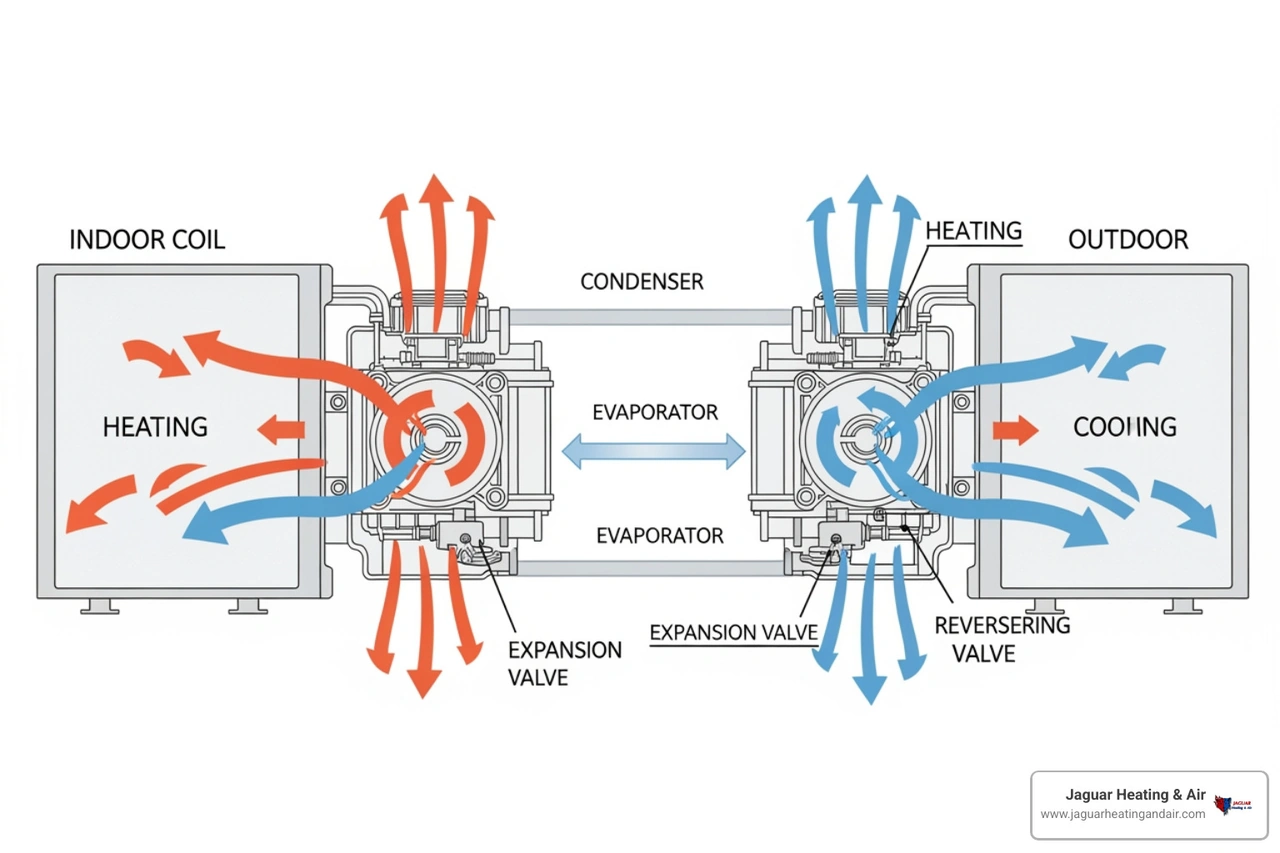
The core difference is that heat pumps transfer heat rather than generating it. In the summer, they pull heat out of your home and dump it outside. In the winter, they pull heat from the outdoor air (yes, even cold air has heat energy!) and move it inside. This is made possible by a specialized component called a reversing valve, which changes the direction of the refrigerant flow.
What Homeowners Mean by “Traditional HVAC”
When we talk about traditional HVAC in Sacramento, we’re usually referring to a "split system." This typically consists of a gas furnace tucked away in a closet or attic for heating and a central air conditioner sitting outside for cooling. These systems rely on separate fuel sources—natural gas for the furnace and electricity for the AC—and use the same set of ducts and a single thermostat to manage your indoor climate.
How a Heat Pump Heats and Cools in One System
A heat pump uses a refrigerant cycle to do both jobs.
- In Cooling Mode: It works exactly like a standard air conditioner. The indoor coil absorbs heat, and the outdoor unit releases it.
- In Heating Mode: The reversing valve flips. The outdoor unit now absorbs heat from the environment, and the indoor coil releases that warmth into your rooms. Because it’s one mechanical system doing both tasks, you don't need to maintain a separate furnace, which simplifies your home’s infrastructure.
Heat Pump Advantages Over Traditional HVAC at a Glance
- Efficiency: They can be 200% to 300% efficient because they move more energy than they consume.
- Space Savings: You only have one outdoor unit and one indoor air handler, freeing up space where a bulky furnace might have been.
- Safety: No gas lines or combustion means zero risk of carbon monoxide leaks from the heating process.
- Consistency: Modern heat pumps are excellent at maintaining a steady temperature without the "blasts" of hot air common with gas furnaces.
Heat Pump Advantages Over Traditional HVAC for Efficiency, Comfort, and Air Quality
Efficiency is the primary reason many of our neighbors in Roseville and Citrus Heights are making the switch. In 2026, energy standards like SEER2 (for cooling) and HSPF2 (for heating) are more important than ever. Heat pumps often boast higher ratings in both categories compared to entry-level traditional systems.
Why Heat Pumps Are Often More Energy Efficient
While a high-efficiency gas furnace might reach 95% to 98% efficiency, a heat pump can reach the equivalent of 300% efficiency. How? Because it isn't burning fuel to create heat; it’s just paying for the "shipping and handling" of moving existing heat. Compared to electric resistance heating (like baseboard heaters), a heat pump can reduce electricity use for heating by up to 75%.
Heating Performance vs Furnaces, Including Cold-Climate Use
Historically, people thought heat pumps couldn't handle the cold. While it’s true that older models struggled when temperatures dipped, modern cold-climate heat pumps are rated to work effectively down to -5°F or even -20°F. In Sacramento, where we rarely see temperatures below freezing, a heat pump is exceptionally reliable. For those rare "Arctic blasts," many systems include a backup electric heat strip or can be paired with a furnace in a dual-fuel setup.
Cooling Performance vs Traditional Central Air Conditioners
In the summer, a heat pump is an air conditioner. There is no performance penalty for choosing a heat pump over a central AC. In fact, because many heat pumps use variable-speed compressors, they are often better at dehumidification than standard single-stage AC units. This means your home in Mather or Orangevale stays crisp and dry even on those muggy Northern California afternoons.
Environmental and Indoor Air Quality Benefits
Since heat pumps are all-electric, they don't produce combustion byproducts. This eliminates the risk of gas leaks or carbon monoxide within the home. Furthermore, because they tend to run for longer, lower-speed cycles, they provide superior air filtration and humidity control. This leads to more stable indoor air quality, which is a major benefit of investing in a heat pump installation.
| Feature | Heat Pump | Traditional HVAC (Gas/AC) |
|---|---|---|
| Fuel Source | Electricity | Electric + Gas/Propane |
| Efficiency | 200–400% | 80–98% |
| Components | Single System | Separate Furnace & AC |
| Carbon Footprint | Low (Zero Onsite Emissions) | Higher (Combustion) |
| Humidity Control | Excellent (Variable Speed) | Standard |
Where Heat Pumps Make the Most Sense for Sacramento-Area Homes
Sacramento is arguably one of the best places in the country for a heat pump. Our climate is classified as Mediterranean—meaning we have hot, dry summers and cool, wet winters. We don't deal with the buried-in-snow winters of the Northeast, which allows heat pumps to run in their "sweet spot" of maximum efficiency for most of the year.
Best Climates and Home Types for Heat Pumps
Heat pumps thrive in moderate regions. They are perfect for:
- All-Electric Homes: If you don't have a gas line, a heat pump is vastly superior to electric furnaces.
- Well-Insulated Modern Homes: These homes hold onto the steady, gentle heat of a heat pump perfectly.
- Additions and Older Homes: For homes in places like Carmichael or Fair Oaks where adding ductwork is difficult, mini-split heat pumps offer a great alternative.
When a Hybrid or Dual-Fuel System Is the Better Middle Ground
Sometimes, homeowners want the "best of both worlds." A dual-fuel system pairs an electric heat pump with a gas furnace. The heat pump handles the cooling and the heating for 90% of the year. When temperatures drop to a point where the heat pump becomes less efficient, the system automatically switches to the gas furnace. This is a popular "middle ground" for those who want the reliability of gas with the efficiency of electric.
Main Limitations Homeowners Should Know Before Switching
While we love heat pumps, we believe in full transparency.
- Electrical Capacity: You may need to upgrade your electrical panel to handle the load if you are switching from gas to all-electric.
- Noise: While modern units are very quiet, the outdoor unit runs year-round, unlike a traditional AC which stays silent all winter.
- Heating Feel: A furnace blows very hot air (120°F+). A heat pump blows air that is warm (90-100°F) but not "hot." It still reaches your target temperature, but the air coming out of the vents feels different.
Installation, Lifespan, and Maintenance Differences Homeowners Should Consider
Choosing a new system is a long-term commitment. You want to know that your investment will last and what it takes to keep it running.
Upfront vs Long-Term Value Without Focusing on Price Tags
While a heat pump is a sophisticated piece of equipment, it replaces two separate systems. When you factor in that you aren't buying a furnace and an AC, the value becomes clear. Furthermore, the monthly operational savings—especially if you have solar panels—can be significant over the life of the system.
Expected Lifespan of Heat Pumps vs Traditional Systems
In the past, heat pumps were thought to have shorter lifespans because they work year-round. However, with modern engineering, a well-maintained heat pump can last 20 to 25 years. This actually edges out the 15 to 20-year average for traditional central AC units. The key to longevity is proper heat pump maintenance.
Maintenance Requirements and Service Needs
Because the heat pump works during both the heating and cooling seasons, we recommend a tune-up twice a year. You’ll want to ensure the coils are clean, the refrigerant levels are correct, and the condensate drains are clear. Regular heat pump service prevents small issues from becoming expensive heat pump repairs.
Rebates, Tax Credits, and How to Decide Between a Heat Pump and Traditional HVAC
In May 2026, the incentives for "going green" are still quite robust. Between federal tax credits under the Inflation Reduction Act and local utility programs (like those from SMUD), the financial barrier to entry is lower than ever.
Heat Pump Advantages Over Traditional HVAC When Incentives Apply
One of the biggest heat pump advantages over traditional HVAC is the eligibility for electrification rebates. Many local programs in Sacramento offer thousands of dollars in incentives specifically for switching from gas to electric heat pumps. This can often make the net investment for a heat pump lower than a traditional AC/furnace combo. For more details on local savings, check out Sacramento's secret to cheaper heat pumps via SMUD.
Questions to Ask Before Choosing Your Next System
- How is my insulation? Heat pumps work best in "tight" homes.
- What is my primary fuel source? If you have solar, a heat pump is almost always the winner.
- Is my electrical panel ready? An HVAC professional can tell you if you need a 200-amp upgrade.
- Do I want zone control? Heat pumps are excellent for creating different "zones" in your home.
When to Schedule a Professional Heat Pump Consultation
If your current system is over 12 years old, it’s time to start looking. Don't wait for a breakdown in the middle of a July heatwave. A professional can perform a "Manual J" load calculation to ensure your new system is sized perfectly for your home's square footage and layout. Whether you need a heat pump installation in Sacramento, CA or just want to explore your options, getting an expert opinion is vital.
Frequently Asked Questions About Heat Pump Advantages Over Traditional HVAC
Do heat pumps really work well during cold weather?
Yes! Modern units are designed to extract heat from the air even when it’s freezing outside. In Sacramento, our winters are mild enough that a standard heat pump will rarely even need to use its backup heat strips.
Are heat pumps better than central air for cooling?
They are essentially the same. A heat pump is a central air conditioner that just happens to have a "reverse" gear. They use the same SEER2 ratings and provide the same level of cooling comfort.
Is a heat pump right for every home in Sacramento?
While they are a great fit for most, homes with very old electrical systems or extremely poor insulation might require some upgrades before a heat pump becomes the most efficient choice. We always recommend a home assessment first.
Conclusion
The heat pump advantages over traditional HVAC are hard to ignore for anyone living in the Sacramento Valley. From the energy savings and environmental benefits to the simplicity of having one system for year-round comfort, heat pumps are the future of home heating and cooling.
At Jaguar Heating & Air, we’ve helped countless families in Elk Grove, Folsom, and beyond make the transition to more efficient, dependable comfort. As a Trane Comfort Specialist, we pride ourselves on providing the expert heat pump services you need to stay comfortable no matter what the California sky throws at us.
Ready to see if a heat pump is the right fit for your home? Upgrade your Sacramento home with our complete guide to heat pump installation or contact us today to schedule your consultation!
Recent Posts

HVAC Maintenance Guide: Comparing Heating Replacement Options Before Winter
Before winter hits, make sure your furnace can handle the cold. Compare your options with these objective heating options comparisons for homeowners.

HVAC Maintenance: Troubleshooting the Fall Heating Startup
Why does your furnace smell like burning on that first chilly morning? Use our home maintenance tips and troubleshooting to know when to call a pro this fall.
HVAC Maintenance: Home Maintenance Tips and Troubleshooting for Fall Heating Startup
Why some systems smell burning during fall startup, and how these home maintenance tips and troubleshooting steps help you decide when to call a professional.