.avif)
Ultimate Checklist for Mitsubishi Ductless Benefits for Older Homes
Why Mitsubishi Ductless Benefits for Older Homes Are Worth Understanding Before You Upgrade The mitsubishi ductless benefits for older homes are real, practi…
Why Mitsubishi Ductless Benefits for Older Homes Are Worth Understanding Before You Upgrade The mitsubishi ductless benefits for older homes are real, practi…

Why Mitsubishi Ductless Benefits for Older Homes Are Worth Understanding Before You Upgrade
The mitsubishi ductless benefits for older homes are real, practical, and especially relevant if you own a pre-1970s property in the Sacramento area that was never built with central air in mind. Older homes — think Craftsman bungalows, Victorian two-stories, and mid-century ranches — carry a lot of charm. But when summer temperatures climb past 100 degrees in Elk Grove or Folsom, that charm can feel a lot less comfortable without a reliable cooling and heating system.
Here is a quick look at the top benefits Mitsubishi ductless systems offer for older homes:
• No ductwork required — installation needs only a small 3-inch wall penetration, leaving plaster, crown molding, and original woodwork intact
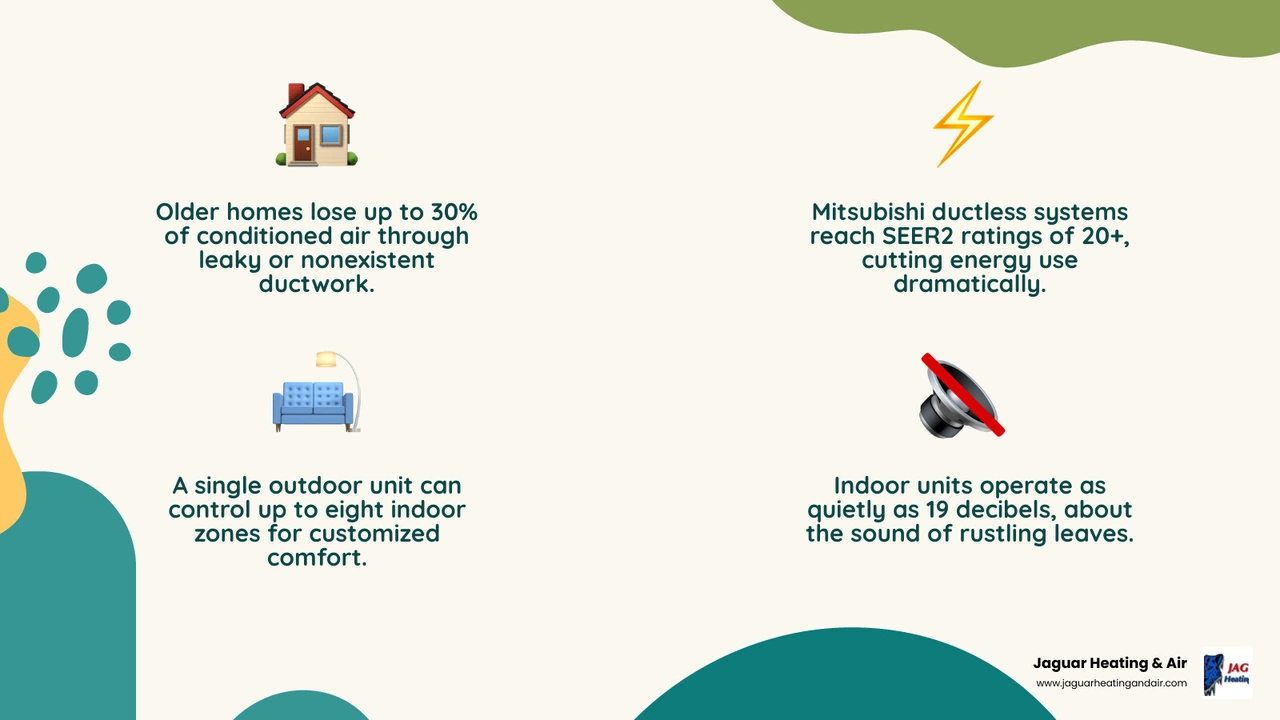
• High energy efficiency — many Mitsubishi systems carry SEER2 ratings of 20 or higher, and eliminate the duct losses that can waste up to 30% of your conditioned air
• Zoned comfort — one outdoor unit can connect up to eight individually controlled indoor units, so every room stays at the temperature you want
• Quiet operation — indoor units can run as low as 19 decibels, roughly the sound of rustling leaves
• Improved indoor air quality — multi-stage filtration reduces dust, allergens, and humidity without relying on old, leaky ducts
• Strong warranty protection — qualifying systems installed by a certified Diamond Contractor can carry up to a 12-year parts and compressor warranty
• Flexible indoor unit styles — wall-mounted, floor-mount, and recessed ceiling cassettes all work in spaces where ductwork simply cannot go
The core challenge in older Sacramento-area homes is simple: the house was built before forced-air HVAC existed, so there is nowhere to put ductwork without tearing into walls, dropping ceilings, or damaging irreplaceable historic details. Mitsubishi ductless systems solve that problem at the source by eliminating the need for ducts entirely. Whether you are dealing with plaster walls, balloon-frame construction, or a floor plan that makes traditional HVAC routing nearly impossible, a ductless mini-split system can deliver whole-home comfort without the demolition.
The Challenges of Retrofitting HVAC in Vintage Properties
If you have ever tried to retroactively fit a modern forced-air system into a home built in the 1920s or 1940s, you know it is often an architectural nightmare. Vintage properties in neighborhoods like Midtown Sacramento, historic Folsom, or older parts of Roseville were built with completely different structural methods than today's tract homes.
One major obstacle is the wall construction itself. Many homes built before World War II feature horsehair plaster over wood lath rather than modern drywall. Plaster is incredibly fragile; hitting it with a standard reciprocating saw or hammer can send cracks spider-webbing across an entire wall, ruining historic finishes. Additionally, pre-1940s properties often use balloon framing. Unlike modern platform framing, balloon framing features continuous studs running from the foundation to the roofline without horizontal fire-blocks. This creates open vertical chases that make running massive sheet-metal ducts a structural hazard and a fire safety nightmare.
Furthermore, older homes rarely have the extra closet space, attic clearance, or basement room required to house a large central air handler and the sprawling web of supply and return ducts. Trying to squeeze these components in often means sacrificing precious square footage or lowering ceilings. When choosing how to bring modern climate control to these properties, homeowners often face a difficult decision, which we discuss in our Sacramento HVAC Showdown Central Air vs Mini Split.
Why Traditional Ducted Systems Fall Short in Older Homes
When you force a traditional ducted system into a vintage home, the compromises start immediately. To route the ductwork, contractors often have to build "soffits" or drop ceilings. This means beautiful, high-ceilinged rooms suddenly get awkward bulkheads that slice right through original crown molding and disrupt the home's historic proportions.
Beyond the aesthetic damage, traditional ducted systems are notoriously inefficient in older structures. According to the U.S. Department of Energy, duct losses can account for as much as 30 percent of the energy used for air conditioning. When you run ducts through unconditioned spaces like a hot Sacramento attic or a drafty crawlspace, that percentage climbs even higher. Leaky joints and poor thermal insulation mean you are paying to cool your attic while your upstairs bedrooms remain stiflingly hot. For a deeper dive into how these two paths compare, read our guide on Is a Mini Split Better Than Central Air for You.
Key Mitsubishi Ductless Benefits for Older Homes
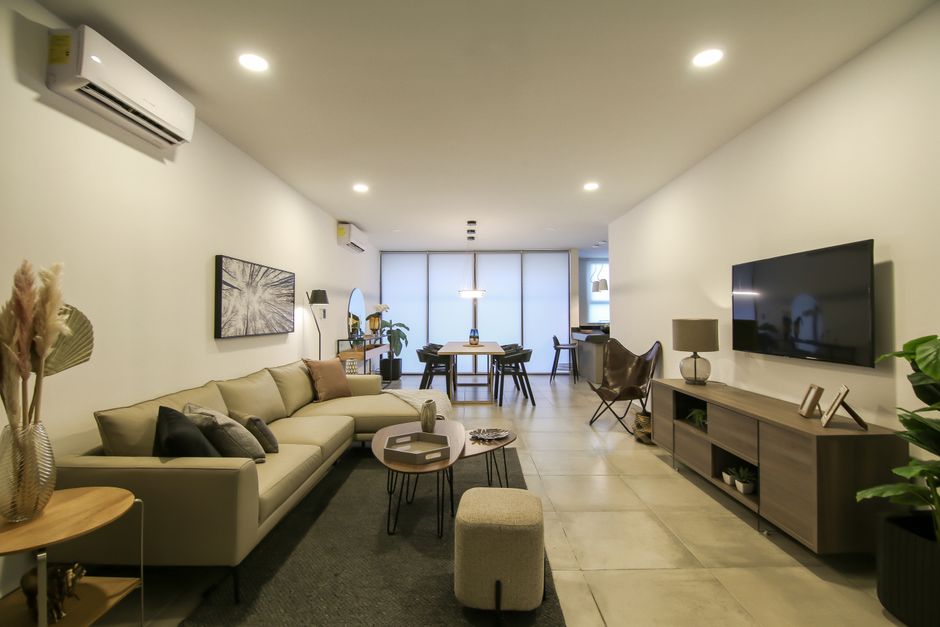
Choosing a ductless system designed by Mitsubishi Electric allows you to bypass these vintage-home headaches entirely. Instead of moving massive volumes of air through bulky metal pipes, a mini-split system transfers thermal energy through small, flexible refrigerant lines.
The primary mitsubishi ductless benefits for older homes center around non-invasive installation, exceptional energy efficiency, and precise room-by-room comfort. Rather than spending weeks tearing open walls and rebuilding drywall, a professional team can often install a multi-zone ductless system in just one to three days. The connection between the outdoor condenser and the indoor air handlers requires only a three-inch hole through an exterior wall to run the refrigerant lines, electrical wiring, and a condensate drain. To understand the full scope of what these systems can do, check out our Ultimate Mitsubishi Ductless Guide 2026.
Preserving Architectural Integrity with Flexible Indoor Units
One of the greatest fears of any historic home enthusiast is losing the unique character of their property. Mitsubishi understands this, offering a wide array of indoor unit styles that can be strategically placed to blend into your decor:
• Wall-Mounted Units: Modern, slim-profile units that sit high on the wall, keeping floor space completely open.
• Floor-Mount Consoles: Perfect for replacing old steam radiators or cast-iron heaters. These units sit low to the ground and fit neatly under windows, blending seamlessly into traditional parlors.
• EZ FIT® Recessed Ceiling Cassettes: Designed to fit flush between standard ceiling joists without additional structural framing. They disappear into the ceiling, leaving only a sleek grille visible.
By utilizing these varied configurations, we can preserve your plaster walls, original woodwork, and high ceilings. For a real-world look at how simple this process can be, read about how Ductless AC Mini Split Installation in Folsom Made Easy simplifies the transition to modern comfort.
Maximizing Energy Efficiency and Eliminating Duct Losses
Older homes are naturally drafty, meaning they already require more energy to heat and cool than modern, tightly sealed buildings. In fact, historic homes often require 25 to 30 BTUs per square foot due to thermal loss, compared to just 20 BTUs for newer constructions.
Mitsubishi ductless systems combat this inherent inefficiency with advanced INVERTER-driven compressors. Unlike traditional single-stage systems that blast on at 100% capacity and then shut off completely, Mitsubishi systems continuously modulate their speed to match the exact heating or cooling load of the room. This eliminates the energy-wasting "on-and-off" cycling. When you combine this modulating technology with the complete elimination of duct losses, the savings are substantial. Homeowners transitioning from old window units or baseboard heaters frequently see their heating and cooling bills drop significantly. To learn more about the financial returns of this technology, read our analysis: Is a Mitsubishi Ductless System Worth the Investment.
How Zoned Comfort Transforms Multi-Story Historic Living
If you live in a multi-story home in Sacramento or Elk Grove, you are likely familiar with the "upstairs-downstairs divide." During a hot July afternoon, your downstairs living room might feel perfectly fine, while the upstairs bedrooms feel like a sauna.
Traditional single-thermostat central systems cannot handle this because they treat the entire house as one single zone. Mitsubishi multi-zone ductless systems solve this by giving every room its own dedicated indoor unit and thermostat.
• Ductwork Needed — Traditional Central Air: Yes (bulky, prone to leaks) — Mitsubishi Zoned Ductless: No (uses small refrigerant lines)
• Aesthetic Impact — Traditional Central Air: High (soffits, dropped ceilings) — Mitsubishi Zoned Ductless: Minimal (slim wall, floor, or ceiling units)
• Temperature Control — Traditional Central Air: Single thermostat (uneven temps) — Mitsubishi Zoned Ductless: Individual room controls (perfect balance)
• Energy Waste — Traditional Central Air: High (cools empty rooms, 30% duct loss) — Mitsubishi Zoned Ductless: Low (only cool the rooms you are using)
• Noise Level — Traditional Central Air: Medium to High — Mitsubishi Zoned Ductless: Whisper-Quiet (down to 19 dB)
With a zoned setup, you can set your kitchen to 72 degrees while cooking, keep an unused guest room at 78, and lower your master bedroom to a cool 68 for sleeping. This level of customization is highly beneficial for older homes with closed-off floor plans. To see how local homeowners are utilizing this technology, take a look at The Elk Grove Guide to Staying Cool with Ductless Mini Split Installation.
Understanding the Mitsubishi Ductless Benefits for Older Homes with Multi-Zone Setups
With Mitsubishi’s advanced multi-zone outdoor condensers, you do not need a forest of outdoor units cluttering your yard. A single, compact outdoor unit can power up to eight individual indoor air handlers.
This multi-zone capability allows you to build a highly customized comfort layout across your entire home. Each indoor unit operates independently, drawing only the exact amount of refrigerant needed to maintain the set temperature in its specific zone. This prevents the system from short-cycling and ensures that you are only paying to condition the spaces you are actively using.
Improving Indoor Air Quality and Humidity Control in Drafty Houses
Older homes are notorious for trapping dust, pollen, and outdoor allergens. Because these houses "breathe" more than modern homes, outdoor pollutants easily find their way inside. If you have an existing ducted system, those ducts can accumulate layers of dust, pet dander, and mold spores over decades, blowing them back into your living spaces every time the system turns on.
Mitsubishi ductless systems improve indoor air quality by utilizing multi-stage filtration directly inside each indoor unit. Air is pulled directly from the room, passed through advanced filters (which often include deodorizing and allergen-busting enzymes), and returned immediately to the space. Because there are no ducts to collect debris, the air you breathe stays cleaner. Learn why this makes mini-splits a smart upgrade in our guide: Ductless Mini Splits Good Investment Folsom CA.
Tackling Moisture and Drafts in Pre-1970s Construction
Sacramento summers can bring dry heat, but older homes with poor insulation and drafty crawlspaces can still suffer from localized humidity issues, especially in areas close to the Sacramento River delta. High indoor humidity doesn't just feel uncomfortable; it can damage historic wood framing, plaster, and wallpaper, and even promote mold growth.
Mitsubishi ductless systems are designed to control both temperature and humidity more effectively than traditional systems. Because the inverter compressor runs at lower speeds for longer periods, the indoor coils continuously pull moisture out of the air rather than running in short, rapid bursts. This steady dehumidification keeps your home feeling cool and dry at higher thermostat settings, saving you energy while protecting your property's historic structure.
Whisper-Quiet Operation and Long-Term Reliability
Many historic neighborhoods in Sacramento, Rocklin, and Roseville are remarkably peaceful. The last thing you want to do is ruin a quiet evening with a loud, clattering air conditioner kicking on outside your window, or a noisy fan vibrating through your bedroom wall.
Mitsubishi systems are engineered specifically for whisper-quiet performance. Indoor units can operate at sound levels as low as 19 decibels — which is actually quieter than a whisper or rustling leaves. To keep your system running at these near-silent levels, it helps to understand basic maintenance, which you can explore in our Ductless Mini Splits Roseville CA Troubleshooting Guide.
Realizing the Mitsubishi Ductless Benefits for Older Homes in Quiet Neighborhoods
The quiet engineering extends to the outdoor units as well. Certain Mitsubishi outdoor models operate at around 46 decibels, which is quieter than a typical household dishwasher. This means you can install the outdoor unit near a patio, porch, or close to a neighbor's property line without causing a disturbance.
Additionally, when you have your system installed by a certified Diamond Contractor like Jaguar Heating & Air, you gain access to some of the strongest warranties in the industry. This includes up to 12 years of warranty protection on parts and compressors for qualifying residential systems. If you ever experience unusual noises or operation, our local team is always ready to help. You can learn more about identifying system sounds in our article on Why Ductless Heating System So Loud Rocklin CA.
Frequently Asked Questions about Ductless Retrofits
Retrofitting a historic property can bring up plenty of questions. Here are some of the most common things we hear from local homeowners.
Will installing a mini-split damage my historic plaster walls?
Not when it is done by experienced professionals. To route the refrigerant lines, we make a single, precise three-inch penetration through the wall. When dealing with historic horsehair plaster, we use specialized drilling techniques to prevent cracking or crumbling. The indoor unit itself is mounted securely to a backing plate that distributes the weight evenly, causing zero structural stress to your vintage walls. If you ever run into issues with your system down the line, such as water pooling, check out our guide on Why Water Leaking Mini Split Rocklin CA for quick answers.
How many zones does a typical older home require?
It depends entirely on your floor plan and how you use your home. For a typical two-story Craftsman or Victorian home between 1,500 and 2,500 square feet, we often recommend three to four zones. This usually covers the main living spaces downstairs (like the living room and kitchen) and the primary bedrooms upstairs. During our initial consultation, we perform a detailed load calculation to ensure your system is sized perfectly to handle your home's unique layout and draftiness without short-cycling.
Can ductless systems completely replace old radiators or baseboard heaters?
Yes, absolutely! Mitsubishi’s Hyper-Heating INVERTER® (H2i®) technology is designed to provide highly efficient heating even when outdoor temperatures drop. While Sacramento winters are relatively mild, having a reliable all-electric heat pump means you can completely decommission old, inefficient wall heaters, oil furnaces, or radiators, freeing up valuable floor space and lowering your carbon footprint.
Conclusion
Preserving the charm of a historic Sacramento-area home does not mean you have to suffer through hot summers and drafty winters. By choosing a Mitsubishi ductless mini-split system, you get the best of both worlds: modern, high-efficiency comfort and complete preservation of your home's architectural soul.
At Jaguar Heating & Air, we are proud to serve communities across Sacramento, Elk Grove, Folsom, Roseville, Rocklin, and the surrounding areas. As a local, family-owned business, our NATE-certified technicians specialize in designing non-invasive, high-efficiency comfort solutions tailored specifically to the unique needs of older homes.
Ready to transform your historic home's comfort? Schedule a high-efficiency ductless consultation with Jaguar Heating & Air today and let our team design the perfect zoned comfort system for your vintage property!
Recent Posts

Why Your Furnace Smells Like Burning Dust: A Guide to Fall HVAC Maintenance
Does your furnace smell like burning dust? Review our home maintenance tips and troubleshooting to see what we found inside a typical fall heating startup.

HVAC Maintenance: Decoding the Burning Smell During Your First Fall Startup
Smelling burning dust on the first chilly morning? Apply our home maintenance tips and troubleshooting to decide if it's normal burn-off or a safety hazard.
HVAC Maintenance Guide: Comparing Heating Replacement Options Before Winter
Before winter hits, make sure your furnace can handle the cold. Compare your options with these objective heating options comparisons for homeowners.