.avif)
A-Z Guide to What to Expect During an Emergency Service Call
Learn what to expect during an emergency service call for HVAC failures in Sacramento with our A-Z guide.
Learn what to expect during an emergency service call for HVAC failures in Sacramento with our A-Z guide.

What to Expect During an Emergency HVAC Service Call in Sacramento
Knowing what to expect during an emergency service call can make a stressful situation much easier to handle. When your heating or cooling system fails during a Sacramento heatwave or a cold winter night, the uncertainty of not knowing what happens next can feel just as overwhelming as the breakdown itself. This guide walks you through the entire process — from the moment you call for help to the final system check after repairs are complete.
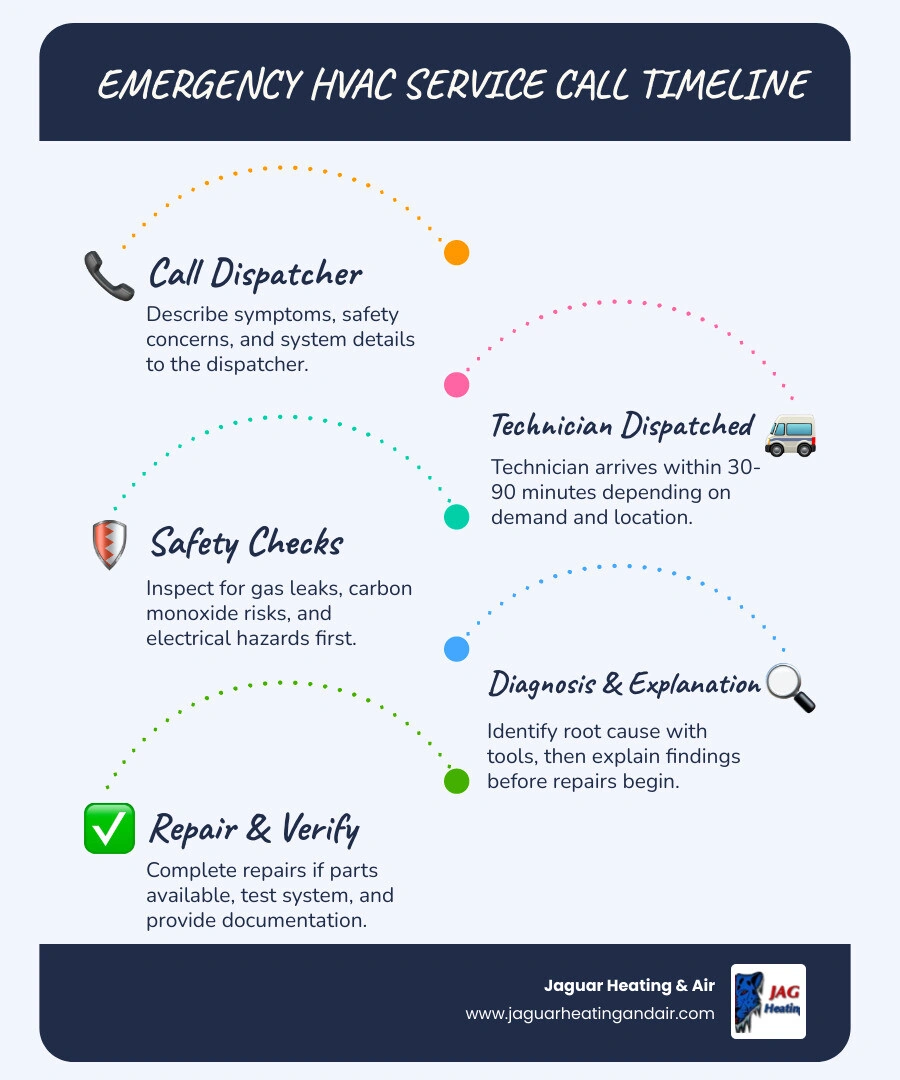
Here is a quick overview of what typically happens during an emergency HVAC service call:
- You call the dispatcher and describe your symptoms, safety concerns, and system details.
- A technician is dispatched — most emergency services arrive within 30 to 90 minutes depending on demand and location.
- Safety checks come first — the technician inspects for gas leaks, carbon monoxide risks, and electrical hazards before anything else.
- Diagnosis follows — using specialized tools, the technician identifies the root cause of the failure.
- You receive a clear explanation of the findings before any repair work begins.
- Repairs are completed or the system is stabilized — if a needed part is on the truck, most repairs are finished in one visit.
- Post-repair testing is performed to confirm the system is running safely and correctly.
- You receive documentation of the work done and recommendations to prevent future breakdowns.
Over 60% of HVAC emergencies happen during peak seasons — exactly when systems are under the most stress and technician demand is highest. In Sacramento's climate, where summer temperatures regularly push past 100 degrees, a failed air conditioner or furnace can quickly become a genuine health and safety concern, not just a comfort inconvenience.
Quick what to expect during an emergency service call definitions:
- how to prevent hvac emergencies with maintenance
- how to stay safe during a heating or cooling emergency
- when an hvac failure is a true emergency
Standard vs. Urgent: Identifying a True HVAC Emergency
When your heating or cooling system starts acting up, your first instinct might be to call for immediate assistance. However, it helps to perform a quick system triage to determine whether your situation requires urgent attention or if it can wait for a standard appointment. Recognizing the difference can save you unnecessary stress and help prioritize response times for families facing immediate safety risks.
A true HVAC emergency is defined by situations that threaten your health, safety, or property. For example, a complete system failure during extreme temperatures — such as a 104-degree July afternoon in Elk Grove or a freezing December night in Folsom — is a clear emergency. Without climate control, indoor temperatures can rapidly reach dangerous levels, posing a severe threat of heatstroke or hypothermia, especially for infants, the elderly, or pets.
Other clear indicators of an emergency include active safety hazards. If you smell burning plastic, see sparks coming from your outdoor condenser, or detect the distinct "rotten egg" odor of a natural gas leak near your furnace, you are facing an urgent situation. On the other hand, a slightly noisy fan motor or a minor temperature fluctuation on a mild spring day is generally considered a standard service issue. For a deeper look at these distinctions, you can read about When an HVAC Failure is a True Emergency.
Because over 60% of HVAC emergencies happen during peak seasons, our dispatchers use a careful triage process to evaluate every call. We look at the outdoor weather, the vulnerability of the occupants in your home, and the specific symptoms your system is displaying to get a technician to your door as quickly as possible.
| Feature | Standard Service Call | Emergency Service Call |
|---|---|---|
| Response Window | Scheduled within a few days | Dispatched immediately (typically 30–90 minutes) |
| Primary Trigger | Minor performance drops, routine wear, or scheduled maintenance | Total system failure during extreme weather, safety hazards, or health risks |
| Weather Conditions | Mild to moderate outdoor temperatures | Extreme heatwaves (95°F+) or freezing winter temperatures |
| Safety Risks | None; system is operating safely but suboptimally | Active risks like gas leaks, electrical sparking, or carbon monoxide concerns |
| Focus of Visit | Comprehensive system tuning, optimization, and routine repairs | Rapid safety inspection, diagnostics, and immediate system stabilization |
What to Expect During an Emergency Service Call When Your System Fails
When a complete breakdown occurs, the experience is very different from a planned maintenance visit. During a standard call, a technician might focus on cleaning components and checking efficiency. But during an emergency call, the primary goal is rapid stabilization and safety.
If you notice electrical sparking, hear loud metal-on-metal grinding noises, or find that your air conditioner has frozen coils encased in ice, the system must be shut down immediately to prevent cascading damage. For instance, running an air conditioner with frozen coils can destroy the compressor — one of the most vital and complex parts of your system.
If your system breaks down unexpectedly during a blistering Sacramento summer, knowing the immediate steps to take can prevent further damage to your equipment. You can find practical advice on how to handle these sudden failures in our guide on What to Do When Your HVAC Breaks Down Unexpectedly.
How to Prepare Your Home Before the Technician Arrives
While our technician is on the way to your home in Roseville, Rocklin, or Rancho Cordova, there are several simple steps you can take to prepare. Taking these proactive measures helps ensure a faster, safer, and more efficient repair process.
First, gather the essential details that our dispatcher and technician will need. Be ready to describe:
- The specific symptoms your system is showing (e.g., blowing warm air, making a clicking sound, or refusing to turn on at all).
- When the problem started and if it has happened before.
- The approximate age of your system and any available warranty documentation or past service records.
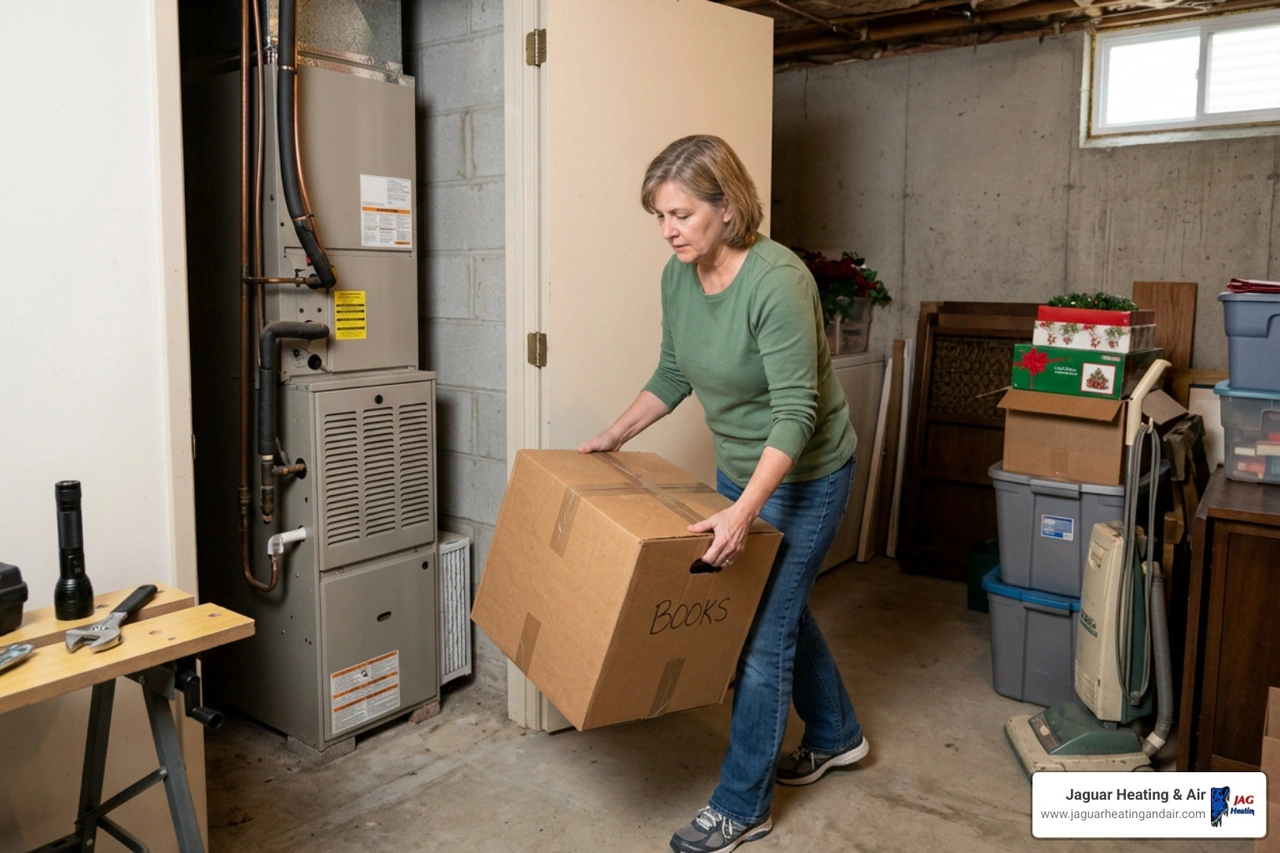
Next, clear a direct path to all parts of your heating and cooling system. Technicians will need quick, unobstructed access to your indoor air handler, furnace (often located in a closet, attic, or garage), thermostat, and outdoor condenser unit. Please ensure there is at least a two-foot clearance around your outdoor unit by clearing away weeds, toys, or patio furniture. Indoors, move any stored boxes or household items out of the way.
Pet safety is another important consideration. Emergency service visits involve open doors, heavy toolbags, and active electrical testing. To keep your furry family members safe and allow the technician to work without distraction, please secure your pets in a quiet, separate room before we arrive.
Finally, verify your thermostat settings. If your air conditioner's coils are frozen, turn the system completely off at the thermostat but set the fan switch to "On." This allows the ice to begin melting safely before the technician arrives. For more safety tips you can implement right away, check out our guide on How to Stay Safe During a Heating or Cooling Emergency.
What to Expect During an Emergency Service Call: Step-by-Step Process
Once our technician arrives at your home, they will follow a highly structured, professional protocol designed to resolve your problem safely and efficiently. We pride ourselves on providing a rapid response to homeowners throughout the greater Sacramento area, ensuring that you are never left in the dark about what is happening to your system.
To learn more about our local services, you can visit our dedicated Emergency HVAC Service Sacramento CA page.
Here is what you can expect during the on-site visit:
- Professional Arrival: Our NATE-certified technician will arrive in a clearly marked service vehicle, wearing a professional uniform. They will introduce themselves, explain the plan for the visit, and ask you a few brief questions about what you have observed.
- Initial Walkthrough: The technician will perform a quick visual inspection of your thermostat, indoor unit, and outdoor condenser to understand the layout of your system.
- Diagnostic Phase: Using specialized diagnostic tools — such as digital manifolds, multimeters, and thermal imaging cameras — the technician will test electrical currents, refrigerant pressures, and airflow rates to pinpoint the exact failure point.
- Findings and Options: Before any repair work begins, the technician will explain their findings in plain, easy-to-understand language. They will walk you through the root cause of the issue and discuss the best options to restore your comfort.
Safety Checks and Diagnostics: What to Expect During an Emergency Service Call
Safety is our absolute highest priority. Before performing any mechanical diagnostics or attempting to restart your system, our technicians conduct a series of essential safety checks.
We inspect for gas leaks using sensitive electronic leak detectors, check for carbon monoxide risks around your heat exchanger, and perform comprehensive voltage testing to identify dangerous electrical faults. This is a critical step, as over 51,000 home fires annually across the country are attributed to electrical failures. By testing the electrical integrity of your capacitors, contactors, and wiring first, we protect both your home and our technicians.
If your heating system fails during a winter cold snap, these safety checks become even more vital to ensure no harmful combustion gases are entering your living spaces. You can read more about our specialized cold-weather protocols in our article on Heating Repair Emergency in Sacramento CA.
Resolving the Issue: Timelines and Parts Availability
Once the problem is diagnosed and you have approved the repair plan, the technician will begin the process of restoring your system.
Our service trucks are stocked with a wide inventory of common replacement parts, including capacitors, contactors, fan motors, and universal thermostats. Because of this preparation, the vast majority of emergency service calls are successfully resolved on the very first visit, typically taking between one and three hours from start to finish.
However, if your system requires a highly specialized or manufacturer-specific component that is not on the truck, we will prioritize stabilizing your system. This means we will ensure your home is left in a safe condition and provide you with clear guidance on temporary comfort measures while we source the necessary part.
Before leaving your home, our technician will perform rigorous post-repair testing. We run the system through a complete heating or cooling cycle to verify that temperatures are correct, safety limits are functioning, and the original problem has been fully resolved. Finally, you will receive clear, written documentation detailing the work performed, the parts replaced, and professional recommendations to keep your system running smoothly.
Frequently Asked Questions About Emergency HVAC Services
What should I do if I smell gas near my furnace?
If you smell a strong odor resembling rotten eggs near your furnace, this indicates a natural gas leak. You must prioritize safety and take immediate action:
- Evacuate the home immediately along with all family members and pets.
- Do not flip any electrical switches, light matches, use your phone, or start your car in the garage, as a single spark could ignite the gas.
- Call 911 and your gas utility provider from a safe distance outside your home.
- Once the utility company has shut off the gas and declared the area safe, you can reach out to us to inspect and repair your heating system. For immediate assistance, please visit our Contact page.
How long does a typical emergency service call take?
Most emergency HVAC service calls are completed within one to three hours of the technician's arrival. This timeline includes a 15-to-45-minute diagnostic phase, followed by the time needed to replace the failed component (such as a capacitor, which takes about 30 minutes, or a blower motor, which can take two to three hours). We always strive to work efficiently to restore your comfort as quickly as possible.
Can regular maintenance prevent future emergency calls?
Absolutely. In fact, members of maintenance programs see 73% fewer emergency calls than those who skip service entirely. Routine maintenance keeps your system running efficiently, extends its lifespan to 15–20 years (compared to just 8–10 years for neglected units), and helps catch minor wear and tear before it escalates into a major peak-season breakdown.
Conclusion
Experiencing an HVAC failure can be incredibly stressful, but knowing what to expect during an emergency service call helps you maintain control and make informed decisions. From the initial safety checks to the final post-repair testing, every step of our process is designed to restore your peace of mind and bring dependable comfort back to your home.
If you are currently facing a system failure or want to ensure your heating and cooling systems are fully prepared for the seasons ahead, our experienced, NATE-certified team is here to help. For reliable, professional service in Sacramento, Elk Grove, Folsom, and the surrounding areas, please visit our Heating Repair page to get started.
Recent Posts
What a Rattling Outdoor Fan Blade Means for Your AC's Lifespan
A vibrating condenser fan creates micro-vibrations that act as a ticking time bomb for delicate copper lines. Find out why you shouldn't ignore this fall noise.
Why We Test Your AC's Amp Draw During Late Summer Maintenance
Even if your vents are blowing cold air, months of intense heat can push your compressor to the brink. We measure invisible electrical fatigue to catch stressed parts before a total breakdown.
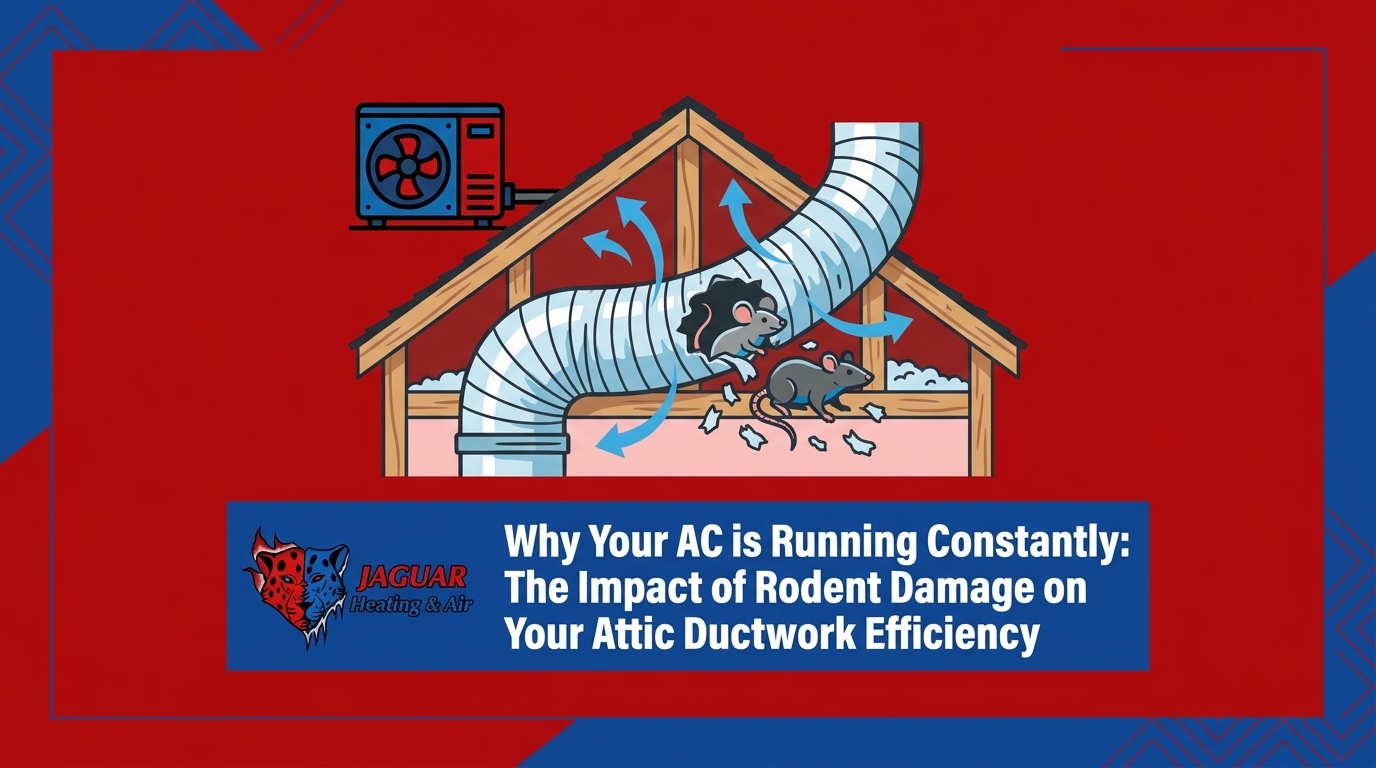
The Impact of Rodent Damage on Your Attic Ductwork Efficiency
If your cooling system runs constantly but your home stays warm, roof rats may have chewed through your flex ducts. See why a tape patch isn't enough to safely restore your system's airflow.