.avif)
The Truth About 'Topping Off' Freon Every Summer
Air conditioners don't naturally consume refrigerant. If your system needs a late-summer recharge, you are masking a physical leak that demands a proper diagnostic instead of a temporary band-aid.
Air conditioners don't naturally consume refrigerant. If your system needs a late-summer recharge, you are masking a physical leak that demands a proper diagnostic instead of a temporary band-aid.

The Persistent Myth of the Annual Refrigerant Recharge
Adding a little extra refrigerant to get a struggling system through the season is one of the most common misconceptions in home cooling, but finding the truth about 'topping off' Freon every summer can save you from a cycle of endless breakdowns. Many homeowners operate under the false assumption that an air conditioner naturally "burns off" or "uses up" its refrigerant over time, much like a vehicle consumes motor oil or gasoline. This belief leads to a recurring pattern where technicians arrive, hook up their gauges, add a few pounds of refrigerant, and leave you with a system that works—for now.
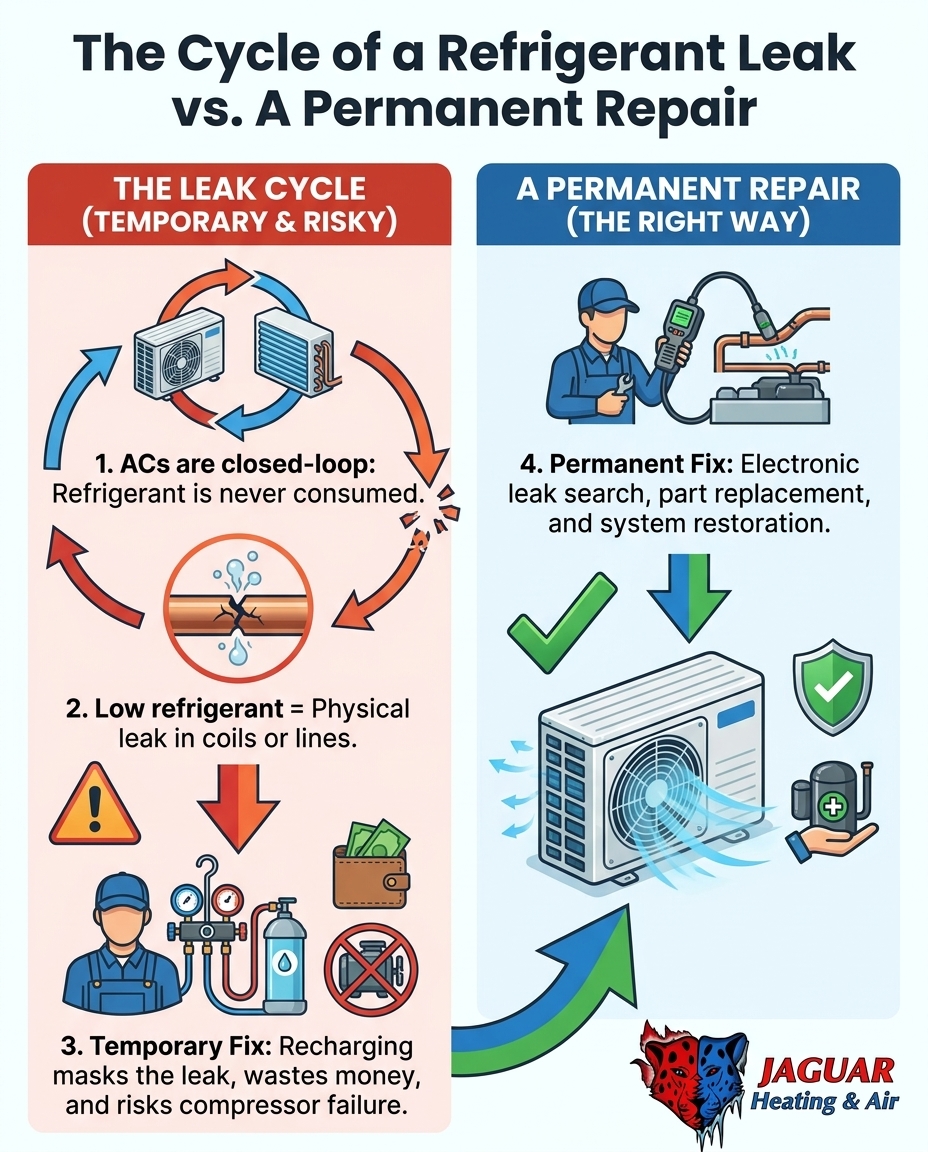
This is a particularly concrete problem for Sacramento homeowners being told their AC needs a 'Freon top-off' to survive late August heat, which masks a physical refrigerant leak in the closed-loop system. When you face a system that isn't cooling properly, you arrive at a critical decision point: whether to accept a temporary seasonal refrigerant recharge or commission a proper leak search and permanent repair. Choosing the temporary route might feel like a quick win, but it leaves the underlying mechanical failure completely unresolved.
To break this cycle, you need comprehensive air conditioning services that focus on root-cause diagnostics rather than seasonal band-aids. Understanding exactly how your system manages refrigerant is the first step toward keeping your home reliably comfortable without falling back on temporary fixes year after year.
The Physics of Closed-Loop HVAC Systems
To understand why an air conditioner never needs to be refilled under normal circumstances, you have to look at the basic physics of how the equipment actually works. Central air conditioners and heat pumps operate as closed-loop systems. This means the chemical refrigerant—whether it is older R-22 (Freon) or modern R-410A (Puron)—travels continuously in a sealed circuit between your indoor evaporator coil and your outdoor condenser coil. The chemical never leaves the copper lines.
A common pitfall is comparing HVAC refrigerant to the gasoline in your car. Gas is a consumable fuel; it is ignited, combusted, and expelled through the exhaust pipe to create forward motion. Refrigerant, on the other hand, is not a fuel. It is a heat transfer fluid that merely changes states from a liquid to a gas and back again. As it evaporates indoors, it absorbs heat from your home. As it condenses outdoors, it releases that heat into the outside air. Because it is never combusted or consumed in this process, a system with the correct initial factory charge should theoretically never need a single ounce of additional refrigerant for its entire lifespan.
• Function — Car Gasoline: Combusted to create mechanical power — AC Refrigerant: Changes states to absorb and release heat
• Consumption — Car Gasoline: Burns off continuously during operation — AC Refrigerant: Never consumed; loops endlessly
• Replenishment — Car Gasoline: Requires regular refilling at the pump — AC Refrigerant: Requires zero refilling unless a leak occurs
• System Type — Car Gasoline: Open exhaust system — AC Refrigerant: Hermetically sealed closed-loop system
The conclusion here is absolute: if the refrigerant levels are low in Sacramento area homes, the chemical has not evaporated or been used up. It has physically escaped through a breach in the copper lines, coils, or valves. Whenever a system requires more refrigerant, it means you need professional AC repair to seal the system back up, not just a refill to replace what was lost.
Why a 'Top-Off' Guarantees a Physical Leak
Because refrigerant is not a consumable fuel like gas in a car, a closed-loop system that is low on Freon guarantees a physical leak exists, making a 'top-off' a recurring band-aid rather than a true mechanical fix. A physical leak means there is a literal hole, crack, or compromised seal somewhere in the pressurized system. Adding refrigerant without finding and sealing that hole is exactly like pumping air into a car tire that has a nail driven through the tread. The tire will inflate and function for a short drive, but it will inevitably go flat again.
These leaks rarely fix themselves. In fact, due to the constant vibration of the compressor and the high-pressure environment inside the copper lines, micro-leaks tend to expand over time. What starts as a slow seep that empties your system over six months will eventually become a major rupture that drains the system in a matter of days. Ignoring the core issue leads to cumulative mechanical damage, making the hidden cost of delaying a minor AC repair much higher in the long run.
Common Culprits of Refrigerant Leaks
Leaks can develop anywhere in the system, but they typically occur in a few highly vulnerable areas:
• Formicary corrosion: Microscopic pinhole leaks that form on the indoor evaporator coil due to a chemical reaction between the copper tubing and volatile organic compounds (VOCs) in your home's air, such as hairspray, cleaning supplies, and building materials.
• Weakened soldered joints: The connections where copper pipes are brazed together can weaken over time due to constant expansion, contraction, and vibration.
• Damaged Schrader valves: The small service valves on the outdoor unit (which look similar to bicycle tire valves) have rubber seals that dry out, crack, and fail, allowing pressurized gas to slowly hiss out into the atmosphere.
The Danger of Low Refrigerant During Late-Summer Heat Waves
When an air conditioner operates with an inadequate charge of refrigerant, it loses its fundamental ability to absorb heat from your indoor air. The system will continue to run, blowing air through the vents, but that air will feel lukewarm or room temperature. Because the thermostat never registers that the house is reaching the target temperature, it commands the system to run continuously, hour after hour, without a break.
Extreme Sacramento triple-digit heat in August acts as a brutal stress test for air conditioners. A system limping along on low refrigerant will almost certainly fail when forced to run continuously during these intense heat waves. The outdoor compressor relies on a steady flow of cold, returning refrigerant gas to keep its internal motor cool. When the system is undercharged, the returning gas is too warm, causing the compressor to overheat rapidly. Thermal overload switches may trip, shutting the system down temporarily, but repeated overheating will eventually destroy the motor windings.
One local homeowner experienced this firsthand during triple-digit heat when their house stopped getting cool entirely. The system was running constantly, but the indoor temperature kept climbing. Rather than just offering a quick recharge, a technician arrived, explained the underlying problem, and laid out the proper options for a permanent fix. Because the root issue was addressed, the house became cool again quickly, and the system was saved from total failure.
Mechanical Consequences: Frozen Coils and Dead Compressors
The mechanical cascade of failure caused by a refrigerant leak is often counterintuitive to homeowners. You might assume that low refrigerant would simply make the system blow warm air, but the reality is much more destructive. Here is the typical progression of a system failing due to low charge:
1. Pressure drops: As refrigerant leaks out, the pressure inside the indoor evaporator coil drops significantly.
2. Temperature plummets: In the world of thermodynamics, a drop in pressure equals a drop in temperature. The coil gets so cold that it drops below the freezing point of water.
3. Ice formation: Normal condensation from your home's humidity hits the freezing coil and instantly turns to ice. This ice builds up until the entire coil is encased in a solid block, completely blocking airflow.
4. Water damage: When the system is finally turned off, that massive block of ice melts rapidly, often overwhelming the drain pan and causing water damage to ceilings or floors.
The ultimate failure: Repeatedly freezing the coil and overheating the outdoor unit will eventually kill the compressor. The compressor is the heart of the system and the single most expensive component to replace. If the compressor dies due to prolonged neglect of a leak, homeowners are often forced into a full AC replacement in Sacramento. A clear, technical explanation of why ACs don't naturally consume refrigerant validates that a leak search is the only permanent, correct solution to prevent this catastrophic mechanical failure.
Environmental Regulations and the R-22 Phase-Out
Beyond the mechanical destruction caused by ignoring a leak, there are strict environmental and legal realities to consider. The Environmental Protection Agency (EPA) governs the handling of HVAC chemicals under Section 608 of the Clean Air Act. These regulations mandate strict management of refrigerants and explicitly prohibit technicians from knowingly venting them into the atmosphere.
Repeatedly "topping off" a system that is known to have a leak is effectively using your air conditioner as a slow-release valve, venting harmful chemicals directly into the environment. Older refrigerants, specifically R-22 (commonly known by the brand name Freon), are hydrochlorofluorocarbons (HCFCs) that actively deplete the ozone layer. Because of this environmental damage, the production and importation of R-22 have been completely phased out in the United States.
As a result, remaining stockpiles of R-22 are incredibly scarce. Continually paying to replace a dwindling, phased-out chemical is highly impractical and financially draining. Even modern R-410A, which does not deplete the ozone layer, is a potent greenhouse gas subject to strict handling rules. Positioning a permanent leak repair as your primary strategy is both an environmentally responsible choice and a regulatory necessity.
The Honest Diagnostic Approach: Finding and Fixing the Leak
When an AC system is low on refrigerant, the right next step is a leak search, not a blind recharge. Jaguar Heating & Air's commitment to honest diagnostics means positioning a proper leak search as the ethical alternative to predatory "recharge services" that only offer temporary fixes. A trustworthy technician will prioritize locating the physical breach and replacing the faulty parts.
Here is what a professional, ethical leak diagnostic process looks like:
1. Electronic Sniffer Testing: Technicians use highly sensitive electronic wands that detect the specific chemical signature of refrigerant gas in the air, allowing them to pinpoint the general area of the breach.
2. UV Dye Injection: A specialized ultraviolet dye is safely injected into the system. As the refrigerant circulates and leaks out, the dye travels with it. The technician then uses a UV light to find the glowing stain left behind at the exact site of the hole.
3. Nitrogen Isolation Testing: For severe or hidden leaks, the remaining refrigerant is safely recovered, and the system is pressurized with inert nitrogen gas. The technician isolates different sections of the copper lines and watches high-precision gauges to see which section loses pressure, identifying the hidden leak.
4. Permanent Repair: Once located, the failing component—whether it is a rusted evaporator coil, a bad valve, or a cracked braze joint—is repaired or replaced. The system is then vacuumed down to remove moisture and recharged with the precise factory specification of refrigerant.
A recent situation highlights this approach: a customer called in the morning because their AC unit was not functioning correctly. Because the technician focused on accurate diagnostics rather than a quick top-off, they arrived and fixed the unit permanently before noon. They also informed the customer about a proactive AC maintenance plan to catch micro-leaks and coil degradation before they cause a mid-summer breakdown.
Frequently Asked Questions About AC Refrigerant
Is it normal to have to add freon to AC every year?
No, it is never normal to add refrigerant to an air conditioner annually. HVAC systems are hermetically sealed, closed-loop systems that do not consume or burn refrigerant during operation. If your system requires additional Freon every year, it means there is a physical leak in the copper lines or coils that is allowing the pressurized gas to escape into the atmosphere. The correct solution is to locate and repair the breach.
Why does my AC need a freon recharge?
Your AC only needs a recharge if a component has failed and allowed the chemical to leak out. Common causes include formicary corrosion on the indoor evaporator coil, degraded rubber seals on the outdoor service valves, or cracked soldered joints in the copper line set. A recharge is necessary to restore the system to its proper factory specifications, but it must be paired with a permanent repair of the leak itself.
What happens if my AC is low on freon?
When refrigerant levels drop, the pressure inside the evaporator coil decreases, which causes the temperature to drop below freezing. This leads to ice forming on the indoor coil, blocking airflow and potentially causing severe water damage when it melts. Additionally, the lack of cold returning gas causes the outdoor compressor to overheat, which can result in total, catastrophic system failure.
How often should freon be added to a home AC?
Ideally, refrigerant should never need to be added to a home air conditioning system over its entire 10-to-15-year lifespan. The chemical simply loops continuously between the indoor and outdoor units to transfer heat. You should only ever need to add refrigerant if a physical leak occurs or if a major component, like the compressor or evaporator coil, requires replacement.
Can low refrigerant cause my AC compressor to fail?
Yes, running an air conditioner with low refrigerant is one of the leading causes of premature compressor death. The compressor motor relies on a steady flow of cool returning refrigerant gas to keep its internal temperature stable. When the system is undercharged, the returning gas is too warm, causing the motor to overheat repeatedly until the electrical windings burn out completely.
How do HVAC technicians find a hidden refrigerant leak?
Professional technicians use several specialized methods to locate hidden leaks. They often start with electronic sniffers that detect the chemical signature of the gas in the air. If the leak is exceptionally small, they may inject a UV-reactive dye into the system to visually spot the breach, or they may pressurize the empty lines with nitrogen gas to listen for the hiss and watch for pressure drops on their gauges.
Stop the Cycle of Temporary Fixes
The short answer is that a need for Freon always means a physical leak exists somewhere in your system. A clear, technical explanation of why ACs don't naturally consume refrigerant validates that a leak search is the only permanent, correct solution. Paying for a seasonal top-off might provide a few weeks of relief from the August late-summer heat, but it leaves your compressor vulnerable to catastrophic failure. Stop wasting resources on temporary band-aids. Seek out professional, honest diagnostics to locate the leak, repair the failing component, and ensure your home stays reliably cool for years to come.
Recent Posts
What a Rattling Outdoor Fan Blade Means for Your AC's Lifespan
A vibrating condenser fan creates micro-vibrations that act as a ticking time bomb for delicate copper lines. Find out why you shouldn't ignore this fall noise.
Why We Test Your AC's Amp Draw During Late Summer Maintenance
Even if your vents are blowing cold air, months of intense heat can push your compressor to the brink. We measure invisible electrical fatigue to catch stressed parts before a total breakdown.
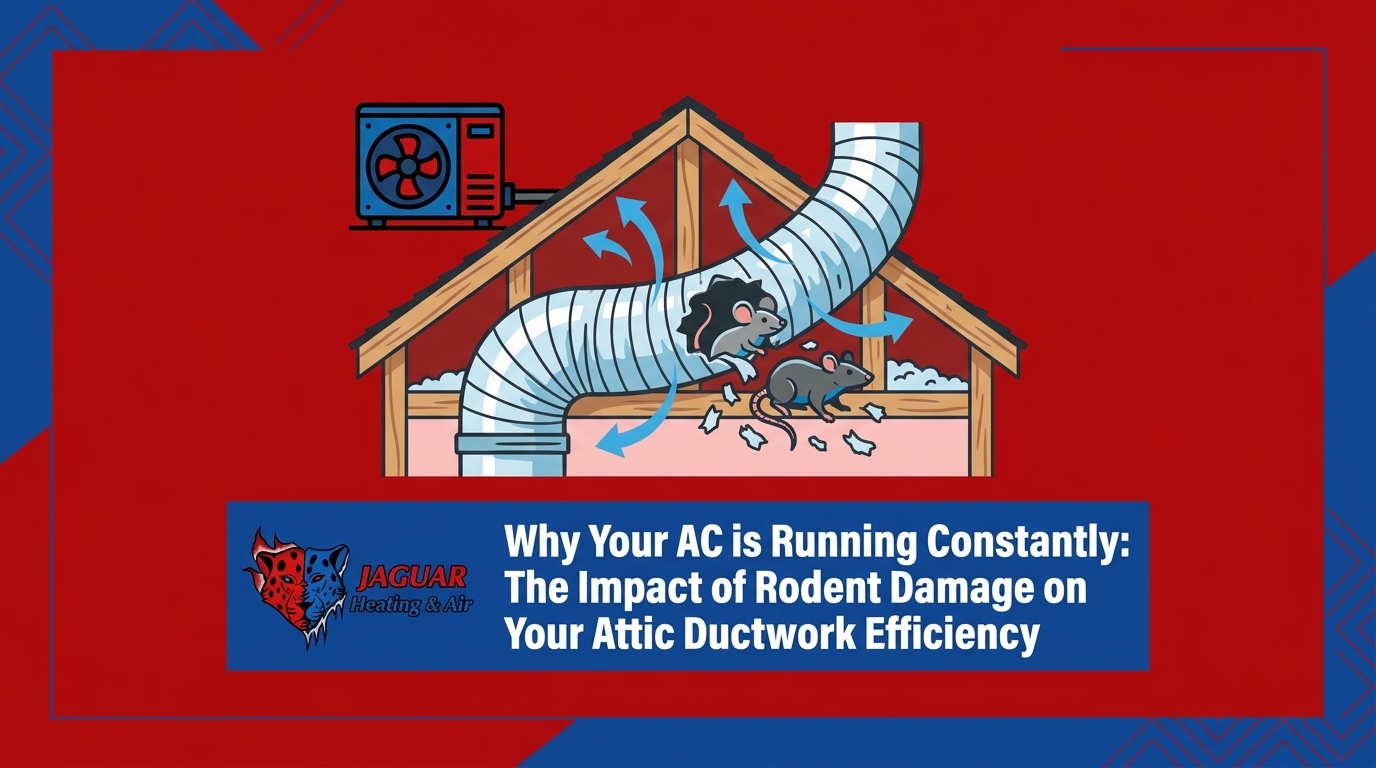
The Impact of Rodent Damage on Your Attic Ductwork Efficiency
If your cooling system runs constantly but your home stays warm, roof rats may have chewed through your flex ducts. See why a tape patch isn't enough to safely restore your system's airflow.