.avif)
The Hidden Cost of Delaying a Minor AC Repair in July
Hoping your buzzing AC will last until payday? Waiting out a strange noise during peak summer heat often forces a failing $150 part to destroy your $2,000 compressor.
Hoping your buzzing AC will last until payday? Waiting out a strange noise during peak summer heat often forces a failing $150 part to destroy your $2,000 compressor.

Why Ignoring a Strange AC Noise in July is a Costly Gamble
When the Sacramento summer heat peaks, your cooling system works overtime, and ignoring a strange noise often leads to the hidden cost of delaying a minor AC repair in July. It is a familiar situation for many homeowners: you hear a sudden buzzing from the outdoor unit or a squealing sound from the vents, but the air coming out still feels somewhat cool. With bills piling up, the immediate reaction is often to hope the system can just limp along until the next paycheck.
However, delaying a minor fix during peak heat rarely saves money. Instead, it accelerates a catastrophic system failure. A typical pattern we see is a homeowner waiting out a strange noise, only to have the entire system shut down on the hottest day of the year. If you need professional air conditioning services, addressing the issue early is your best financial defense against major breakdowns.
July brings intense, unrelenting temperatures that force your equipment to run at maximum capacity. Under these extreme conditions, the margin for mechanical error drops to zero. What might have been a quick, inexpensive part swap on a mild spring afternoon rapidly transforms into a complete system breakdown when the equipment is under heavy thermal stress. Understanding how this mechanical chain reaction works is the key to protecting both your home comfort and your wallet.
The Mechanical Domino Effect: How Small Issues Destroy Compressors
Your cooling system is a complex network of interconnected electrical and mechanical components. They rely on each other to maintain proper voltage, manage heat, and keep refrigerant flowing at the correct pressure. When one small piece begins to fail, it creates a mechanical domino effect that places a massive burden on the most expensive parts of your system.
The problem: This process often starts with a minor electrical component struggling to do its job. For example, a failing start component can cause what technicians call "hard starting." The motor cannot get the electrical boost it needs to turn on smoothly.
The cause: Because the motor still wants to start, it pulls excessive amperage from your electrical panel to compensate for the failing part. This massive power draw generates extreme heat inside the equipment. The compressor, which is the heart of your cooling system, takes the brunt of this abuse. The internal windings of the compressor begin to overheat, breaking down the protective insulation inside the unit.
The solution: Recognizing the early warning signs stops this destructive cycle. By learning the signs you should schedule AC repair right away, you can catch the inexpensive part before it ruins the compressor. The financial difference is staggering: replacing a minor, inexpensive electrical part is a standard maintenance task, whereas replacing a dead compressor is a major, catastrophic expense that often leads to replacing the entire outdoor unit.
• Capacitor — Immediate Symptom: Buzzing noise, hard starting — Catastrophic Consequence if Ignored: Overheated and destroyed compressor
• Blower Motor — Immediate Symptom: Squealing, weak airflow — Catastrophic Consequence if Ignored: Frozen coils, liquid refrigerant damaging compressor
• Contactor — Immediate Symptom: Clicking noise, unit won't shut off — Catastrophic Consequence if Ignored: Burned out electrical components, motor failure
• Air Filter — Immediate Symptom: Dust buildup, longer run cycles — Catastrophic Consequence if Ignored: Overheating blower, completely frozen system
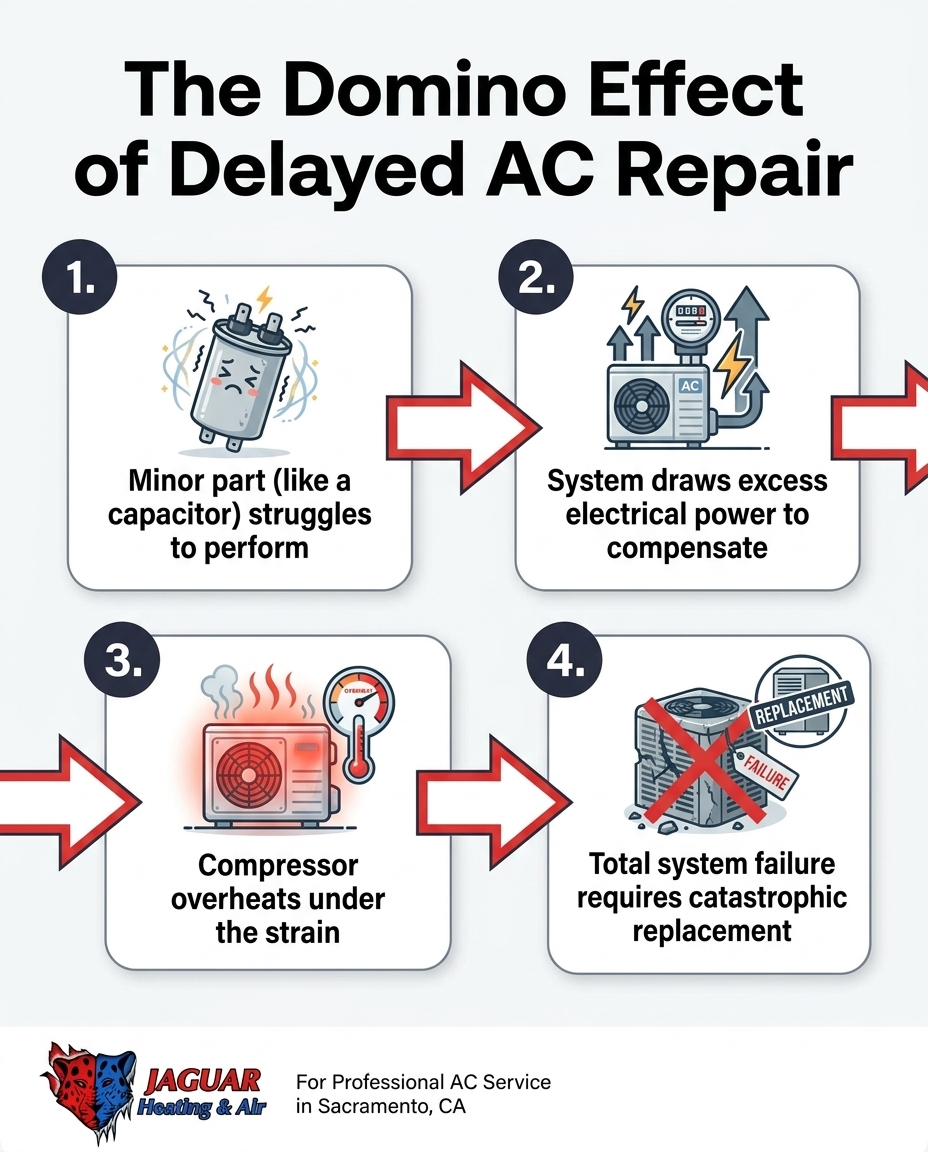
Triple-Digit Danger: Why Your AC Can't Limp Along in Extreme Heat
In mild weather, a struggling component might survive for a few weeks before finally giving out. The system has time to rest between cooling cycles, allowing overheated motors to cool down. But in Sacramento's extreme triple-digit heat, the rules change entirely. The climate acts as a pressure multiplier, turning weeks of "limping along" into mere days or hours before total failure.
During a July heatwave, your system experiences continuous 100% duty cycles. This means the air conditioner never actually shuts off; it runs continuously just to keep the indoor temperature bearable. When a component is already struggling and the system never powers down, that failing part has absolutely no time to cool off. The ambient outdoor temperatures place maximum thermal stress on the condensing unit, baking the internal parts while they overwork.
A typical pattern we see during these extreme stretches is a system simply giving up under the strain. One local homeowner reached out during a stretch of triple-digit heat when their system stopped cooling entirely. Because they called right away rather than waiting for the system to fail completely, a technician was able to clearly explain the problem and the available options, getting the house cool again before the heat became dangerous inside the home.
When the outdoor thermometer reads over 100 degrees, you cannot afford to gamble with a compromised system. The heat accelerates the wear and tear on bearings, motors, and electrical contacts, ensuring that a minor noise on Monday becomes a silent, broken system by Wednesday.
The Payday Trap: Why Waiting to Save Money Backfires
It is completely natural to want to delay an unexpected home expense. When you are managing a tight household budget, the idea of calling a technician for a strange noise can feel stressful, leading many to fall into the "payday trap." You think that if you can just wait until the end of the month, you will be in a better position to handle the service call.
Myth: Running a noisy or struggling air conditioner for just a few more days will save you money by delaying the service fee.
Reality: Running a compromised system drastically increases your energy bills while simultaneously ruining the equipment. A struggling system pulls excessive amperage and runs longer cycles, meaning your utility meter is spinning faster than ever. The extra cost on your monthly utility bill often exceeds the cost of the minor repair you were trying to avoid.
We see this false economy play out constantly. One local homeowner on a tight budget noticed their system blowing ambient air right before a major hot spell. They were worried about the cost, but by calling immediately, a technician arrived within the hour, identified a minor failing part, and fixed the system. The homeowner was relieved by the clear explanation and the affordable outcome. Had they waited until payday, that minor part would have destroyed the compressor, guaranteeing a massive emergency replacement bill.
Prompt intervention protects your budget. Regular AC maintenance and immediate attention to strange noises keep your operating costs low and prevent the kind of catastrophic bills that actually derail a household budget.
Component Breakdown: What Happens When Specific Parts Struggle?
To fully understand why waiting is a bad gamble, it helps to know exactly what is happening inside that metal box outside your home. Strange noises directly correlate to specific failing parts, and none of these issues resolve themselves over time.
Failing Capacitors and Compressor Overheating
A loud buzzing or humming noise from your outdoor unit often indicates a failing run capacitor. Think of the capacitor as a powerful battery that gives your compressor and fan motors the massive electrical "kick" they need to start spinning. When this part weakens, it loses its ability to store and deliver that charge.
Without the capacitor's boost, the compressor struggles to start. It sits there humming, drawing massive amounts of electricity from your panel, and generating severe heat. This leads directly to premature compressor death. The internal windings literally bake themselves until the insulation melts, shorting out the entire unit. Replacing a capacitor is a quick, inexpensive job; replacing a burned-out compressor is one of the most expensive repairs in the HVAC industry.
Struggling Blower Motors and Frozen Coils
If you hear a squealing noise from your indoor vents, or if the airflow suddenly becomes very weak, your indoor blower motor is likely failing. This motor is responsible for pushing warm indoor air over the cold evaporator coils to cool it down.
When the fan stops moving enough air, the evaporator coil gets too cold and freezes over completely, turning into a block of ice. This ice acts as an insulator, stopping the cooling process entirely. Worse, because the refrigerant is no longer absorbing heat from your home, it travels back to the outdoor compressor as a cold liquid instead of a warm gas. Compressors are designed to pump gas, not liquid. When liquid refrigerant hits the compressor, it washes away the vital lubricating oil and causes the internal metal parts to grind together and self-destruct.
Worn Contactors and Electrical Arcing
A clicking or chattering noise from the outdoor unit points to a failing contactor. This is the mechanical switch that receives the signal from your thermostat and sends high-voltage power to the compressor. Over time, the metal contacts become pitted and burned from the electrical current.
When a contactor struggles to close properly, it creates electrical arcing—essentially tiny lightning bolts jumping across the gap. This delivers inconsistent, "dirty" power to the compressor and fan motor, causing them to stutter and overheat. If the contactor welds itself shut due to the heat, the system will run continuously until it destroys itself or trips a breaker.
Stop the Chain Reaction with Prompt Diagnostics
The goal of a service call is not just to make the annoying noise go away; it is to stop the mechanical chain reaction before it spreads to the rest of the equipment. Professional diagnostics catch the minor, inexpensive issue before it becomes a major disaster.
At Jaguar Heating & Air, we position our prompt diagnostic services as a proactive financial safeguard for your home. Our fast response is designed specifically to catch affordable fixes before they turn into major emergencies. When a technician evaluates your system, they test the electrical draw, check the refrigerant pressures, and inspect the moving parts to ensure everything is operating within safe parameters. This thorough approach protects your primary investment in your home cooling system.
A fast response prevents a minor hiccup from escalating. For instance, another Sacramento customer called late on a Friday night because their blower fan refused to turn on. Instead of waiting through the weekend and risking a frozen system, a technician arrived the following morning, diagnosed a simple electrical issue, and had the system running smoothly in under half an hour. Prompt emergency HVAC service is about stopping the damage in its tracks.
Frequently Asked Questions About Delayed AC Repairs
Can I still run my AC if it's making a buzzing noise?
No, you should turn the system off immediately at the thermostat. A buzzing noise usually means an electrical component, such as a capacitor or contactor, is failing to engage properly. Running the system in this state forces the motors to draw dangerous levels of power, which generates extreme heat. Shutting it down prevents a minor electrical issue from destroying your expensive compressor.
How long can you put off AC repair?
In peak summer heat, you cannot safely put off a repair at all. There is a massive difference between a minor drop in efficiency and a loud mechanical failure noise. When temperatures soar, your system runs at maximum capacity with zero margin for error. Waiting even a few days guarantees higher energy bills and significantly increases the likelihood of a catastrophic, expensive system failure.
Will a bad AC fan motor ruin the compressor?
Yes, a failing indoor fan motor absolutely can ruin your outdoor compressor. When the fan stops pushing warm air over the indoor coils, those coils freeze solid. This ice buildup prevents the refrigerant from absorbing heat, causing liquid refrigerant to travel back outside to the compressor. Because compressors are built to pump gas, this liquid "slugging" washes away internal lubricants and destroys the compressor's mechanical parts.
What happens when an AC capacitor fails?
When a capacitor fails, the motors lose the electrical "kick" they need to start spinning. You will typically notice a humming sound from the outdoor unit while the fan blades remain still, and your vents will blow warm air indoors. This places immediate, severe stress on the compressor windings as they pull excessive amperage trying to force a start, leading to rapid overheating and potential permanent damage.
Does running a broken AC increase my energy bill?
Yes, running a compromised system increases your energy bill significantly. A struggling system pulls excessive electrical amperage to overcome failing parts and runs much longer cooling cycles to try and reach the target temperature. The extra cost added to your monthly utility bill from this wasted electricity often exceeds the cost of simply fixing the minor repair in the first place.
Protect Your System and Your Wallet Today
A strange noise from your cooling system is a warning, not a suggestion. Ignoring it during the intense July heat only forces your equipment to work harder, turning a simple, inexpensive fix into a complete system failure. Prompt action is always the best way to save money and protect your home.
Do not wait for a minor buzz or squeal to become a silent, sweltering house. Schedule a diagnostic visit today to get a clear, financially grounded explanation of your system's health. Taking action now ensures your equipment runs efficiently all summer long. Contact the local experts for reliable AC repair in Sacramento and secure your peace of mind.
Recent Posts

Fall HVAC Startup Checklist: Diagnosing Burning Smells and System Red Flags
Deciding if that burning dust smell is normal? See why this seasonal home maintenance checklist is critical for catching heating failures before winter hits.

Fall HVAC Maintenance Troubleshooting: Decoding Furnace Startup Smells and Sounds
Is that burning dust smell normal? See what happens inside your system during fall startup and find home maintenance tips and troubleshooting to stay safe.

A Proactive Seasonal Home Maintenance Checklist for HVAC Systems
Why we prioritize October heating inspections. Use this seasonal home maintenance checklist to prevent sudden furnace failures. Schedule your checkup today.