.avif)
How to Get HVAC Repair Help When Yours Breaks Down Unexpectedly
Learn what to do when your HVAC breaks down unexpectedly with these 5 immediate steps for Sacramento homeowners facing sudden system failure.
Learn what to do when your HVAC breaks down unexpectedly with these 5 immediate steps for Sacramento homeowners facing sudden system failure.

What to Do When Your HVAC Breaks Down Unexpectedly: Your Quickest Path to Comfort
Knowing what to do when your HVAC breaks down unexpectedly can mean the difference between a stressful crisis and a situation you handle with confidence — especially during Sacramento's sweltering summers or those chilly Central Valley winters when your system works hardest.
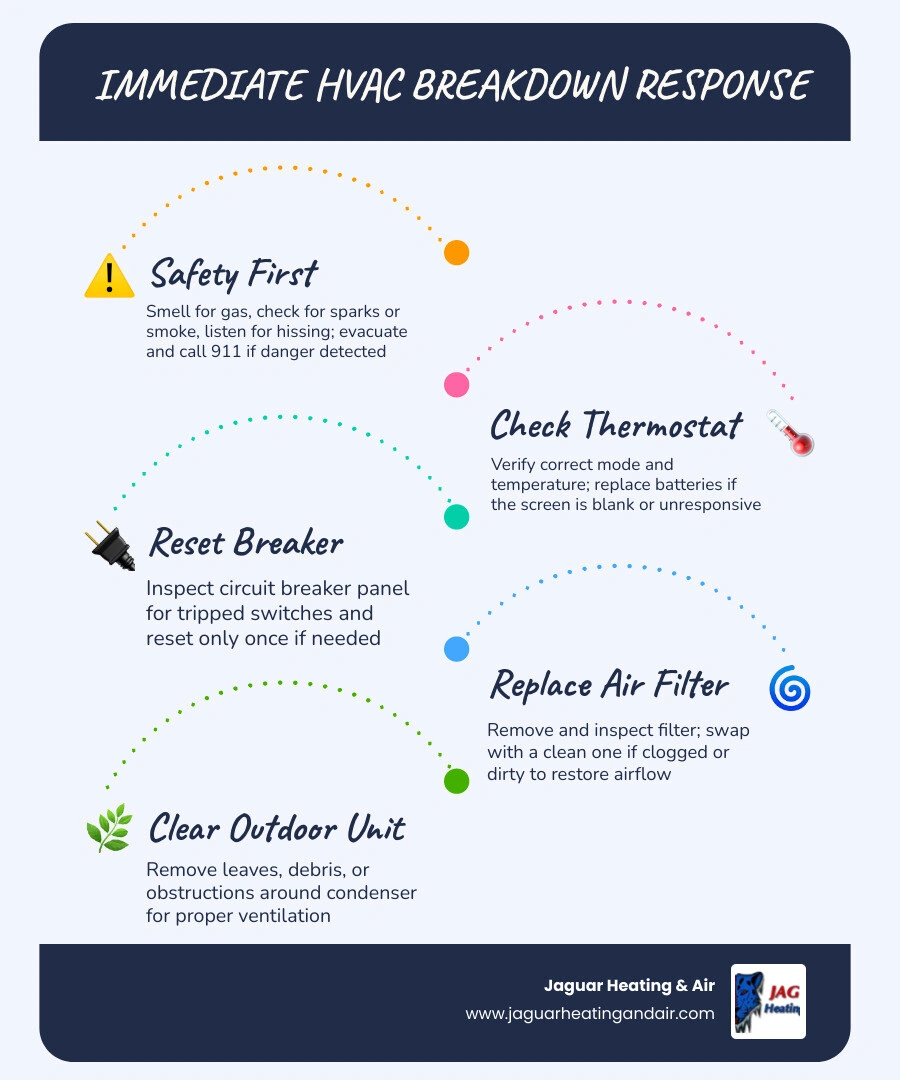
Here's what to do right now if your HVAC just stopped working:
- Do a quick safety check — smell for gas, look for smoke or sparks, and listen for hissing. If anything seems dangerous, leave the house and call 911.
- Check your thermostat — make sure it's set to the right mode and replace the batteries if the screen is blank.
- Check your circuit breaker — look for a tripped breaker and reset it once. Don't reset it repeatedly.
- Inspect your air filter — a clogged filter is the most common cause of sudden HVAC shutdowns. Replace it if it looks dirty.
- Check the outdoor unit — clear any debris blocking airflow around the condenser.
- If none of that works — turn the system off and call a licensed HVAC technician.
About 40% of HVAC emergencies trace back to something as simple as a thermostat malfunction or dead batteries. And over 70% of breakdowns happen during peak seasons — exactly when you need your system the most. So if your system just quit on the hottest or coldest day of the year, you're not alone, and there's a good chance a quick check will get things moving again.
That said, some situations genuinely can't wait. This guide walks you through exactly what to check, when to call for help, and how to stay safe and comfortable in the meantime.
What to do when your hvac breaks down unexpectedly glossary:
- how to prevent hvac emergencies with maintenance
- how to stay safe during a heating or cooling emergency
- when an hvac failure is a true emergency
What to Do When Your HVAC Breaks Down Unexpectedly: The First 5 Steps
When the air suddenly stops circulating in your home, it is incredibly easy to panic. However, taking a systematic, calm approach will help you identify the problem quickly and prevent further damage to your equipment. Before you pull out your phone to schedule an emergency service call, run through these essential first steps.
Safety First: Perform a Sensory Sweep
Before touching any equipment, stand near your indoor unit and your thermostat to conduct a quick sensory sweep.
- Smell: Do you smell rotten eggs (a sign of a natural gas leak) or a strong metallic burning odor (indicative of electrical overheating)?
- Sight: Is there visible smoke, sparking, or water pooling rapidly around your indoor unit? Do you see a sheet of ice blanketing your outdoor condenser coils?
- Sound: Is the system making a deafening screeching, grinding, or loud banging noise?
If you detect gas, smoke, or active electrical sparking, evacuate your home immediately and call emergency services. If you notice ice or pooling water, turn the system off at the thermostat right away to prevent compressor damage or structural water damage.
The Power Check
Many homeowners are surprised to learn that a completely dead HVAC system is often caused by a simple interruption in electrical power. Go to your home's main electrical panel and locate the circuit breakers labeled for your indoor heating unit and your outdoor air conditioner.
Even if a breaker does not look tripped, flip it completely to the "Off" position and then firmly back to "On." If the breaker trips again immediately, do not attempt to reset it a second time. A repeatedly tripping breaker indicates a serious electrical fault or a failing compressor, which requires immediate professional diagnostic care.
Inspect the Air Filter
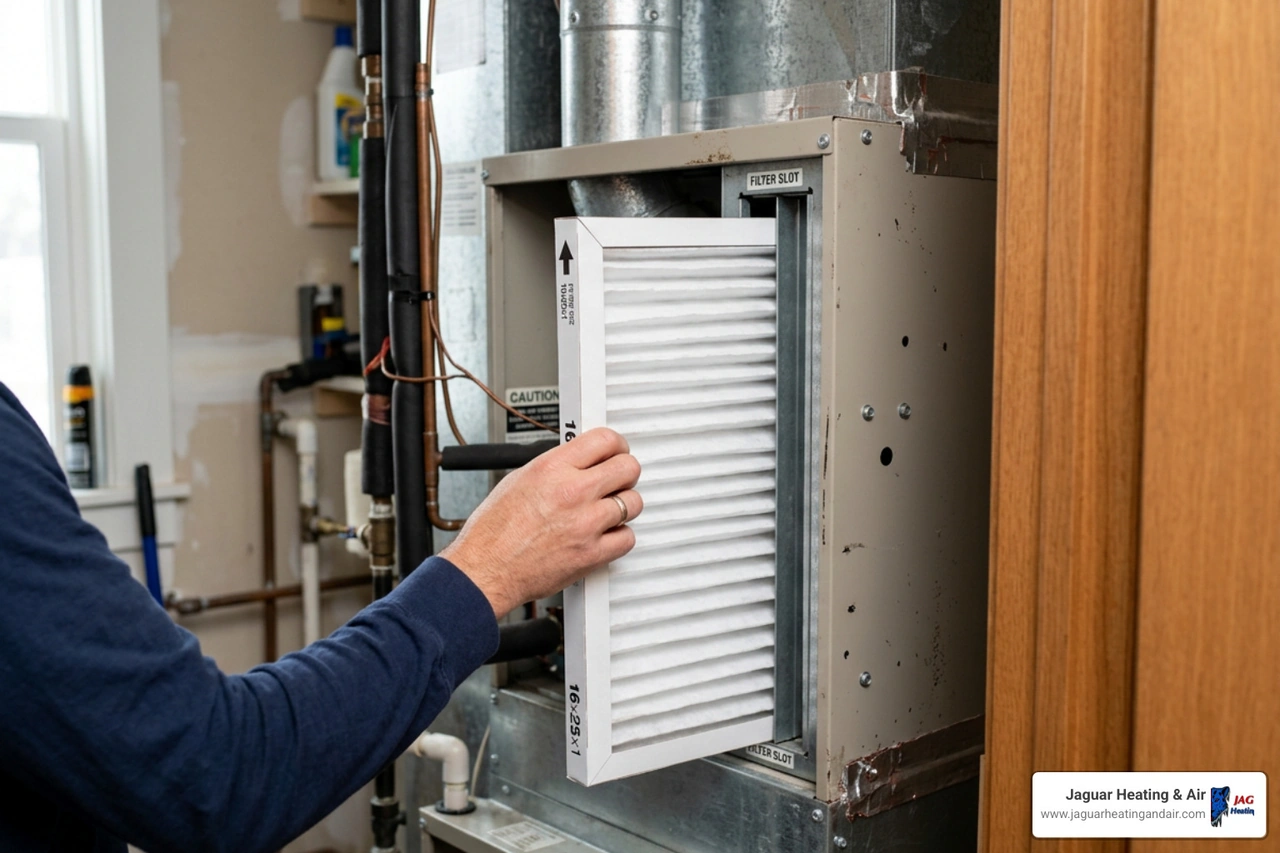
A heavily clogged air filter is the "silent killer" of HVAC efficiency and a primary cause of unexpected system shutdowns. When an air filter is caked with dust, pet dander, and hair, it restricts airflow to a crawl. In the summer, this lack of airflow causes the indoor evaporator coils to drop below freezing, turning condensation into a solid block of ice that suffocates the system. In the winter, restricted airflow causes the furnace heat exchanger to overheat rapidly, triggering a safety limit switch that shuts the entire system down.
Slide your filter out and hold it up to a light source. If light cannot pass through it, it must be replaced immediately. Keeping a fresh filter in place is one of the easiest ways to protect your system. For more tips on keeping your system running smoothly, check out our guide on How to Prevent HVAC Emergencies with Maintenance.
Clear the Outdoor Condenser
Walk outside and inspect your outdoor condenser unit. To operate efficiently, your air conditioner or heat pump needs plenty of breathing room. Ensure there is at least 18 to 24 inches of clear space around the entire unit. Clear away accumulated dry leaves, overgrown weeds, tall grass, or fallen branches. If the metal fins of the condenser are caked with dirt or valley dust, they cannot release heat effectively, which can cause the compressor to overheat and shut down under the strain of a hot afternoon.
Troubleshooting What to Do When Your HVAC Breaks Down Unexpectedly
When you are figuring out what to do when your hvac breaks down unexpectedly, performing a structured troubleshooting routine can save you time and unnecessary stress. Many system failures are caused by minor, non-mechanical issues that you can easily resolve yourself.
Start by checking your thermostat's physical condition. If the display screen is completely blank, your system cannot receive signals to turn on. Replace the batteries immediately — even if they were changed recently, a fresh set can rule out a low-voltage control issue.
Next, verify that the system is set to the correct operating mode. It sounds simple, but thermostats are easily bumped into "Heat" during the summer or "Cool" during the winter by passing family members or during routine cleaning.
If your heating system turns on but refuses to warm your home, the problem could stem from a variety of airflow or ignition issues. For a detailed breakdown of why this happens and how to address it, explore our guide on Why Furnace Not Blowing Warm Air.
Checking the Thermostat and Power Supply
The thermostat acts as the brain of your entire heating and cooling system. If the brain isn't receiving power or is miscommunicating, the rest of the system will remain completely unresponsive.
[Thermostat Screen Blank] │ ▼[Replace Batteries] ───► [Screen Powers On?] ───► No ───► [Check System Power Switch / Breaker] │ └─► Yes ───► [Verify Mode: Cool/Heat & Set Temp 3° Below/Above Room Temp]Beyond checking the batteries, inspect the physical switch on the side of your indoor furnace or air handler cabinet. This switch looks exactly like a standard household light switch and is often accidentally flipped off by homeowners retrieving items from a utility closet or attic. Ensure this switch is in the "Up" or "On" position.
Additionally, check the safety float switch installed on your indoor condensate drain pan. If your air conditioner's drain line becomes clogged with algae or debris, the pan will fill with water. The safety float switch is designed to trip and cut power to the entire system before the water overflows and damages your ceilings or floors. If you see water pooling in this secondary pan, your drain line needs to be cleared before the system will power back on.
If you have verified that your system has power but it still refuses to cool your home, there may be deeper mechanical issues at play. Learn how to spot these early warning signs by reading about the Signs Your AC Needs Repair.
Identifying a True HVAC Emergency vs. an Urgent Repair
When your heating or cooling system fails, it always feels like a crisis. However, from a service perspective, it is helpful to distinguish between a true emergency that requires immediate 24/7 intervention and an urgent situation that can safely be scheduled during normal business hours.
| Situation Type | Description / Symptoms | Recommended Action |
|---|---|---|
| True Emergency | Gas leak (rotten egg smell), carbon monoxide alarm sounding, active electrical sparks, smoke, or complete system failure during extreme weather (above 95°F or below 40°F) with vulnerable household members (infants, elderly, or medically fragile individuals). | Evacuate immediately if gas/smoke is present. Shut off power/gas lines and call for 24/7 emergency service. |
| Urgent Repair | Complete loss of cooling or heating during moderate outdoor temperatures (between 50°F and 85°F), minor water leaks from a condensate line, or unusual but non-catastrophic system noises. | Turn off the system to prevent secondary damage and schedule a prompt, same-day service visit. |
| Routine Service | Slightly reduced airflow, minor temperature inconsistencies between rooms, or a system that is overdue for its annual safety tune-up. | Schedule a standard maintenance or service appointment during normal business hours. |
Understanding where your situation falls on this spectrum helps protect your family's safety while avoiding unnecessary panic. To learn more about how we classify these situations, read our detailed article on When an HVAC Failure is a True Emergency.
Warning Signs of Serious Mechanical or Electrical Failure
Your HVAC system will often try to tell you that something is seriously wrong before it shuts down completely. Ignoring these warning signs can turn a simple repair into a catastrophic mechanical failure.
- Burning Smells or Smoke: A distinct electrical burning odor indicates that a blower motor is overheating, wires are melting, or a capacitor has failed. Turn off the power at your breaker box immediately.
- Loud, Unusual Noises: Squealing, metal-on-metal grinding, loud banging, or rapid clicking sounds are never normal. Squealing often points to a failing belt or motor bearing, while banging can mean a loose component is thrashing around inside the blower wheel or compressor housing. If your furnace is making these sounds, turn it off immediately. You can find more information on this by reading Loud Sounds From Furnace Mean Trouble.
- Hissing Sounds: A persistent hissing sound from your indoor or outdoor unit usually indicates a high-pressure refrigerant leak or a leak in your furnace's gas valve assembly. Refrigerant leaks require recovery and repair by certified technicians.
- Rapid short-cycling: If your system turns on and off every few minutes without completing a full cycle, it is under immense stress and will quickly burn out its compressor or motor.
When to Call for Emergency HVAC Service in Sacramento CA
In the Greater Sacramento region, summer temperatures routinely climb past 100°F, and winter nights can plunge below freezing. When your system breaks down during these seasonal extremes, it can quickly become a health hazard.
You should call for immediate emergency service if:
- The outdoor temperature is above 95°F or below 40°F and your home cannot maintain a safe indoor temperature.
- There are vulnerable individuals in your home, including infants, elderly family members, pregnant women, or individuals with chronic respiratory or cardiovascular medical conditions.
- There is an active safety hazard, such as a suspected gas leak, carbon monoxide alarm activation, pooling water threatening your home's structure, or electrical sparks.
If you are experiencing any of these critical issues, do not wait. Reach out immediately to our team for Emergency HVAC Service Sacramento CA to get a NATE-certified technician to your door fast.
Staying Safe and Comfortable While Waiting for a Technician
Once you have completed your basic troubleshooting and called for professional assistance, your main priority shifts to keeping your household safe, calm, and comfortable until your technician arrives. Depending on the season, there are several highly effective strategies you can use to manage your indoor climate.
If your system is showing warning signs but hasn't failed completely, it is vital to turn it off rather than forcing it to run. Running a malfunctioning unit can cause irreparable damage to expensive components like your compressor. Learn more about protecting your equipment by reading Schedule AC Repair Right Away Notice These Signs.
Beating the Heat Without AC in Northern California
When your air conditioner fails on a blazing Sacramento afternoon, your home will begin to absorb and trap heat quickly. Take these immediate steps to slow down this process:
- Block out the sun: Close all window blinds, curtains, and drapes immediately, especially on the south- and west-facing sides of your home. Solar heat gain through uncovered windows is the fastest way to heat up an indoor space.
- Utilize the lowest floor: Because hot air rises, your home's ground floor or basement will remain significantly cooler than upstairs bedrooms. Move your family's activities downstairs.
- Create a breeze: Use portable floor fans or ceiling fans to keep air moving. While fans do not cool the actual room temperature, the moving air creates an evaporative cooling effect on your skin, making the room feel 4 to 6 degrees cooler.
- Stay hydrated: Drink plenty of cool water and avoid strenuous physical activity.
- Avoid adding heat: Do not use your oven, stove, dishwasher, or clothes dryer, as these appliances generate massive amounts of indoor heat and humidity.
If your system is older and struggling to keep up with summer heatwaves, it might be time to consider a modern, highly efficient upgrade. To understand your options, read Crisis Averted Your Guide to Emergency Heat Pump Installation in Roseville.
Staying Warm During a Winter Furnace Failure
If your heating system fails during a cold winter night, your primary goal is to conserve every bit of warmth currently trapped inside your home.
- Layer your clothing: Put on thermal base layers, warm sweaters, thick socks, and beanies. Retaining your body heat is your first line of defense.
- Consolidate your living space: Close the doors to unused bedrooms, bathrooms, and closets. Gather your family and pets into a single, central room to concentrate body heat and portable warmth.
- Block drafts: Place rolled-up towels at the base of exterior doors and cover drafty windows with heavy blankets.
- Use space heaters safely: If you use portable electric space heaters, place them on a flat, hard surface at least three feet away from any flammable materials like curtains, furniture, or bedding. Always plug them directly into a wall outlet — never use an extension cord — and turn them off completely before going to sleep.
- Protect your plumbing: If the indoor temperature threatens to drop below 50°F, open the cabinet doors under your kitchen and bathroom sinks to allow what little warmth is left in your home to reach your plumbing pipes. Let your faucets drip slowly to prevent water from freezing and bursting your pipes.
For homes with failing, outdated furnaces, a sudden breakdown can be the final straw. Learn about your emergency heating options by reading Emergency Heating Installation Services in Elk Grove.
Repair vs. Replace: Making the Right Choice for Your Home in 2026
When your HVAC system breaks down unexpectedly, you will eventually face a critical decision: should you invest in repairing your existing unit, or is it time to replace it entirely?
Is your system over 10-12 years old? │ ├─► No ───► Repair is usually the best choice. │ └─► Yes ──► Does the repair require a major component (compressor, heat exchanger)? │ ├─► Yes ───► Consider Replacement (Better efficiency, warranty, peace of mind). │ └─► No ────► Repair may still be viable if overall system is healthy.To make an informed choice, consider these three key factors:
- System Age: Most modern air conditioners, heat pumps, and furnaces have a reliable lifespan of 12 to 15 years. If your system is over 10 to 12 years old and begins experiencing frequent breakdowns, investing in major repairs is often just a temporary band-aid.
- Frequency of Repairs: If you have had to call an HVAC technician multiple times over the past two years, those cumulative repairs are signaling that the system is reaching the end of its operational life.
- Energy Efficiency and Technology: Older systems typically operate at much lower efficiency levels. Upgrading to a modern system with a high SEER rating can dramatically reduce your monthly utility bills while providing superior indoor comfort and air filtration.
If you are weighing these factors for your home, take a look at our comprehensive guide: Should I Repair or Replace My HVAC System.
Frequently Asked Questions About Unexpected HVAC Failures
Frequently Asked Questions About What to Do When Your HVAC Breaks Down Unexpectedly
What are the most common causes of unexpected HVAC breakdowns?The vast majority of sudden HVAC failures are caused by neglected maintenance. The "Big Four" culprits are heavily clogged air filters, dead thermostat batteries, tripped electrical circuit breakers, and accumulated dirt on the indoor and outdoor coils. Regularly scheduling professional tune-ups twice a year can prevent up to 50% of these unexpected breakdowns.
How often should I change my air filters?We recommend inspecting your air filters every 30 days during peak heating and cooling seasons. If you have pets, allergies, or a large household, you should replace them every 1 to 3 months. If you live in a quieter household with no pets, you can typically stretch this to every 90 days.
How can I tell if my furnace has a gas leak?
A natural gas leak is an extremely serious safety hazard that requires immediate action. Because natural gas is naturally odorless and colorless, utility companies add a harmless chemical called mercaptan to the gas supply. This chemical gives natural gas a highly distinctive, unmistakable smell of rotten eggs.
Other warning signs of a gas leak include:
- A persistent, faint hissing or whistling sound coming from your furnace cabinet or gas supply lines.
- Dead or dying houseplants in the immediate vicinity of your heating unit.
- Physical symptoms among family members, such as sudden dizziness, headaches, nausea, or unexplained fatigue.
If you smell gas or suspect a leak, do not flip any electrical switches, use a landline phone, or light any matches inside your home. Evacuate all occupants and pets immediately, walk a safe distance away from your property, and call 911 and your gas utility company.
Is it safe to use a space heater if my furnace fails?
Yes, portable electric space heaters are an excellent way to stay warm during a furnace failure, but they must be operated with extreme caution. According to national safety databases, space heaters are responsible for thousands of house fires every year.
To keep your home safe, always follow these critical rules:
- The Three-Foot Rule: Keep the space heater at least three feet away from anything that can burn, including blankets, papers, clothing, rugs, and upholstered furniture.
- Plug directly into the wall: Never plug a space heater into a power strip, surge protector, or extension cord. The high electrical current can easily overheat these devices and start an electrical fire.
- Never leave them unattended: Turn off and unplug your space heaters when you leave the room or go to sleep.
- Look for safety features: Only use modern space heaters equipped with an automatic tip-over safety switch and overheat protection.
Conclusion
An unexpected HVAC breakdown is always stressful, but with a clear plan, you can easily navigate the situation safely. By performing a quick sensory sweep, checking your thermostat batteries, resetting your breaker once, and inspecting your air filter, you can often resolve simple issues in a matter of minutes. If your system requires professional care, taking proactive steps to stay safe and comfortable while you wait ensures your household remains protected.
At Jaguar Heating & Air, we are committed to restoring your home’s comfort quickly and reliably. As a family-owned business and a certified Trane Comfort Specialist, our NATE-certified technicians provide flat-rate pricing, same-day service, and a 100% customer satisfaction guarantee. Whether you live in Sacramento, Elk Grove, Folsom, Roseville, or any of our surrounding Northern California communities, we are here to help.
Don't stay uncomfortable in your own home. Schedule Heating Repair Today and let our expert team restore your peace of mind!
Recent Posts

A Proactive Seasonal Home Maintenance Checklist for HVAC Systems
Why we prioritize October heating inspections. Use this seasonal home maintenance checklist to prevent sudden furnace failures. Schedule your checkup today.

HVAC Maintenance & Replacement Options: Heat Pumps vs. Gas Furnaces in Sacramento
Deciding on a new heater? Review these options comparisons for homeowners to evaluate heat pumps vs. gas furnaces. Compare your system options before winter.

Troubleshooting HVAC Maintenance: Why Your Heater Smells Like Burning on Startup
Why we check the exact odor on fall startups. Use our home maintenance tips and troubleshooting criteria to safely tell harmless dust from a real fire hazard.