.avif)
How to Stay Safe in a Heating or Cooling Emergency in 5 Easy Steps
Learn how to stay safe during a heating or cooling emergency with quick steps for Sacramento homes facing extreme weather and HVAC failure.
Learn how to stay safe during a heating or cooling emergency with quick steps for Sacramento homes facing extreme weather and HVAC failure.

When Your HVAC Fails: Why Knowing How to Stay Safe During a Heating or Cooling Emergency Could Save Your Life
Knowing how to stay safe during a heating or cooling emergency is one of the most important things a Sacramento-area homeowner can have in their back pocket — especially when temperatures in the Central Valley can swing from triple-digit summer heat to freezing winter nights.
Here's a quick overview of the five key steps to keep your household safe:
- Triage the situation - Identify whether you have a true emergency (gas smell, CO alarm, sparks) or a fixable inconvenience
- Run basic checks first - Verify thermostat settings, circuit breakers, and air filters before calling for help
- Protect vulnerable members - Prioritize infants, elderly family members, and pets immediately
- Manage the temperature - Use safe temporary heating or cooling methods while waiting for professional service
- Call for emergency HVAC help - Contact a licensed technician if conditions are dangerous or worsening
When your system goes down at the worst possible moment, the difference between a stressful night and a life-threatening situation often comes down to what you do in the first few minutes. Extreme heat alone kills more than 700 people across the United States every year — making it the deadliest weather-related hazard in the country. And a heating failure during a hard freeze carries its own serious risks, from hypothermia to burst pipes.
This guide walks you through exactly what to do, step by step, so you can stay calm, stay safe, and get the right help fast.
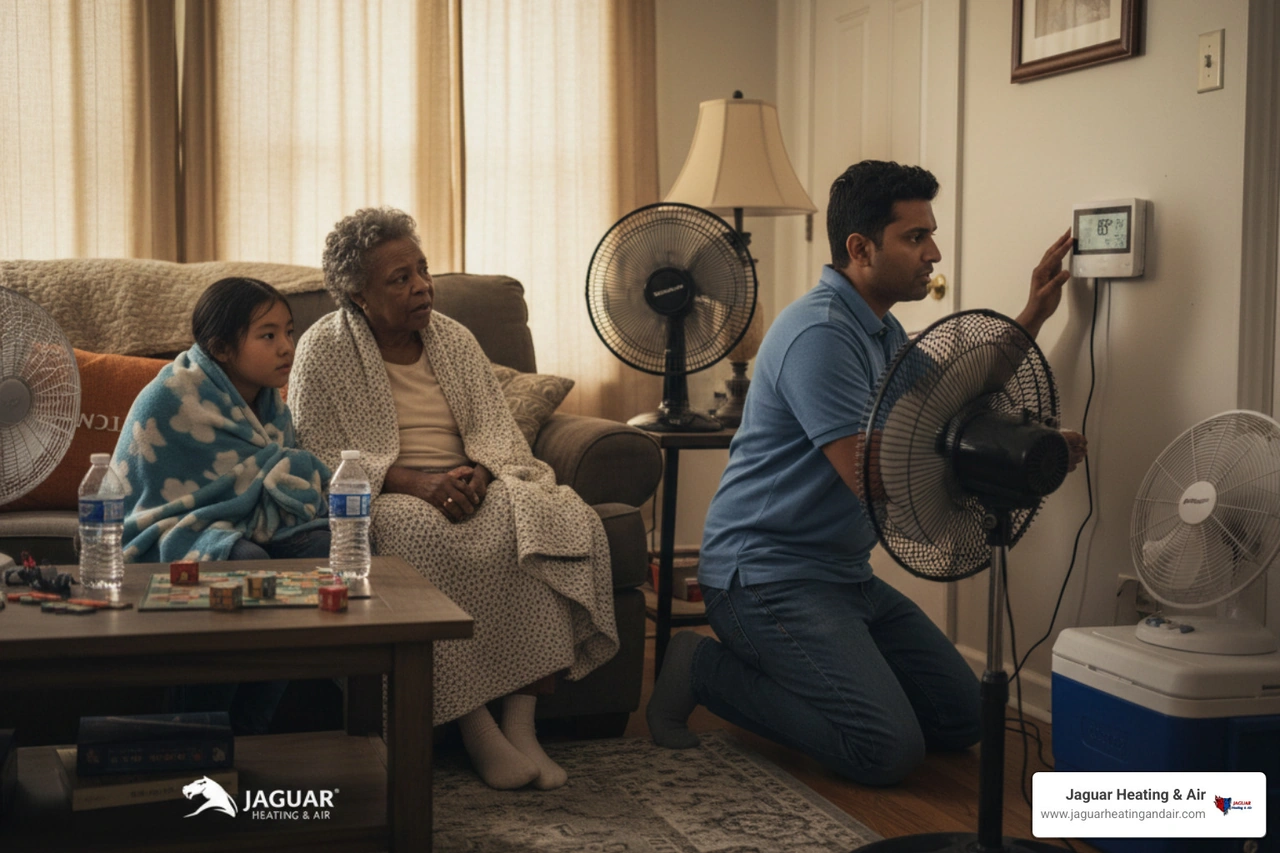
Glossary for how to stay safe during a heating or cooling emergency:
Step 1: Triage the Situation (Emergency vs. Inconvenience)
When your home heating or cooling system suddenly stops working, your immediate reaction might be a wave of panic. However, before you rush to make an urgent call, it is vital to assess the situation calmly. Understanding the distinction between a minor, inconvenient system glitch and a life-threatening disaster is the cornerstone of knowing how to stay safe during a heating or cooling emergency.
To triage your situation like a professional, start by assessing the current indoor and outdoor temperatures. If the outdoor temperature is relatively mild—say, a comfortable 72°F afternoon in Folsom or Roseville—and your indoor climate is stable, a system breakdown is a frustrating inconvenience. You can safely wait for a standard, next-day service appointment.
On the other hand, a system failure becomes a true emergency when extreme temperatures threaten the health of your household. If your heating system fails during a freezing winter night when temperatures drop below 32°F, or if your air conditioner breaks down during a blistering 105°F Sacramento summer afternoon, you are facing a dangerous situation. Under these extreme conditions, indoor spaces can rapidly reach unsafe levels, leading to severe cold-stress or heat-related illnesses.
To help you decide on the best course of action, we recommend reading our detailed guide on When an HVAC Failure is a True Emergency. Knowing when you can safely shelter in place versus when you must plan an immediate evacuation is essential for protecting your family.
How to Stay Safe During a Heating or Cooling Emergency When Hazards Are Present
Some HVAC failures are accompanied by severe physical hazards that require you to bypass standard troubleshooting and evacuate your home immediately. These situations involve gas leaks, carbon monoxide, or electrical malfunctions.
- Gas Leaks and Mercaptan: Natural gas is naturally odorless and colorless. To ensure leaks can be easily detected, utility companies infuse it with a chemical called mercaptan, which gives it a highly distinct, sulfurous "rotten eggs" smell. If you smell rotten eggs near your furnace, gas lines, or registers, do not attempt to investigate. Do not turn light switches on or off, light matches, or use your phone inside, as a single tiny electrical spark can ignite the gas. Evacuate everyone—including your pets—immediately, move at least 100 feet away from the home, and call 911 or your local gas utility.
- Carbon Monoxide (CO): Carbon monoxide is a colorless, odorless, and tasteless gas that can be fatal if inhaled. It is often produced by cracked heat exchangers, blocked venting systems, or malfunctioning burners in gas furnaces. Because your human senses cannot detect it, working carbon monoxide detectors are your first line of defense. If your CO alarm sounds, or if anyone in your home begins experiencing symptoms of CO poisoning—such as unexplained headaches, dizziness, weakness, nausea, or confusion—evacuate the building immediately and call emergency services.
- Electrical Sparks and Burning Smells: If you notice visible sparks, smoke, or a strong smell of burning plastic or electrical wiring coming from your indoor air handler, furnace, or outdoor condenser unit, shut off the system's main power at your home's circuit breaker panel immediately. Do not attempt to touch the equipment. An electrical malfunction of this scale can quickly escalate into a residential structure fire.
Step 2: Perform Quick DIY Troubleshooting
Before you pick up the phone to request an urgent service visit, it is always a good idea to perform a few quick, safe checks. Believe it or not, nearly a quarter of all emergency HVAC service calls we receive are resolved by simple, minor adjustments that you can easily perform yourself. Running through a quick diagnostic checklist can save you time and restore your comfort without a wait.
First, take a close look at your thermostat settings. It sounds simple, but it is incredibly common for a system to stop running because someone accidentally switched the mode from "Heat" to "Cool," or vice versa. Ensure that the thermostat is set to the correct mode and that the target temperature is set at least a few degrees higher (for heating) or lower (for cooling) than the current room temperature. If your thermostat's digital display screen is blank or flashing a low-battery icon, replace the batteries immediately. A weak or dead battery can prevent the thermostat from sending signals to your heating and cooling equipment.
Next, check your home's electrical panel. HVAC systems draw a substantial amount of electrical power, especially during peak seasonal use when they run continuously. This heavy draw can occasionally cause a circuit breaker to trip. Find your main breaker panel and look for the switches labeled for your indoor heating unit and outdoor air conditioner. If a breaker has tripped, it will be positioned halfway between "On" and "Off." Flip the switch completely to the "Off" position first, and then firmly back to "On." Please note: if the breaker trips again immediately, do not attempt to reset it a second time. This indicates a serious underlying electrical issue that requires professional diagnostic attention.
Another common culprit is a severely clogged air filter. When an air filter becomes completely covered in dust, pet dander, and hair, it restricts the airflow passing through your system. This lack of airflow can cause a heating system to overheat and shut down via its high-limit safety switch, or cause an air conditioning coil to freeze solid, stopping all cooling.
Pull your filter out and hold it up to a light source. If you cannot see light passing through it, replace it with a fresh, clean filter immediately.
Finally, keep in mind that many modern HVAC systems have built-in safety delays. If you have recently turned your system off and on, or if your home experienced a temporary power flicker, the system may delay startup for five to ten minutes to protect the compressor from short-cycling. Give the system a few minutes to reset before assuming it has failed completely.
Step 3: Protect Vulnerable Household Members
During any severe temperature emergency, your absolute top priority must be protecting the most vulnerable members of your household. Infants, young children, elderly family members, individuals with chronic medical conditions, and family pets are much more sensitive to extreme heat and cold than healthy adults. Their bodies cannot regulate temperature as efficiently, making them susceptible to rapid health declines during an HVAC failure.
For infants and young children, monitor their behavior closely. In extreme heat, look for signs of heavy sweating, extreme irritability, or lethargy. In extreme cold, ensure they are dressed in warm, dry layers, including a hat, as a significant portion of body heat is lost through the head.
Elderly family members are particularly susceptible to heat exhaustion and hypothermia. Certain prescription medications can impair the body's natural ability to sweat or regulate temperature. Keep a close eye on older loved ones, check their skin temperature, and encourage them to drink water consistently, even if they claim they are not thirsty.
Our beloved pets also need special attention when the indoor climate becomes unsafe.
- Prevent Dehydration: Ensure pets have constant access to fresh, cool water. You can drop a few ice cubes into their water bowls to keep it chilled during a summer cooling failure.
- Watch for Heat Stress: Dogs and cats do not sweat like humans; they rely on panting to cool down. If you notice excessive panting, drooling, red gums, or weakness, your pet is experiencing dangerous heat stress.
- Protect Their Paws: That outdoor surfaces like asphalt, concrete, and dark pavement can reach scorching temperatures during a Central Valley heatwave, easily burning sensitive pet paws. Keep pets indoors on cool surfaces like tile or linoleum.
If your home's temperature reaches unsafe levels and you have vulnerable individuals or pets in your care, do not wait to see if the system will start working again on its own. It is time to call in the professionals. For fast, reliable assistance, contact our team for Emergency HVAC Service Sacramento CA to restore safe conditions to your home as quickly as possible.
How to Stay Safe During a Heating or Cooling Emergency in Extreme Cold
While Sacramento winters are generally milder than in other parts of the country, overnight temperatures can still drop below freezing. A complete heating system failure during a winter cold snap is a serious situation that requires prompt action to keep your family warm and protect your property from costly damage.
One of the greatest property risks during a prolonged winter heating failure is frozen plumbing pipes. When water freezes inside a pipe, it expands, creating immense pressure that can cause the pipe to burst, leading to catastrophic water damage once the system thaws.
To prevent this, take immediate steps to protect your pipes:
- Drip Your Faucets: Open both hot and cold faucets slightly to allow a slow, steady drip of water. Moving water is much less likely to freeze inside the pipes.
- Open Cabinet Doors: Open the cabinet doors under your kitchen and bathroom sinks. This allows whatever warmth is left in your living spaces to circulate around the plumbing pipes.
- Locate the Main Shut-off: Make sure you know where your home's main water shut-off valve is located so you can turn off the water supply immediately if a pipe does burst.
If your heating system has failed completely and you need a fast, professional solution to get your home warm again, you can learn about your options by reviewing our Stay Warm Stay Safe Emergency Heating Installation Services in Elk Grove or checking out our comprehensive Sacramento Emergency Heating Installation Guide.
Safe Temporary Heating and Insulation Tips
While you are waiting for an emergency HVAC technician to arrive, there are several practical steps you can take to conserve warmth and heat your home safely:
- Gather in a Single Room: Pick a central, insulated room with minimal windows and close the doors to the rest of the house. By pocketing your family and pets in one room, your collective body heat will help keep the space warmer.
- Block Drafts: Roll up towels, blankets, or rugs and place them at the base of exterior doors and across window sills to block cold air drafts from entering.
- Dress in Layers: Wear multiple thin layers of loose, breathable clothing rather than one thick layer. Thin layers trap warm air between them, providing superior insulation. Wear a warm beanie and thick socks.
- Use Space Heaters Safely: If you use portable electric space heaters, ensure they are UL-approved and equipped with an automatic tip-over shut-off switch. Always place the heater on a flat, hard, non-flammable surface, and keep it at least three feet away from curtains, bedding, furniture, and paper. Never leave a space heater unattended or running while you sleep, and never use a gas oven, stovetop, or outdoor grill to heat your home, as this poses a fatal carbon monoxide risk.
If your furnace is beyond repair and you need an efficient, modern replacement, you can explore how heat pumps provide both heating and cooling in our guide, Crisis Averted Your Guide to Emergency Heat Pump Installation in Roseville.
Step 5: Manage Extreme Summer Heat Safely
Summers in the Central Valley are notoriously intense, with temperatures regularly soaring into the triple digits. When your air conditioner fails during a heatwave in Sacramento, Elk Grove, or Roseville, your home can quickly turn into an oven. Managing extreme summer heat safely requires a proactive approach to keep your body temperature down while professional help is on the way.
If you are dealing with a complete AC breakdown during a major heatwave, do not hesitate to call for professional support. For residents in West Sacramento and the surrounding areas, our team offers rapid Emergency HVAC Service West Sacramento CA. If your system is old and cannot handle the summer heat, we can also help you quickly transition to a new, energy-efficient system with our Fast and Frosty Emergency AC Installation in Roseville CA.
How to Stay Safe During a Heating or Cooling Emergency in Extreme Heat
When surviving a severe cooling failure during extreme summer heat, you must prioritize physical safety and monitor everyone in your home for symptoms of heat-related illnesses.
- Recognize Heat Exhaustion vs. Heat Stroke: Heat exhaustion is characterized by heavy sweating, a rapid pulse, muscle cramps, dizziness, headache, nausea, and cool, clammy skin. If someone shows these signs, move them to the coolest room, apply cool, wet cloths to their skin, and have them sip water. Heat stroke is a life-threatening medical emergency. Symptoms include a body temperature rising above 103°F, red, hot, dry skin (with no sweating), confusion, rapid breathing, and loss of consciousness. Call 911 immediately if you suspect heat stroke.
- Stay Hydrated: Drink plenty of cool water throughout the day, even if you do not feel thirsty. Avoid alcoholic, caffeinated, or highly sugary beverages, as they can accelerate dehydration.
- Understand Fan Limitations: Many homeowners rely heavily on electric fans during an AC failure. However, according to public health experts, electric fans will not cool you down enough when indoor temperatures rise above 90°F. In fact, blowing hot air over dry skin can actually accelerate dehydration and heat stress. If your home is warmer than 90°F, you must seek a cooled, air-conditioned environment.
- Utilize Public Cooling Centers: If your home becomes dangerously hot, seek shelter in air-conditioned public spaces. Many local municipalities open designated cooling centers in libraries, community centers, and senior facilities during heat waves. You can call 2-1-1 or 3-1-1 to find the nearest cooling center. Taking cool showers or baths at home can also help lower your core body temperature.
Step 6: Prepare Your Home for Future Temperature Extremes
The best way to handle a heating or cooling emergency is to prevent it from happening in the first place. By taking proactive steps to prepare your home and maintain your HVAC system, you can significantly reduce the risk of an unexpected system failure during extreme weather.
First and foremost, invest in regular, professional preventive maintenance. Just like your car, your heating and cooling systems require routine tune-ups to operate safely and efficiently. A NATE-certified technician can inspect your electrical connections, clean vital components, check refrigerant levels, and identify minor wear-and-tear issues before they escalate into major, expensive breakdowns. To understand the long-term benefits of routine service, read our article on How to Prevent HVAC Emergencies with Maintenance.
Additionally, improving your home's thermal envelope can help keep your indoor temperatures stable, even if your HVAC system goes offline. Consider these simple home improvements:
- Upgrade Insulation: Adding high-quality insulation to your attic and crawl spaces helps keep warm air inside during the winter and hot air outside during the summer.
- Apply Weather-Stripping: Seal gaps around your doors and windows with weather-stripping or caulk to prevent drafts and minimize temperature loss.
- Use Window Coverings: Installing heavy drapes, solar shades, or outdoor awnings can block direct sunlight. Outdoor awnings alone can reduce the amount of solar heat entering your home by up to 80 percent.
When choosing a contractor to help you prepare your home, it is crucial to partner with a reputable, licensed professional. For helpful tips on choosing the right provider, check out our guide on Don't Get Left in the Cold How to Pick a Professional Heating Contractor in Roseville.
Frequently Asked Questions About HVAC Emergencies
What is the very first thing I should do if I smell rotten eggs near my furnace?
If you smell a rotten egg odor, you must treat it as a potential gas leak. Do not attempt to locate the leak, turn any appliances or lights on or off, or use your phone inside. Evacuate everyone from the home immediately, move a safe distance away (at least 100 feet), and call 911 or your gas utility provider.
Why shouldn't I rely on electric fans when my home is over 90°F?
When indoor temperatures exceed 90°F, electric fans are no longer effective at cooling your body. Instead of cooling you down, a fan simply blows hot air across your skin, which can accelerate dehydration and increase your risk of heat-related illnesses. In these conditions, you must seek an air-conditioned space.
When is a heating failure considered a true emergency in Northern California?
A heating failure is considered a true emergency if outdoor temperatures drop below freezing (32°F) or if there are vulnerable individuals in the home, such as infants, elderly family members, or those with chronic health conditions. It is also an emergency if the failure is accompanied by a gas leak, carbon monoxide alarm, or electrical sparking.
Conclusion
When a heating or cooling emergency strikes, having a plan and knowing how to stay safe during a heating or cooling emergency is your best defense. By triaging the situation, performing basic troubleshooting, protecting vulnerable family members, and managing home temperatures safely, you can navigate any seasonal breakdown with confidence.
At Jaguar Heating & Air, we are committed to providing dependable comfort and peace of mind to our neighbors throughout the Sacramento region. As a family-owned HVAC company and a Trane Comfort Specialist, our NATE-certified technicians are ready to deliver fast, professional service with flat-rate pricing.
If you are dealing with a system failure, don't wait in uncomfortable or unsafe conditions. Check out our Rapid Response Sacramento's Top Emergency Heat Pump Repair Services or contact us directly to schedule our professional Heating Repair Services today. We are here to keep your home safe, comfortable, and running smoothly all year long!
Recent Posts

Why Your Furnace Smells Like Burning Dust: Essential HVAC Maintenance Questions Answered
Smelling burning dust this fall? Have common homeowner questions answered about your furnace. Decide with confidence on when to call a pro before winter.

Why Your Furnace Smells Like Burning Dust: A Guide to Fall HVAC Maintenance
Does your furnace smell like burning dust? Review our home maintenance tips and troubleshooting to see what we found inside a typical fall heating startup.
HVAC Maintenance: Decoding the Burning Smell During Your First Fall Startup
Smelling burning dust on the first chilly morning? Apply our home maintenance tips and troubleshooting to decide if it's normal burn-off or a safety hazard.