.avif)
Diagnosing a Short-Cycling AC Unit Before It Ruins Your Compressor
An AC turning on and off every five minutes isn't just annoying—it's a mechanical emergency. See why shutting the system down immediately is critical to saving your compressor.
An AC turning on and off every five minutes isn't just annoying—it's a mechanical emergency. See why shutting the system down immediately is critical to saving your compressor.

Why Is My AC Turning On and Off Every Five Minutes?
Are you listening to your system start up, run for just a few moments, and abruptly shut down, leaving you wondering if you should be diagnosing a short-cycling AC unit before it ruins your compressor? This rapid starting and stopping is one of the most alarming sounds a homeowner can hear during the peak of summer. It is not just a minor annoyance or a quirk of the system; it is a mechanical emergency that requires immediate attention.
When you need AC repair in Sacramento, recognizing the urgency of this symptom is your first line of defense. We refer to this rapid on-and-off behavior as "short-cycling." A healthy air conditioner should run in smooth, consistent cycles—typically 15 to 20 minutes at a time—to properly cool and dehumidify your home. When the system becomes trapped in 5-minute ON/OFF cycles, it is actively damaging the internal equipment with every false start.
As a homeowner, you face a critical decision point the moment you notice this pattern. You must decide whether to shut the system down immediately to save the compressor or risk complete, catastrophic failure by letting it run. Allowing the equipment to continuously short-cycle forces the most expensive components in your system to endure relentless mechanical and electrical stress. Understanding exactly why this happens is the key to preventing a minor issue from turning into a total system replacement.
The Physics of AC Wear-and-Tear: Locked Rotor Amps
To understand why short-cycling is so destructive, we have to look at the immense electrical strain required to start modern air conditioning systems. The moment your thermostat calls for cooling, the outdoor compressor must overcome immense physical inertia to begin pumping refrigerant. This requires a massive surge of electricity.
During the intense August late-summer heat, outdoor units are already forced to run at maximum capacity. When short-cycling occurs, these stressed compressors are left with absolutely zero recovery time between rapid, violent electrical surges.
Startup Amperage vs. Running Amperage
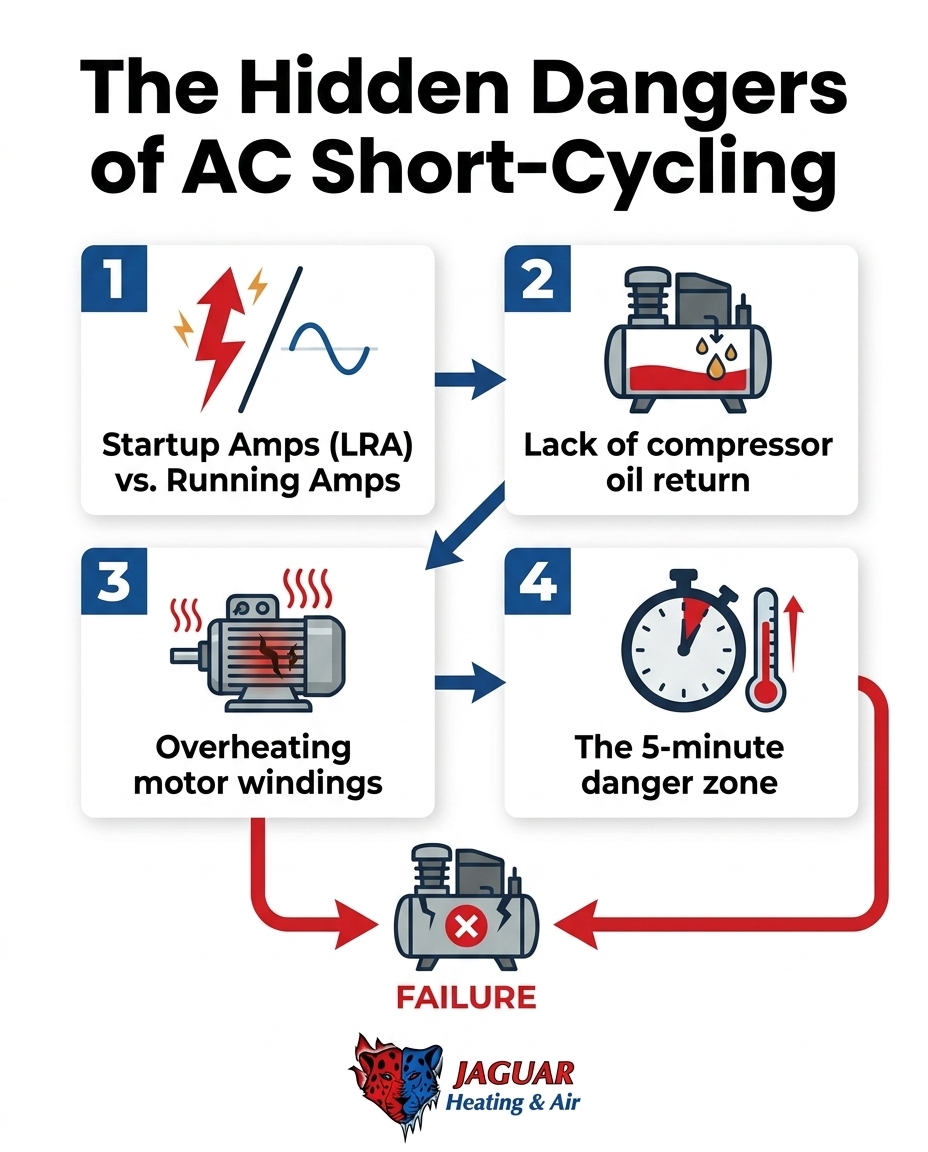
The amount of power required to start a compressor is known as Locked Rotor Amps (LRA). This startup surge can be three to five times higher than the electricity required to keep the system running once it is up to speed. During a normal, long cooling cycle, the compressor endures this massive electrical strain just once, settles into its running amperage, and operates smoothly.
When a system is trapped in 5-minute cycles, it is forced to endure that massive electrical strain repeatedly. Instead of starting once or twice an hour, the compressor might start ten or twelve times an hour. This repetitive strain generates excessive heat in the motor windings and quickly degrades vital electrical components, such as the run capacitor and the contactor, long before the compressor itself finally fails.
• Normal Cycle (15-20 min) — Electrical Strain: One high-amp startup surge per cycle — Component Wear: Minimal; components stabilize and cool — Cooling Efficiency: High; properly dehumidifies indoor air
• Short-Cycling (5 min) — Electrical Strain: Multiple massive surges per hour — Component Wear: Severe stress on capacitors and contactors — Cooling Efficiency: Low; leaves indoor air warm and humid
This rapid degradation is a pattern we see frequently in the field. One local homeowner called in the morning when their AC unit was not functioning correctly, continually shutting down after just a few minutes of operation. By noon, a technician had arrived, diagnosed the excessive electrical stress the unit was under, and implemented a servicing plan that resolved the issue before the afternoon heat peaked, saving the system from further damage.
Why Your Compressor Fails Without Proper Run Time
The electrical strain is only half of the equation. The mechanical consequences of short-cycling are equally devastating, specifically regarding how the compressor cools itself and maintains internal lubrication. The compressor is essentially a large mechanical pump, and like any engine, it requires proper oiling and temperature management to survive.
A compressor requires continuous run time to cool its internal motor windings. It achieves this using the steady flow of cold, returning refrigerant gas. When the system shuts down prematurely, that flow of cooling refrigerant stops, leaving the motor windings to bake in their own heat. Sacramento CA experiences intense, triple-digit summer temperatures that put an immense ambient heat load on outdoor condenser units. When you combine that external environmental heat with the internal heat of rapid short-cycling, it creates a rapid path to compressor death.
Furthermore, proper oil return relies on long cycles. The lubricating oil inside the compressor travels throughout the copper lines mixed with the refrigerant. It requires a sustained, high-velocity flow to make the complete trip through the indoor coil and back outside to the compressor crankcase. Rapid short-cycling pumps the oil out into the lines but shuts off before the oil can return. The compressor ends up running dry, which drastically increases internal friction.
This combination of increased friction and a lack of cooling leads directly to rapid overheating and eventual mechanical seizure. If ignored, this damage is often irreversible. What starts as a minor operational hiccup quickly escalates, proving the hidden cost of delaying a minor AC repair. Once a compressor mechanically seizes or electrically shorts to ground due to this abuse, a full, costly replacement is the only remaining option.
Safe Preliminary Checks Homeowners Can Perform
When you notice your system caught in 5-minute ON/OFF cycles, there are a few safe, actionable troubleshooting steps you can take before calling a professional. It is crucial to strictly avoid any dangerous DIY electrical or refrigerant work, as these systems operate under high voltage and high pressure. Stick to the basics that influence airflow and system communication.
• Inspect and replace dirty air filters: A clogged air filter is the most common cause of airflow restriction. When air cannot pass freely over the indoor coil, the system can freeze up or trigger internal safety switches, causing the unit to shut down rapidly.
• Verify thermostat placement and settings: Ensure your thermostat is set to the correct cooling mode and that the temperature setting is lower than the room temperature. Check that the thermostat isn't receiving false readings from a nearby heat source, like a warm lamp, electronics, or direct afternoon sunlight.
• Check all indoor vents and registers: Walk through your home and ensure that all supply and return vents are fully open and unobstructed. Blocking vents with heavy furniture, rugs, or curtains chokes the system's airflow and can easily induce short-cycling.
• Clear the outdoor condenser area: Ensure the outdoor unit has at least two feet of clearance on all sides. Remove any encroaching shrubs, tall grass, or debris that might be smothering the exhaust fan.
If you perform these basic checks and the system continues to cycle rapidly, you have ruled out the simple airflow issues. At this stage, preventative AC maintenance transitions into the need for an active, professional repair.
Hidden Root Causes That Demand Professional Diagnosis
Once basic airflow and thermostat issues are ruled out, short-cycling usually points to complex internal failures. These hidden root causes require specialized tools and training to diagnose safely. Attempting to investigate these issues without a license is dangerous and can void your equipment warranty.
An expert diagnostic approach is vital because it catches these hidden root causes—like subtle refrigerant leaks or failing capacitors—before they force a catastrophic compressor replacement. For example, when an AC went out at a local rental property during the summer heat, a technician was dispatched to investigate. By thoroughly diagnosing the underlying pressure problems rather than just guessing, they provided an accurate, all-inclusive repair plan and fixed the unit properly, while offering preventive maintenance advice to keep the system running smoothly.
Refrigerant Leaks and Pressure Switches
Modern air conditioners are equipped with internal safety mechanisms designed to protect the compressor. One of the most critical is the low-pressure safety switch. If your system develops a refrigerant leak, the pressure inside the copper lines drops significantly. When the compressor turns on, the suction pressure plummets, and the low-pressure switch instantly cuts power to the unit to prevent damage.
However, once the unit shuts off, the internal pressures slowly equalize. The switch resets, the thermostat calls for cooling again, and the system restarts—only to trip the switch a few minutes later. Diagnosing this endless loop requires specialized digital gauges to read the precise pressures safely without venting dangerous chemicals into the atmosphere.
Other hidden causes include a failing run capacitor, which struggles to keep the compressor running after the initial startup surge, causing the motor to stall and drop out. Additionally, an oversized AC unit will cool the space far too quickly, satisfying the thermostat in just a few minutes without ever running long enough to properly dehumidify the air—a situation where the system short-cycles by design flaw.
The Critical Decision: Shutting Down the System
If your preliminary filter and vent checks do not resolve the rapid 5-minute cycling, you must take immediate action to protect your equipment. The most important step you can take is to turn the system completely OFF at the thermostat. Do not let it continue to struggle.
Enduring a warm house temporarily is vastly preferable to replacing a burnt-out compressor. While Sacramento CA summers are unforgiving, allowing a compromised system to hammer itself to death will leave you without air conditioning for much longer—and at a much higher cost—than waiting for a professional repair.
When you call for emergency HVAC service, the technician will arrive to diagnose the powered-down system safely. They will check the electrical integrity of the capacitors and contactors, measure the refrigerant pressures, and inspect the safety switches. By shutting the system down at the first sign of trouble, you preserve your repair options and ensure the technician has a salvageable system to work with.
Frequently Asked Questions About AC Short-Cycling
Why does my AC turn on and off every 5 minutes?
An air conditioner turning on and off every 5 minutes is usually suffering from severe airflow restrictions, thermostat communication errors, or triggered safety switches. When the system cannot breathe due to a clogged air filter or blocked vents, the internal temperatures drop, causing the coil to freeze and the unit to shut down prematurely. Alternatively, low refrigerant levels can cause the low-pressure safety switch to trip repeatedly. This rapid cycling is a mechanical emergency that requires immediate investigation to prevent permanent damage.
Will short cycling ruin my AC compressor?
Yes, allowing an air conditioner to short-cycle will absolutely ruin the compressor if left unaddressed. The compressor requires continuous run time to cool its internal motor windings with returning refrigerant and to maintain proper oil lubrication. Rapid cycling forces the unit to endure massive electrical strain (Locked Rotor Amps) without any cooling or oil return, leading to intense friction. Eventually, this causes the motor windings to overheat, burn out, or mechanically seize entirely.
Should I turn off my AC if it keeps short cycling?
You should strongly advise shutting the system off immediately at the thermostat if it continues to short-cycle after you have checked the air filter. Continuing to run a short-cycling unit forces it to endure relentless electrical and mechanical stress that it was not designed to handle. Turning the system off prevents irreversible damage to the compressor and preserves your options for a much less invasive, less expensive repair.
How do I fix a short cycling air conditioner?
Homeowners can safely fix short-cycling only if the root cause is a simple airflow or thermostat issue. You should start by replacing a dirty air filter, opening all indoor vents, and ensuring the thermostat is set correctly and away from direct heat sources. If those safe preliminary checks do not resolve the rapid cycling, the fix requires a licensed professional to diagnose hidden electrical failures, clear frozen evaporator coils, or repair refrigerant leaks safely.
What does a compressor thermal overload switch do?
A compressor thermal overload switch is an internal safety mechanism designed to shut down the compressor motor when it detects dangerous levels of heat. During rapid short cycles, the compressor motor generates excessive heat because it lacks the continuous flow of cool refrigerant needed to regulate its temperature. When the internal temperature spikes, the thermal overload switch breaks the electrical connection, forcing the compressor to stop until it cools down enough to safely attempt another start.
Stop the Cycle and Protect Your Compressor Today
Addressing a system that starts and stops constantly is not something that can wait until the end of the season. The immense electrical strain and lack of internal lubrication mean that every false start brings your outdoor unit one step closer to a catastrophic failure. Expert diagnostics are the only proven way to catch these hidden root causes and save compressors from irreversible damage.
If you are tired of listening to your unit struggle and want to be proactive about diagnosing a short-cycling AC unit before it ruins your compressor, it is time to bring in a local professional. Schedule a comprehensive inspection today to get a clear explanation of the underlying mechanical issues, resolve the rapid cycling safely, and restore your home's comfort with total peace of mind.
Recent Posts
What a Rattling Outdoor Fan Blade Means for Your AC's Lifespan
A vibrating condenser fan creates micro-vibrations that act as a ticking time bomb for delicate copper lines. Find out why you shouldn't ignore this fall noise.
Why We Test Your AC's Amp Draw During Late Summer Maintenance
Even if your vents are blowing cold air, months of intense heat can push your compressor to the brink. We measure invisible electrical fatigue to catch stressed parts before a total breakdown.
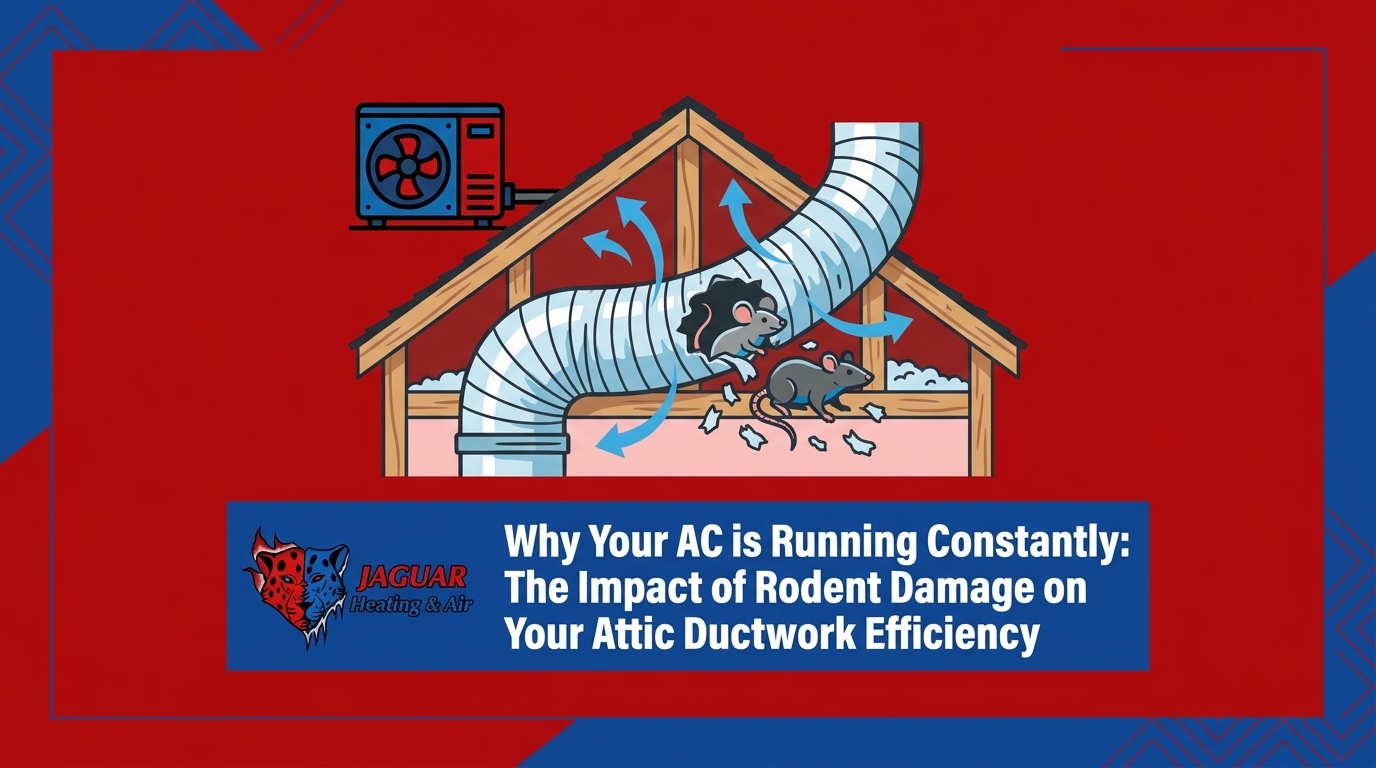
The Impact of Rodent Damage on Your Attic Ductwork Efficiency
If your cooling system runs constantly but your home stays warm, roof rats may have chewed through your flex ducts. See why a tape patch isn't enough to safely restore your system's airflow.