.avif)
Why We Recommend Replacing Your Contactor Before It Welds Shut
A pitted AC contactor might seem like a minor issue, but it can force your compressor to run continuously until it burns out. Understand why proactive replacement protects your system.
A pitted AC contactor might seem like a minor issue, but it can force your compressor to run continuously until it burns out. Understand why proactive replacement protects your system.

Could a Tiny Electrical Part Threaten Your Entire AC System?
Have you ever wondered why we recommend replacing your contactor before it welds shut during a routine maintenance visit? When a technician suggests swapping out a small, seemingly functional part, it is natural to question if the replacement is truly necessary. The reality is that an aging AC contactor pitting and welding shut during extreme heatwaves forces your compressor to run continuously, turning a minor wear-and-tear issue into a catastrophic system failure.
As a homeowner, you face a critical decision point: deciding whether to proactively authorize the replacement of a worn contactor or risk waiting for it to fail completely. Making this preventative decision early is a core part of reliable air conditioning services and proactive AC repair in Sacramento.
Understanding the AC Contactor: The Gatekeeper of Cooling
To understand why this component matters so much, you need to know what it actually does. The contactor acts as the primary heavy-duty switch for your entire air conditioning system. It serves as the vital gatekeeper that connects and disconnects high-voltage power to your outdoor compressor and condenser fan. Without a functioning contactor, your system simply cannot cool your home.
Because this part handles an immense electrical load every single time your system cycles on, it endures significant mechanical and electrical stress. The power required to jump-start a heavy compressor is substantial, and the contactor bears the brunt of that energy transfer. Note: Because the contactor manages dangerous, high-voltage electricity, you should never attempt to locate, test, or replace this component yourself.
How the Magnetic Coil Operates
The operation of the contactor relies on a simple but powerful sequence of events. Here is exactly how the process unfolds when your house gets too warm:
1. The initial call for cooling: Your indoor thermostat detects rising temperatures and sends a safe, low-voltage signal out to the condenser unit.
2. The magnetic activation: This low-voltage signal energizes a magnetic coil located at the base of the contactor.
3. The high-voltage connection: The magnetized coil forcefully pulls a set of metal contacts closed, bridging the gap and allowing high-voltage electricity to flow directly into the compressor and fan motor.
Once your home reaches the desired temperature, the thermostat drops the low-voltage signal, the magnet releases, and a spring pushes the contacts apart, safely shutting down the heavy equipment.
From Arcing to Failure: Pitting vs. Welding Shut
Every time your thermostat tells the system to turn on, those metal contacts snap together. Just before they touch, the high-voltage electricity jumps the microscopic gap, creating a small electrical arc. Over thousands of cycles, this miniature lightning bolt slowly burns away the smooth, protective coating on the metal surfaces.
As the coating degrades, you begin to see pitted and blackened contactor points. This pitting creates an uneven, rough surface that prevents electricity from flowing cleanly. A pitted contactor might still turn your system on and off, but it is a ticking time bomb. The rough surface creates electrical resistance, and resistance creates extreme heat. If you ignore the signs your AC needs repair, that heat eventually causes the metal to melt and fuse together permanently—a condition known as welding shut.
The Ticking Time Bomb of Carbon Deposits
The transition from normal wear to catastrophic failure happens through a specific chain of events:
• Carbon buildup: The repeated electrical arcing leaves behind black carbon deposits on the metal contacts.
• Increased resistance: Electricity struggles to push through the carbon, generating excess heat inside the electrical panel.
• Material failure: The intense heat softens the metal contacts until they melt into a single, fused piece of metal.
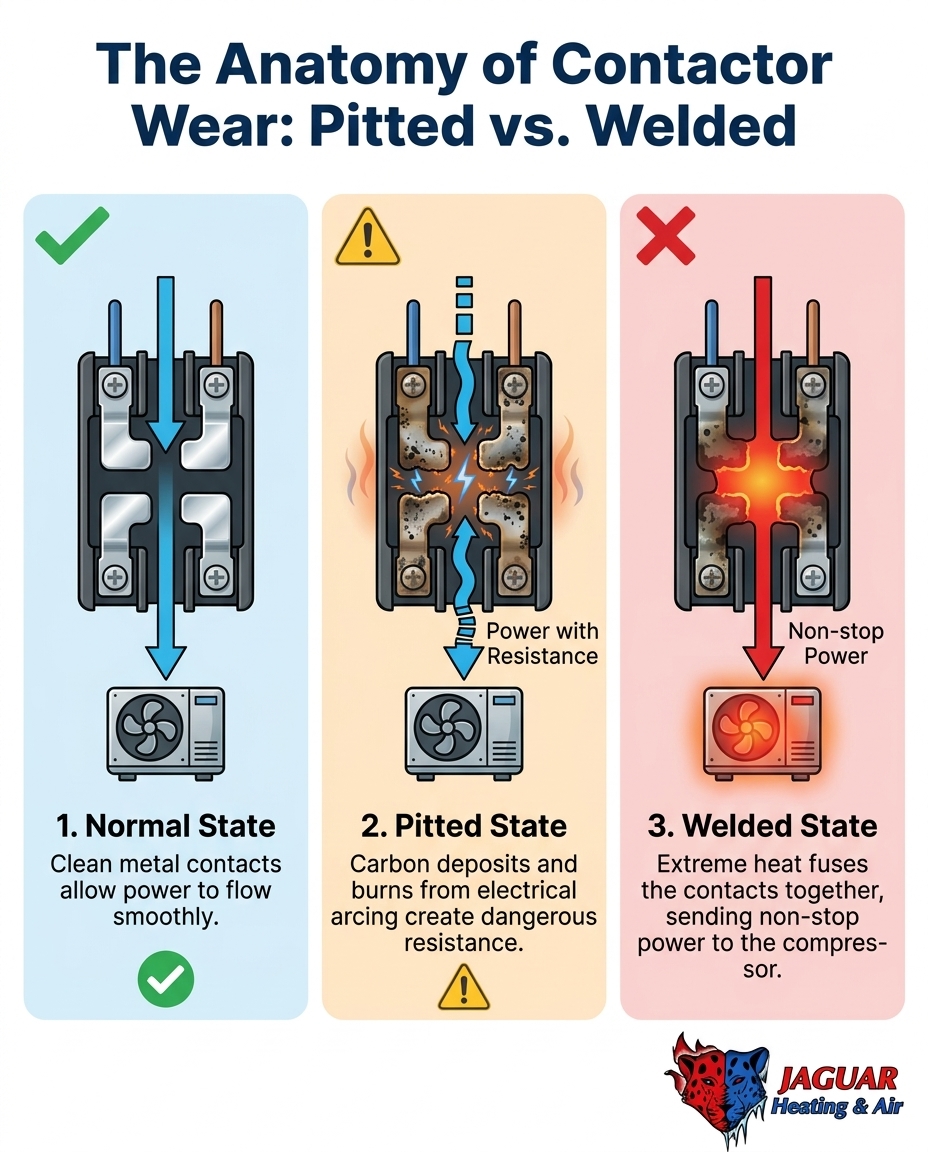
• Normal / New — Visual Evidence: Smooth, shiny silver metal surfaces. — System Impact: Clean power flow, normal system cycling. — Action Required: None. Monitor during annual maintenance.
• Pitted / Worn — Visual Evidence: Pitted and blackened contactor points. — System Impact: High resistance, excessive heat generation. — Action Required: Proactive replacement recommended immediately.
• Welded Shut — Visual Evidence: Contacts fused together, unable to separate. — System Impact: Compressor runs continuously without stopping. — Action Required: Emergency repair to save the compressor.
The Chain Reaction: How a Stuck Contactor Destroys Compressors
When an AC contactor welds shut, the immediate consequence is severe: continuous, high-voltage power flows directly to the compressor, completely bypassing your thermostat. Even if you turn your thermostat to the "off" position, the outdoor unit will keep running because the physical switch controlling the high voltage is permanently stuck in the "on" position.
The Problem: Air conditioning compressors are designed to cycle on and off. They need periods of rest to cool down their internal copper windings. When a welded contactor forces the compressor to run non-stop for hours or days, the equipment experiences severe thermal overload.
The Cause: The continuous flow of electricity generates friction and heat that the system cannot dissipate. The internal oil breaks down, losing its lubricating properties. Without proper lubrication and cooling, the internal mechanical parts grind against each other.
The Solution: The only way to prevent this chain reaction is to replace the contactor while it is merely pitted, before it fuses. The compressor is the heart of your cooling system, and replacing it represents one of the most expensive repairs a homeowner can face. Comparing the immense value of a preventative contactor replacement against the massive burden of catastrophic compressor damage makes the choice clear. Proactive replacement acts as an inexpensive insurance policy for your most valuable cooling component.
Why Extreme Summer Weather Accelerates Electrical Wear
The climate in our region plays a massive role in how quickly your electrical components degrade. Sacramento's frequent triple-digit summer temperatures force your air conditioner to work overtime. During a brutal heatwave, your system does not just turn on a few times a day; it cycles on and off dozens of times to maintain a comfortable indoor temperature.
This rapid cycling multiplies the arcing effect. Every cycle adds another tiny burn mark to the metal contacts. During July peak summer heat, a pitted contactor is under maximum electrical load. Because the system is already stressed by the ambient outdoor temperature, a welded contactor during these conditions almost guarantees catastrophic thermal failure. The compressor simply has no chance to shed heat before it burns out.
Taking action before the worst weather hits makes all the difference. One Sacramento homeowner called for service on a Tuesday evening when their system started struggling to keep up with the rising temperatures. A technician arrived, performed a full diagnostic test, and identified failing electrical components. By replacing the worn parts proactively, the technician ensured the system was running flawlessly and recharged before the heatwave peaked the very next day. Catching the wear early prevented a total breakdown when the household needed cooling the most.
Reading the Signs: Why Technicians Check for Wear During Tune-Ups
When a technician recommends a part replacement during a routine visit, it is completely normal to ask if the fix is actually necessary or just an unnecessary upsell. At Jaguar Heating & Air, our commitment to honest, preventative service means we want to save you from catastrophic compressor failure by proactively addressing these minor components before they break.
The evidence of a failing contactor is highly visual and undeniable. When a technician shows you a photo of pitted and blackened contactor points, you are looking at physical damage that will only get worse. The metal cannot heal itself, and the carbon deposits will only grow thicker. By recommending a replacement, your technician acts as a trusted advisor, aiming to spare you from a massive future headache.
This transparent approach to diagnostics yields better outcomes for homeowners. Another local customer reached out in the morning when their unit stopped functioning correctly. A technician arrived promptly, diagnosed the electrical failure, and fixed the unit before noon. The technician then took the time to explain the issue clearly, showing the customer how a regular AC maintenance plan catches these exact types of electrical wear before they cause unexpected morning breakdowns.
What We Look For During a Maintenance Visit
During a thorough inspection, our technicians check multiple indicators to determine the health of your contactor:
• Visual discoloration: Deep pitting, burning, or black carbon buildup on the metal contacts.
• Audible warnings: Loud humming, buzzing, or chattering noises coming from the outdoor unit when it tries to start.
• Voltage drops: Using a multimeter to measure the electricity flowing across the contactor to detect hidden resistance.
• Physical degradation: Checking for melted plastic casing around the component, which indicates extreme heat generation.
Preventative Care vs. Catastrophic Failure: Weighing Your Options
The decision to replace a pitted contactor ultimately comes down to risk management. You have two paths: replacing a worn, inexpensive part now on your own schedule, or waiting until the part fuses and potentially destroys a compressor that costs a small fortune to replace.
Replacing a pitted contactor is vital compressor insurance, especially as we approach July peak summer heat. You rely on your system to keep your family safe and comfortable when the temperatures soar. Prioritizing regular system check-ups allows professionals to catch these small, hidden issues long before they escalate into emergencies.
Enrolling in an HVAC maintenance membership makes these preventative swaps seamless. Regular inspections ensure that the moment a contactor shows dangerous levels of pitting, it gets flagged and addressed, keeping your primary cooling equipment safe year after year.
• Proactive Replacement — System Health: Compressor remains protected from thermal overload and power surges. — Long-Term Impact: Maximizes the lifespan of the entire HVAC system.
• Wait and See — System Health: Contactor continues to degrade, generating excessive heat and resistance. — Long-Term Impact: High risk of sudden failure during peak summer heat.
• Ignoring the Issue — System Health: Contactor welds shut, bypassing the thermostat entirely. — Long-Term Impact: Catastrophic compressor burnout requiring major system replacement.
Common Questions About AC Contactors and Compressor Safety
What happens when an AC contactor welds shut?
When an AC contactor welds shut, the electrical contacts fuse together, sending continuous power to the compressor. This bypasses the thermostat entirely, forcing the outdoor unit to run non-stop. If left unchecked, the compressor will overheat and suffer catastrophic internal damage.
Why do AC contactors get pitted?
AC contactors get pitted due to the natural electrical arcing that occurs every time the system turns on. As the high-voltage electricity jumps the gap between the contacts, it creates a tiny spark. Over thousands of cycles, this spark burns away the metal coating and leaves behind rough, carbonized pits.
Is replacing a pitted contactor necessary?
Yes, replacing a pitted contactor is highly necessary to protect your compressor. While a pitted contactor might still function temporarily, the uneven surface creates electrical resistance and extreme heat. It is only a matter of time before that heat causes the contacts to melt and fuse together.
Can you clean a pitted contactor instead of replacing it?
You should never attempt to clean or file down a pitted contactor. Filing the contacts removes the remaining protective silver coating, exposing the raw copper underneath. This actually accelerates the degradation process and makes the contactor much more likely to weld shut shortly after cleaning.
How often should an AC contactor be inspected for wear?
An AC contactor should be inspected at least once a year during a routine spring or early summer tune-up. Because Sacramento summers require the system to cycle frequently, annual inspections are critical for catching pitting before it transitions into a dangerous welded state.
Protect Your Compressor with Honest, Preventative Care
Understanding the mechanics of your HVAC system empowers you to protect your home. A clear, non-technical explanation of how a contactor works and what 'welding shut' actually means for your expensive compressor proves why preventative replacement is the only logical choice for long-term system survival. Do not wait for a minor electrical issue to trigger a major mechanical failure. Schedule a comprehensive inspection with a local expert today to ensure your system is prepared to handle whatever the summer weather brings.
Recent Posts
Why Your AC Vents Are Dripping Condensation Onto the Floor
Water pooling under your ceiling registers is a stressful surprise. Understand the physics behind sweating duct boots and know when to call a professional before drywall damage occurs.
The Financial Math of Repairing vs. Replacing a Failed Compressor
A dead compressor on an aging AC system forces a tough choice. We break down the percentage-based lifespan math so you can confidently decide between a heavy repair and a full replacement.

How We Trace Elusive Refrigerant Leaks in Sacramento Attics
A slow summer leak can cause your AC to blow warm air when you need it most. We stop the cycle of endless top-offs by pinpointing the true root cause.