.avif)
HVAC Maintenance: Decoding the Burning Smell During Your First Fall Startup
Smelling burning dust on the first chilly morning? Apply our home maintenance tips and troubleshooting to decide if it's normal burn-off or a safety hazard.
Smelling burning dust on the first chilly morning? Apply our home maintenance tips and troubleshooting to decide if it's normal burn-off or a safety hazard.

That Alarming Scent on the First Chilly Morning
Searching for home maintenance tips and troubleshooting usually starts when an unexpected problem disrupts your comfort. At Jaguar Heating & Air, our dispatchers know exactly what happens on the first chilly October morning in Sacramento: the phones start ringing with homeowners panicked by a distinct burning dust odor filling their hallways. Add an initial blast of cold air blowing from the vents, and you are immediately left wondering if the system is safe to run or if you need to shut it down before a fire starts.
This specific scenario plays out in thousands of homes across our service area every autumn. The sudden smell of something burning, combined with the mechanical sounds of a system waking up after months of inactivity, creates a high-anxiety moment. Knowing how to interpret these sensory signals is the key to protecting your property and your peace of mind. Before winter weather fully sets in, understanding the basics of HVAC maintenance helps you decode these seasonal startup symptoms so you can confidently decide whether to let the system run or call our team for professional backup.
The core decision point: You must determine if the odor is a harmless byproduct of a dormant system waking up, or the early warning sign of a dangerous electrical failure. Making the right call requires a basic understanding of what happens inside your furnace cabinet when the thermostat signals for heat after a long summer.
The Physiology of a Dormant Heating System
To understand why your furnace smells like it is burning, you have to look at the mechanical reality of the equipment. Heating systems do not operate in a vacuum; they constantly cycle the ambient air from inside your living space. Over time, this air carries millions of microscopic particles.
In Sacramento valley homes, heating systems sit completely dormant for over half the year. Our technicians see firsthand how, during these long, intense summers, the furnace relies on the exact same blower motor and air handler cabinet used by your air conditioning system. As air circulates for cooling, the internal heating components—specifically the metal heat exchanger—act like a magnet for household debris. Airborne particles, pet dander, microscopic skin cells, and standard household dust settle onto the cold metal surfaces of the burners and the heat exchanger over several months.
When you finally trigger the heating cycle, the physiological process of the system waking up involves a rapid spike in temperature. The burners ignite, and the metal heat exchanger quickly heats up to hundreds of degrees. The layer of accumulated dust and dander sitting on that metal literally incinerates within seconds. This physical burn-off creates a distinct, toasted odor.
What happens next:
• The blower engages: The system's blower motor pushes air over the newly heated metal.
• The smell travels: That incinerated dust odor is carried directly into your ductwork.
• Vents distribute the scent: The smell is forced into every room of your house simultaneously, making the issue seem much larger and more dangerous than it actually is.
This rapid incineration is a normal, expected mechanical process. The dust has nowhere else to go, and burning off is the only way the heat exchanger clears its surface. However, because this smell is so alarming, homeowners must know how to differentiate this standard process from a genuine emergency.
Normal Burn-Off vs. Critical Electrical Failure
While dust burn-off is a routine seasonal event, heating equipment remains a leading cause of home fires, according to the National Fire Protection Association (NFPA). That is why our team always emphasizes safety-first diagnostics. You must be able to distinguish between the harmless smell of toasted dust and the hazardous odor of melting components.
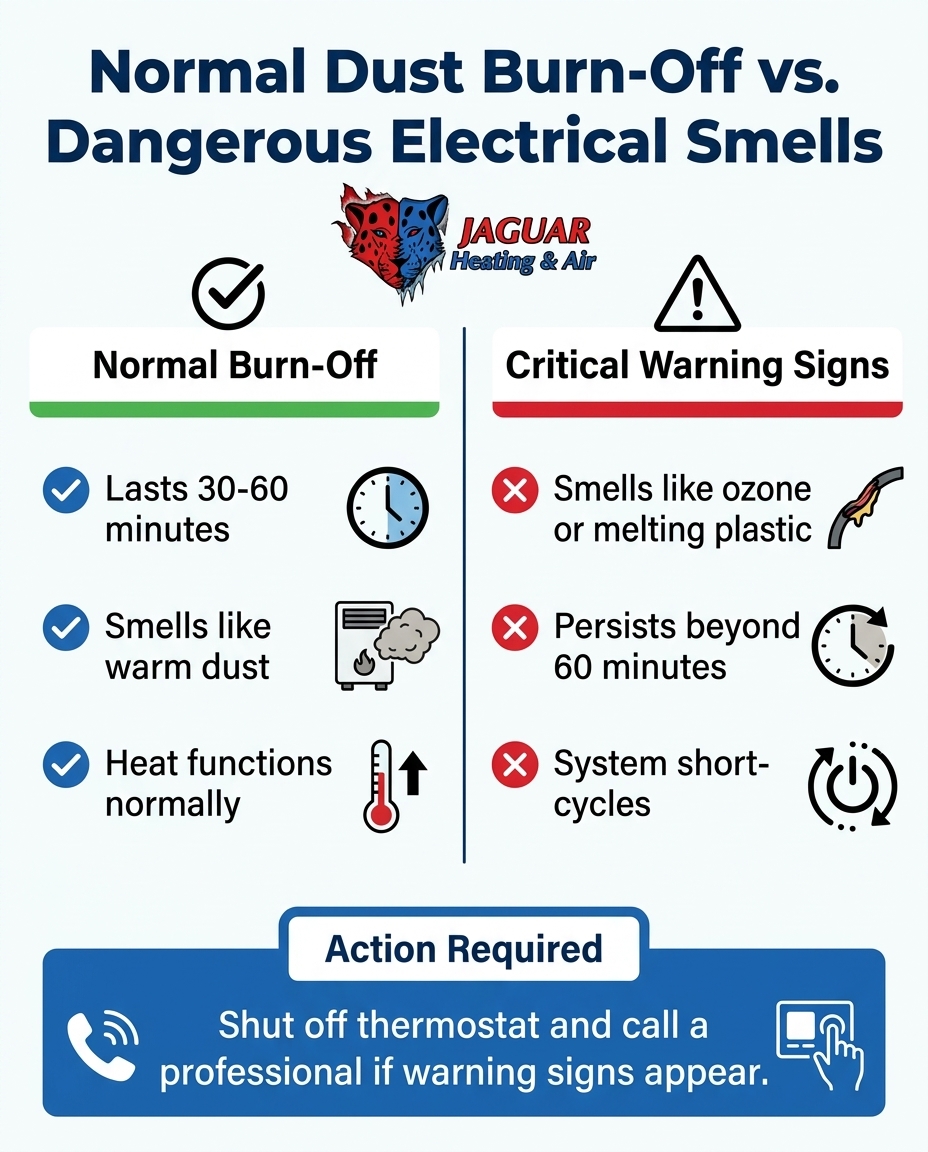
The primary differentiator is time. A normal dust burn-off has a very specific timeline, typically lasting between 30 to 60 minutes during the first seasonal use. As the settled dust is entirely consumed, the odor will steadily fade until the air smells completely neutral. If the smell changes in character or persists for hours, the diagnostic picture shifts from normal operation to critical failure.
Signs It Is Just Dust
When a system is simply burning off summer buildup, the symptoms follow a predictable pattern. The smell dissipates within an hour of continuous operation. The odor itself resembles warm, toasted dust—similar to the smell of a space heater that has just been plugged in. Most importantly, the system produces steady, consistent warm air after the initial startup sequence, and the furnace runs in smooth, normal cycles without shutting down prematurely.
Warning Signs of a Critical Failure
Electrical and mechanical failures produce entirely different sensory warnings. If the smell persists beyond the first heating cycle, or if the odor resembles acrid chemicals, melting plastic, burning wire casing, or sharp metallic ozone, you are no longer dealing with dust. Additionally, if the system rapidly cycles on and off (a safety mechanism known as short-cycling) or fails to produce heat entirely, the internal safety sensors are likely detecting a severe malfunction.
• Odor Profile — Normal Dust Burn-Off: Toasted, warm dust or earthy smell — Critical Safety Hazard: Melting plastic, ozone, fishy, or chemical
• Duration — Normal Dust Burn-Off: Fades entirely within 30 to 60 minutes — Critical Safety Hazard: Persists for hours or worsens over time
• System Behavior — Normal Dust Burn-Off: Runs smoothly and produces consistent heat — Critical Safety Hazard: Short-cycles, trips breakers, or blows cold air
• Action Required — Normal Dust Burn-Off: Open a window and let the cycle finish — Critical Safety Hazard: Shut off at thermostat immediately and call a pro
If you experience any of the critical warning signs, do not wait to see if the problem resolves itself. Shut the system off at the thermostat, turn off the dedicated breaker if you suspect electrical burning, and schedule a professional diagnostic evaluation with our team immediately.
Why Your Vents Blow Cold Air Before the Heat Kicks In
The burning smell is often accompanied by a secondary symptom that causes equal concern: a rush of cold air blowing out of the registers before any heat actually arrives. When you are already worried about a burning odor, feeling cold air can make you assume the furnace is completely broken. However, we always remind our customers that this is usually a standard part of the furnace's sequence of operations.
Modern heating systems follow a strict, automated safety sequence before they ever deliver warm air to your living space. Understanding this sequence removes the mystery from the startup process. Here is exactly what happens when you adjust the thermostat:
1. The call for heat: The thermostat sends a signal to the furnace control board, initiating the cycle.
2. Draft inducer activation: A small motor starts up to clear any lingering combustion gases out of the heat exchanger and vent them safely outdoors.
3. Ignition sequence: Once the safety sensors confirm the exhaust pathway is clear, the igniter warms up and the gas burners light.
4. Heat exchanger warming: The burners heat the metal heat exchanger. The system intentionally delays turning on the main blower motor to give the metal time to reach the proper temperature.
5. Blower engagement: Finally, the main blower motor kicks on. It pushes air over the hot heat exchanger and into the supply plenum for distribution.
Because the ductwork has been sitting idle in a cool house, the air trapped inside those metal tubes is cold. When the blower motor first turns on, it must push all that ambient, unheated air out of the vents before the newly heated air can reach your rooms. This brief period of cool air is entirely normal.
However, if the air never turns warm and continues blowing cold indefinitely, this indicates a failure in the sequence. A dirty flame sensor, a faulty igniter, or a tripped limit switch will stop the burners from lighting, causing the system to circulate unheated air. Routine heating maintenance is the most effective way to prevent these specific sensor and ignition failures before the cold weather arrives.
Transitioning Your System from Summer Cooling to Fall Heating
The shift from cooling to heating is not just a matter of flipping a switch on the thermostat; it is a mechanical transition that requires the system to adapt to new operational demands. Because your central air and your furnace share the same ductwork and the same indoor blower motor, the wear and tear from the summer directly impacts your fall heating performance.
During the cooling season, the system works overtime to manage indoor humidity and temperature. This continuous operation pulls massive amounts of air through the filter. By the time autumn arrives, the systems we inspect across Sacramento are often fatigued. Skipping AC maintenance in the spring often leads to compound issues in the fall, as dirty blower wheels and clogged filters restrict the precise airflow required for a furnace to operate safely.
The Impact of Summer Particulates
Environmental factors play a massive role in system transitions. Dry, dusty summer conditions force air filters to capture higher volumes of particulate matter. Furthermore, understanding how wildfire ash affects AC condenser coils is just part of the equation; that same microscopic ash also infiltrates indoor environments, coating the furnace filter and the blower motor.
When airflow is compromised by summer buildup, the furnace suffers immediately in the fall. A furnace requires a strict volume of moving air to keep the heat exchanger from overheating. If a clogged filter or a dirty blower wheel restricts that air, the furnace will overheat, trip its internal high-limit safety switch, and shut down. Addressing lingering summer debris through a thorough seasonal inspection prevents these compound issues from leaving you in the cold.
The Long-Term Value of Proactive Seasonal Care
Shifting your approach from reactive troubleshooting to proactive seasonal care changes the entire dynamic of home ownership. Instead of waiting for a burning smell to trigger panic on a cold morning, scheduled maintenance eliminates the problem before it ever has a chance to develop. During a comprehensive pre-season tune-up, our technicians physically clean the heat exchanger, brush away the summer dust, and ensure the burners ignite cleanly.
The financial benefits of catching worn components early cannot be overstated. Operating a dirty system forces the equipment to consume more energy to produce the same amount of heat, driving up utility costs. More importantly, running a system with failing sensors risks catastrophic breakdowns mid-winter. We recently helped a local Sacramento homeowner who believed a complete, costly air conditioner replacement was necessary based on poor performance and prior expectations. Instead of providing an unnecessary replacement estimate, our team performed a thorough professional cleaning of the existing unit, restoring its function entirely and saving the homeowner from a massive premature expense. This same principle applies directly to furnace care: deep cleaning and honest maintenance often prevent the need for drastic repairs. Furthermore, upgrading to or maintaining high-efficiency heating systems may qualify you for generic utility incentive programs or federal tax credits—though we always advise verifying current programs with your utility provider or a tax professional.
Regular inspections also ensure that critical safety mechanisms—like carbon monoxide detectors, flame roll-out switches, and draft inducers—are fully operational. When you invest in a dedicated HVAC maintenance membership, you secure proactive, reliable care from our trusted local experts. Automated service reminders keep you ahead of the seasonal transitions, ensuring your system is cleaned, calibrated, and safely prepared long before that first chilly morning arrives.
Frequently Asked Questions
Is a burning smell normal when turning on the heater for the first time?
Yes, a temporary burning smell is a normal physiological process during the first fall startup. Over the summer, dust and airborne particles settle on the dormant heat exchanger. When the furnace ignites, this accumulated debris rapidly burns off, creating a distinct toasted odor that travels through your ductwork.
How long should a furnace smell like burning dust?
The standard dust burn-off odor should dissipate within 30 to 60 minutes of continuous operation. As the heat exchanger reaches its operating temperature, the settled debris is entirely consumed. If the smell persists for several hours or returns during subsequent heating cycles, it warrants a professional inspection.
What does an electrical failure in a furnace smell like?
An electrical failure produces harsh, dangerous odors that are distinctly different from warm dust. You may notice the smell of melting plastic, burning wire casing, acrid chemicals, or a sharp metallic ozone scent. If you detect any of these odors, shut the system down immediately at the thermostat and contact our technicians.
Why is my furnace blowing cold air when I first turn it on?
Your furnace blows cold air initially because the blower motor is pushing the ambient, unheated air out of your ductwork. The system intentionally delays engaging the blower until the heat exchanger has adequately warmed up. Once the metal is hot, the air coming from the vents will transition to a steady, warm flow.
Can a dirty air filter cause a burning smell?
Yes, a severely clogged air filter can restrict airflow enough to cause the furnace to overheat, producing a burning odor. When the system cannot pull enough air over the heat exchanger, the internal temperature spikes, stressing the equipment. Replacing your filter regularly prevents this dangerous overheating cycle.
How often should I schedule professional heating maintenance?
Professional heating maintenance should be scheduled once a year, ideally in the early fall before the system is subjected to heavy daily use. An annual tune-up allows a technician to clean the heat exchanger, test all safety sensors, and calibrate the ignition sequence. This proactive approach ensures safe, efficient operation throughout the winter.
Recent Posts
HVAC Maintenance Guide: Comparing Heating Replacement Options Before Winter
Before winter hits, make sure your furnace can handle the cold. Compare your options with these objective heating options comparisons for homeowners.
HVAC Maintenance: Troubleshooting the Fall Heating Startup
Why does your furnace smell like burning on that first chilly morning? Use our home maintenance tips and troubleshooting to know when to call a pro this fall.
HVAC Maintenance: Home Maintenance Tips and Troubleshooting for Fall Heating Startup
Why some systems smell burning during fall startup, and how these home maintenance tips and troubleshooting steps help you decide when to call a professional.