.avif)
All About How Sacramento Valley Heat Affects Your HVAC System
Discover how Sacramento Valley heat affects your HVAC system efficiency and performance during triple-digit summers, plus tips to reduce strain and extend system life.
Discover how Sacramento Valley heat affects your HVAC system efficiency and performance during triple-digit summers, plus tips to reduce strain and extend system life.

Why Sacramento Valley Heat Is One of the Toughest Tests for Any HVAC System
How Sacramento Valley heat affects your HVAC system is something every local homeowner finds out the hard way — usually on the first 105°F afternoon of the year when the thermostat just won't budge.
Here's a quick answer if you need it now:
- Cooling capacity hits a wall. Most residential AC systems can only cool a home about 20°F below the outdoor temperature. On a 105°F day, that means indoor temps may not drop below 85°F — no matter how hard your system runs.
- Systems are built for 95°F, not 109°F. Residential AC equipment is designed around a 95°F outdoor design temperature. Sacramento regularly blows past that from late June through early September.
- Run times skyrocket. During a Sacramento heat wave, AC units can run 10 to 14 hours straight — far beyond what normal operating conditions require.
- Component wear accelerates. Extended run times combined with extreme outdoor heat stress compressors, capacitors, and refrigerant lines faster than in nearly any other California climate.
- The Delta Breeze adds a humidity twist. When the evening breeze rolls in from the Bay, it brings moisture your system has to remove on top of managing temperature — adding another layer of strain.
- The urban heat island effect makes it worse downtown. Neighborhoods like Midtown and Land Park can run up to 8°F hotter than surrounding areas, meaning your system faces an even steeper cooling challenge.
- Energy bills climb fast. Heating and cooling already account for 40–50% of a typical home energy bill. Every degree you push the thermostat below 78°F can increase energy use by up to 6%.
Sacramento's heat isn't just uncomfortable — it's genuinely hard on the machinery keeping your home livable. The sections below break down exactly what's happening inside your system and what you can do about it.
How Sacramento Valley Heat Affects Your HVAC System Efficiency and Performance
When we talk about how sacramento valley heat affects your hvac system, we have to start with the physics of cooling. Most homeowners assume that if they set the thermostat to 70°F, the air conditioner will eventually get there, regardless of the weather outside. However, HVAC systems are governed by the "20-degree rule."
In the engineering world, residential systems are typically designed to handle outdoor temperatures up to about 95°F. This is known as the "design temperature." When the mercury in Roseville or Rocklin hits 105°F or 109°F, your system is officially operating outside its comfort zone. At these extremes, the unit can usually only maintain an indoor temperature that is about 20 degrees cooler than the air outside. If it’s 105°F in the shade, an indoor temperature of 85°F is actually a sign that your system is performing exactly as it was designed to.
This struggle occurs because of the "sensible load"—the actual heat you can feel. As the sun beats down on your roof, attic temperatures can soar past 130°F, creating a massive heat load that radiates through your ceilings. To understand why your unit feels like it's losing the battle, it helps to look at The Triple Digit Struggle: Why Your AC Works Overtime.
Furthermore, the efficiency of your system (often measured by its SEER2 rating) drops as the heat rises. A unit that is highly efficient at 82°F becomes significantly less efficient when the outdoor condenser unit is sitting in 110°F air. Finding the right balance for our local climate is essential, which is why we often discuss Beating the Heat: The Best HVAC Setup for Sacramento Area Weather with our neighbors in Elk Grove and Folsom.
Managing Humidity: How Sacramento Valley Heat Affects Your HVAC System During the Delta Breeze
Sacramento is famous for the Delta Breeze—that cooling wind that blows in from the San Francisco Bay. While it feels great on your skin, it changes the "latent load" on your HVAC system. Latent load refers to the energy required to remove moisture from the air.
When the Delta Breeze kicks in, humidity levels in the Valley can spike. Your air conditioner doesn't just cool the air; it also acts as a dehumidifier. As warm, moist air passes over the cold evaporator coils, the moisture condenses into water and drains away. On humid nights, your system has to work twice as hard: first to wring the water out of the air, and second to lower the temperature.
If your system isn't draining properly or the coils are dirty, this extra moisture can lead to "frozen" coils or a house that feels "clammy" even if the temperature is dropping. This is why nighttime recovery is so important—it gives the system a chance to stabilize the indoor climate when the sun isn't adding to the heat load.
Long-Term Wear: How Sacramento Valley Heat Affects Your HVAC System Lifespan
In more moderate climates, a well-maintained AC unit might last 15 to 20 years. In the Sacramento Valley, that lifespan often shrinks to 10 or 12 years. Why? It comes down to the sheer volume of work.
A typical system in a mild area might run for 800 hours a summer. In places like Citrus Heights or Rancho Cordova, that same system might clock over 2,500 run hours. This constant operation puts immense stress on the compressor—the "heart" of your AC. High heat also causes compressor oil to lose its protective properties and leads to the degradation of capacitors, which are the small components that provide the electrical "jolt" needed to start the motors.
Additionally, we live in a 140-mile salt intrusion zone. While we aren't exactly on the beach, trace amounts of salt and agricultural dust can lead to coil corrosion, which further reduces efficiency and shaves years off the equipment's life. To protect your investment, you must stay on top of How to Maintain Your Heating and Cooling System.
What are the signs that my cooling system is failing during a heat wave?
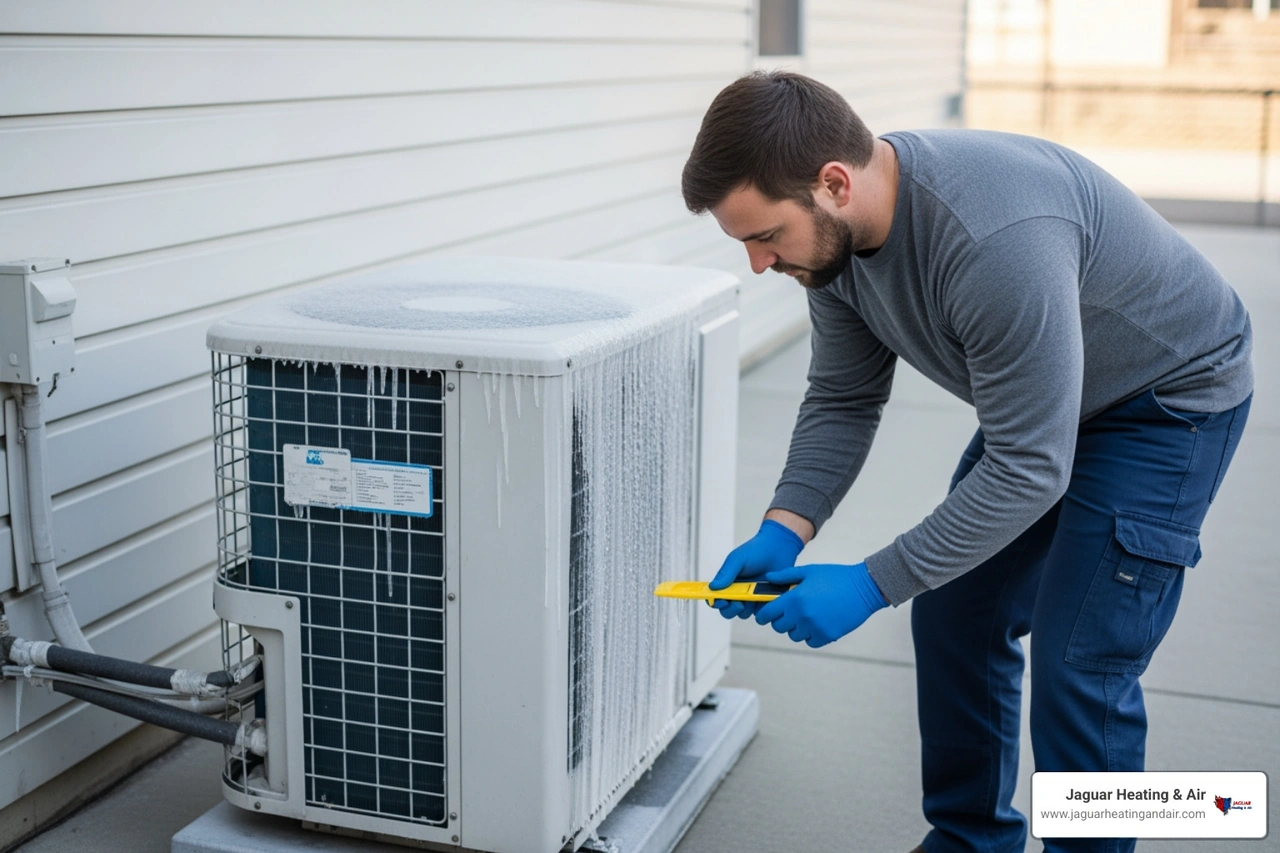
When the heat is on, your system will tell you if it’s struggling. Recognizing these red flags early can prevent a total breakdown in the middle of a July scorcher.
- Short Cycling: If your AC turns on and off every few minutes without ever cooling the house, it’s likely overheating or facing a sensor issue.
- Warm Airflow: If the air coming out of the vents feels lukewarm, you could be dealing with a refrigerant leak or a failed compressor.
- Tripped Breakers: Extreme heat makes motors draw more electricity. If your AC keeps tripping the circuit breaker, it’s a sign the electrical components are under dangerous levels of stress.
- Strange Noises: Squealing, grinding, or loud banging often indicates a failing fan motor or a dying compressor.
- Ice Formation: It sounds counterintuitive, but your AC can freeze over in 100°F weather. This usually happens due to restricted airflow (like a dirty filter) or low refrigerant.
- Uneven Cooling: If the upstairs is 10 degrees warmer than the downstairs, your system is likely struggling against the 130°F heat load in your attic.
Sometimes, the issue isn't the machine itself, but the "veins" of the system. Dust and debris buildup can restrict airflow, which is why we often suggest homeowners consider Why Schedule Duct Cleaning Service in Spring to ensure the system can breathe freely before the heat hits.
How can I reduce the strain on my air conditioner during a Sacramento summer?
You don't have to just sit there and watch your energy bill climb. There are several proactive steps you can take to help your AC survive the summer.
First, embrace the 78°F setting. We know it sounds warm, but 78°F is the "sweet spot" recommended by SMUD and Energy Star. It provides a reasonable level of comfort without forcing the system into a 24/7 marathon. Every degree you set the thermostat below 78°F can increase your energy usage by up to 6–8%.
Second, use pre-cooling strategies. Sacramento utilities often use Time-of-Use (TOU) rates, where electricity is most expensive between 4:00 PM and 9:00 PM—exactly when the day is hottest. Try "super-cooling" your home to 70°F or 72°F in the early morning hours when power is cheaper and the air is cool. Then, raise the thermostat to 78°F or 80°F during the peak afternoon hours. Your home’s thermal mass will help hold the coolness, giving your AC a much-needed break.
Third, never underestimate the power of a clean filter. During a Sacramento summer, you should check your air filter every 30 days. If you have pets or there is wildfire smoke in the air, you might need to change it monthly. A dirty filter is the number one cause of system failure; it can lead to a $2,000 compressor replacement while only costing $20 to fix. For more localized tips, check out How to Lessen Strain on Your Air Conditioner in Rocklin, CA and our general Tips to Boost HVAC Efficiency.
Simple Home Adjustments for Better Cooling
Beyond the HVAC system itself, your home's environment plays a huge role in how hard the AC has to work.
- Ceiling Fans: Fans don't cool rooms; they cool people. By creating a wind-chill effect on your skin, a ceiling fan can make 78°F feel like 74°F. Just remember to turn them off when you leave the room!
- Blackout Curtains: Keep curtains and blinds closed on the south and west-facing sides of your home. This can reduce solar heat gain by up to 30%.
- LED Lighting: Traditional incandescent bulbs are essentially tiny heaters. Switching to LEDs reduces internal heat generation.
- Appliance Timing: Avoid using the oven, clothes dryer, or dishwasher during the hottest part of the day. These appliances dump significant heat and moisture into your living space.
- Landscaping: Planting deciduous trees on the west side of your home can provide natural shade that lowers exterior wall temperatures. Learn more about How Landscaping Can Boost HVAC Efficiency.
Is it time to upgrade to a high-efficiency HVAC system for the Valley climate?
If your system is more than 10–12 years old and struggles every time the temperature hits triple digits, an upgrade might be the most cost-effective path forward. Modern technology has come a long way in handling "Valley heat."
As of May 2026, California standards require a minimum of 14.3 SEER2 for split systems. However, for our climate, we often recommend moving toward 17 SEER2 or higher. The real game-changer for Sacramento is variable-speed (inverter) technology.
Traditional AC units are either "on" or "off"—like a light switch. Variable-speed systems are more like a dimmer switch. They can run at 30% capacity or 100% capacity, depending on the need. This allows them to provide constant, gentle dehumidification and maintain a rock-steady temperature without the "blast of cold/period of warmth" cycle.
| Feature | Standard SEER2 (14.3) | High-Efficiency Variable-Speed |
|---|---|---|
| Operation | Single-stage (On/Off) | Infinite stages (Variable) |
| Humidity Control | Basic | Superior |
| Noise Level | Standard | Ultra-Quiet |
| Energy Savings | Baseline | Up to 50% higher |
| Comfort | Temperature swings | Precise & Consistent |
Many homeowners are also switching to air-source heat pumps. Sacramento has one of the best climates in the world for heat pumps because our winters are mild. These systems are incredibly efficient and can often reduce heating costs by 30% to 60% compared to gas furnaces. If you're planning for the future, consider The Connection Between Energy Efficient HVAC and Your Home Value and ensure you are Getting Your Cooling System Ready for Warm Weather.
Frequently Asked Questions about Sacramento Summer Cooling
What is the ideal thermostat setting during a Sacramento heat wave?
We recommend 78°F when you are home. This is the "sweet spot" where you stay reasonably cool without putting excessive strain on the electrical grid or your equipment. When you’re away, bumping it up to 85°F can help save energy while preventing the house from becoming a literal oven.
Why can't my AC get my house below 80 degrees when it's 105 outside?
This is usually due to the 20-degree differential rule. Residential AC systems are designed for typical summer days, not extreme outliers. When it’s 105°F, the heat penetrating your walls and roof is so intense that the AC can only remove it at a certain rate. If your system is blowing cold air (about 15-20 degrees cooler than the intake air) but the house stays at 82°F, the system is likely working perfectly; it's just outmatched by the weather.
How often should I change my air filter during the summer?
During peak Sacramento summers, you should check your filter every 30 days. If you have pets, live near a construction site in a growing area like Lincoln or Elk Grove, or if there is wildfire smoke in the air, you may need to replace it every single month to maintain airflow and protect your compressor.
Conclusion
Understanding how sacramento valley heat affects your hvac system is the first step toward a more comfortable, affordable summer. From the 20-degree rule to the humidity shifts of the Delta Breeze, our local climate poses unique challenges that "off-the-shelf" advice often misses.
At Jaguar Heating & Air, we’re a family-owned company that lives and works right here in the Valley. As a Trane Comfort Specialist with NATE-certified technicians, we understand exactly what it takes to keep a home in Sacramento, Roseville, or Elk Grove cool when the pavement is melting. Whether you need a precision tune-up to survive the next heat wave or you’re ready to explore a high-efficiency variable-speed upgrade, we’re here to help with flat-rate pricing and same-day service.
Don't wait for your system to fail on a 110-degree afternoon. Schedule your Sacramento HVAC service today and ensure your system is ready for whatever the valley throws at it!
Recent Posts
How to Tell If Your AC Contactor is Pitted and Failing
After thousands of high-load cycles this summer, your AC's electrical components are exhausted. Catching a failing contactor early prevents a catastrophic compressor breakdown this fall.
Why We Recommend Surge Protectors for Your HVAC Equipment
A standard circuit breaker isn't enough to protect modern heating and cooling systems from grid spikes. Find out how a dedicated safeguard prevents catastrophic control board failures.
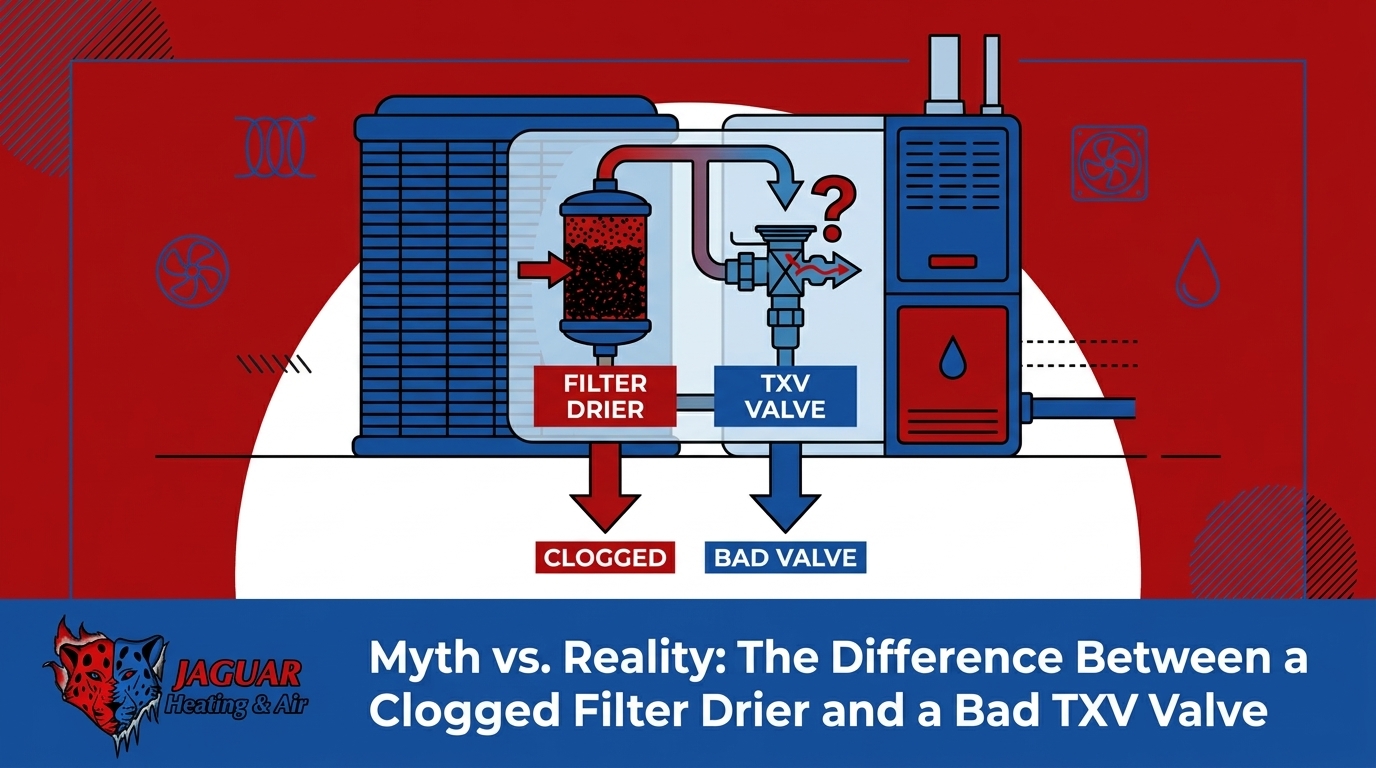
The Difference Between a Clogged Filter Drier and a Bad TXV Valve
An AC that blows warm air isn't always leaking refrigerant—it might be suffering from a flow restriction. Find out how technicians trace the bottleneck to restore your cooling.