.avif)
Duct Cleaning Is the Secret to a Mold Free Home
Why Mold-Free Air Starts With What's Inside Your Ducts How clean ducts reduce mold risk in your home comes down to three things: removing the organic debris …
Why Mold-Free Air Starts With What's Inside Your Ducts How clean ducts reduce mold risk in your home comes down to three things: removing the organic debris …

Why Mold-Free Air Starts With What's Inside Your Ducts
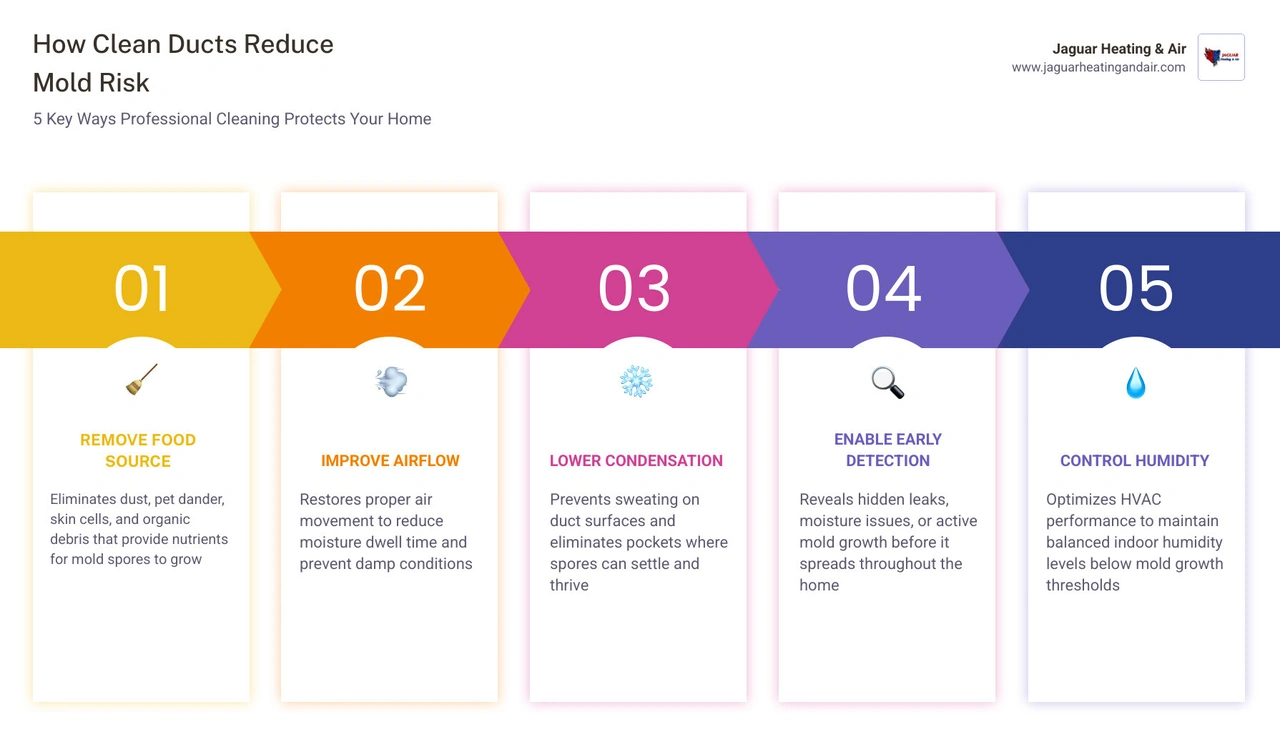
How clean ducts reduce mold risk in your home comes down to three things: removing the organic debris mold feeds on, restoring airflow that dries out moisture, and giving professionals a chance to spot hidden problems before they spread.
Quick answer: How clean ducts reduce mold risk
1. Remove the food source - Dust, pet dander, and skin cells trapped in ducts give mold colonies the organic material they need to grow
2. Improve airflow - Clean ducts restore proper air movement, reducing the moisture "dwell time" that mold depends on
3. Lower condensation - Better airflow means less sweating on duct surfaces and fewer damp pockets where spores can settle
4. Enable early detection - Professional cleaning reveals hidden moisture issues, leaks, or active growth before it becomes a whole-home problem
5. Control humidity passively - A well-functioning duct system helps your HVAC regulate indoor humidity more effectively
Most Sacramento homeowners never think about their air ducts — until they notice a musty smell every time the AC kicks on. That odor is a warning. It often means mold spores are hitching a ride through your ventilation system and spreading to every room in the house.
Your HVAC system runs through dark, enclosed spaces where dust collects and moisture can linger. That combination — organic debris plus warmth plus moisture — is exactly what mold needs to thrive. And because ducts are hidden, a contamination problem can grow for months before anyone notices.
The good news is that keeping your ducts clean directly disrupts that cycle. This guide walks you through exactly how, and what you can do about it.
The Science of Spores: Why Mold Grows in HVAC Systems
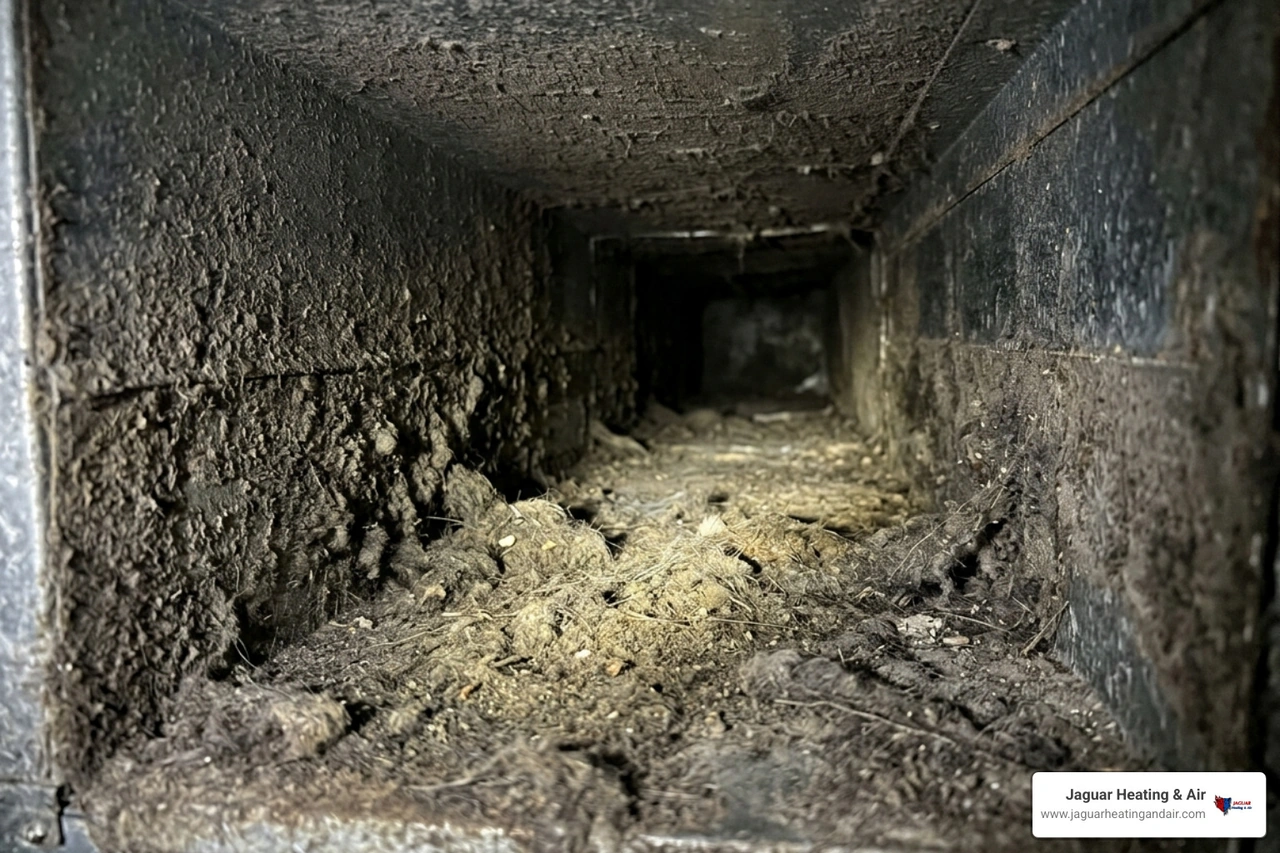
To understand how clean ducts reduce mold risk in your home, we first have to look at what makes your ventilation system such a tempting target for microbial growth. Mold isn't just a "dirt" problem; it is a biological process that requires a specific trifecta of conditions to thrive.
Inside an HVAC system, mold spores find a sanctuary that is dark, often damp, and filled with a buffet of organic material. These spores enter our homes through open windows, doors, or even on our clothing. Once they find their way into the ductwork, they look for a place to anchor.
The Three Pillars of Mold Growth
Mold requires three primary conditions to establish a colony inside your HVAC system:
1. Moisture: This is the most critical factor. It can come from high indoor humidity, condensation on cooling coils, or localized leaks.
2. Warmth: HVAC systems, especially during the transition between heating and cooling seasons, provide the perfect temperature range for mold to germinate.
3. Organic Material (Food): Mold cannot grow on bare sheet metal. However, it feeds voraciously on the accumulation of dust, pet dander, skin cells, and textile fibers that settle in your ducts over time.
When these three elements meet, mold can establish itself in as little as 24 to 48 hours. This is why addressing the Health Risks Associated Dirty Ductwork Lincoln CA is so important for families in our region.
The Role of Stagnant Air and Humidity
In Northern California, we often deal with fluctuating humidity. If indoor humidity levels exceed 60%, it creates an environment where black mold (Stachybotrys chartarum) can actively flourish. Stagnant air pockets caused by clogged filters or blocked vents allow moisture to linger, giving spores the "dwell time" they need to bond with organic debris.
• Humidity Level — Mold-Friendly Environment: Above 60% — Mold-Resistant Environment: Below 50%
• Airflow — Mold-Friendly Environment: Restricted/Stagnant — Mold-Resistant Environment: Consistent/High Velocity
• Duct Surfaces — Mold-Friendly Environment: Dusty with organic debris — Mold-Resistant Environment: Clean and debris-free
• Maintenance — Mold-Friendly Environment: Neglected for 5+ years — Mold-Resistant Environment: Cleaned every 3 to 5 years
• Filtration — Mold-Friendly Environment: Clogged or low-MERV filters — Mold-Resistant Environment: High-efficiency (MERV 13+)
How Clean Ducts Reduce Mold Risk in Your Home
As Sacramento HVAC experts, we see how professional maintenance acts as a proactive defense. How clean ducts reduce mold risk in your home is primarily through the physical removal of the "anchors" mold uses to grow.
When we perform a Duct Cleaning Sacramento CA, we aren't just vacuuming out dust. We are restoring the mechanical integrity of your air distribution system. By clearing out the obstructions, we ensure that air moves at the designed velocity. High-velocity airflow helps moisture evaporate quickly rather than sitting in the ducts and "sweating."
Furthermore, a clean system operates more efficiently. When your cooling coils and blower motors are free of debris, they can regulate humidity much better. This reduces the overall moisture load on the system, which is the "secret sauce" to a mold-free environment. For a deeper dive into this process, check out Is Your Home Breathing Easy The Ultimate Guide to Duct Cleaning.
How clean ducts reduce mold risk in your home by eliminating organic debris
Think of the dust in your ducts as "biological fuel." This mixture of skin cells, pet hair, and microscopic plant particles is exactly what mold spores need to eat. Without this organic layer, mold has a very difficult time surviving on the inorganic surfaces of metal ductwork.
By stripping away this nutrient layer, we effectively "starve" any spores that might enter the system. This is a key part of The Science of Sneezing How Duct Cleaning Clears the Air, as it removes the irritants that trigger both allergies and microbial growth.
How clean ducts reduce mold risk in your home through improved airflow
Poor airflow is a mold's best friend. When dust builds up, it creates friction that slows down the air. This causes "vapor pressure" issues where moisture in the air is more likely to condense into liquid water.
Clean ducts ensure that the air reaches its destination quickly and that the cooling coils can do their job of extracting moisture from the air. If your system is struggling, you might notice "sweating" pipes or damp spots near your vents. This is one of the major Stop Choking Your AC Signs Your Ducts Need Help.
Identifying the Warning Signs of Mold in Your Ventilation
How do you know if you already have a problem? Mold is a sneaky tenant, but it usually leaves a few clues. In areas like Elk Grove and Sacramento, the most common sign is sensory.
Olfactory and Visual Clues
The first indicator is almost always a musty, earthy, or "locker room" smell (sometimes called Dirty Sock Syndrome) that becomes more intense when the fan turns on. If the smell disappears when the system is off, the source is likely inside your ducts.
Visually, you should look for:
• Black splotches or fuzzy textures on the vent covers (supply registers).
• Slimy films inside the duct boot (the area just behind the vent).
• Dust "ghosting" or streaks on the ceiling or walls around the vents.
Health Symptoms
If you or your family members experience unexplained sneezing, watery eyes, or respiratory irritation that improves when you leave the house, your HVAC system might be circulating spores. Understanding What's Causing Poor Indoor Air Quality Elk Grove CA often leads back to the hidden stretches of your ductwork.
If you suspect mold but aren't certain, a laboratory analysis can be a cost-effective next step. For approximately $50, you can send a tape sample of a suspicious substance to a microbiology lab to confirm if it is indeed mold. This takes the guesswork out of the Signs to Schedule Duct Cleaning Sacramento CA.
Professional Remediation vs. Standard Duct Cleaning
It is important to distinguish between a standard cleaning and mold remediation. A standard Duct Cleaning is a preventive maintenance task designed to remove dust and debris. However, if there is an active, widespread mold infestation, you may need remediation.
The Professional Process
At Jaguar Heating & Air, we use specialized tools like high-powered HEPA vacuums and negative pressure systems. This ensures that as we agitate the debris inside your ducts, the particles (and spores) are sucked directly into a sealed containment unit rather than being blown into your living room.
When we work in areas like Duct Cleaning West Sacramento CA, we also inspect for porous materials. This is a critical distinction:
• Hard Surfaces (Sheet Metal): These can be cleaned, sanitized, and treated with EPA-registered biocides.
• Porous Materials (Fiberglass Insulation): If fiberglass duct liner or fiberboard becomes contaminated with mold, it cannot be effectively cleaned. The spores become embedded deep in the fibers. In these cases, the contaminated insulation must be removed and replaced according to NAIMA standards.
The Root Cause Philosophy
Cleaning is only a temporary fix if you don't address why the mold grew in the first place. We look for the "root cause"—whether it's a leaking roof, a cracked condensate pan, or poor insulation that causes the ducts to "sweat." Addressing these moisture issues is critical to preventing mold recurrence.
Long-Term Prevention Strategies for Northern California Homeowners
Once your ducts are clean, how do you keep them that way? Prevention is a daily habit, not just a one-time service.
Control the Humidity
The most effective way to prevent biological growth is to keep your indoor humidity levels below 50%. In the humid mornings of the Sacramento Delta, a whole-home dehumidifier can be a game-changer. If you ever experience a leak or water spill, remember the 24-hour rule: you must dry wet areas within 24 to 48 hours to prevent mold from establishing a foothold.
Maintenance Milestones
• Filter Changes: Replace your air filters every 1 to 3 months. High-efficiency filters (MERV 13) are excellent at trapping spores before they enter the ductwork.
• Professional Inspections: Schedule a professional cleaning every 3 to 5 years to ensure optimal air quality. This is one of the top Reasons Get Ductwork Cleaned Every Year (or at least inspected) for homes with pets or allergy sufferers.
• Spring Cleaning: Many homeowners find that Why Schedule Duct Cleaning Service Spring is the best timing, as it clears out the winter's dust before the heavy AC season begins.
Frequently Asked Questions About Duct Mold
Does professional duct cleaning remove mold permanently?
Duct cleaning is a highly effective "reset button," but it is not a permanent shield. If the underlying moisture problem—such as a leak or high humidity—is not corrected, mold can return. Think of it as a partial solution that must be paired with moisture control. However, by removing the food source, you significantly How Duct Cleaning Impacts HVAC System Life Expectancy and reduce the likelihood of a major infestation.
When should contaminated duct insulation be replaced rather than cleaned?
If you have fiberglass-lined ducts or fiberboard ducting, mold is much harder to treat. Because these materials are porous, they trap spores in a way that mechanical brushing cannot reach. Following NAIMA and EPA guidelines, we recommend replacing these components if mold is visible. This prevents the Dangers of Dirty Ducts Winter Sacramento from lingering in your home for years.
Are chemical biocides recommended for use inside air ducts?
The EPA has registered several biocides specifically for use inside HVAC systems. These are generally recommended for non-porous surfaces like sheet metal to kill remaining microscopic spores after a physical cleaning. However, they should only be used by professionals who follow strict safety protocols. These treatments are part of How Make Homes Air Cleaner Duct Cleaning strategies, but they are a supplement to—not a replacement for—physical debris removal.
Conclusion
At Jaguar Heating & Air, we believe that every Sacramento family deserves to breathe clean, healthy air. How clean ducts reduce mold risk in your home is a science, but our approach is simple: we remove the food, restore the airflow, and fix the moisture.
As a family-owned company and Trane Comfort Specialist, we bring NATE-certified expertise to every home in Elk Grove, Rocklin, Roseville, and beyond. We don't just "blow and go"—we provide comprehensive indoor air quality solutions that keep your home comfortable and your air pure.
Don't let hidden mold compromise your family's health. Schedule your professional indoor air quality assessment today and experience the dependable comfort that comes with a truly clean HVAC system.
Recent Posts
Fall Home Maintenance Tips and Troubleshooting
Smelling burning dust during your first fall heating cycle? See what is normal versus a safety risk with our home maintenance tips and troubleshooting.

Navigating the October Heating Startup: A Guide to Fall HVAC Maintenance
Is your first fall heating startup causing strange odors? Rely on our local service expertise and area tips to know when to call a pro on this in Sacramento.

Why Your Furnace Smells Like Burning Dust: Essential HVAC Maintenance Questions Answered
Smelling burning dust this fall? Have common homeowner questions answered about your furnace. Decide with confidence on when to call a pro before winter.