.avif)
How Energy Audits Identify Insulation and Duct Problems
Why Understanding How Energy Audits Identify Insulation and Duct Problems Can Save Sacramento Homeowners Real Money How energy audits identify insulation and…
Why Understanding How Energy Audits Identify Insulation and Duct Problems Can Save Sacramento Homeowners Real Money How energy audits identify insulation and…

Why Understanding How Energy Audits Identify Insulation and Duct Problems Can Save Sacramento Homeowners Real Money
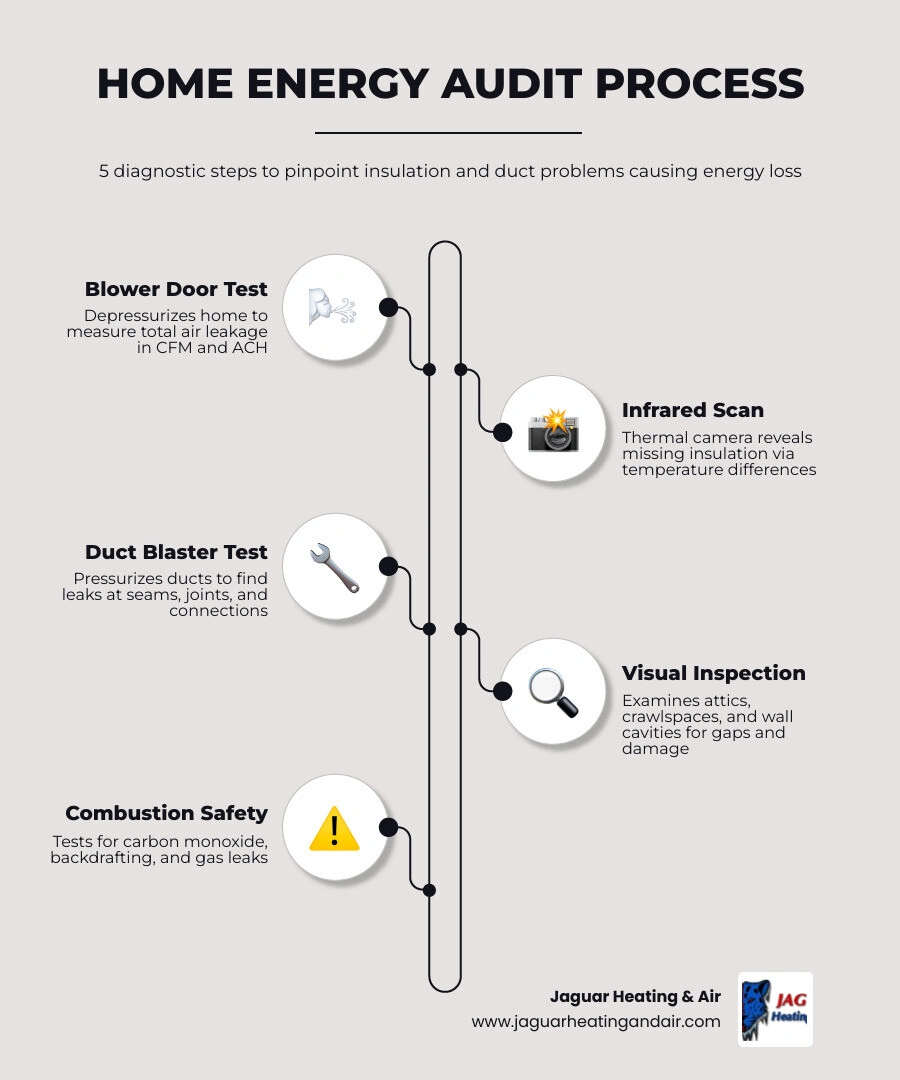
How energy audits identify insulation and duct problems comes down to a systematic process where trained professionals use specialized diagnostic tools to find exactly where your home is losing conditioned air and wasting energy.
Here is a quick breakdown of how it works:
• Blower door test - depressurizes your home to measure total air leakage in cubic feet per minute (CFM) or air changes per hour (ACH)
• Infrared thermography - a thermal camera scans walls, ceilings, and floors to reveal missing or damaged insulation by detecting temperature differences
• Duct blaster test - pressurizes your duct system to pinpoint leaks at seams, joints, and connections in unconditioned spaces
• Visual inspection - auditors physically examine attics, crawlspaces, and accessible wall cavities for obvious insulation gaps, damaged ducts, or soot streaks
• Combustion safety testing - checks for carbon monoxide, backdrafting, and gas leaks before and during testing
If your Sacramento-area home has rooms that never seem to cool down in summer or stay warm in winter, or your energy bills keep climbing for no obvious reason, a professional energy audit can pinpoint the exact cause. Older homes in the region use significantly more energy per square foot than newer construction, and air leakage alone can account for up to 30% of wasted energy costs when left unaddressed.
The good news is that once an auditor identifies the problems, fixes are often more straightforward and affordable than homeowners expect.
How energy audits identify insulation and duct problems further reading:
• energy saving audit benefits for homeowners
• is a home energy audit worth it
• what happens during a home energy audit
What is a Professional Energy Audit vs. a DIY Assessment?
When homeowners in Sacramento or Elk Grove notice their heating and cooling costs spiking, they often start with a basic do-it-yourself walk-through. A DIY assessment usually involves checking for obvious drafts around windows, feeling for cold air beneath exterior doors, and taking a quick peek in the attic to see if the insulation looks thin. While these visual checks are a great starting point for home maintenance, they barely scratch the surface of your home's actual thermal performance.
A DIY check-up is limited by what the human eye can see. You cannot feel a microscopic leak in a buried duct joint behind a wall, nor can you accurately gauge if your attic insulation has degraded or settled unevenly over the years.
In contrast, a professional HVAC energy audit is a comprehensive, scientific evaluation of your entire home as an integrated system. When we perform an audit, we bring advanced diagnostic equipment to measure exactly how tight your home's envelope is and where it is failing. We don't guess; we gather hard data. We look at past utility bills to establish baseline energy consumption, evaluate the efficiency of your heating and cooling equipment, and run physical diagnostic tests.
If you are wondering, is a home energy audit worth it for your property, consider the sheer depth of a professional assessment. A professional auditor evaluates the alignment between your home's pressure boundary and its thermal boundary. When those two boundaries do not match up, your HVAC system has to work twice as hard to keep you comfortable.
By analyzing real-world data, an audit takes the guesswork out of home improvements. If you find your energy bills too high in Elk Grove, CA, consider an energy audit to reveal the hidden drafts and system inefficiencies that are quietly draining your wallet. To understand the full scope of this service, you can read more about what happens during a home energy audit and how our technicians inspect every nook and cranny of your living space.
How Energy Audits Identify Insulation and Duct Problems Using Advanced Tools
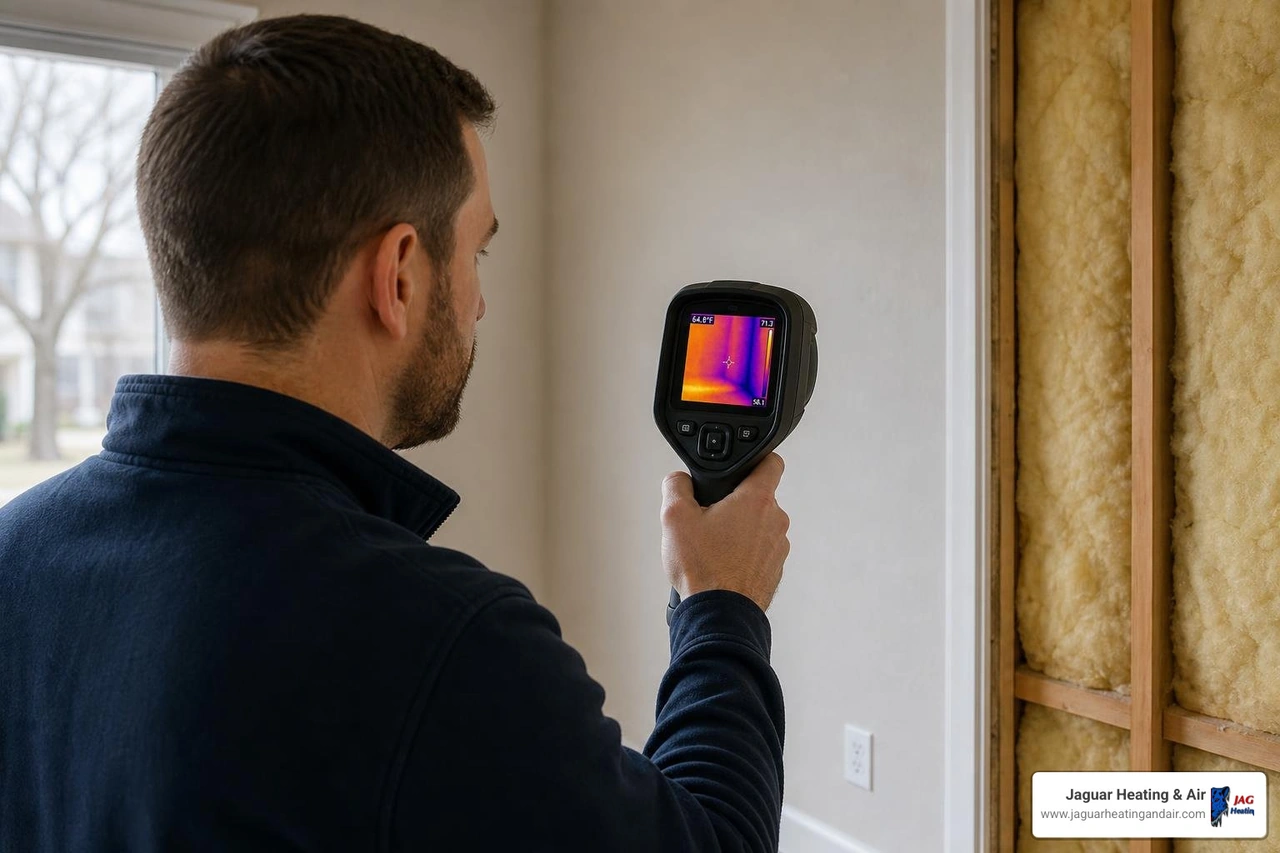
To truly understand how energy audits identify insulation and duct problems, we have to look at the advanced diagnostic tools used during the process. These high-tech devices make the invisible visible, showing us exactly where heated or cooled air is escaping your living spaces.
By utilizing these specialized tools, we can uncover hidden savings and improve your home’s overall sustainability. If you want to explore the benefits of these diagnostics, read about the bright side of energy audits to uncover savings and sustainability. Scheduling these tests early in the year is also an excellent way to start the year off right with an energy savings audit.
Blower Door Testing and Air Leakage Measurement
The cornerstone of any professional energy audit is the blower door test. This test involves mounting a powerful, calibrated fan into the frame of an exterior door. The fan pulls air out of the house, lowering the indoor air pressure and forcing outside air to rush in through every crack, gap, and unsealed opening in the home's structure.
As the fan depressurizes the building, the auditor uses a digital manometer to measure the air pressure difference between the inside and outside. This measurement allows us to calculate two key metrics:
• Cubic Feet per Minute (CFM): The volume of air flowing through the fan, which corresponds directly to the total size of all the air leaks combined.
• Air Changes per Hour (ACH): The number of times the entire volume of air inside your home is replaced by outdoor air in one hour.
A high ACH indicates a drafty, inefficient home where your conditioned air escapes far too quickly, forcing your HVAC system to run constantly.
Infrared Thermography for Insulation Gaps
While the blower door fan is running and depressurizing the home, the auditor will walk through your rooms with an infrared (thermal imaging) camera. Because the blower door is actively pulling outside air through any hidden gaps, the temperature differences around those gaps become highly pronounced.
An infrared camera detects heat transfer and displays it as a color-coded visual map.
• In the winter, cold outdoor air leaking into a warm room appears as dark blue or purple streaks on the screen.
• In the summer, hot Sacramento air radiating through uninsulated wall cavities shows up as bright red or orange hot spots.
This tool allows us to evaluate the actual performance and R-value of your insulation without tearing down drywall. We can instantly spot if insulation batts have slumped inside the walls, if blown-in cellulose was missed at the tops of stud bays, or if an attic knee wall was left completely bare.
Duct Blaster Testing for Air Distribution Leaks
While a blower door test measures leaks in your home's outer shell, a duct blaster test focuses entirely on your heating and cooling distribution system. Your ductwork is responsible for carrying conditioned air to every room, but if those ducts are leaky, you are paying to heat or cool unconditioned areas like your attic or crawlspace.
To perform this test, we seal off all your supply registers and return grilles. We then connect a smaller diagnostic fan (the duct blaster) directly to your duct system, usually at the main return grille or the air handler. The fan pressurizes or depressurizes the ductwork to a standard test pressure, and a gauge measures the amount of air required to maintain that pressure.
If your ducts are tightly sealed, very little air is needed. If there are major disconnects or leaky seams, the fan has to work hard to maintain pressure, revealing the exact percentage of air loss. When ducts leak, they restrict airflow to your living spaces. If you notice uneven temperatures, it might be time to look for signs your ducts need help and stop choking your AC. Proper airflow is crucial for comfort, which is why even airflow matters in Folsom, CA and surrounding areas.
Common Insulation and Ductwork Issues Uncovered During Audits
Throughout Sacramento, Roseville, and Folsom, we see the same common structural deficiencies time and time again. Homes built several decades ago simply weren't held to the same strict energy standards we have today. When we perform audits, we frequently uncover issues that explain why homes have inconsistent airflow and why some rooms feel like a sauna while others feel like an icebox.
Furthermore, leaky ducts pull in dust, pollen, and pests from attics and crawlspaces. To understand the full impact of these leaks on your HVAC performance, read about how dirty ductwork decreases HVAC efficiency in Rocklin, CA.
Understanding How Energy Audits Identify Insulation and Duct Problems in Attics and Crawlspaces
The attic is almost always the largest source of energy loss in a home. During an audit, we pay close attention to the attic floor and the floor of crawlspaces. Common issues we find include:
• Unsealed Attic Hatches: An uninsulated, unsealed attic access door acts like an open chimney, letting warm air escape directly into the attic.
• Leaky Rim Joists: In crawlspaces and basements, the rim joist is a major source of outdoor air infiltration if it is not sealed with spray foam.
• Missing or Damaged Vapor Barriers: Without a proper vapor barrier, moisture from the earth can rise into your crawlspace, damaging floor insulation and creating mold risks.
• Soot-Streaked Insulation: When we see dark, dirty streaks on fiberglass insulation batts, it means the insulation is acting as a giant air filter. Those soot streaks are proof that drafts are pulling dirty attic air straight through the insulation and into your home's framing cavities.
How Energy Audits Identify Insulation and Duct Problems Behind Walls and Ceilings
Many of the worst insulation gaps are hidden completely out of sight behind your plaster or drywall. An energy audit easily exposes these trouble spots:
• Plumbing and Electrical Chases: Large holes are cut into wall framing during construction to run pipes and wires. If these chases aren't sealed at the top and bottom plates, they create a direct pathway for air to bypass your insulation.
• Drafty Electrical Outlets: Outlets on exterior walls often leak air because the drywall cutout around the electrical box is left unsealed.
• Empty Wall Cavities: It is surprisingly common to find entire sections of exterior walls where insulation was completely missed during construction or slipped down over time.
• Uninsulated Knee Walls: In homes with finished attics or bonus rooms, the short vertical walls (knee walls) that separate the living space from the attic space are rarely insulated or air-sealed correctly, leading to massive heat transfer.
Safety Protocols and Combustion Testing During an Audit
While saving money on utility bills is a major benefit of an energy audit, occupant safety is always our absolute top priority. When we seal up a home to make it more energy-efficient, we must ensure we aren't accidentally trapping toxic gases or creating a hazardous living environment. This is why professional audits always include rigorous safety testing.
Before we turn on a blower door fan to depressurize your home, we must perform safety checks on all atmospherically vented combustion appliances (such as gas water heaters, furnaces, and stoves) located within the Combustion Appliance Zone (CAZ).
• Carbon Monoxide (CO) Testing: We use sensitive digital detectors to measure CO levels in the ambient air and within appliance exhaust flues to verify they are operating safely.
• Backdrafting Evaluation: Under normal conditions, combustion exhaust rises naturally up the flue and exits your home. However, if a home is sealed too tightly, exhaust fans (like bath fans or range hoods) can compete with combustion appliances for air. This can cause a dangerous reverse flow, pulling carbon monoxide and combustion gases backward down the chimney and into your living spaces. We perform "worst-case depressurization" tests to ensure backdrafting will not occur.
• Gas Leak Detection: We inspect accessible natural gas and propane lines using combustible gas detectors to identify any active fuel leaks.
• Asbestos and Hazardous Materials Inspection: If an auditor spots suspected asbestos insulation (such as vermiculite in the attic or transite pipes) or crumbling lead paint, they will halt pressurization tests. Running a blower door fan in a home with loose asbestos fibers could pull those hazardous particles directly into your indoor air.
Ensuring your combustion appliances vent safely is particularly critical during the colder months when heating systems run continuously. To protect your family, be sure to review the dangers of dirty ducts in winter in Sacramento and keep your air distribution system safe and clean.
Translating Audit Findings into Prioritized Home Upgrades
Once the physical testing is complete, the auditor compiles all the measurements, thermal images, and visual findings into a comprehensive report. Rather than handing you a random list of expensive repairs, a high-quality audit translates these findings into a prioritized, step-by-step roadmap for home improvements.
We categorize recommendations based on their cost-effectiveness, safety impact, and return on investment. The table below outlines how common audit findings translate into practical, high-value upgrades:
• Major Air Leaks — Diagnostic Proof: High CFM/ACH on Blower Door; drafts seen on thermal camera — Prioritized Recommendation: Professional air sealing (caulking, expanding foam in chases, weather-stripping) — Expected Benefit: Up to 10% to 20% savings on annual energy bills; immediate draft reduction
• Leaky, Disconnected Ducts — Diagnostic Proof: High duct leakage percentage on Duct Blaster test — Prioritized Recommendation: Professional duct sealing and repair — Expected Benefit: Eliminates hot/cold spots; stops HVAC from wasting conditioned air in the attic
• Thin or Missing Attic Insulation — Diagnostic Proof: Low R-value observed during attic inspection — Prioritized Recommendation: Blown-in cellulose or fiberglass upgrade to at least R-30 or R-49 — Expected Benefit: Keeps heat inside during winter and blocks radiant heat in summer
• Dirty, Obstructed Ductwork — Diagnostic Proof: Visual inspection showing heavy dust and debris — Prioritized Recommendation: Professional duct cleaning — Expected Benefit: Restores system airflow, reduces strain on HVAC motors, and extends system life
• Combustion Safety Hazard — Diagnostic Proof: Failing CO test or backdrafting under worst-case test — Prioritized Recommendation: Immediate repair or replacement of vented gas appliances — Expected Benefit: Protects occupants from carbon monoxide poisoning and fire hazards
To maximize your comfort and savings, it is always wise to schedule an energy savings audit before turning on your heater for the winter. Furthermore, if the audit reveals leaky, dust-filled ducts, understanding the importance of residential duct cleaning can help you restore clean, efficient airflow to your entire home.
Frequently Asked Questions About Home Energy Audits
How often should I schedule a professional energy audit?
For most homeowners in the Sacramento area, we recommend scheduling a professional energy audit every 3 to 5 years. However, certain triggers should prompt you to schedule an audit sooner:
• You notice a sudden, unexplained spike in your monthly utility bills.
• You are planning a major home renovation, home addition, or converting attic space.
• You are preparing to replace your heating and air conditioning system (an audit provides the exact heating and cooling load calculations needed to size your new system perfectly).
• You have recently moved into an older home and want to establish an efficiency baseline.
Can a home energy audit help improve my indoor air quality?
Yes, absolutely! How energy audits identify insulation and duct problems is directly linked to your indoor air quality. When your ductwork has leaks, it acts like a vacuum, pulling in fiberglass particles, insulation dust, mold spores, and outdoor allergens from your attic or crawlspace and blowing them into your bedrooms and living areas.
By pinpointing these duct leaks and sealing them, you stop this cycle of contamination. If you want to keep your family healthy and breathing easy, sealing your system and learning how clean ducts reduce mold risk in your home is a great place to start. For a deeper look into how professional cleaning clears out trapped allergens, read about the science of sneezing and how duct cleaning clears the air.
What should I do to prepare my home for an energy auditor?
To get the most accurate results and help the audit go smoothly, you can take a few simple preparation steps:
• Gather Utility Bills: Have at least 12 to 24 months of your gas and electric bills ready for the auditor to analyze.
• Clear Access Paths: Ensure the auditor has clear, unobstructed access to your attic hatch, crawlspace entry, electrical panel, and all HVAC equipment.
• Prepare the Fireplace: If you have a wood-burning fireplace, clean out any cold ashes so the blower door fan doesn't pull soot into your living room.
• Keep Interior Doors Open: During the blower door test, all interior doors should be open to allow air to flow freely throughout the house.
Conclusion
At Jaguar Heating & Air, we are proud to be Sacramento's trusted, family-owned HVAC experts. As a Trane Comfort Specialist with NATE-certified technicians, we are dedicated to helping our neighbors in Sacramento, Elk Grove, Folsom, Roseville, Rocklin, and surrounding communities achieve dependable, year-round comfort.
Now that you know how energy audits identify insulation and duct problems, you don't have to suffer through uneven room temperatures or sky-high utility bills. Let our experienced team pinpoint the exact source of your home's energy loss and provide you with clear, cost-effective solutions.
Are you ready to stop wasting energy and start enjoying a more comfortable, efficient home? Schedule your professional energy audit with Jaguar Heating & Air today!
Recent Posts

Fall HVAC Maintenance Troubleshooting: Decoding Furnace Startup Smells and Sounds
Is that burning dust smell normal? See what happens inside your system during fall startup and find home maintenance tips and troubleshooting to stay safe.

A Proactive Seasonal Home Maintenance Checklist for HVAC Systems
Why we prioritize October heating inspections. Use this seasonal home maintenance checklist to prevent sudden furnace failures. Schedule your checkup today.

HVAC Maintenance & Replacement Options: Heat Pumps vs. Gas Furnaces in Sacramento
Deciding on a new heater? Review these options comparisons for homeowners to evaluate heat pumps vs. gas furnaces. Compare your system options before winter.