.avif)
How to Handle Emergency HVAC Repair in Sacramento
When Your HVAC Fails in Sacramento: What to Do Right Now The most important emergency HVAC repair tips for the Sacramento area homeowners come down to one qu…
When Your HVAC Fails in Sacramento: What to Do Right Now The most important emergency HVAC repair tips for the Sacramento area homeowners come down to one qu…

When Your HVAC Fails in Sacramento: What to Do Right Now
The most important emergency HVAC repair tips for the Sacramento area homeowners come down to one question: is your family safe right now, and does the problem need fixing within hours — not days?
Here is a quick-reference guide to help you decide:
Is this a true HVAC emergency?
1. Yes — act immediately if you smell gas, burning plastic, or see sparks near your system
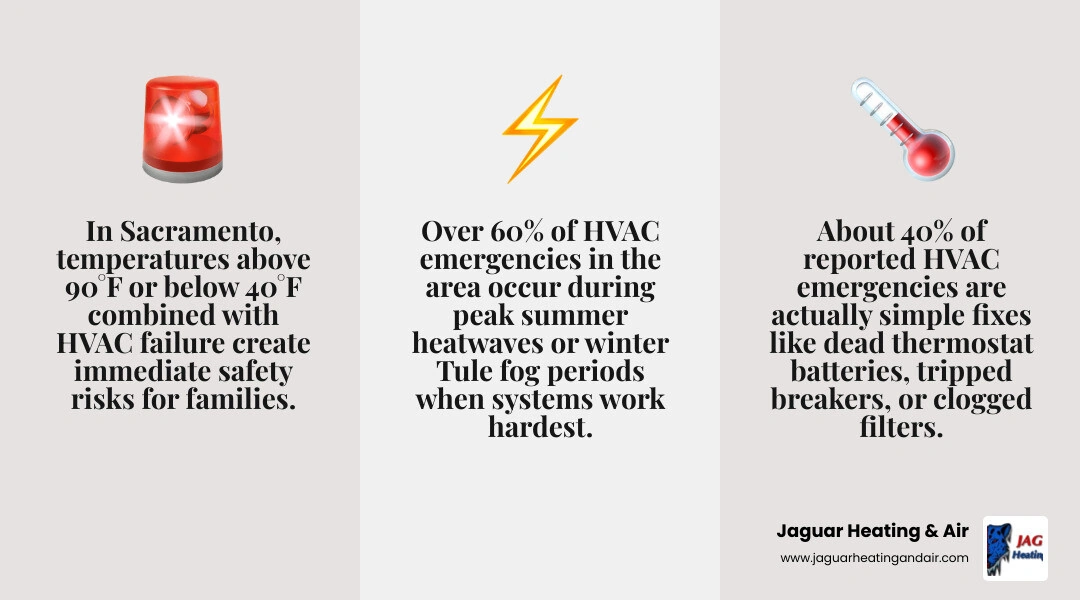
2. Yes — call now if outdoor temps are above 90°F or below 40°F and your system has completely stopped working
3. Yes — evacuate first if a carbon monoxide alarm is sounding — then call 911 from outside
4. Maybe — check first if the system is blowing weak air, short-cycling, or making unusual noises
5. Likely not urgent if the weather is mild and you have no safety concerns — schedule a standard repair visit
Sacramento's climate is unforgiving. Summers regularly push past 105°F, and the Sacramento Valley's Delta breeze creates rapid temperature swings that put serious stress on HVAC components. Winters bring Tule fog that drives up moisture levels, corroding ignition parts and icing heat pump coils. It is no surprise that over 60% of HVAC emergencies happen during peak summer or winter — exactly when your system is working hardest.
The good news? Roughly 40% of reported HVAC emergencies turn out to be simple fixes — a dead thermostat battery, a tripped breaker, or a clogged filter. Knowing the difference between a quick DIY check and a true emergency can save you time, stress, and money.
This guide walks you through everything Sacramento homeowners need to know — from recognizing a real emergency to staying safe while you wait for a technician.
Essential emergency hvac repair tips for the sacramento area homeowners terms:
• how to prevent hvac emergencies with maintenance
• how to stay safe during a heating or cooling emergency
• what to do when your hvac breaks down unexpectedly
Essential Emergency HVAC Repair Tips for the Sacramento Area Homeowners to Keep Safe
When your heating or cooling system fails, your first instinct might be to panic or immediately try to fix it yourself. However, safety must always come first. HVAC systems pull more electricity than almost any other appliance in your home, and gas-powered furnaces carry inherent risks of carbon monoxide leaks or combustion issues.
Knowing How to Stay Safe During a Heating or Cooling Emergency is the absolute priority for every household. If you experience any of the following warning signs, take immediate action:
• Gas Leaks (The "Rotten Egg" Smell): Natural gas is naturally odorless, but utilities add a chemical called mercaptan to give it a distinctive sulfur or rotten egg smell. If you detect this odor near your furnace or anywhere in your home, do not attempt to turn off the HVAC system, flip any light switches, or use your phone inside. These actions can create a tiny spark capable of igniting the gas. Evacuate everyone (including pets) immediately, move a safe distance away, and call 911 or PG&E. Only call an HVAC technician after emergency services have declared the home safe.
• Burning Smells and Odors: A faint dusty smell when you first turn your furnace on in the fall is normal. However, a strong smell of burning plastic, ozone, or gunpowder indicates electrical components are overheating or melting. If you notice these smells, turn off the system immediately at the thermostat and the circuit breaker.
• Unusual or Scary Noises: Loud screeching, grinding metal, or heavy rattling sounds mean mechanical parts are failing. Running a system with a broken blower wheel or failed motor can cause catastrophic damage to the entire unit. Shut it down right away.
• Electrical Hazards: If your HVAC system is repeatedly tripping your circuit breaker, do not keep resetting it. This is a safety mechanism designed to prevent electrical fires. A tripped breaker usually means there is a short circuit, a failing capacitor, or an overloaded compressor drawing too much current.
How Sacramento’s Extreme Climate Dictates HVAC Urgency
Sacramento Valley weather is beautiful, but it places unique, heavy demands on home comfort systems. Our region experiences intense seasonal contrasts. In July and August, temperatures frequently climb past 100°F—sometimes staying there for days during prolonged heatwaves. In the winter, overnight temperatures can drop near freezing, accompanied by the heavy, damp Tule fog that settles over cities like Woodland, Rancho Cordova, and Elk Grove.
Understanding When an HVAC Failure is a True Emergency requires looking at how these outdoor extremes impact your indoor environment. During a 105°F summer afternoon, a home without air conditioning can see indoor temperatures rise past 90°F in just a few hours. Because of the home's thermal mass, heat radiates from the walls and attic, sometimes pushing indoor temperatures 10 to 15 degrees higher than the outside temperature, occasionally reaching a dangerous 120°F.
Conversely, winter dampness and cold put massive pressure on gas furnaces and heat pumps. When your system runs continuously for 12 or more hours to combat these extremes, minor wear and tear quickly escalates into a complete mechanical breakdown.
Weather Thresholds and Emergency HVAC Repair Tips for the Sacramento Area Homeowners
To help local families stay safe, we use a simple metric known as the 40/90 Rule to determine when a breakdown requires Emergency Heating Repair in Sacramento CA or immediate emergency cooling assistance:
• The 90-Degree Rule (Summer): If the outdoor temperature is 90°F or higher, a complete loss of cooling is a true emergency—especially if your household includes infants, elderly family members, pregnant individuals, or anyone with chronic respiratory or cardiovascular conditions. High indoor heat can rapidly lead to heat exhaustion or heat stroke.
• The 40-Degree Rule (Winter): If the outdoor temperature drops below 40°F, a complete loss of heating is an emergency. While a home's insulation can protect it for about 8 to 12 hours, prolonged exposure to freezing or near-freezing temperatures can lead to hypothermia for vulnerable occupants and increases the risk of frozen or burst plumbing pipes.
If your system breaks down during these extreme weather windows, do not wait. Reach out for professional emergency service to protect your loved ones and your property.
Troubleshooting Steps Before Calling a Professional
When your heating or cooling stops working unexpectedly, it is easy to feel overwhelmed. However, before you call for emergency dispatch, taking a few minutes to run through basic checks can save you from paying for an emergency service call on a simple issue.
Knowing What to Do When Your HVAC Breaks Down Unexpectedly allows you to systematically rule out minor power and setting glitches before calling in the professionals.
Simple Diagnostics and Emergency HVAC Repair Tips for the Sacramento Area Homeowners
Review this quick checklist to see if your issue is a simple fix or a true mechanical failure. Recognizing these Signs Your AC Needs Repair can help you communicate clearly with our dispatch team:
1. Check the Thermostat Batteries and Settings: Did you know that roughly 40% of HVAC emergencies actually start with thermostat malfunctions? If your thermostat screen is blank, replace the batteries first. Next, verify that the system is set to the correct mode ("Cool" for summer, "Heat" for winter) and that the fan setting is on "Auto" rather than "On" (which runs the fan continuously even when the system isn't heating or cooling).
2. Inspect the Indoor and Outdoor Power Switches: HVAC systems have dedicated power switches that look like standard light switches. The indoor switch is usually located near your furnace or indoor air handler (often in a closet, garage, or attic), and it can easily be flipped off by accident. Additionally, check the outdoor disconnect box near your condenser unit to ensure the outdoor switch is fully engaged.
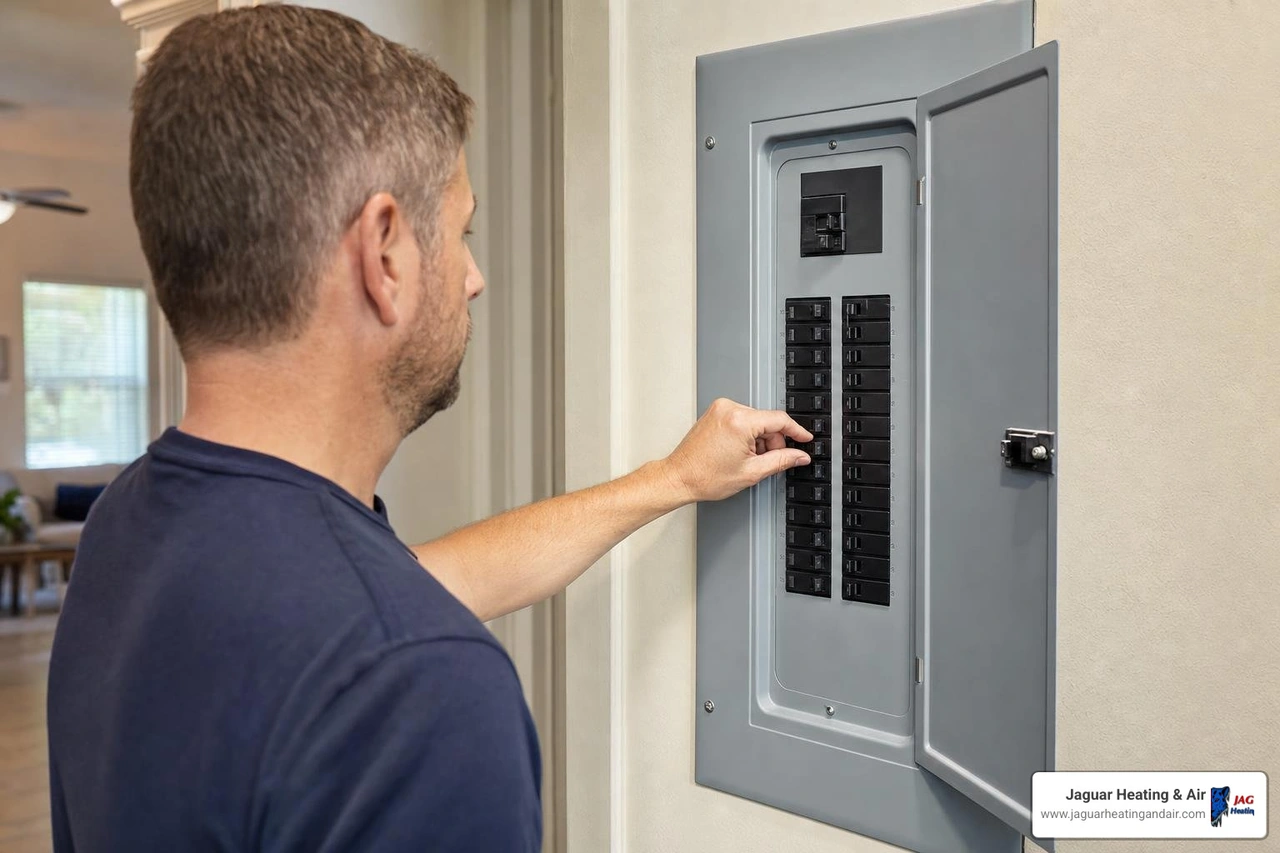
3. Examine the Circuit Breaker Panel: Locate your main electrical panel and check for any tripped breakers labeled "AC," "Furnace," or "HVAC." If a breaker is tripped, flip it completely to the "Off" position first, then back to "On." Note: If the breaker trips again immediately, do not attempt to reset it a second time. This indicates a serious electrical fault that requires professional attention.
4. Check Your Air Filter: A heavily clogged air filter restricts airflow so severely that it can cause your air conditioner's evaporator coil to freeze into a solid block of ice, or cause your furnace to overheat and shut down via its high-limit safety switch. If your filter looks like a thick wool blanket, replace it immediately. If your AC coil is frozen, turn the system completely off at the thermostat and let it thaw for several hours before trying to run it with a clean filter.
What to Expect During an Emergency HVAC Service Visit
If your troubleshooting steps don't resolve the issue, it’s time to call for professional backup. When you contact us for emergency assistance, our goal is to restore your home’s comfort as quickly and safely as possible.
Here is what you can expect during a typical emergency service visit:
• Rapid Dispatch and Arrival: When you call, our live dispatchers will gather critical details, including your location (whether you are in Folsom, Roseville, Rocklin, or El Dorado Hills), the symptoms your system is showing, and whether there are vulnerable individuals in your home. Our technicians are strategically located throughout the Sacramento area to ensure rapid response times.
• Fully Stocked Service Vehicles: Our "warehouse on wheels" service trucks are stocked with a wide range of high-quality, universal replacement parts. This includes common failure points like run capacitors, contactors, fan motors, flame sensors, and hot surface igniters. Because we carry these parts with us, we can complete most emergency repairs during the very first visit.
• The Diagnostic Process: Upon arrival, our NATE-certified technician will perform a comprehensive diagnostic assessment. This involves checking electrical connections, testing refrigerant pressures, inspecting safety switches, and examining the overall physical condition of your system.
• Clear Explanations and Upfront Pricing: Once the problem is identified, our technician will explain the issue in plain, everyday language—no confusing industry jargon. We will present your repair options clearly, backed by our transparent, flat-rate pricing, so you know exactly what to expect before any work begins.
• Safety Verification and Testing: After the repair is complete, we don't just pack up and leave. Our technician will perform a thorough safety check, testing carbon monoxide levels (for gas systems), verifying proper electrical draw, and measuring airflow to ensure your system is running safely and efficiently.
On average, a typical emergency repair—such as replacing a failed capacitor or clearing a clogged condensate drain line—takes between 1 and 3 hours once the technician arrives.
Preventing Future Breakdowns with Proactive Maintenance
While knowing how to handle an emergency is essential, the absolute best emergency is the one that never happens. Did you know that homeowners who invest in regular HVAC maintenance are 50% less likely to experience an unexpected emergency breakdown?
Taking a proactive approach to How to Prevent HVAC Emergencies with Maintenance keeps your system running smoothly, lowers your monthly energy bills, and extends the overall lifespan of your equipment.
We recommend scheduling professional maintenance twice a year:
• Spring AC Tune-Up: Before the summer heat spikes in places like Lincoln, Citrus Heights, or Fair Oaks, a spring check ensures your air conditioner is charged with refrigerant, electrical connections are tight, and coils are clean. Clean coils can improve system efficiency by 5% to 15%.
• Fall Furnace Tune-Up: Before the winter dampness sets in, a fall inspection focuses on safety. We inspect the heat exchanger for cracks (which can leak deadly carbon monoxide), clean the burners, and test ignition systems to ensure reliable heating when you need it most.
In addition to scheduled tune-ups, maintaining clean ductwork is a critical piece of the home comfort puzzle. Roughly 35% of heating and cooling energy is lost through leaky, dirty ductwork. If you notice excessive dust, uneven heating, or musty smells, it is wise to learn the Signs Schedule Duct Cleaning Sacramento CA. Scheduling this service, especially when you Why Schedule Duct Cleaning Service Spring, can dramatically improve your indoor air quality and reduce strain on your system.
Furthermore, local utility programs, such as SMUD (Sacramento Municipal Utility District) and PG&E, frequently offer rebates and incentives for upgrading to high-efficiency systems or installing smart thermostats. These programs make proactive system care even more affordable for Sacramento area homeowners.
Frequently Asked Questions about Sacramento HVAC Emergencies
We know that dealing with a broken heating or cooling system is stressful. Here are straightforward answers to the most common questions we receive from local homeowners.
What qualifies as a true HVAC emergency in Sacramento?
A true emergency is any situation that poses an immediate threat to your family's health, your home's safety, or your property. This is why we provide dedicated Emergency HVAC Service Sacramento CA for issues like:
• Total loss of cooling when outdoor temperatures exceed 90°F (especially with vulnerable residents home).
• Total loss of heating when outdoor temperatures drop below 40°F.
• The smell of natural gas or sulfur inside the home.
• Sparks, smoke, or strong burning electrical odors coming from your HVAC unit.
• A carbon monoxide detector sounding its alarm.
• A major water leak from your indoor unit that threatens to flood drywall or electrical panels.
How can I distinguish between reputable emergency HVAC contractors and potential scammers?
During a weather emergency, some dishonest contractors take advantage of desperate homeowners. Protect yourself by keeping these vetting tips in mind:
• Verify Licensing: Always check the contractor's license number on the California State License Board (CSLB) website. Reputable companies will proudly display their license.
• Avoid High-Pressure Sales: A trustworthy technician will diagnose your system, explain the issue, and provide repair options. If a technician pressures you into replacing your entire system immediately without giving you a written breakdown of the repair options, get a second opinion.
• Look for Local Reviews: Check online reviews from neighbors in your specific area—whether in Mather, Orangevale, or Carmichael. Consistent, positive local feedback is a great indicator of reliable service.
• Insist on Written Quotes: Never agree to work based on a verbal estimate. A reputable contractor will always provide a clear, written, itemized quote before starting any repairs.
When is it better to repair an HVAC system versus replacing it during an emergency?
Deciding whether to repair or replace your system during an emergency comes down to three main factors:
1. System Age: The average lifespan of a well-maintained heat pump or air conditioner is 15 to 20 years. If your system is over 15 years old and experiences a major component failure (like a failed compressor), investing in a replacement is often more cost-effective than a costly repair.
2. Repair History: If your system has been reliable and this is its first major breakdown, a repair is usually the best choice. However, if you find yourself calling for repairs every season, those costs add up quickly, and replacing the unit will save you money in the long run.
3. Obsolete Refrigerant: Older AC systems (typically installed before 2010) use R-22 refrigerant, which has been phased out due to environmental regulations. If your R-22 system has a major refrigerant leak, the cost of sourcing the obsolete refrigerant and repairing the leak is rarely worth the investment compared to upgrading to a modern, eco-friendly system.
Conclusion
When your heating or cooling system fails unexpectedly, you don't have to face the heat—or the cold—alone. By keeping these safety and troubleshooting tips in mind, you can protect your family and make smart, informed decisions for your home.
At Jaguar Heating & Air, we are proud to be a family-owned, trusted home comfort partner for families across Sacramento, Elk Grove, Folsom, Roseville, Rocklin, Woodland, and the surrounding communities. As a Trane Comfort Specialist with NATE-certified technicians, we are dedicated to providing same-day service, flat-rate pricing, and a 100% customer satisfaction guarantee.
If your heating system is struggling or has stopped working entirely, do not wait for the situation to get worse. Reach out to us today for fast, professional Heating Repair Services and restore your peace of mind.
Recent Posts
How Proper Refrigerant Charge Impacts Your Monthly SMUD Bill
Blaming lingering Sacramento heat for high September electricity usage? A minor 10% refrigerant undercharge forces your AC to run drastically longer, quietly multiplying your energy costs.
Why Your AC Vents Are Dripping Condensation Onto the Floor
Water pooling under your ceiling registers is a stressful surprise. Understand the physics behind sweating duct boots and know when to call a professional before drywall damage occurs.
The Financial Math of Repairing vs. Replacing a Failed Compressor
A dead compressor on an aging AC system forces a tough choice. We break down the percentage-based lifespan math so you can confidently decide between a heavy repair and a full replacement.