.avif)
Step-by-Step Guide to Heat Pump Efficiency in Hot Dry Climates
Discover if heat pumps are efficient in hot dry climates with expert tips for Sacramento Valley homes during extreme heat.
Discover if heat pumps are efficient in hot dry climates with expert tips for Sacramento Valley homes during extreme heat.

Are Heat Pumps Efficient in Hot Dry Climates? Here's What Sacramento Homeowners Need to Know
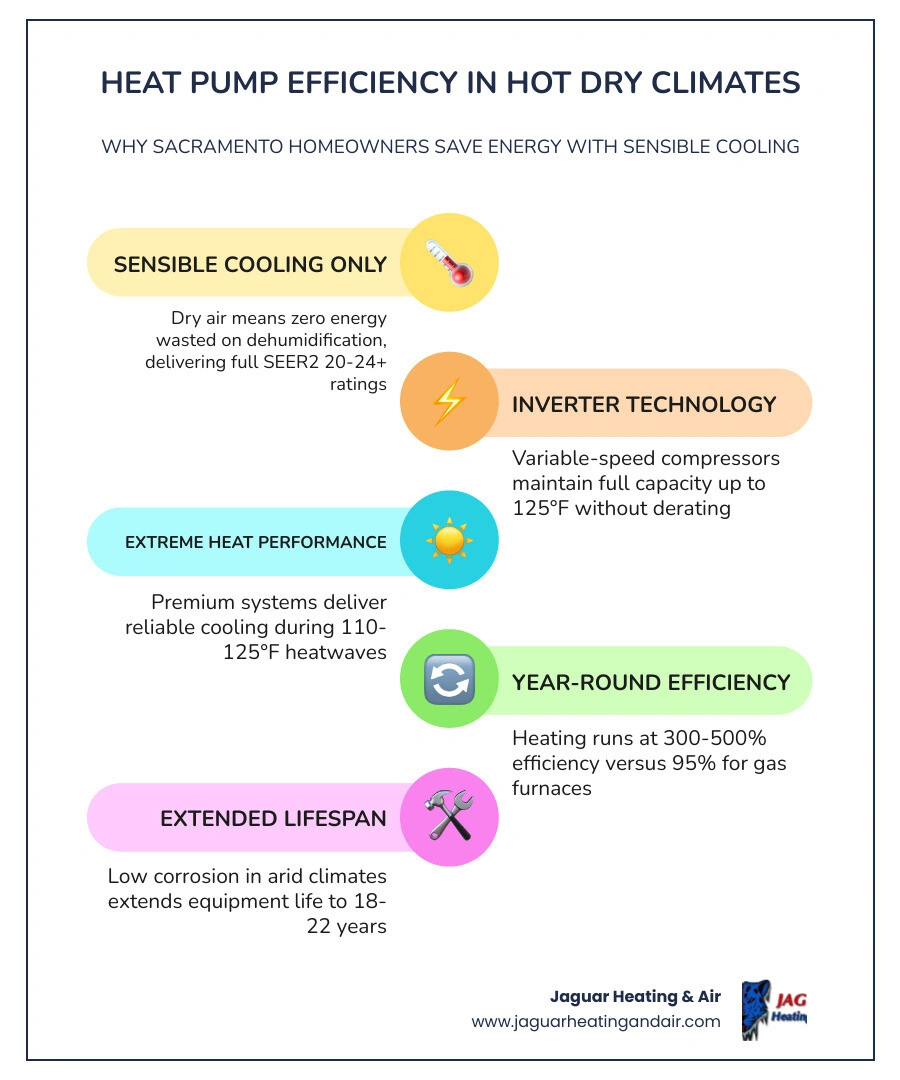
Are heat pumps efficient in hot dry climates? Yes — and in many ways, the hot, dry conditions across the Sacramento Valley actually give heat pumps a performance edge over traditional HVAC systems. Here's a quick summary:
- Cooling efficiency: Modern heat pumps reach SEER2 ratings of 20–24+ in dry climates, outperforming most traditional AC units
- Extreme heat: Premium inverter-driven systems maintain full cooling capacity up to 125°F
- Low humidity benefit: Dry air means the system focuses entirely on sensible cooling — no energy wasted on dehumidification
- Year-round efficiency: Heat pumps run at 300–500% efficiency for heating, compared to a gas furnace's 95%
- Longer lifespan: Dry climates reduce coil corrosion, extending equipment life to 18–22 years on average
Most homeowners assume heat pumps struggle in extreme heat or need humidity to work properly. Neither is true. A field study in Redding, CA — a city with a climate nearly identical to much of the Sacramento region — found that heat pump households saved up to 60% on energy costs compared to conventional electric systems. That's not a small difference. That's a system working harder and smarter in exactly the conditions many people assume would break it.
Whether you're in Sacramento, Elk Grove, Folsom, or Roseville, understanding how heat pumps actually behave in our Northern California climate can help you make a confident, informed decision about your home comfort system.
Handy are heat pumps efficient in hot dry climates terms:
- heat pump advantages over traditional hvac
- heat pump efficiency in extreme heat and mild winters
- how does a heat pump work
Are Heat Pumps Efficient in Hot Dry Climates During Extreme Heat?
When the Sacramento Valley faces triple-digit summer heatwaves, your HVAC system isn't just a luxury; it is a vital utility. A common concern among homeowners in places like Rocklin, Woodland, and Rancho Cordova is whether a heat pump can handle sustained outdoor temperatures of 110°F to 125°F.
Historically, older single-stage heat pumps struggled in extreme heat. As outdoor temperatures rise, the temperature difference between the indoor air and the outdoor air grows wider. This makes it harder for a standard compressor to release heat outside, resulting in automatic derating—where the system intentionally lowers its output to protect its internal hardware from overheating.
However, modern engineering has completely changed the game. Premium systems designed with advanced inverter technology can easily maintain full cooling capacity even when the mercury climbs to 125°F. Instead of shutting down or losing capacity, these units dynamically adjust their compressor speeds to handle the extreme thermal load.
For Northern California homeowners, this means consistent indoor comfort without the dramatic energy spikes common with older systems. Understanding these capabilities is why we often emphasize that modern systems are uniquely suited for our local conditions. You can read more about why this technology is a perfect fit for our region in our guide on Why Heat Pump Installation Perfect Californian Homeowners.
Understanding Efficiency Metrics: COP, SEER2, and EER2
To truly understand how heat pumps perform in dry, hot conditions, we have to look at the industry efficiency metrics. These ratings tell us exactly how much heating or cooling we get for every watt of electricity consumed.
- COP (Coefficient of Performance): This measures the instantaneous efficiency of a system. Modern heat pumps often achieve a COP between 3.0 and 7.0. A COP of 4.0 means that for every single unit of electricity the system consumes, it moves four units of heat. No gas furnace can ever exceed a COP of 1.0 (100% efficiency), making heat pumps vastly superior in energy transfer.
- SEER2 (Seasonal Energy Efficiency Ratio 2): This represents the cooling efficiency over an entire typical cooling season. The "2" indicates compliance with the updated, more rigorous 2023 testing standards that better replicate real-world duct static pressure.
- EER2 (Energy Efficiency Ratio 2): While SEER2 is a seasonal average, EER2 is measured at a single, high-stress operating temperature of 95°F. For hot, dry climates like ours, EER2 is actually the more critical metric because it tells us how efficient the unit is when it is baking under the mid-day sun.
In our dry climate, cooling is primarily "sensible" (lowering the actual air temperature) rather than "latent" (removing moisture from the air). Because traditional air conditioners are designed to do both, they often run less efficiently in dry climates because their coils are optimized to condense water that isn't there. Heat pumps optimized for dry climates focus almost entirely on sensible cooling, which keeps their real-world EER2 exceptionally high.
To help visualize this, we can look at how different metrics prioritize performance in dry climates:
| Metric | Testing Conditions | Relevance to Dry Climates | Ideal Target Rating |
|---|---|---|---|
| SEER2 | Seasonal average temperatures | Good overall seasonal cost indicator | 18 to 24+ |
| EER2 | Constant 95°F outdoor temp | Crucial; measures peak-load efficiency | 12 to 14+ |
| COP | Instantaneous measurement | Shows true heat-transfer multiplier | 3.0 to 7.0 |
For a deeper dive into how these metrics translate to actual home comfort during seasonal shifts, check out our article on Heat Pump Efficiency in Extreme Heat and Mild Winters.
How Variable-Speed Inverters Prevent Capacity Loss
The secret weapon of the modern heat pump is the variable-speed, inverter-driven compressor. Traditional air conditioners are either 100% "on" or 100% "off." When your home warms up, the system kicks on at full blast, cools the home rapidly, and then shuts down. This constant cycling is incredibly inefficient and places massive electrical and physical stress on the compressor.
In contrast, an inverter-driven system can scale its output anywhere from 25% to 100% capacity. It starts up slowly and runs continuously at a lower, highly efficient speed to precisely match the cooling load of the home.
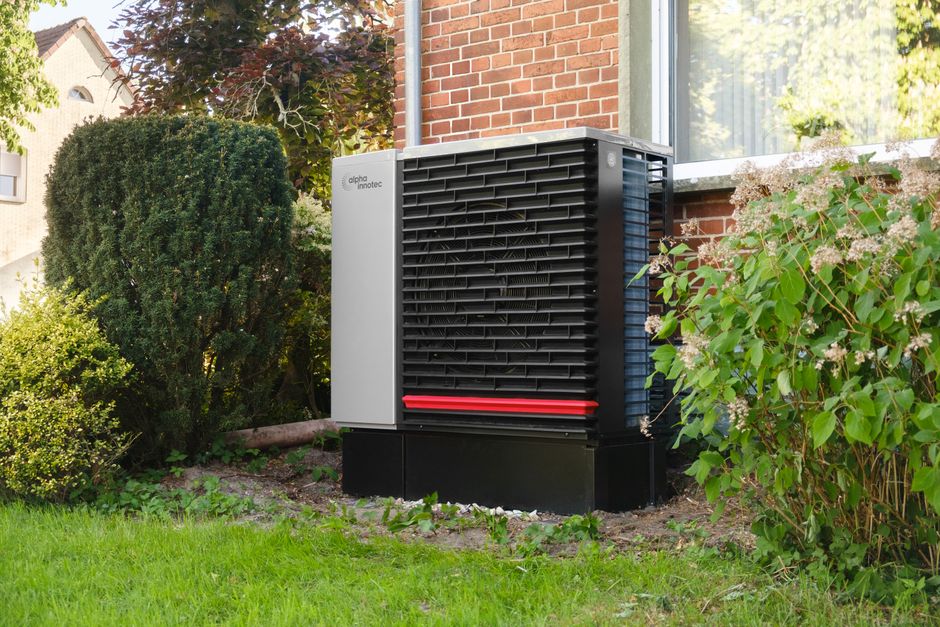
During a 115°F heatwave in Citrus Heights or Fair Oaks, a variable-speed heat pump will gently ramp up its compressor speed to maintain the exact thermostat setpoint. Because it doesn't cycle on and off, it avoids the massive inrush current spikes that inflate your utility bills, and it prevents the capacity drops that plague single-stage systems.
The Impact of Low Humidity on Heat Exchange
Low humidity is a defining characteristic of the Sacramento Valley's summer climate. Fortunately, dry air is actually a major benefit for heat pump efficiency.
In humid climates, an air conditioner must spend a massive amount of energy pulling water vapor out of the air (latent cooling) before the occupants feel a drop in temperature. In a dry climate, there is very little moisture in the air. Consequently, almost 100% of the heat pump's energy is directed toward sensible cooling—lowering the actual temperature of the air.
While it is true that extremely dry air can slightly reduce the heat-transfer rate across the outdoor evaporator coils (causing a minor physical BTU capacity drop of about 6% when relative humidity drops significantly), the lack of a latent cooling load more than compensates for this. The compressor does not have to work nearly as hard to make the home feel comfortable, resulting in net energy savings.
The Arid Advantage: Lifespan and Maintenance in Desert Climates
One of the most surprising benefits of installing a heat pump in a dry climate is what we call the "Arid Advantage." In humid, coastal regions, salt air and constant moisture accelerate the corrosion of the outdoor unit's aluminum fins and copper tubing. This leads to premature refrigerant leaks and system failures.
In dry climates like ours, the absence of moisture prevents this rapid oxidation. As a result, heat pumps actually last significantly longer in dry climates, boasting an average lifespan of 18 to 22 years compared to just 12 to 15 years in humid areas.
However, dry climates present their own unique environmental challenges—namely, dust, agricultural silt, and intense sun exposure. To maximize this natural lifespan, proper maintenance is essential. For practical advice on keeping your system running smoothly, you can read our Tips Extending Lifespan AC System Lincoln CA.
Managing Dust and Sand on Outdoor Coils
In agricultural and dry valley areas like Woodland, Davis, and Lincoln, dust and fine soil particles are constantly swept through the air. The outdoor unit's fan pulls this dusty air directly through the condenser coils. Over time, a layer of dirt and silt blankets the delicate metal fins.
This dust acts as an insulating blanket. It prevents the refrigerant inside the coils from releasing heat to the outside air. A dirty coil can drop your system's efficiency by 15% to 30% almost overnight, forcing the compressor to run hotter and work twice as hard to cool your home.
To combat this, we recommend:
- Regular professional coil washes: Gently washing the outdoor coils with low-pressure water clears out the deeply embedded valley silt.
- Monthly filter checks: In dusty areas, indoor air filters clog much faster. Inspect them monthly and replace them as needed to maintain proper system airflow.
- Keeping the surrounding area clear: Maintain at least a two-foot clearance around your outdoor unit, keeping it free of dry weeds, leaves, and loose dirt.
Protecting Systems from UV Degradation
The Sacramento Valley receives an intense amount of direct sunlight. Over years of exposure, high ultraviolet (UV) radiation can degrade budget plastic components, wire insulation, and service valve covers on outdoor HVAC units.
When choosing a heat pump for our region, it is wise to invest in premium systems that feature powder-coated metal cabinets, hail guards, and UV-resistant electrical conduits. These heavy-duty materials resist sun damage, ensuring that the exterior of your system remains as durable and protective as the high-performance machinery inside.
Heat Pumps vs. Traditional HVAC for Year-Round Comfort
For decades, the standard home comfort setup in Northern California was a split system: a central air conditioner paired with a natural gas furnace. While this setup has kept homes comfortable for years, it is no longer the most efficient or cost-effective option available.
A traditional air conditioner only works in one direction—cooling. A heat pump, however, is a two-for-one deal. By utilizing a reversing valve, it can instantly switch from extracting heat from your home to extracting heat from the outdoor air and pumping it indoors.
When you compare a heat pump to a gas furnace and AC combo, the efficiency differences are stark. Even the highest-efficiency condensing gas furnaces max out at 95% to 98% efficiency. A heat pump regularly operates at 300% to 500% efficiency. To explore these differences in deeper detail, you can read our comparison on Heat Pump Advantages Over Traditional HVAC.
Why Sacramento Valley Winters Favor Heat Pumps
Our local winters in places like Elk Grove, Folsom, and Sacramento are incredibly mild. While we get chilly nights, temperatures rarely drop below freezing for extended periods. This is the absolute sweet spot for heat pump heating.
Because a heat pump doesn't have to create heat through combustion—it simply captures and moves existing heat from the outdoor air—it requires a fraction of the energy. In a climate with mild winters, many homeowners see their heating costs drop significantly when switching from gas to a heat pump.
Furthermore, pairing a heat pump with solar panels allows you to run your heating and cooling on self-generated electricity, bringing your seasonal energy bills close to zero. Local homeowners are increasingly making this transition, as discussed in Sacramento Homeowners Are Finally Warming Up to Heat Pumps.
Ductless Mini-Splits as an Efficient Alternative
If your home has rooms that are always too hot or too cold, or if you live in an older home in Sacramento or Folsom without existing ductwork, ductless mini-split heat pumps are an incredible alternative.
Traditional central systems can lose 20% to 30% of their conditioned air through leaks and thermal conduction in ductwork running through hot attics. Ductless mini-splits eliminate this waste entirely by delivering comfort directly to individual zones.
With ductless systems, you can easily customize the temperature in different rooms, ensuring you only pay to cool or heat the spaces you are actively using. To learn more about customized installations, take a look at Don't Sweat It Top Rated Heat Pump Installation Services in Sacramento.
Frequently Asked Questions About Heat Pumps in Arid Regions
Are heat pumps efficient in hot dry climates without humidity?
Yes, absolutely. There is a common myth that heat pumps require moisture or humidity in the air to transfer heat effectively. This is scientifically incorrect.
Heat pumps transfer thermal energy, which is present in air of any humidity level. In fact, because dry air has no latent heat load, the heat pump does not have to spend energy condensing water vapor out of the air. This allows 100% of the system's capacity to go directly toward sensible cooling (lowering the actual temperature), making them highly efficient in dry climates.
Are heat pumps efficient in hot dry climates during triple-digit heatwaves?
Yes, provided you choose a modern system equipped with a variable-speed, inverter-driven compressor. While basic, single-stage budget units may lose 10% to 30% of their cooling capacity when temperatures exceed 110°F, premium inverter systems are engineered to maintain full capacity up to 125°F. They continuously adjust their output to handle the extreme load without shutting down or experiencing massive energy spikes.
Do heat pumps require a backup furnace in Northern California?
No, a backup gas furnace is not necessary for homes in the Sacramento Valley. Our winter design temperatures rarely drop below 30°F, which is well within the highly efficient operating range of standard air-source heat pumps. Modern systems can easily keep your home warm and cozy on our coldest winter nights without needing a fossil-fuel backup.
Conclusion
When asking are heat pumps efficient in hot dry climates, the evidence points to a resounding yes. From dramatic energy savings during our blazing summer afternoons to highly efficient heating during our mild winters, heat pumps are an ideal match for the Northern California climate.
At Jaguar Heating & Air, we are proud to be a family-owned HVAC company serving Sacramento, Elk Grove, Folsom, Roseville, Woodland, Lincoln, and the surrounding areas. As a Trane Comfort Specialist with NATE-certified technicians, we are dedicated to providing flat-rate pricing, same-day service, and a 100% customer satisfaction guarantee.
If you are ready to upgrade your home comfort, lower your utility bills, and experience the incredible efficiency of a modern system, we are here to help. Contact us today to explore our Jaguar Heating & Air Heat Pump Services and take the first step toward a more comfortable, energy-efficient home.
Recent Posts
Fall Home Maintenance Tips and Troubleshooting
Smelling burning dust during your first fall heating cycle? See what is normal versus a safety risk with our home maintenance tips and troubleshooting.

Navigating the October Heating Startup: A Guide to Fall HVAC Maintenance
Is your first fall heating startup causing strange odors? Rely on our local service expertise and area tips to know when to call a pro on this in Sacramento.

Why Your Furnace Smells Like Burning Dust: Essential HVAC Maintenance Questions Answered
Smelling burning dust this fall? Have common homeowner questions answered about your furnace. Decide with confidence on when to call a pro before winter.