.avif)
What Your Air Conditioner is Trying to Tell You
What Your Air Conditioner Is Trying to Tell You: AC Making Strange Noises and What They Mean AC making strange noises what they mean is one of the most commo…
What Your Air Conditioner Is Trying to Tell You: AC Making Strange Noises and What They Mean AC making strange noises what they mean is one of the most commo…

What Your Air Conditioner Is Trying to Tell You: AC Making Strange Noises and What They Mean
AC making strange noises what they mean is one of the most common questions Sacramento-area homeowners ask when their cooling system starts acting up — and it makes sense why. Your AC is designed to run quietly, typically between 25 and 55 decibels, about the level of a soft conversation in the next room. Some newer indoor units run as low as 19 decibels — quieter than a library. So when your system suddenly sounds like it is banging, screeching, hissing, or rattling, something is almost certainly asking for your attention.
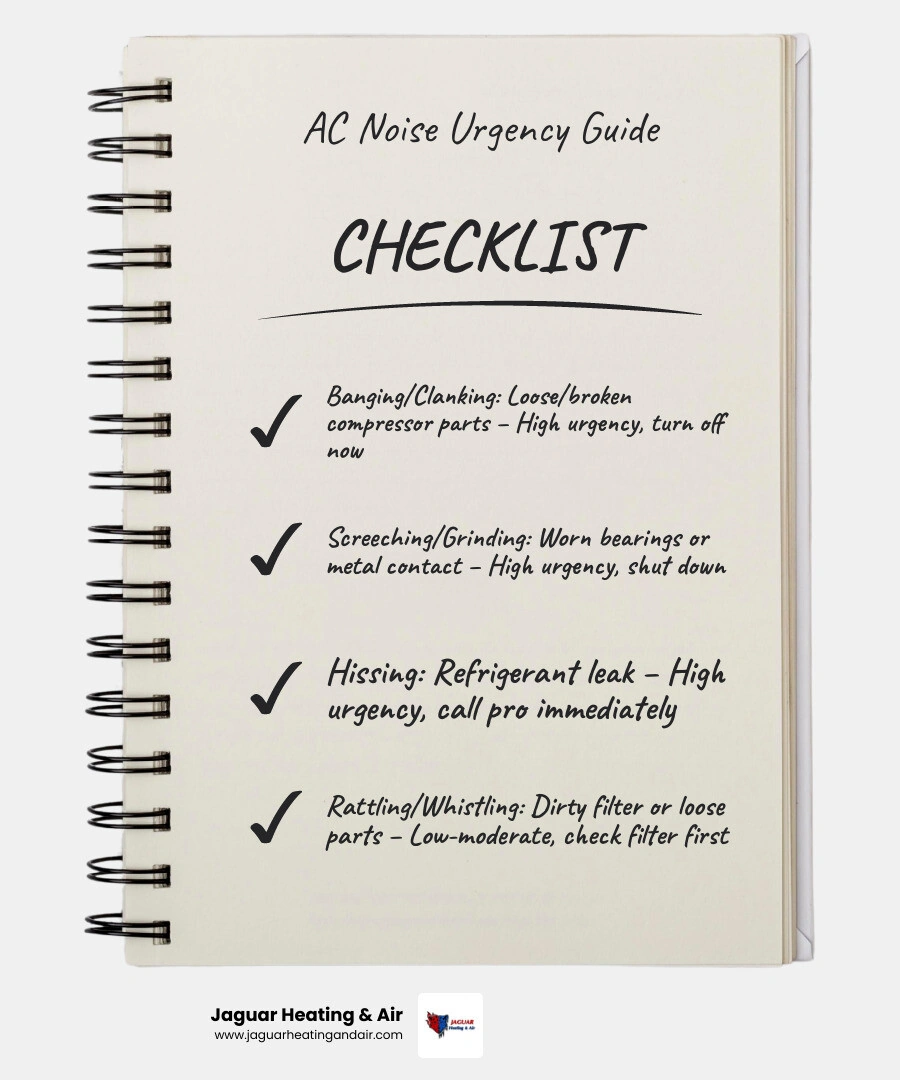
Here is a quick-reference breakdown of the most common AC noises and what they typically mean:
• Banging / Clanking — Likely Cause: Loose or broken part inside compressor or blower — Urgency: 🔴 High — turn off immediately
• Screeching / Squealing — Likely Cause: Worn motor bearings or high compressor pressure — Urgency: 🔴 High — shut down if lasting 10–15+ seconds
• Grinding — Likely Cause: Metal-on-metal contact, dry bearings — Urgency: 🔴 High — turn off immediately
• Hissing — Likely Cause: Refrigerant leak or internal valve leak — Urgency: 🔴 High — call a professional
• Buzzing / Humming — Likely Cause: Electrical fault, failing capacitor, or frozen coils — Urgency: 🟠 Moderate — inspect soon
• Rattling — Likely Cause: Loose debris, panel screws, or aging components — Urgency: 🟡 Low-Moderate — check soon
• Clicking (persistent) — Likely Cause: Failing contactor relay or thermostat issue — Urgency: 🟠 Moderate — call a technician
• Whistling / Whooshing — Likely Cause: Dirty air filter or blocked vents — Urgency: 🟡 Low — try a filter change first
• Gurgling / Bubbling — Likely Cause: Clogged condensate drain or refrigerant issue — Urgency: 🟠 Moderate — inspect soon
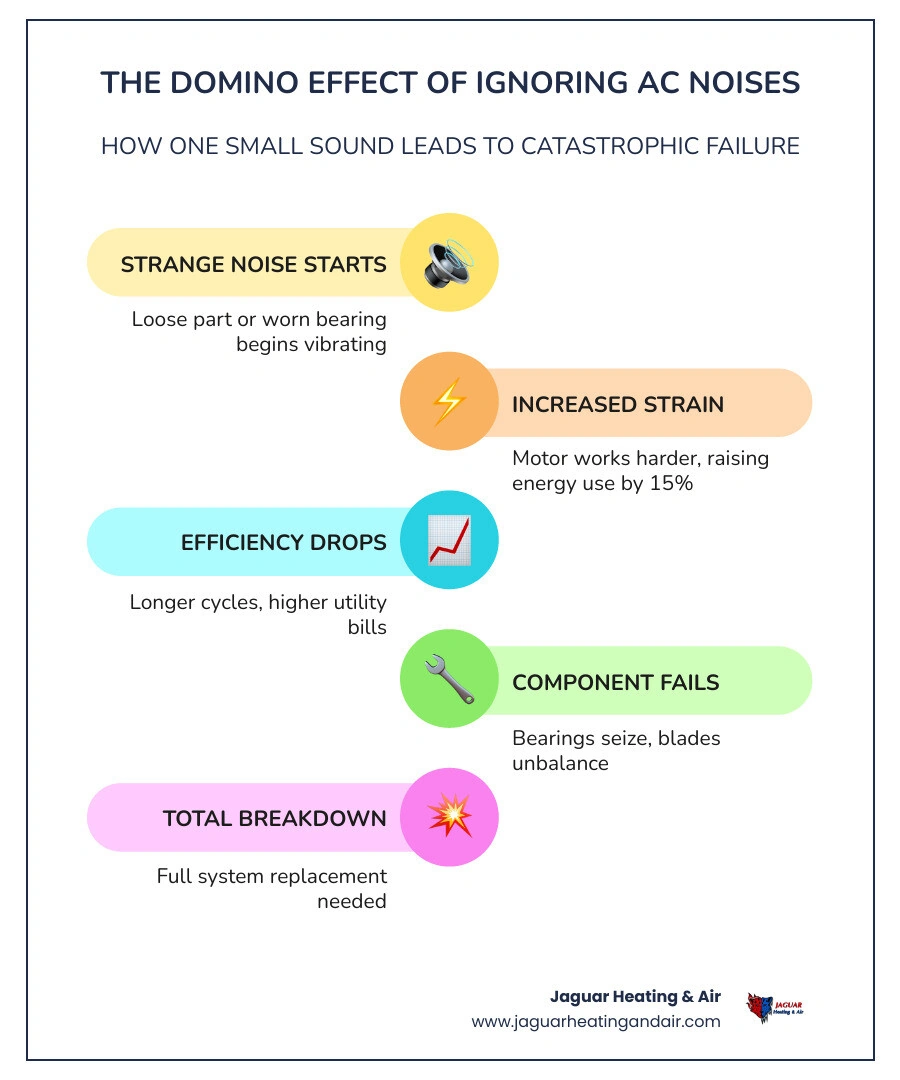
Most of these sounds start small. A loose screw vibrates. A dirty filter forces air through tiny gaps and whistles. A worn bearing starts to grind. Left alone, one small problem can set off a chain reaction that damages other components — and what could have been a simple repair turns into a much bigger one.
If you are in the Sacramento area and your AC has started making a new or worsening noise, the sections below will walk you through exactly what each sound means, where it is coming from, and what to do about it.
Decoding the Symphony: AC Making Strange Noises What They Mean
When your air conditioner is running perfectly, it produces a "symphony of silence"—or at least a very predictable, steady hum and a gentle whoosh of air through your vents. As experts in Why Air Conditioner Strange Noise occurs, we know that any deviation from this baseline is your system’s way of communicating.
A healthy unit operates within the 25–55 decibel range. If you start hearing "sour notes" like heavy clanking or rhythmic thumping, it usually points to mechanical wear or loose components. Think of your AC like a car; if you heard a loud metal-on-metal sound under the hood, you wouldn't keep driving down I-80 at 70 mph. Your home’s cooling system deserves that same level of caution.
Why is my AC making strange noises what they mean for my compressor?
The compressor is the "heart" of your AC unit, located in the outdoor cabinet. If you hear heavy banging, it’s often a sign that a part has come loose inside this sealed component. It could be a broken piston pin, a connecting rod, or a crankshaft.
Because the compressor is a hermetically sealed unit, these parts cannot be "tightened" or replaced individually. When you hear these sounds, you should Schedule AC Repair Right Away Notice These Signs to determine if the compressor has suffered an internal failure. Ignoring a banging compressor is dangerous; it can lead to the part "thrashing" inside the cabinet, potentially rupturing refrigerant lines.
Identifying screeching and grinding in modern systems
In April 2026, many homes in Roseville and Rocklin are equipped with high-efficiency units that are designed to be whisper-quiet. Modern systems like the Hitachi airHome range can operate at a mere 19dB. If a unit that quiet starts screeching, it is a major red flag.
• Screeching: This high-pitched sound often indicates high internal pressure within the compressor or a failing fan motor belt (in older units). If it lasts longer than 15 seconds upon startup, shut the system down immediately.
• Grinding: This is almost always a sign of metal-on-metal contact. It typically means the motor bearings have worn out or the lubricant has dried up.
If you hear these sounds, you need AC Repair Sacramento CA to prevent the motor from seizing entirely.
High-Urgency Sounds: When to Shut Down Your System Immediately

Some noises are more than just annoying; they are warnings of imminent system failure or safety hazards. If you encounter any of the following, turn off your AC at the thermostat and the breaker before calling for help.
The danger of persistent clicking and electrical arcing
A single click when your AC starts or stops is completely normal—that is just the electrical contactor engaging or disengaging. However, persistent or rapid clicking is a different story.
This often indicates an electrical communication issue. The thermostat may be sending a signal that the contactor relay or the start capacitor is failing to execute. If the system clicks repeatedly but won't stay on, it can lead to a burned-out motor. We often see this when homeowners ask Why Won't AC System Stay On Lincoln CA during a heatwave. Electrical buzzing or clicking can also signal "arcing," which is a fire hazard that requires immediate professional attention.
Hissing and whistling: Refrigerant and airflow red flags
If your AC sounds like a tea kettle or a snake, you likely have a pressure issue.
1. Hissing: This is the classic sound of pressurized refrigerant escaping through a crack in the coils or lines. Refrigerant leaks are hazardous to the environment and will eventually cause your compressor to burn out.
2. Whistling: While hissing is usually a leak, whistling is often an airflow restriction.
In places like Lincoln and Citrus Heights, we find that Common Problems Lead AC Repairs Lincoln CA often start with these "minor" air sounds that eventually lead to evaporator coil freezing. If your system is hissing, it needs AC Repair West Sacramento CA right away to seal the leak and recharge the system.
Identifying the Source: Indoor vs. Outdoor Unit Noises
To help your technician, try to pinpoint where the sound is coming from. Is it the big unit outside, the air handler in the closet/attic, or the vents themselves?
Indoor unit sounds: Bubbling, dripping, and whistling
The indoor portion of your AC (the air handler) deals with moisture and airflow.
• Bubbling/Gurgling: This usually means your condensate drain line is clogged. As water backs up, air bubbles through it, creating a "straw-finishing-a-drink" sound.
• Whistling: As mentioned, this is often air being forced through a restricted space, like a dirty filter or a closed damper.
• Dripping: While some moisture is normal, loud dripping sounds can indicate that the primary drain pan is overflowing or the "P-trap" is improperly vented.
Loud Sounds from Furnace Mean Trouble even in the summer, as the furnace blower is often what moves the cool air produced by your AC.
Outdoor unit sounds: Rattling, clanking, and humming
The outdoor condenser is exposed to the elements in Granite Bay and Elk Grove, making it prone to debris-related noises.
• Rattling: This is the most common outdoor noise. It can be as simple as a loose panel screw or as frustrating as a twig caught in the fan blades.
• Clanking: This suggests the fan blades are out of balance or striking a piece of debris.
• Loud Humming: A loud hum without the fan spinning often points to a failing capacitor or a seized fan motor.
Northern California storms can blow leaves and small branches into the unit, so a quick visual inspection (with the power off!) is always a good first step.
Simple DIY Troubleshooting for Minor AC Sounds
Not every noise requires a major overhaul. Before you call for AC Repair, there are a few safe DIY steps you can take to see if the fix is simple.
Troubleshooting an ac making strange noises what they mean for your air filter
If you hear a whistling or "whooshing" sound, check your air filter immediately. A clogged filter is like a "dust bunny convention" blocking your system's lungs. When the blower motor tries to pull air through a blocked filter, it creates a high-pressure whistle.
• The Test: Hold your filter up to a light. If you can’t see light through it, replace it.
• The Result: Replacing a dirty filter often silences whistling and prevents the "thumping" sound of a filter being sucked against the intake grille.
Cleaning and tightening for a quieter system
If you hear a light rattle or vibration from the outdoor unit, try these steps:
1. Clear Debris: Ensure there is at least a 2-foot clearance around your outdoor unit. Remove weeds, twigs, and leaves.
2. Tighten Screws: Sometimes the metal panels on the cabinet vibrate against each other. Use a screwdriver to ensure all exterior screws are snug.
3. Check Vents: Ensure at least 80% of your home’s vents are open. Closing too many vents creates backpressure that can cause whistling or "banging" in the ductwork due to thermal expansion.
The Risks of Ignoring Unusual Air Conditioner Noises
It is tempting to ignore a small rattle, especially when life in Rancho Cordova or Folsom gets busy. However, the "domino effect" of HVAC failure is real.
Higher utility bills and efficiency loss
When your AC makes noise, it is usually working harder than it needs to. A motor with worn bearings uses more electricity to spin. A system with a refrigerant leak runs longer cycles to reach the same temperature. Statistics show that routine maintenance can reduce energy use by up to 15%. If you ignore the sounds, you aren't just risking a breakdown; you are paying a "noise tax" every month on your utility bill.
Preventing total system failure through maintenance
A well-maintained AC system in Sacramento should last 15 to 20 years. Ignoring a grinding sound might save you a service call today, but it could cost you a full system replacement next year.
Our NATE-certified technicians focus on:
• Lubrication: Keeping motor bearings quiet and cool.
• Electrical Tightening: Preventing the buzzing and arcing that leads to fires.
• Coil Cleaning: Ensuring quiet, efficient heat transfer.
Frequently Asked Questions about AC Noises
Is it normal for my AC to click when it turns off?
Yes, a single, distinct click is perfectly normal. This is the electrical relay (the contactor) opening to cut power to the compressor and fan. If you hear a series of clicks or a loud bang upon shutdown, that may indicate a failing part or a loose fan blade.
Why does my AC make a whooshing sound?
A "whoosh" is usually just the sound of air moving through your ducts. However, if the whoosh is sudden or unusually loud, it could mean your blower speed has changed, your filter is bypassing air, or your ductwork is expanding (thermal expansion).
Can weather in Northern California cause my AC to rattle?
Absolutely. High winds in the Sacramento Valley can blow debris into the condenser. Additionally, the extreme heat during our summers causes metal components to expand, which can lead to "popping" sounds in the ductwork or slight vibrations in the unit's cabinet that weren't there during the cooler spring months.
Conclusion
At Jaguar Heating & Air, we believe your home should be a sanctuary of quiet comfort. We are a family-owned Sacramento HVAC company and a Trane Comfort Specialist dedicated to keeping your system running silently and efficiently. Whether you are in Elk Grove, Roseville, or anywhere in the greater Sacramento area, our NATE-certified technicians are ready to decode your system's "cries for help."
Don't let a small noise turn into a sweltering summer emergency. We offer flat-rate pricing and a 100% satisfaction guarantee to ensure you get the peace and quiet you deserve. Schedule your professional AC repair today and let us bring the "Symphony of Silence" back to your home.
Recent Posts

Navigating the October Heating Startup: A Guide to Fall HVAC Maintenance
Is your first fall heating startup causing strange odors? Rely on our local service expertise and area tips to know when to call a pro on this in Sacramento.

Why Your Furnace Smells Like Burning Dust: Essential HVAC Maintenance Questions Answered
Smelling burning dust this fall? Have common homeowner questions answered about your furnace. Decide with confidence on when to call a pro before winter.

Why Your Furnace Smells Like Burning Dust: A Guide to Fall HVAC Maintenance
Does your furnace smell like burning dust? Review our home maintenance tips and troubleshooting to see what we found inside a typical fall heating startup.