.avif)
Everything You Need to Know About How Heat Pumps Work
Learn how does a heat pump work for year-round heating and cooling, plus efficiency tips for Northern California homes.
Learn how does a heat pump work for year-round heating and cooling, plus efficiency tips for Northern California homes.

Why Understanding How a Heat Pump Works Can Change How You Heat and Cool Your Home
How does a heat pump work? Here's the short answer:
- A heat pump moves heat from one place to another instead of generating it by burning fuel
- In summer, it pulls heat out of your home and releases it outside — just like an air conditioner
- In winter, it runs in reverse, pulling heat from outdoor air and moving it inside to warm your home
- It does all of this using electricity and a refrigerant that cycles between liquid and gas states
- The result is one system that handles both heating and cooling, often using far less energy than traditional equipment
That's the core of it. One device, two jobs, and a clever use of physics instead of combustion.
If you've been noticing your energy bills creeping up or your current HVAC system is getting harder to rely on, you're not alone. Many Sacramento-area homeowners are looking for smarter, more efficient ways to stay comfortable year-round — through triple-digit summer heat and chilly winter nights alike. Heat pumps have quietly become one of the most effective solutions available, and they're especially well-suited to Northern California's climate.
In this guide, we'll break down exactly how heat pumps work, what types are available, how efficient they really are, and what it takes to keep one running well — so you can make a confident, informed decision for your home.
How does a heat pump work glossary:
- heat pump advantages over traditional hvac
- heat pump benefits for sacramento homeowners
- heat pump efficiency in extreme heat and mild winters
What is a Heat Pump and How Does a Heat Pump Work?
To understand how a heat pump works, it helps to throw out the idea that heating equipment has to "create" heat. Traditional systems like gas furnaces or electric baseboard heaters create warmth by burning fuel or running electricity through high-resistance coils.
A heat pump doesn't do this. Instead, it relies on the thermodynamic principle that heat energy naturally exists in the air, ground, or water around us—even when it feels cold outside. By using a closed-loop vapor-compression cycle, a heat pump captures this existing heat and transfers it from one space to another.
This process of heat transfer is incredibly efficient. Because the system only uses electricity to run a compressor and circulate refrigerant—rather than to generate thermal energy from scratch—it can deliver up to 4 kWh of thermal energy for every 1 kWh of electricity consumed. That represents a massive leap in energy efficiency compared to standard electric resistance heating, which has a maximum theoretical efficiency of 1:1 (or 100%).
If you are new to this technology, reading a Beginners Guide Heat Pumps Homeowners Sacramento can help you visualize how these systems integrate into local properties to replace traditional, energy-hungry setups.
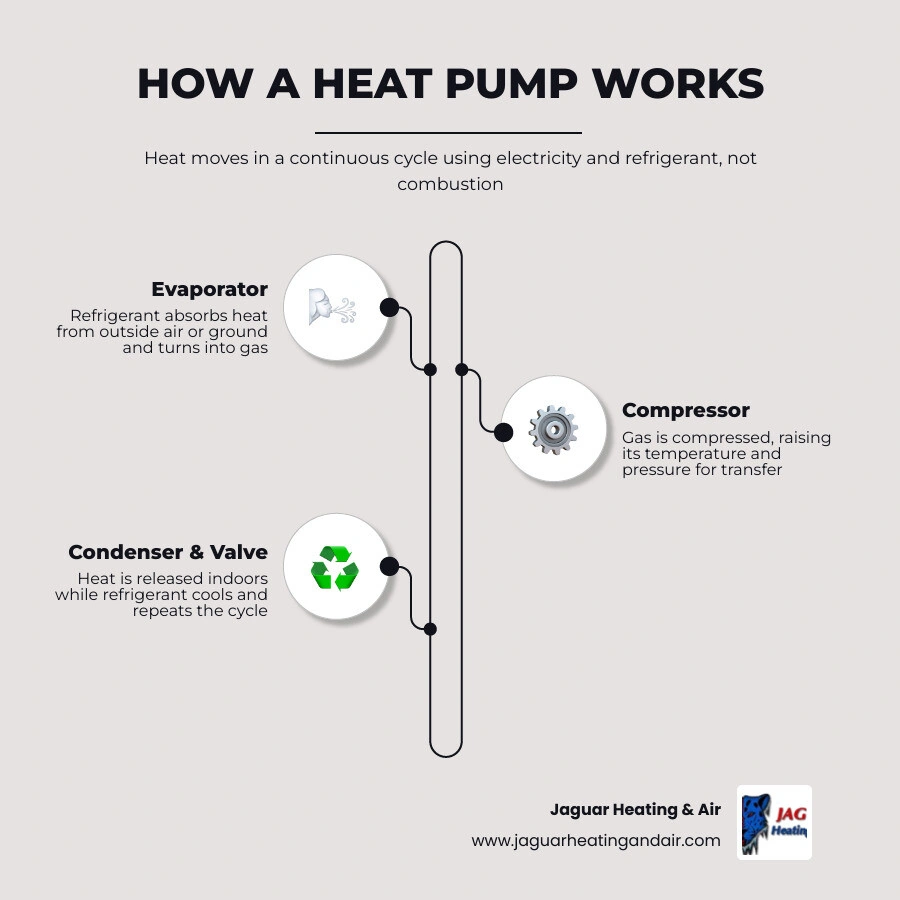
Understanding the Refrigerant Cycle: How Does a Heat Pump Work to Transfer Heat?
The magic behind this heat transfer lies in the refrigerant, a specialized chemical fluid that circulates through the system. Refrigerant has an incredibly low boiling point, meaning it can transition from a cold liquid to a gas even at freezing outdoor temperatures.
Here is how the four main components of the refrigerant cycle work together to make this happen:
- The Evaporator Coil: This is where the magic begins. Cold, low-pressure liquid refrigerant passes through this coil. Because the refrigerant is much colder than the surrounding air, it absorbs heat from its environment. As it absorbs this heat, it warms up and evaporates into a low-pressure gas.
- The Compressor: The low-pressure gas travels to the compressor, which acts as the "heart" of the system. Powered by electricity, the compressor tightly squeezes the gaseous refrigerant. Squeezing the gas causes its pressure and temperature to spike dramatically, turning it into a hot, high-pressure vapor.
- The Condenser Coil: The hot, pressurized gas then flows into the condenser coil. As warmer air or water passes over the coil, the heat from the hot refrigerant is released to the surrounding environment. As the refrigerant loses heat, it condenses back into a high-pressure liquid.
- The Expansion Valve: Finally, the high-pressure liquid refrigerant passes through the expansion valve. This valve acts as a narrow gateway, restricting flow and abruptly dropping the refrigerant's pressure. This sudden pressure drop causes the temperature to plummet, returning the refrigerant to a cold, low-pressure liquid state, ready to head back to the evaporator coil and repeat the cycle.
By manipulating the pressure and state of the refrigerant, the system easily coaxes heat to move in the direction we want. For a deeper look at how this physical cycle keeps your living room perfectly conditioned, check out our article on How Heat Pump Keep You Comfortable.
Dual-Mode Comfort: Heating and Cooling Cycles
The defining feature of a heat pump is its ability to provide year-round comfort from a single unit. It acts as a highly efficient air conditioner in the summer and reverses its operation to become a powerful heater in the winter.
This dual-mode capability is made possible by a single, critical component: the reversing valve.
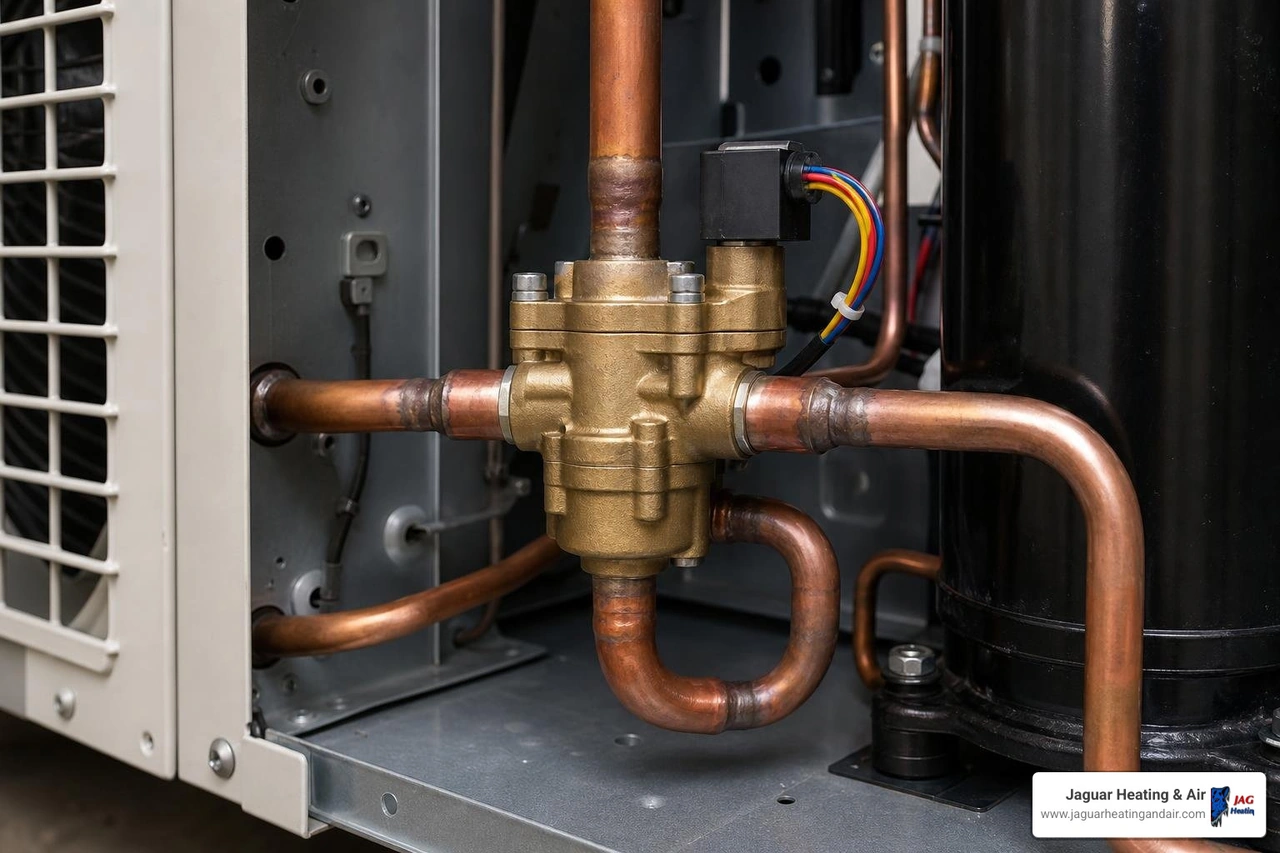
The reversing valve physically changes the direction of the refrigerant flow. With the simple flip of a switch on your thermostat, the system alters which coils act as the evaporator and which act as the condenser. This versatility makes a Why Heat Pump Installation Perfect Californian Homeowners, particularly in our region where we experience hot summers and chilly, damp winters.
Cooling Mode: How Does a Heat Pump Work in the Summer?
During our scorching Sacramento summers, a heat pump works identically to a standard central air conditioner.
- Cool liquid refrigerant circulates through the indoor coil (which acts as the evaporator).
- As warm indoor air is blown across this coil by the blower motor, the refrigerant absorbs the unwanted heat, cooling the air before it is distributed back into your home.
- The warmed refrigerant is then compressed and sent to the outdoor unit (which acts as the condenser).
- A large fan blows outdoor air across the outdoor coil, exhausting the captured heat into the atmosphere.
- The refrigerant cools down, passes through the expansion valve, and returns indoors to collect more heat.
Because standard air conditioners and heat pumps use the exact same cooling technology, they are equally effective at keeping you cool on a 105°F July afternoon. However, the heat pump has the distinct advantage of not sitting idle once autumn arrives. Understanding Heat Pump Efficiency in Extreme Heat and Mild Winters can help you see how these systems maintain optimal performance across shifting seasons.
Heating Mode: Warmth in the Cooler Months
When temperatures drop in the winter, the reversing valve slides into its heating position, reversing the path of the refrigerant.
- The outdoor coil now functions as the evaporator. Cold liquid refrigerant passes through it, absorbing heat energy from the outdoor air.
- Even when the air outside feels cold to us, it still contains a significant amount of ambient heat energy (thermodynamically, any air temperature above absolute zero contains heat!).
- The compressor squeezes this warmed refrigerant gas, raising its temperature significantly.
- The hot gas is pumped indoors to the indoor coil (now acting as the condenser).
- Indoor air is blown across the hot coil, absorbing the heat and warming your home.
- The refrigerant condenses back into a liquid and travels back outdoors to repeat the process.
To get the absolute most out of your system during the chilly season, it pays to understand the best Ways Use Heat Pump Efficiently During Cooler Months to keep your energy consumption as low as possible.
Types of Heat Pump Systems Available
When selecting a heat pump, the right choice depends heavily on your home’s layout, your existing ductwork, and your specific comfort goals.
Investing in the right setup can pay off for decades. You can learn more about these long-term advantages by reading about the Benefits Investing Heat Pump Installation.
Air-Source Heat Pumps
Air-source heat pumps are the most common systems installed in Northern California. They extract heat from the outdoor air and deliver it indoors (or vice versa). These systems come in two primary configurations:
- Ducted Systems: If your home already has a central ductwork system from an old furnace or air conditioner, a ducted air-source heat pump can connect directly to it, distributing conditioned air evenly to every room.
- Ductless Mini-Splits: For homes without existing ductwork, or for room additions, ductless mini-splits are an exceptional choice. These systems pair an outdoor compressor with one or more compact indoor air handlers mounted directly on the wall or ceiling. They allow for precise zone control, meaning you can heat or cool only the rooms you are currently using.
Ground-Source and Geothermal Systems
Instead of exchanging heat with the outdoor air, ground-source (or geothermal) heat pumps exchange heat with the earth.
Several feet below the surface, the ground maintains a remarkably stable temperature year-round (usually between 50°F and 60°F). Geothermal systems utilize a series of fluid-filled pipes, known as ground loops, buried in the yard to tap into this thermal reservoir.
While ground-source systems are more complex and require a larger initial installation footprint, they are incredibly efficient. High-efficiency geothermal heat pumps use up to 61% less energy than standard heating systems, and their underground components can last for 50 years or more.
Efficiency and Performance Benefits
The primary reason heat pumps are taking over the HVAC industry is their unparalleled efficiency. By transferring heat rather than generating it, they drastically reduce energy consumption.
To put this in perspective, let's look at how heat pumps compare to traditional heating and cooling systems:
| System Type | Heating Efficiency (COP / AFUE) | Cooling Efficiency (SEER2) | Environmental Impact |
|---|---|---|---|
| Heat Pump | 3.0 to 4.5 COP (300%–450% efficient) | Up to 24+ SEER2 | Very Low (Runs on electricity, zero local emissions) |
| Gas Boiler / Furnace | 80% to 98% AFUE (Less than 100% efficient) | N/A (Requires separate AC) | Moderate to High (Burns fossil fuels) |
| Electric Resistance | 100% efficient (1.0 COP) | N/A (Requires separate AC) | High (High electrical draw) |
As shown above, heat pumps are 3 to 5 times more energy efficient than gas boilers and can reduce electricity use for heating by up to 75% compared to electric resistance heating. For a deeper breakdown of these comparisons, read about the Heat Pump Advantages Over Traditional HVAC.
Factors That Determine Efficiency
Not all heat pumps perform identically. Several key factors influence how efficiently a system will run in your specific home:
- SEER2 (Seasonal Energy Efficiency Ratio 2): This measures the cooling efficiency of the system over a typical cooling season. Higher SEER2 ratings mean lower summer electricity bills.
- HSPF2 (Heating Seasonal Performance Factor 2): This measures the heating efficiency of the system over a typical heating season. The higher the HSPF2, the more efficient the unit is at warming your home.
- Climate Zone: Heat pumps perform beautifully in moderate climates like ours. However, extreme temperatures can affect how hard the system has to work.
- Home Insulation: A well-insulated, air-sealed home retains conditioned air much longer, reducing the workload on your heat pump.
To learn more about how these ratings and environmental factors affect local installations, check out our guide on Things Determine Heat Pump Efficiency Folsom CA.
Performance in Cold Climates
A common historical concern with air-source heat pumps was their performance in freezing temperatures. In the past, as outdoor temperatures dropped toward freezing, air-source systems struggled to extract enough heat, often relying on inefficient backup electric resistance "heat strips" to keep up.
Fortunately, modern HVAC technology has solved this problem. Today’s cold-climate heat pumps feature variable-speed inverter compressors and advanced refrigerants, allowing them to operate efficiently at temperatures well below freezing—some models can even pull heat out of the air down to -22°F!
In regions that experience prolonged, extreme sub-zero temperatures, homeowners can also opt for a dual-fuel (or hybrid) system. This setup pairs a heat pump with a gas furnace. The system automatically runs the highly efficient heat pump during mild winter days and switches over to the gas furnace only when extreme cold strikes, ensuring reliable, cost-effective warmth no matter what.
Frequently Asked Questions About Heat Pumps
Do heat pumps work in freezing temperatures?
Yes, modern heat pumps work exceptionally well in freezing temperatures. While older models struggled when temperatures dropped below 32°F, today's advanced cold-climate systems utilize variable-speed compressors to extract ambient heat from outdoor air even in sub-freezing weather.
Additionally, during very cold and humid conditions, frost can accumulate on the outdoor coils. When this happens, the heat pump automatically initiates a brief defrost cycle, temporarily reversing itself to send warm gas to the outdoor unit to melt the frost before returning to normal heating mode.
What maintenance does a heat pump require?
Because heat pumps work hard all year long, regular maintenance is essential to keep them running efficiently. Homeowners should:
- Change air filters every 1 to 3 months.
- Keep the outdoor unit clear of leaves, dirt, and debris to ensure unrestricted airflow.
- Schedule professional HVAC tune-ups twice a year (once before the cooling season and once before the heating season) to clean the coils, check refrigerant levels, inspect electrical connections, and verify proper airflow balance.
How long do heat pump systems typically last?
With proper professional maintenance, a high-quality heat pump system typically lasts about 15 years. Because they handle both heating and cooling duties, they accumulate more operational hours per year than a standalone furnace or air conditioner, making routine preventative care the single most important factor in maximizing their lifespan.
Conclusion
Understanding how does a heat pump work reveals why this technology has become the gold standard for modern home comfort. By moving heat instead of creating it, heat pumps deliver incredible year-round climate control while drastically lowering your home's energy consumption and carbon footprint.
If you live in Lincoln, Roseville, Elk Grove, Folsom, or anywhere in the greater Sacramento area, upgrading to a heat pump is one of the smartest investments you can make for your home. To learn more about how these systems perform in local neighborhoods, check out the Benefits Heat Pumps Lincoln CA and discover how you can Enjoy Efficiency Eco Friendliness New Heat Pump.
At Jaguar Heating & Air, we are proud to be your local Trane Comfort Specialist. Our team of NATE-certified technicians is dedicated to providing flat-rate pricing, same-day service, and a 100% satisfaction guarantee. Whether you need a system tune-up, a quick repair, or a brand-new installation, we are here to keep your home perfectly comfortable in every season.
Ready to experience the efficiency and comfort of a modern heat pump? Schedule your service with Jaguar Heating & Air today!
Recent Posts

Fall HVAC Startup Checklist: Diagnosing Burning Smells and System Red Flags
Deciding if that burning dust smell is normal? See why this seasonal home maintenance checklist is critical for catching heating failures before winter hits.

Fall HVAC Maintenance Troubleshooting: Decoding Furnace Startup Smells and Sounds
Is that burning dust smell normal? See what happens inside your system during fall startup and find home maintenance tips and troubleshooting to stay safe.

A Proactive Seasonal Home Maintenance Checklist for HVAC Systems
Why we prioritize October heating inspections. Use this seasonal home maintenance checklist to prevent sudden furnace failures. Schedule your checkup today.