.avif)
Why Your Thermostat Blanking Out Might Just Be a Blown Low-Voltage Fuse
A completely dead thermostat screen right as fall begins often triggers panic. See why a blown 3-amp low-voltage fuse is actually protecting your furnace control board.
A completely dead thermostat screen right as fall begins often triggers panic. See why a blown 3-amp low-voltage fuse is actually protecting your furnace control board.

Is Your Thermostat Screen Completely Dead?
Did you just wake up to a freezing house and wonder why your thermostat blanking out might just be a blown low-voltage fuse? You are not alone. When the chilly Sacramento early fall mornings finally arrive, homeowners rush to switch their systems from cooling to heating. Finding a completely dead, unresponsive screen on the wall often triggers immediate panic. In our years of serving the Sacramento area, we have seen countless homeowners assume their entire HVAC system has suffered a catastrophic failure, leaving them stranded in the cold.
The reality is usually far less intimidating. A blank screen is rarely a sign of a dead furnace; instead, it is often a deliberate safety mechanism doing exactly what it was designed to do. During the September early fall transition, our technicians frequently find that dormant electrical issues are suddenly exposed, causing a tiny protective fuse to blow and cut power to the thermostat.
If you need fast heating services or reliable heating repair, our professional team is ready to restore your home's comfort.
The Hidden Connection Between Your Thermostat and the Furnace
To understand why a furnace issue causes a blank screen on your wall, you have to look at how modern heating and cooling systems communicate. Your thermostat is essentially the brain of the operation, but it does not generate its own operating power. Instead, it relies on a continuous flow of electricity from the furnace itself.
Inside your furnace cabinet, a component called a transformer takes the standard high-voltage electricity from your home's breaker panel and steps it down to a safe, steady 24 volts. This 24-volt power travels up the wires inside your walls directly to the thermostat. When this specific power connection is severed at the furnace level, the thermostat screen immediately goes dark.
This interruption is not a random glitch. It is a highly intentional safety feature designed to stop the flow of electricity the moment a fault is detected in the system. By cutting the power, the system prevents dangerous electrical surges from damaging sensitive components. The good news is that your thermostat itself is likely perfectly fine—it has simply lost its life support from the furnace.
Why Batteries Aren't Always the Answer
Many homeowners immediately assume a blank screen means the batteries have died. While it is always smart to check the battery compartment, our field technicians often arrive on service calls only to find that putting in fresh batteries does nothing, or that the specific thermostat model does not even use them.
Even if your thermostat has backup batteries, a break in the 24-volt line from the furnace will prevent the system from communicating. The batteries might keep the screen illuminated temporarily, but the thermostat will remain entirely incapable of turning on the heat. Ruling out basic battery failure is a good first step, but if the screen remains completely unresponsive, the issue lies deeper within the furnace's control board.
• Screen flashes "Low Battery" before dying — Potential Cause: Depleted backup batteries — Next Step: Replace batteries and test the heating cycle.
• Screen is blank, but furnace makes clicking noises — Potential Cause: Failing thermostat or loose wall wire — Next Step: Requires professional diagnostic of the wall unit.
• Screen is totally dead, furnace is completely silent — Potential Cause: Blown low-voltage fuse on control board — Next Step: Requires a professional to trace the electrical short.
What is the 3-Amp Low-Voltage Fuse?
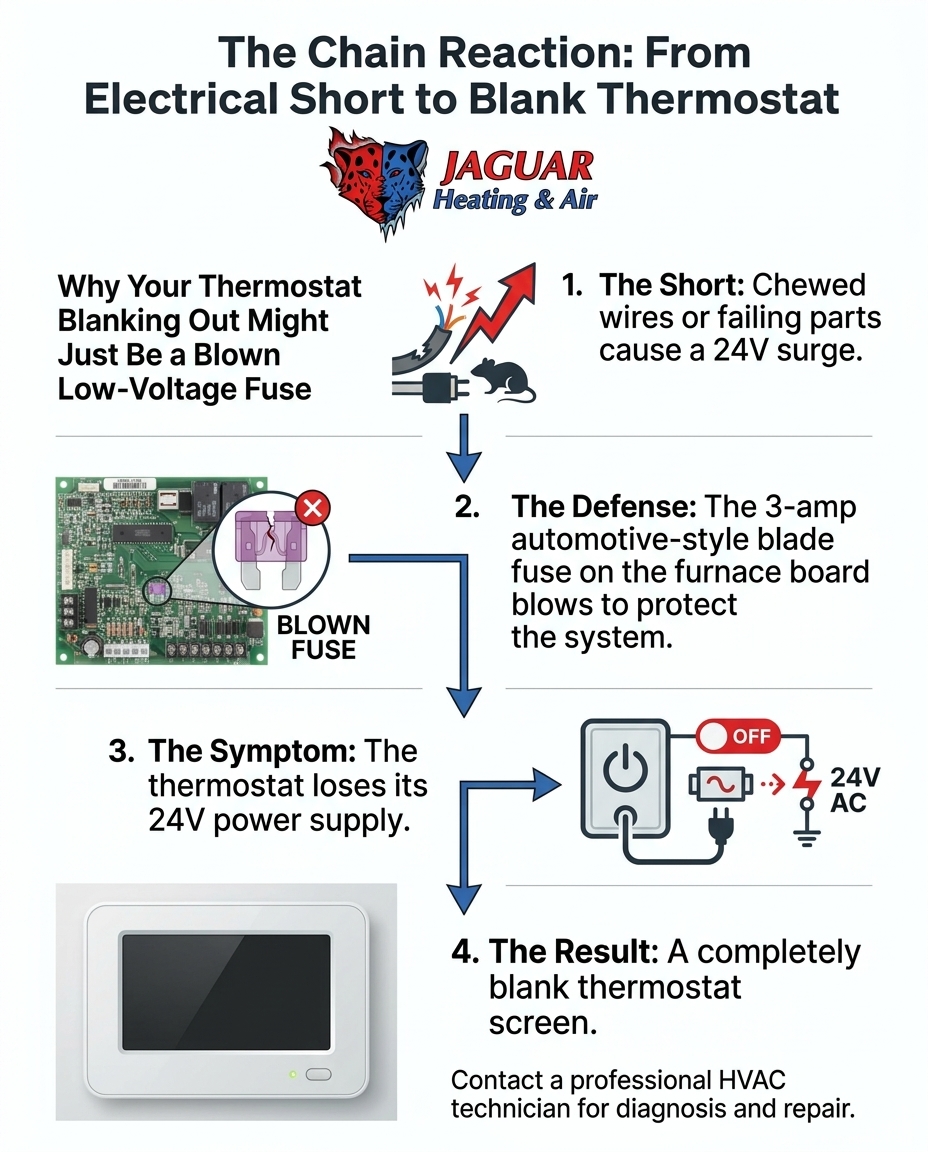
When the 24-volt power supply is abruptly cut off, the most common culprit our team finds is a tiny, inexpensive component located on the main furnace control board: the 3-amp automotive-style blade fuse. If you have ever looked inside the fuse box of a car, you will recognize this part immediately. It is typically a small, purple plastic square with two metal prongs.
This tiny fuse acts as the ultimate bodyguard for your highly expensive furnace control board. The control board is a complex circuit board that acts as the central nervous system for your HVAC equipment, coordinating the blower motor, the gas valve, the igniter, and the thermostat. Because it is packed with sensitive microprocessors, even a minor electrical surge could fry the entire board.
How the defense mechanism works:
• Normal operation: The 24-volt current flows safely through the metal filament inside the 3-amp automotive-style blade fuse, powering the thermostat and relays.
• The surge: An electrical short occurs somewhere in the wiring, causing the electrical current to spike beyond the safe 3-amp limit.
• The sacrifice: The metal filament inside the fuse instantly melts and breaks apart, physically severing the electrical circuit.
• The protection: Because the circuit is broken, the surge never reaches the delicate microprocessors on the control board.
When you look at it this way, a blown fuse is not a system failure at all. It is a highly successful defense mechanism. The fuse sacrificed itself to save you from a massive repair bill.
The Real Culprit: Tracing the Low-Voltage Short
While discovering a blown fuse explains why the thermostat went blank, it does not explain the root cause. Fuses do not blow for no reason. They blow because an underlying electrical short caused a dangerous surge in the 24-volt circuit. Simply acknowledging the blown fuse is only half the battle; tracing the short is where the real diagnostic work begins.
These electrical shorts often sit dormant for months. During the September early fall transition, our dispatchers at Jaguar Heating & Air take numerous calls from homeowners switching their thermostats from cooling to heating for the first time. This action sends electrical signals down pathways that have not been used since last winter, instantly exposing hidden damage.
Common causes of low-voltage shorts include:
1. Rodent-chewed wiring: Over the summer, pests frequently seek shelter in cool, dark spaces like crawlspaces, attics, and outdoor condenser units. They often chew through the thin insulation of the low-voltage thermostat wires, leaving exposed copper. When the system turns on, these bare wires touch, creating a direct short.
2. Wire chafing from vibration: HVAC units vibrate slightly while running. Over years of operation, this vibration can cause the thermostat wires to rub against the sharp metal edges of the furnace cabinet, eventually slicing through the insulation.
3. Failing outdoor AC contactor: Even though you are trying to turn on the heat, the thermostat wiring is still connected to the outdoor air conditioning unit. If the magnetic coil inside the outdoor contactor has failed or shorted out over the summer, it will blow the furnace fuse the moment power is applied to the system.
4. Water damage: Condensation from the summer cooling season can sometimes overflow and drip onto poorly placed wire splices, leading to corrosion and electrical shorts.
While researching tips for using your smart thermostat efficiently is great for lowering energy bills, none of those strategies will work until this root power source issue is resolved. A dead screen requires addressing the underlying short before any efficiency settings can be applied.
Why DIY Fuse Replacement Usually Fails
When homeowners learn that a simple, inexpensive fuse is the reason their heat will not turn on, the temptation to fix it themselves is high. However, we strongly advise homeowners never to attempt to open the furnace panel or replace the fuse themselves. Modern HVAC systems involve high-voltage components, natural gas lines, and complex circuitry that require a licensed professional to navigate safely.
The Infinite Loop of Blown Fuses:
If the underlying electrical short is not found and fixed, putting a new fuse into the control board will accomplish absolutely nothing. The exact second the thermostat calls for heat, the unresolved short will trigger another power surge, and the new fuse will blow instantly. You can plug ten new fuses into the board, and all ten will blow in rapid succession. This "infinite loop" is incredibly frustrating and entirely avoidable with proper diagnostics.
The Danger of Bypassing the Safety:
Some online forums suggest dangerous workarounds, such as replacing the 3-amp automotive-style blade fuse with a larger 5-amp or 10-amp fuse, or even wrapping the blown fuse in aluminum foil. This is a catastrophic mistake. By bypassing the 3-amp limit, you allow the electrical surge to travel directly into the control board. Instead of replacing a simple fuse, you will permanently destroy the entire furnace control board, turning a minor electrical issue into a major repair.
Finding a short in a complex HVAC wiring system is like finding a needle in a haystack without the right diagnostic tools. Our professionals use specialized multimeters to safely isolate the exact location of the short, ensuring the repair is permanent and the system remains protected.
Honest Diagnostics vs. Unnecessary Replacements
Unfortunately, some contractors use a completely blank thermostat as an excuse to push for a full system replacement or an incredibly expensive control board swap. They see a homeowner panicking over a dead screen and frame the situation as a total system failure, skipping the basic diagnostic steps that would reveal a simple short.
At Jaguar Heating & Air, our approach is rooted in honest, thorough troubleshooting. We are committed to finding the actual root cause of the problem rather than using a scary blank screen to upsell unnecessary equipment. We trace the short, repair the damaged wire or failing component, and replace the simple 3-amp automotive-style blade fuse.
One local Sacramento homeowner reached out to us last fall when their heat suddenly stopped coming on. A Jaguar Heating & Air technician arrived the very next day, called ahead to confirm the arrival time, and quickly traced the electrical fault. Because we focused on the root cause, the problem was completely resolved in under 30 minutes for a highly reasonable cost, restoring their comfort without any high-pressure sales tactics. A quick, honest diagnostic from our team can restore your heat rapidly without breaking the bank.
What to Expect When the Technician Arrives
Demystifying the service call helps relieve the anxiety of a sudden heating failure. When you schedule a professional diagnostic with Jaguar Heating & Air for a blank thermostat, our process follows a strict, logical sequence to ensure safety and accuracy.
The professional diagnostic process:
1. Verifying the Thermostat: The technician will first check the wall unit to confirm it is completely dead and rule out loose faceplates or depleted backup batteries.
2. Inspecting the Control Board: They will safely open the furnace cabinet, locate the control board, and visually inspect the 3-amp automotive-style blade fuse to confirm it has blown.
3. Tracing the Short: Using a digital multimeter, the technician will test the 24-volt wiring throughout the home. They will isolate different segments of the wiring—checking the path to the thermostat, the path to the outdoor condenser, and the internal furnace wiring—until the exact location of the short is identified.
4. Executing the Repair: Once the damaged wire (such as a rodent-chewed section) or the failing component is repaired, the technician will install a fresh fuse.
5. System Testing: Finally, they will test the system through a full heating cycle during the September early fall transition to ensure the thermostat communicates flawlessly and the furnace operates safely.
When another customer needed their system checked for leaks during a busy season, they appreciated our 24-hour service availability. The technician was on time, quick, and highly efficient. Whether you are dealing with a blank screen or a sudden breakdown, you can rely on our emergency HVAC service to get your home back to normal.
Frequently Asked Questions About Blank Thermostats and Fuses
Why is my thermostat completely blank?
It usually means the thermostat has lost its 24-volt power supply from the furnace, often due to a blown protective fuse. When this power connection is severed, the wall unit cannot operate, even if it has backup batteries installed. A professional needs to inspect the furnace control board to restore the power flow safely.
Where is the fuse for a thermostat located?
The fuse is typically located on the main control board inside the indoor furnace or air handler cabinet. It is usually a small, brightly colored automotive-style blade fuse plugged directly into the circuit board. Accessing this area requires removing the furnace panels, which should only be done by a licensed technician.
Does a thermostat have its own internal fuse?
Most thermostats do not have internal fuses; they rely on the furnace control board's fuse for electrical protection. The thermostat acts purely as a switch, while the heavy lifting of electrical protection happens down at the furnace level. If a surge occurs, the furnace fuse blows to protect both the board and the thermostat.
Why does my furnace 3-amp fuse keep blowing?
A repeatedly blowing fuse indicates an active low-voltage short in the system's wiring or components that requires professional tracing. Putting a new fuse in without fixing the short will just cause the new fuse to blow the moment the system turns on. This "infinite loop" stops only when the damaged wire or failing part is repaired by a trained professional.
Can a power outage cause a thermostat to go blank?
Yes, a power outage cuts electricity to the entire HVAC system, but if power is restored and the screen remains blank, a power surge may have blown the low-voltage fuse. When the grid comes back online, the sudden rush of electricity can overwhelm the 24-volt circuit. A technician can verify if the surge damaged the fuse or the control board itself.
Restore Your Comfort with Expert Diagnostics
A blank thermostat screen can feel overwhelming, but it is often just a sign that your system's defenses worked exactly as intended. The 3-amp automotive-style blade fuse sacrificed itself to protect your equipment from a serious electrical short. Finding that short is a job for a trained professional with the right diagnostic tools.
Do not let a dormant electrical issue keep your family in the cold. Reach out to our local Sacramento experts at Jaguar Heating & Air today for reliable heating repair. We will trace the root cause, replace the fuse, and safely restore your heating so you can enjoy total peace of mind all season long.
Recent Posts
How to Tell If Your AC Contactor is Pitted and Failing
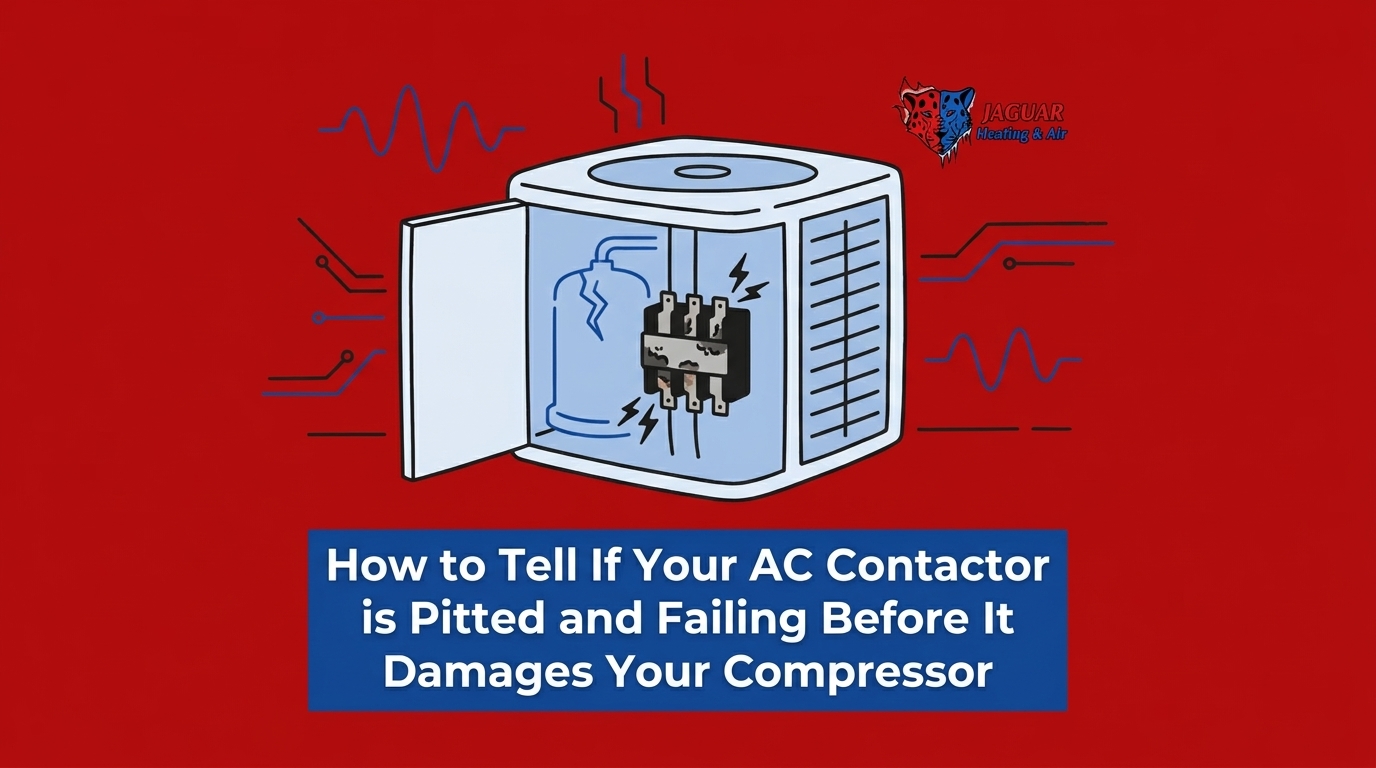
After thousands of high-load cycles this summer, your AC's electrical components are exhausted. Catching a failing contactor early prevents a catastrophic compressor breakdown this fall.
Why We Recommend Surge Protectors for Your HVAC Equipment
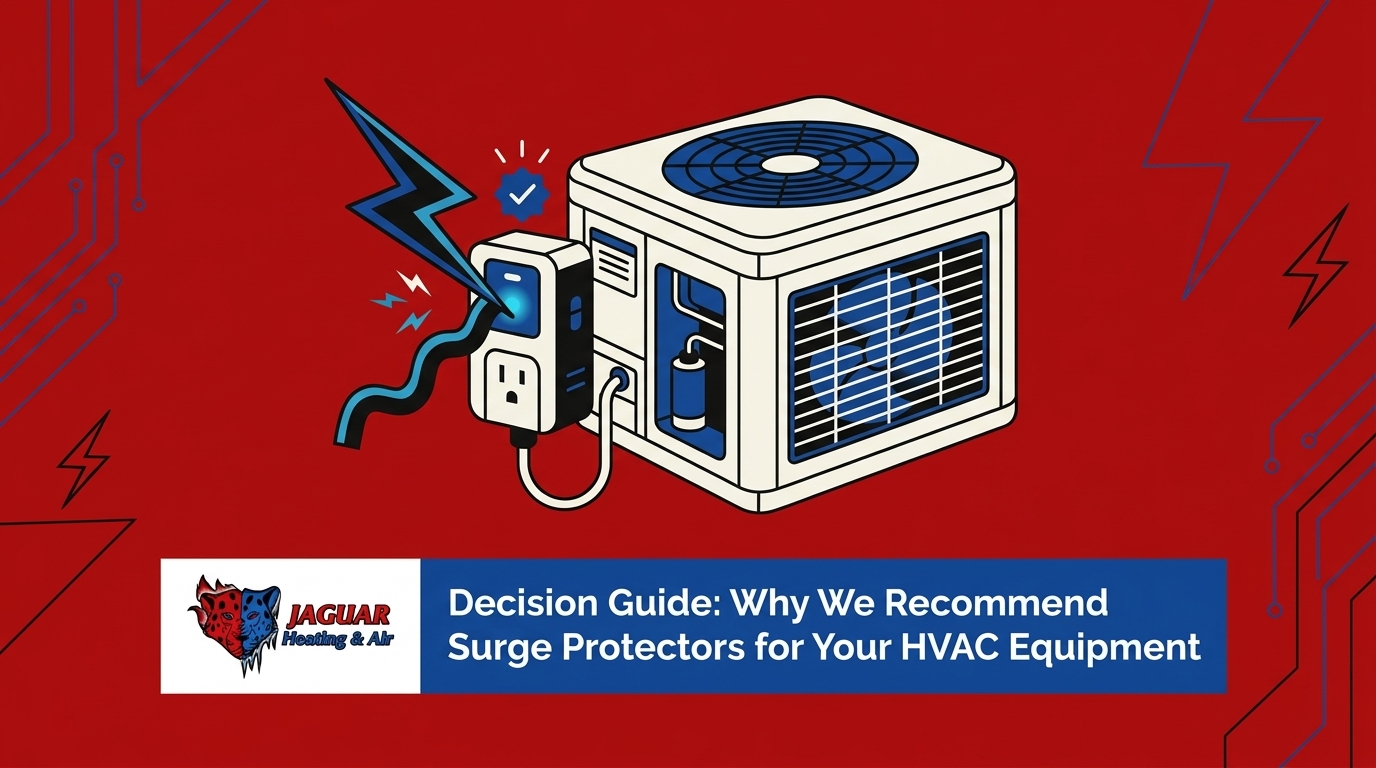
A standard circuit breaker isn't enough to protect modern heating and cooling systems from grid spikes. Find out how a dedicated safeguard prevents catastrophic control board failures.
The Difference Between a Clogged Filter Drier and a Bad TXV Valve
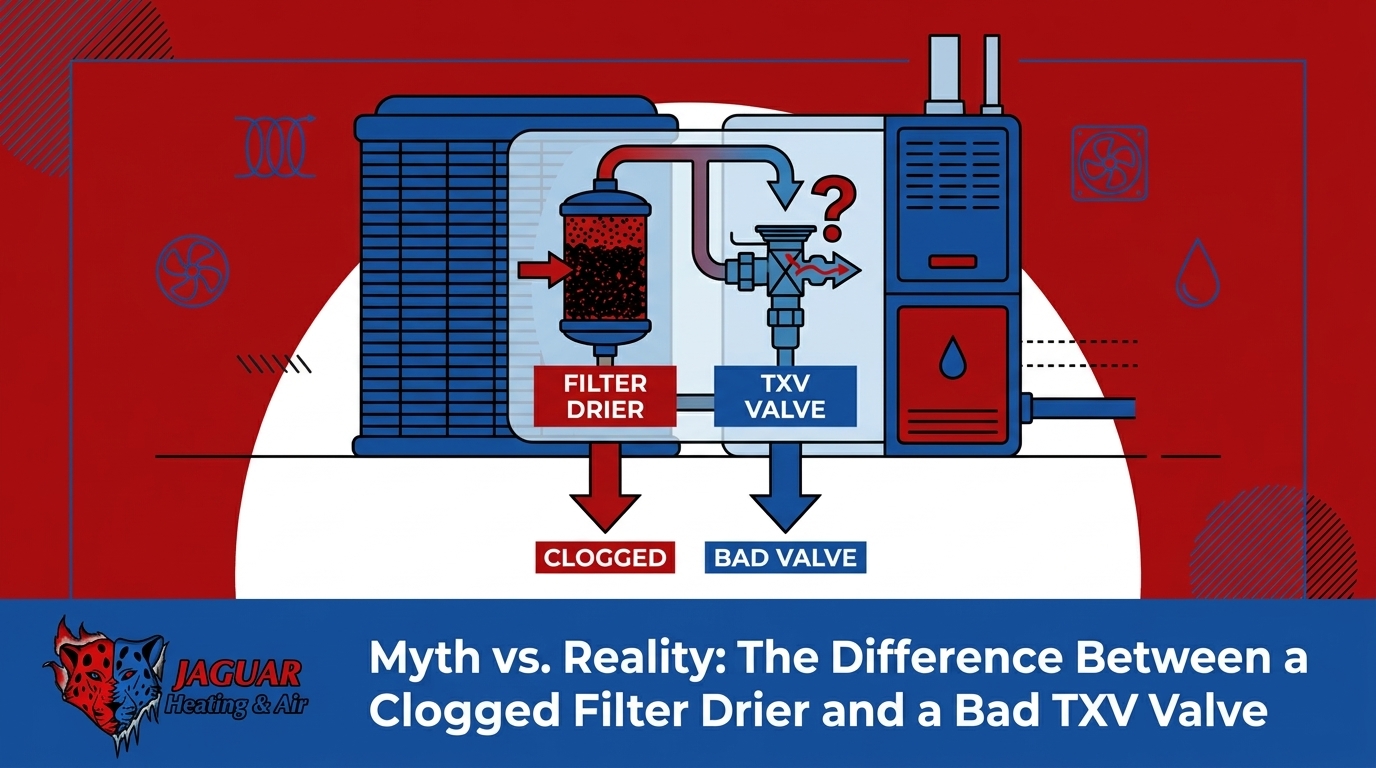
An AC that blows warm air isn't always leaking refrigerant—it might be suffering from a flow restriction. Find out how technicians trace the bottleneck to restore your cooling.