.avif)
Why We Test Your AC's Amp Draw During Late Summer Maintenance
Even if your vents are blowing cold air, months of intense heat can push your compressor to the brink. We measure invisible electrical fatigue to catch stressed parts before a total breakdown.
Even if your vents are blowing cold air, months of intense heat can push your compressor to the brink. We measure invisible electrical fatigue to catch stressed parts before a total breakdown.

Surviving the Transition: Why Your AC Needs a Late-Season Electrical Health Check
September is here, but if you live in the Sacramento area, you know the intense heat hasn't exactly packed its bags just yet. In our years of keeping local homes comfortable, our team at Jaguar Heating & Air has seen firsthand how this late-season heat pushes equipment to the breaking point. If you are wondering why we test your AC's amp draw during late summer maintenance, it comes down to catching invisible electrical strain before it causes a sudden, total breakdown. Right now, during the September late-summer transition, average highs in the area still hover in the low 90s. This means your cooling system is still working incredibly hard after already enduring months of continuous, heavy operation. It is easy to assume everything is perfectly healthy because the vents are still blowing cold air, but the reality inside the metal cabinet is often a completely different story.
Beneath the surface, your system's motors and compressors may be silently suffering from extreme electrical fatigue. The parts that keep the air moving and the refrigerant flowing have been running a marathon since May. This is exactly why a late-season tune-up becomes a critical decision point for homeowners as we prep for the upcoming heating season. Instead of just guessing if the system is okay, our trained technicians use advanced diagnostics—like testing the electrical current—to determine if your equipment is safely coasting into the off-season or if it desperately requires preemptive care. Making sure your system survives this final stretch of hot weather requires more than just changing a filter; it requires professional Air Conditioning expertise to evaluate the true health of the machinery.
The Invisible Toll of Sacramento Valley Heat on HVAC Systems
The hidden problem: A pattern we see often across the Sacramento Valley is that the prolonged, relentless nature of triple-digit heat takes a severe, cumulative toll on mechanical and electrical equipment. Months of 90-100°F heat literally bake the internal components of your AC unit. While the system is designed to handle hot weather, constant exposure to these extreme temperatures causes a phenomenon known as thermal degradation. The insulation inside the motor wiring begins to break down, and the lubricating oils inside the bearings start to lose their effectiveness.
The underlying cause: This excessive, continuous heat directly increases the electrical resistance within the wiring and motor windings. You can think of electrical resistance like trying to drink a thick milkshake through a very narrow straw—it requires a lot more effort. When resistance goes up, the system's components are forced to draw more current (measured in amps) just to perform their normal, everyday cooling functions. This is not a sudden event; it is a cumulative effect. The thermal degradation builds up day after day, week after week, forcing the motors to run hotter and pull more electricity as the summer drags on.
The proactive solution: By the time early fall arrives, your system is at its absolute highest risk for sudden electrical failures. The equipment is exhausted right when you still need it to handle warm September afternoons. Catching this heat fatigue requires detailed AC Maintenance, where our professionals can measure the exact toll the summer has taken. By identifying this invisible strain early, you can intervene before parts literally melt down and leave your home without cooling.
Decoding the Diagnostics: What Exactly is Amp Draw?
To understand why late-summer tune-ups are so important, it helps to understand exactly what our technicians are looking for when they open the electrical panel. In simple terms, an amp (short for ampere) is the measurement of electrical current flowing to your AC's motors and compressor. If voltage is the water pressure in a pipe, amperage is the actual amount of water flowing through it. When your system is healthy, it uses a predictable, steady amount of electricity. When it is struggling, it pulls more current to compensate.
During a maintenance visit, our technicians rely on multimeter amp draw readings (RLA vs LRA) to see exactly how hard the system is working. By comparing the actual readings on the multimeter against the manufacturer's specifications printed on the unit's data plate, a technician can instantly reveal the true health of the motor. If the numbers are too high, it is a clear warning sign that the motor is exhausted.
RLA vs. LRA: The Tale of Two Metrics
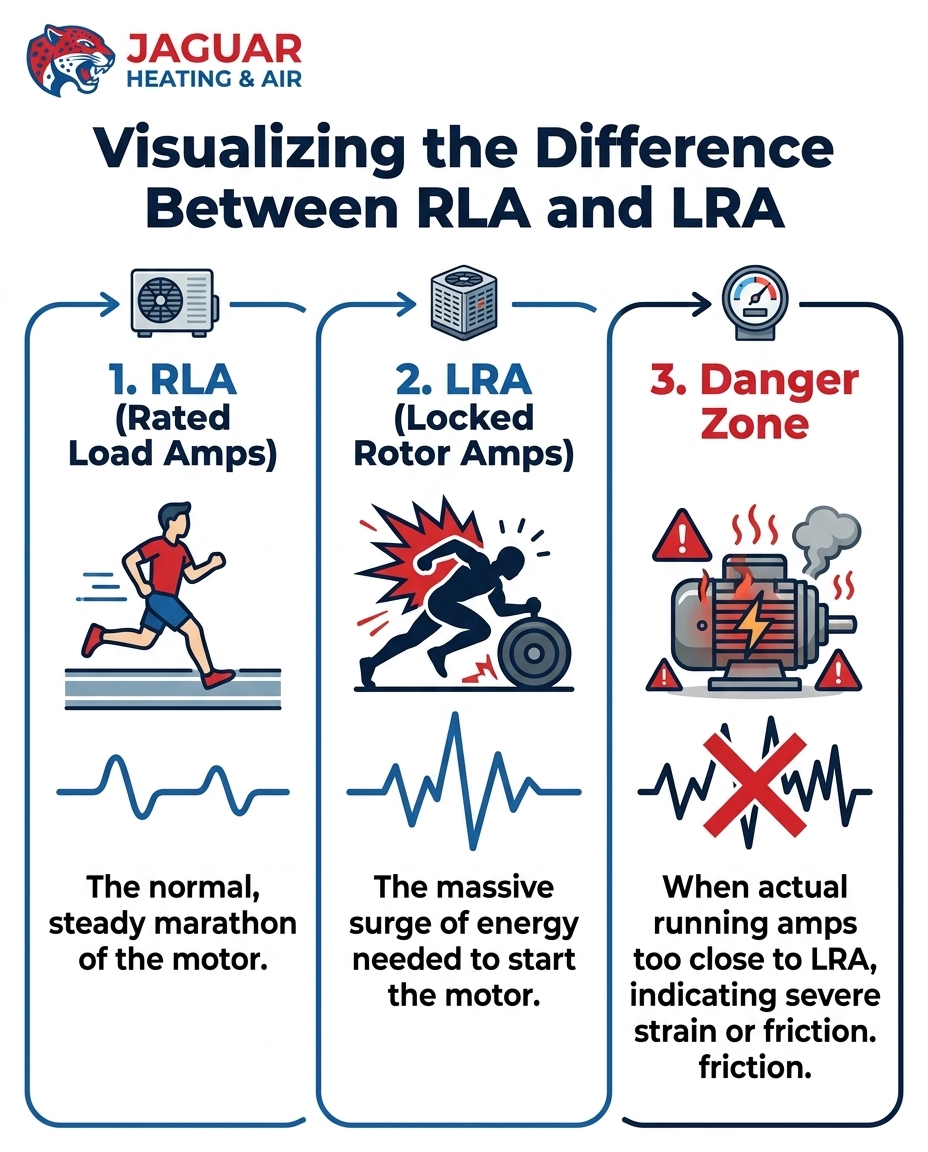
When looking at a motor's health, professionals focus on two very specific metrics. Understanding the difference between them explains how a motor can be running but still be on the verge of failure.
• RLA (Rated Load Amps): This is the everyday marathon pace of the motor. It represents the normal, safe operating current the manufacturer specifies for the unit when it is running smoothly.
• LRA (Locked Rotor Amps): This is the explosive sprint to get started. It is the massive surge of current required to initially turn the motor on, or what happens when a motor is completely seized and cannot spin at all.
Consistently high RLA means the motor is exhausted and working much too hard just to maintain its normal pace. If your running amps start creeping up toward the LRA number, a breakdown is imminent.
• Rated Load Amps (RLA) — What It Measures: Continuous running current during normal operation. — What High Readings Mean: Motor is strained, overheating, or fighting friction.
• Locked Rotor Amps (LRA) — What It Measures: Starting surge current or current when the motor is stuck. — What High Readings Mean: Motor is completely seized, or capacitor has failed.
Why 'Blowing Cold Air' Isn't the Whole Story
One of the most common misconceptions in home maintenance is the belief that "if it's cooling my house, it doesn't need maintenance." It is entirely logical to think that cold air coming from the vents means the equipment is in perfect condition. However, an AC compressor or blower motor will often continue to run and produce cold air even while drawing dangerously high amps. The system will literally work itself to death to keep your house comfortable.
You can compare a high amp draw to driving a car on the highway in second gear. Yes, the car is moving forward, and you are getting to your destination, but the engine is screaming, overheating, and slowly destroying itself in the process. Your air conditioner does the exact same thing when it is fighting high electrical resistance. It will keep cooling your home right up until the moment a wire melts or a motor seizes.
In our experience servicing both newer tract homes and older properties throughout the region, this hidden danger is exactly why our team at Jaguar Heating & Air relies on a strict, metric-driven diagnostic checklist rather than just doing a quick visual once-over. Basic visual inspections completely miss invisible electrical strain. A technician cannot "see" high amperage just by looking at a motor. By prioritizing hard data and precise multimeter readings, we catch the silent issues that standard visual checks leave behind, protecting your investment from sudden failure.
Top Culprits Behind High Amp Readings in Early Fall
When our technicians test your system and find that it is pulling too many amps, it is usually a symptom of a specific underlying issue. After a long summer of heavy use, we typically see several common culprits driving up electrical strain in early fall.
1. Failing Capacitors: The run capacitor acts like a continuous battery booster for the motor, helping it maintain a steady spin. When the intense summer heat causes a capacitor to weaken, it stops providing that extra electrical push. The motor is then forced to draw more amps directly from your home's electrical panel to keep spinning, which quickly leads to overheating.
2. Mechanical Friction: Motors have bearings that allow them to spin smoothly. Over months of continuous operation, these bearings can wear down, or the internal lubrication can dry up. This creates mechanical friction, making it physically harder for the blower motor or condenser fan motor to turn. If you notice strange sounds alongside performance issues, it might be friction—in fact, an AC Blower Motor Sounds Like a Jet Engine when these bearings begin to severely fail.
3. Dirty Coils and Airflow Restrictions: A system suffocated by months of summer dust, pollen, and debris has to work twice as hard to move air and transfer heat. When the condenser coils outside are blanketed in dirt, the compressor cannot release heat efficiently. This restriction drives up the compressor's amp draw significantly.
4. Electrical Winding Breakdown: The copper wires inside your AC motors are coated with a thin layer of insulation. Constant summer heat and vibration can cause this insulation to degrade. When the insulation breaks down, the electrical current doesn't flow as smoothly, causing the motor to pull more amps to compensate for the lost efficiency.
From High Amps to Total Breakdown: The Domino Effect
The problem: Ignoring high amp draw is like ignoring a check engine light—it never resolves itself, and it always leads to a larger issue. High amp draw generates excessive internal heat within the motor. This additional heat further degrades the motor's wiring insulation, which in turn causes the amp draw to spike even higher. It is a vicious cycle that rapidly accelerates the aging process of your equipment.
The cause: The tipping point usually happens during a late-season heatwave. The motor, already compromised by months of thermal degradation and high electrical resistance, is pushed to its absolute limit. The internal wiring finally shorts out, or the compressor seizes entirely because it simply cannot handle the electrical load anymore. Our technicians see this sudden domino effect happen all too often. Just this past cooling season, a local customer reached out to us when their AC went out completely at a rental property on a scorching Friday afternoon. One of our lead technicians diagnosed the problem, explained the electrical failure, and fixed the unit while providing preventive maintenance advice to prep the system for the upcoming heating season.
The solution: Catching a failing capacitor or a struggling blower motor early prevents a much more expensive emergency repair. Sudden blower fan failures always seem to happen at the worst possible times—like late at night or during a weekend heatwave—when early warning signs are ignored. By scheduling professional AC Repair or maintenance before the system fails, you stop the domino effect in its tracks and save yourself from a costly, uncomfortable emergency.
How Professionals Measure Electrical Strain Safely
It is absolutely vital to understand that testing amp draw is strictly a job for licensed professionals. This diagnostic process requires exposing live, high-voltage electrical panels while the system is actively running. There is a severe risk of electric shock, and this should never be attempted by a homeowner under any circumstances. DIY electrical testing on HVAC equipment is incredibly dangerous.
When our licensed technicians perform this test, they safely use a specialized tool called a clamp-on multimeter. They carefully clamp this device around the specific, insulated high-voltage wires feeding the compressor and the fan motors. The multimeter measures the magnetic field generated by the electricity flowing through the wire, providing a highly accurate reading of the current without needing to disconnect any live circuits.
This process creates a critical decision point during the tune-up. The technician reads the multimeter amp draw readings (RLA vs LRA) and compares them directly to the unit's original data plate. If the actual running amps are dangerously close to the maximum rated limits, the technician can determine if preemptive replacement of a part—like a weak capacitor or a failing motor—is needed. Knowing exactly how your system's "heart" is performing provides immense peace of mind before entering the off-season. For homeowners who want this level of thorough, metric-driven care year-round, enrolling in an HVAC Maintenance Membership ensures these vital electrical checks are never skipped.
Protect Your System's Heart Before the Off-Season
Understanding your cooling system's electrical health is the absolute best way to predict and prevent sudden motor failure. While the air coming out of your vents might feel perfectly fine, the invisible electrical strain inside the cabinet tells the true story of how your equipment handled the long, hot summer. By relying on precise metrics rather than just visual guesswork, you can catch heat-fatigued components before they cause a complete system shutdown.
As the intense summer heat finally begins to break and we transition toward the cooler heating season, now is the perfect time to prioritize a comprehensive, metric-driven tune-up. Our team highly recommends scheduling this maintenance now, before you need to switch on your furnace or heat pump for the winter. Knowing exactly why we test your AC's amp draw during late summer maintenance empowers you to make smart, proactive decisions for your home. We encourage you to reach out and learn more about our thorough maintenance options, ensuring your system remains efficient, safe, and ready to rest easy during the upcoming off-season.
Frequently Asked Questions
Why is my AC pulling too many amps?
Your AC pulls too many amps when it has to work harder than normal to perform its job. This is typically caused by failing run capacitors, mechanical friction from worn bearings, or severe airflow restrictions like dirty condenser coils. When components face resistance, they require more electrical current to keep spinning, which drives up the overall amp draw.
What happens when an AC compressor draws too much current?
When a compressor draws too much current, it generates excessive internal heat that breaks down its electrical insulation. This heat fatigue creates a vicious cycle where the compressor pulls even more electricity to keep running. Eventually, this leads to tripped circuit breakers, short-circuited wiring, or a completely seized compressor that requires an expensive replacement.
How do you know if an AC blower motor is going bad?
A failing blower motor often gives early warning signs before it completely stops working. You might notice weak airflow from your vents, strange grinding or squealing noises, or a burning smell coming from the ductwork. However, the most accurate way to know a motor is going bad is through a professional amp draw test, which detects invisible electrical strain before physical symptoms appear.
What causes an AC capacitor to fail?
AC capacitors most commonly fail due to prolonged exposure to extreme heat and heavy continuous use during the summer. Over time, the internal components of the capacitor degrade, causing it to lose its ability to store and release electrical energy. Power surges and age also contribute heavily to capacitor failure, which is why they are checked during every maintenance visit.
Can a dirty air filter cause high amp draw?
Yes, a severely dirty air filter can indirectly cause high amp draw. When a filter is clogged, it suffocates the system, forcing the blower motor to work much harder to pull air through the restriction. This added mechanical strain requires the motor to pull more electrical current, increasing the amp draw and the risk of overheating.
Is it normal for an AC to pull more amps in extreme heat?
It is normal for an AC to pull slightly more amps during extreme heat because the system is working under a heavier load to cool the house. However, the amp draw should never exceed the manufacturer's Rated Load Amps (RLA) specified on the data plate. If the readings spike above those safe limits, it indicates a dangerous level of electrical strain, not just normal hot weather operation.
Recent Posts
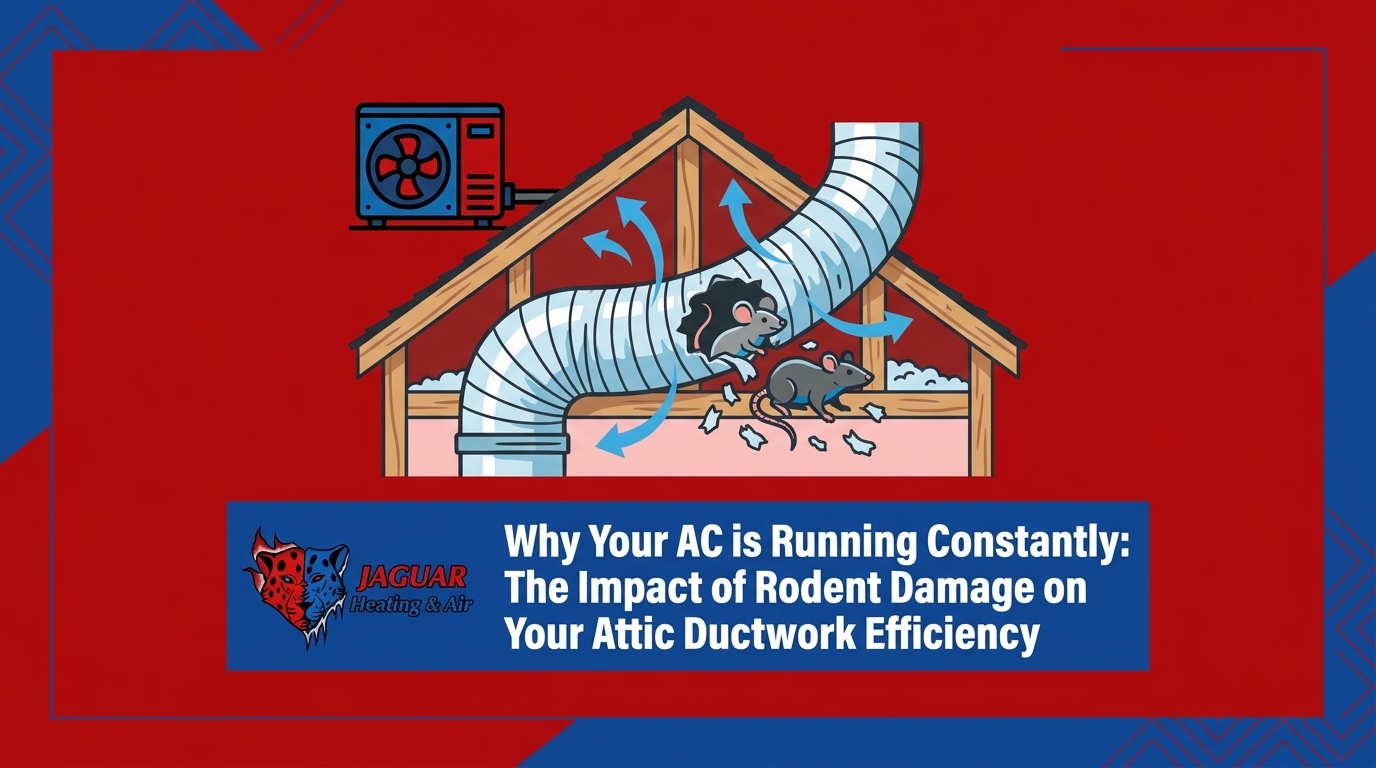
The Impact of Rodent Damage on Your Attic Ductwork Efficiency
If your cooling system runs constantly but your home stays warm, roof rats may have chewed through your flex ducts. See why a tape patch isn't enough to safely restore your system's airflow.
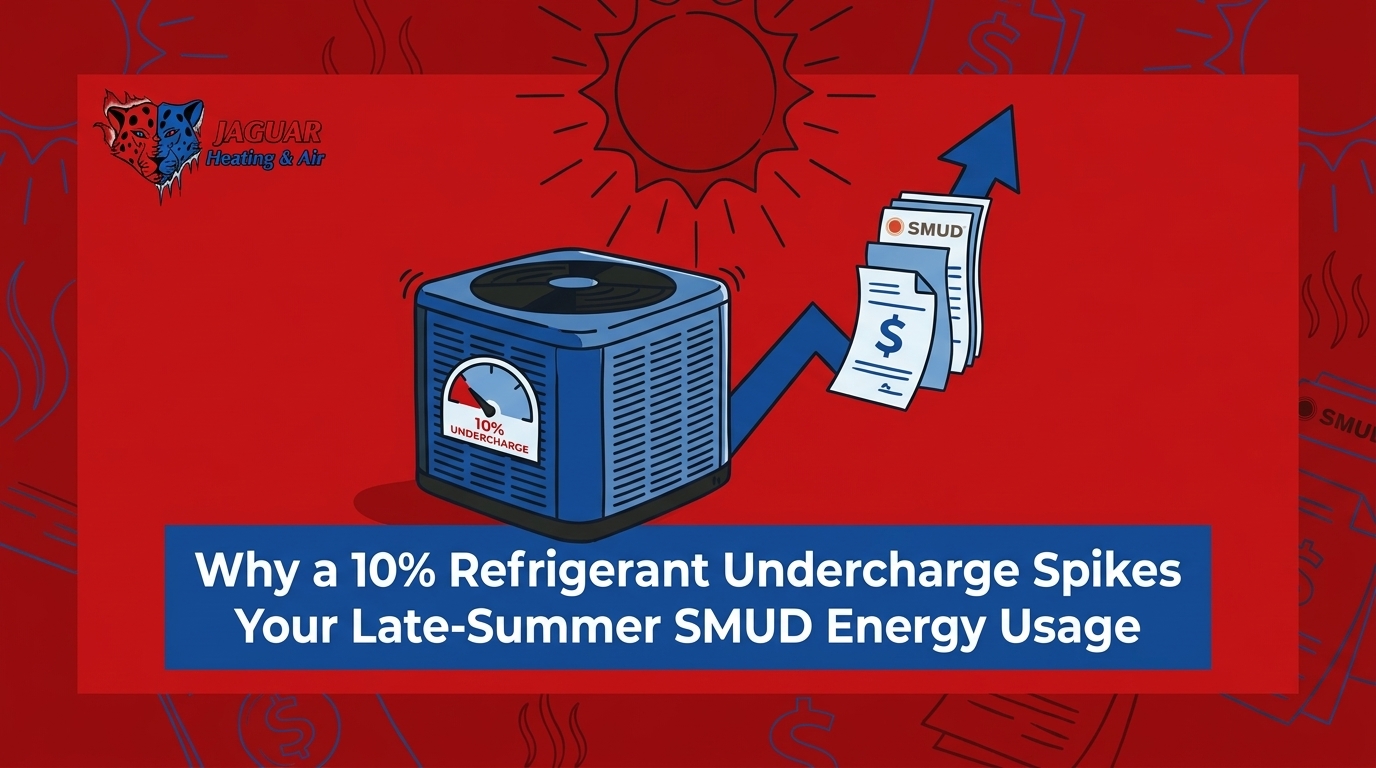
How Proper Refrigerant Charge Impacts Your Monthly SMUD Bill
Blaming lingering Sacramento heat for high September electricity usage? A minor 10% refrigerant undercharge forces your AC to run drastically longer, quietly multiplying your energy costs.
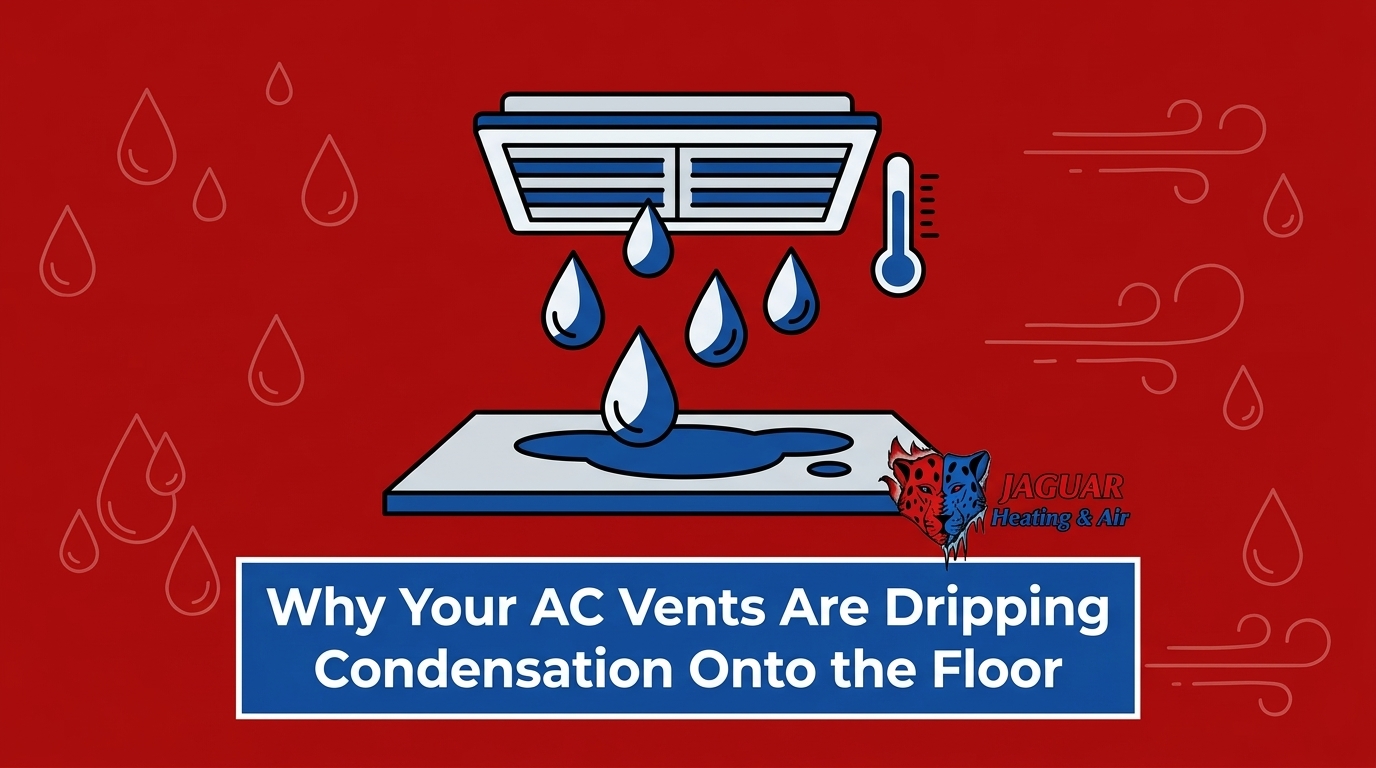
Why Your AC Vents Are Dripping Condensation Onto the Floor
Water pooling under your ceiling registers is a stressful surprise. Understand the physics behind sweating duct boots and know when to call a professional before drywall damage occurs.