.avif)
The Real Story Behind Buzzing Sounds from Your AC Disconnect Box
A buzzing AC disconnect box could be normal operation or a serious fire hazard. Understand what causes these noises and why you should never inspect high-voltage equipment yourself.
A buzzing AC disconnect box could be normal operation or a serious fire hazard. Understand what causes these noises and why you should never inspect high-voltage equipment yourself.

Hearing a Buzz Outside? Deciding Between a Normal Hum and an Electrical Hazard
Is the strange noise coming from the gray metal panel next to your outdoor unit just a normal operational hum, or is it a warning sign of an electrical fire hazard? Knowing The Real Story Behind Buzzing Sounds from Your AC Disconnect Box is critical for your home's safety. By the time the September transition arrives, your cooling system has endured hundreds of hours of intense operation, making electrical fatigue highly likely. You might walk outside, hear an unsettling crackle, and wonder if the system is safe to run, or if it is on the verge of a catastrophic failure.
When high-voltage symptoms appear, relying on professional air conditioning services for diagnostic AC repair is the only safe path forward. The disconnect box is not a component that can be ignored or safely tinkered with by a homeowner. It serves as the primary localized safety switch for your entire outdoor condenser, meaning it handles a massive amount of electrical current. Differentiating between a standard magnetic vibration and a dangerous electrical arc is the first step in protecting your property and ensuring your system is ready for the changing seasons.
What you should do first:
• Listen from a safe distance: Do not touch the metal box if it is vibrating loudly.
• Identify the tone: A steady, low-volume hum is often normal, but a loud, aggressive buzz is not.
• Check for odors: A faint smell of burning plastic or ozone indicates immediate danger.
• Turn off the indoor thermostat: Stop the demand for cooling to temporarily halt power flow.
Understanding exactly what is happening inside that box requires looking at how the components operate under heavy load, why they degrade over time, and what specific sounds indicate a critical mechanical failure.
Understanding Your AC Disconnect Box: Normal Operations vs. Dangerous Noises
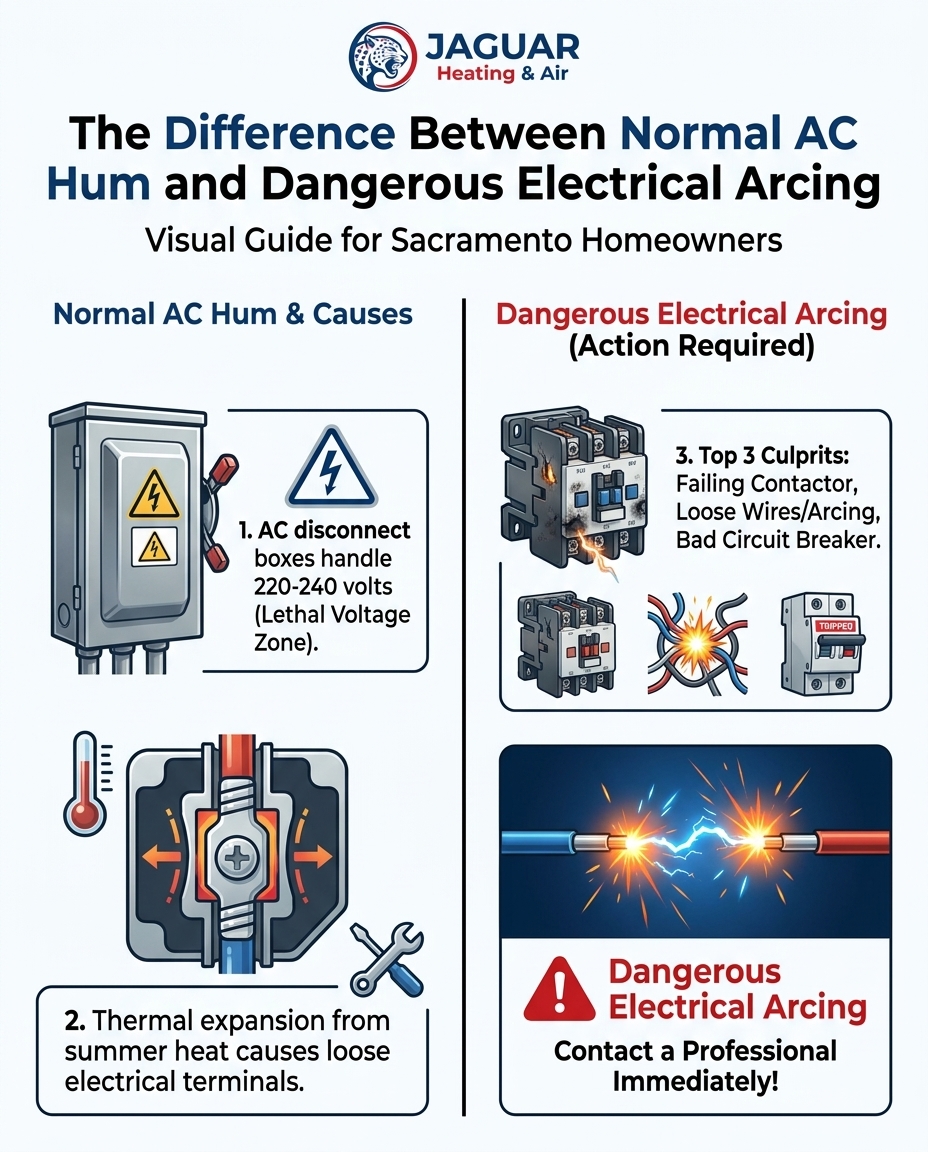
The primary function of the AC disconnect box is to act as a localized, manual safety switch. It allows technicians to completely cut the 220 to 240 volts of electricity flowing to the outdoor condenser unit before performing maintenance or repairs. Because it handles such high voltage, the components inside are heavy-duty and designed to withstand significant electrical loads. However, they are not completely silent. Understanding the physics of the sounds it makes is essential for accurate diagnostics.
A normal, low-level magnetic hum is often associated with standard power flow. Many electrical devices containing transformers or magnetic coils emit a faint, 60-hertz hum simply because alternating current (AC) creates a rapidly changing magnetic field. This causes the internal metal laminations to vibrate slightly. If you have to put your ear close to the box to hear it, and the sound is smooth and consistent, it is typically just the sound of standard electrical operation.
Contrast that normal hum with a loud, crackling, or aggressive buzzing sound. This is indicative of electrical arcing. Arcing occurs when electrical current jumps across a physical gap in a compromised connection. Instead of flowing smoothly through a tight wire terminal, the electricity uses the surrounding air as a conductor. This generates intense heat, degrades the metal, and creates a distinct, erratic crackling noise. It is a severe fire hazard.
Homeowners often notice these noises because they stand out against the usual background hum of the condenser fan and compressor. Just as an AC blower motor sounds like a jet engine when its internal bearings begin to fail, a disconnect box will broadcast its distress through highly specific audio cues. Recognizing the difference is a vital part of homeowner diagnostic awareness.
• Low, steady, consistent hum — Likely Internal Source: Normal magnetic coil operation or transformer vibration — Safety Level & Required Action: Safe. Monitor for changes in volume.
• Rapid chattering or clicking — Likely Internal Source: Failing contactor struggling to stay closed — Safety Level & Required Action: Warning. Requires professional replacement soon.
• Loud, aggressive buzzing — Likely Internal Source: Degraded circuit breaker vibrating under heavy load — Safety Level & Required Action: Hazardous. Turn off power at main panel and call for service.
• Erratic crackling or sizzling — Likely Internal Source: Electrical arcing across loose or melted wire terminals — Safety Level & Required Action: Critical Danger. Shut off main power immediately.
How Sacramento's Brutal Summer Heat Loosens Electrical Connections
The environment your outdoor unit operates in plays a massive role in the lifespan of its electrical components. Sacramento's frequent triple-digit summer days cause continuous AC cycling, accelerating a physical phenomenon known as thermal expansion and contraction. This is the mechanical reality behind why so many disconnect boxes begin to fail as the cooling season draws to a close.
Metals expand when they get hot and contract when they cool down. The electrical terminals inside your disconnect box are made of copper, aluminum, and steel alloys. During a heatwave, the ambient temperature inside the metal box can easily exceed 140 degrees Fahrenheit. When the air conditioner kicks on, the 240 volts of electricity flowing through those connections generates even more heat. The metal terminals expand under this thermal load.
When the system cycles off, or when the sun goes down and the nighttime air cools the neighborhood, the metal contracts. This continuous, daily cycle of expanding and contracting acts like a microscopic loosening wrench. Over months of intense operation, the tight screws holding the electrical wires in place slowly back out. A connection that was perfectly tight in May can become dangerously loose by September.
This is a common pattern observed in the field. In fact, during a recent stretch of triple-digit heat, a diagnosis of an AC system failing to cool a home revealed that the core issue was severe electrical fatigue at the outdoor connections. The continuous heavy load had compromised the power delivery. Once the technician explained the problem and options clearly, the failing electrical components were addressed, restoring proper voltage to the compressor and allowing the house to cool effectively again.
The cumulative effect of this thermal stress cannot be overstated. Loose connections create electrical resistance. Resistance generates more heat, which causes further expansion, creating a vicious cycle that eventually leads to melted insulation, arcing, and a loud buzzing sound. It is a slow, mechanical degradation driven entirely by the intense summer climate and heavy system usage.
Three Common Causes Behind a Buzzing AC Disconnect Box
When a professional technician opens a buzzing disconnect box during the September transition—the end of the heavy cooling season—they are typically looking for one of three specific component failures. Each of these issues generates a slightly different type of noise, but all of them require immediate professional intervention to resolve safely.
Failing AC Contactors
The contactor is an electromechanical switch responsible for sending high-voltage power to your compressor and condenser fan. It operates using a low-voltage magnetic coil. When your thermostat calls for cooling, it sends 24 volts to this coil, which creates a magnetic field that physically pulls down a set of high-voltage metal contacts, completing the circuit.
Over time, the magnetic coil can weaken, or the metal contacts can become pitted and scarred from electrical arcing during normal operation. When the coil degrades, it struggles to hold the contacts tightly together against the force of an internal spring. This results in a rapid "chattering" or loud buzzing sound as the contacts bounce open and closed dozens of times per second. A chattering contactor delivers inconsistent, dirty power to your compressor, which can cause catastrophic damage to the most critical part of your air conditioner if left unresolved.
Loose Electrical Wiring and Arcing
As discussed regarding thermal expansion, loose wiring is a primary culprit for aggressive electrical noise. When a wire terminal backs out even a fraction of a millimeter, the 240 volts of electricity must jump that physical gap to keep flowing. This is called electrical arcing.
Arcing is incredibly dangerous. It ionizes the surrounding air, creating a plasma discharge that can reach temperatures hot enough to melt copper and steel. The sound of arcing is a distinct, erratic crackling or aggressive sizzle, often accompanied by a loud buzz. If you hear this sound, you are listening to a live fire hazard. The intense heat will melt the wire insulation, destroy the disconnect block, and can easily ignite surrounding debris or the siding of your home.
Tripped or Failing Circuit Breakers
Many modern AC disconnect boxes include built-in circuit breakers rather than old-fashioned pull-out fuses. These breakers are designed to trip and cut power if the system draws too much amperage, protecting the wires from overheating.
However, circuit breakers are mechanical devices with internal bimetallic strips and spring mechanisms that degrade over time. As a breaker ages and is subjected to years of intense summer heat, its internal components can become loose. When high current flows through a degrading breaker, the internal parts can literally vibrate against each other, creating a loud, continuous hum or buzz. A buzzing breaker is a strong indicator that the component is failing under load and is no longer capable of providing reliable safety protection for your HVAC system.
The Dangers of DIY: Why You Should Never Open the Disconnect Box
The internet is full of tutorials on how to troubleshoot household appliances, but the AC disconnect box is strictly off-limits for anyone without professional certification. Residential air conditioning systems operate on 220 to 240 volts of electricity. To put that in perspective, a standard wall outlet in your home delivers 120 volts. The voltage inside the disconnect box is highly lethal and can cause severe injury, deep tissue burns, or death in a fraction of a second.
Homeowners should be explicitly warned against opening the outer panel, attempting to pull the fuse block, or trying to tighten loose wires with standard household screwdrivers. Even if you believe you have turned off the power at the main breaker panel inside your house, residual voltage can remain, or the breaker itself may be mislabeled or faulty. The illusion of safety is often the most dangerous part of DIY electrical work.
Working with a veteran-owned, certified company means you are relying on professionals equipped with the proper insulated tools, specialized diagnostic meters, and rigorous safety training. Certified technicians follow strict National Electrical Code (NEC) and Occupational Safety and Health Administration (OSHA) standards for high-voltage equipment. They know how to properly verify that a circuit is dead before touching any metal components.
If the buzzing from your disconnect box is exceptionally loud, erratic, or accompanied by a burning plastic smell, your immediate action should be to shut off the system at the indoor thermostat. Next, locate your home's main electrical panel and flip the dedicated breaker for the air conditioner to the "OFF" position. Once the power is cut from inside the house, step away from the outdoor unit and call for emergency HVAC service. Never attempt to remove the buzzing fuse block yourself while it is under load, as doing so can trigger a dangerous arc flash.
The September Transition: Addressing Electrical Fatigue Before Fall
The timing of electrical failures is rarely a coincidence. The end of the heavy cooling season—the September transition—is precisely when your system's components are at their weakest. After battling Sacramento's intense heat for months, the mechanical and electrical fatigue reaches its peak. This makes late summer and early fall the most critical time to address strange noises before they cascade into larger system failures.
Addressing a buzzing disconnect box before transitioning your HVAC system to fall heating modes is vital, especially if you utilize a heat pump that relies on the same outdoor unit for winter warmth. Ignoring the warning signs of electrical fatigue can lead to a sudden, complete system failure on the first cold night of the year. Worse, dirty power from a failing contactor or arcing wires can travel down the line and permanently damage the system's compressor, turning a straightforward electrical repair into a massive component replacement.
Proper diagnostics save systems. In a recent scenario where a homeowner feared their entire AC unit was failing and sought a full replacement estimate, a thorough professional inspection revealed a different story. The technician discovered that the core components were still viable, but the system was suffering from severe maintenance neglect. Instead of pushing a replacement, the technician performed a deep cleaning and targeted electrical maintenance, fully restoring the unit's functionality. This highlights the importance of having an expert evaluate the symptoms rather than assuming the worst.
Before the weather shifts entirely, scheduling a comprehensive pre-heating-season diagnostic is the best way to secure your system. A technician will open the disconnect box safely, tighten all high-voltage lugs to the manufacturer's torque specifications, test the contactor coil's resistance, and verify that the breakers are operating within safe parameters. This proactive approach eliminates electrical fire hazards and ensures your equipment is ready for the upcoming season.
Frequently Asked Questions About AC Disconnect Box Noises
When an unsettling noise starts coming from high-voltage equipment, it naturally raises immediate concerns. Here are the most common questions homeowners ask when trying to diagnose electrical sounds near their outdoor unit.
Why is my AC disconnect box buzzing?
A buzzing AC disconnect box is usually caused by electrical fatigue, specifically a failing contactor, loose wire connections, or a degrading circuit breaker. Over the course of a hot Sacramento summer, thermal expansion causes metal terminals to loosen, creating electrical resistance. When current struggles to pass through these loose connections, it generates a loud buzzing or vibrating sound that requires professional repair.
Is an electrical buzzing sound from my AC dangerous?
Yes, loud buzzing or erratic crackling is highly dangerous and often indicates an electrical arcing hazard. While a very faint, steady hum can be normal magnetic operation, an aggressive buzz means electricity is jumping gaps or components are failing under heavy load. This generates intense heat that can melt insulation and easily start an electrical fire if not shut down immediately.
Can I open my AC disconnect box to check the wires?
No, you should never open the AC disconnect box yourself due to the lethal 240 volts of electricity present inside. Even if the system is not actively running, the incoming power lines from your main house panel remain fully energized. Only a certified HVAC technician or licensed electrician with proper insulated tools should open, test, or repair the components inside this high-voltage safety switch.
What does a bad AC contactor sound like?
A failing AC contactor typically produces a rapid chattering, loud clicking, or heavy buzzing sound. This happens because the internal magnetic coil has weakened and can no longer hold the high-voltage metal contacts tightly together. As the contacts bounce rapidly against each other, they create a distinct mechanical chatter that disrupts the clean flow of power to your compressor.
Should I turn off my AC if the disconnect box is buzzing loudly?
Yes, if the disconnect box is buzzing loudly or emitting a crackling noise, you should turn off the system immediately at the indoor thermostat. Following that, go to your home's main electrical panel and switch off the dedicated AC breaker to completely cut the power supply. Once the power is safely disabled from inside the house, leave the outdoor box alone and call a professional technician for emergency diagnostics.
Secure Your System's Safety With Professional Diagnostics
A buzzing disconnect box is not a symptom you can afford to ignore. It is a clear sign of electrical fatigue, often brought on by the grueling thermal stress of the summer cooling season. Whether the noise is caused by a chattering contactor, a vibrating breaker, or the severe danger of electrical arcing, the presence of an aggressive buzz means your system is operating under compromised, unsafe conditions.
Validating your safety concerns is the first step; taking immediate action is the second. Because this equipment handles lethal 240-volt power, professional diagnostics are the only way to achieve true peace of mind. As we enter the September transition, securing your system before the fall heating season begins is critical. Protect your home and your equipment by contacting Jaguar Heating & Air for safe, expert AC repair. Our certified technicians have the tools and training to resolve high-voltage issues safely, ensuring your system runs reliably when you need it most.
Recent Posts

Fall HVAC Maintenance Troubleshooting: Decoding Furnace Startup Smells and Sounds
Is that burning dust smell normal? See what happens inside your system during fall startup and find home maintenance tips and troubleshooting to stay safe.

A Proactive Seasonal Home Maintenance Checklist for HVAC Systems
Why we prioritize October heating inspections. Use this seasonal home maintenance checklist to prevent sudden furnace failures. Schedule your checkup today.

HVAC Maintenance & Replacement Options: Heat Pumps vs. Gas Furnaces in Sacramento
Deciding on a new heater? Review these options comparisons for homeowners to evaluate heat pumps vs. gas furnaces. Compare your system options before winter.