.avif)
The Warranty Safety Net: Why Dealer Certification Matters
Discover why dealer certification matters for your warranty: superior inspections, factory-backed coverage & peace of mind for CPO vehicles.
Discover why dealer certification matters for your warranty: superior inspections, factory-backed coverage & peace of mind for CPO vehicles.

Why Dealer Certification Matters for Your Warranty
Why dealer certification matters for your warranty is simple: without it, you may have little to no protection when something goes wrong. Whether you're buying a used car or having HVAC equipment installed in your Sacramento home, the certification status of the dealer or installer directly determines what warranty coverage you actually receive — and whether that coverage holds up when you need it most.
Here's a quick breakdown of why it matters:
- Manufacturer backing: Only certified dealers can offer factory-backed warranties. Without certification, coverage may come from a third party with far less reliability.
- Inspection standards: Certified dealers must meet strict manufacturer requirements before any warranty is issued or honored.
- Warranty validity: Using a non-certified dealer or installer can void your warranty entirely, leaving you responsible for repair costs.
- Nationwide support: Factory-backed warranties through certified dealers are honored across a broad service network, not just at one location.
- Long-term value: Certification ensures the product or vehicle was properly prepared and documented, reducing the risk of costly surprises down the road.
In April 2026, with repair costs rising and consumers looking for more protection on big purchases, understanding the link between dealer certification and warranty coverage has never been more important.
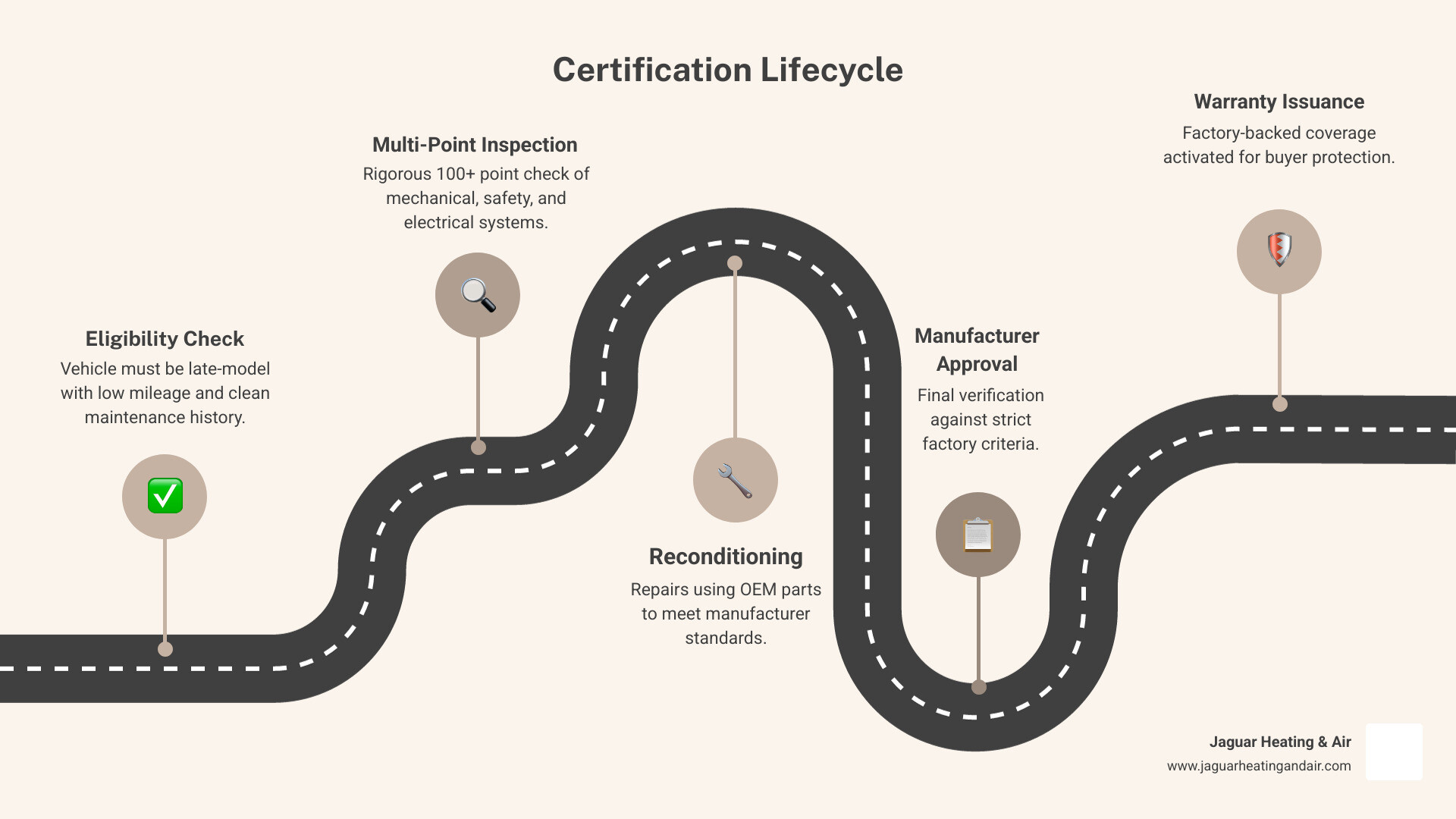
Understanding Certified Pre-Owned (CPO) vs. Standard Used Vehicles
When you browse a lot in Roseville or Sacramento, you’ll see two main categories of used cars: standard used and Certified Pre-Owned (CPO). While they might look similar on the surface, the "safety net" beneath them is vastly different. A standard used car is typically sold "as-is" or with a very limited, short-term dealer warranty. Once you drive it off the lot, any mechanical failure becomes your financial burden.
A CPO vehicle, however, is the "cream of the crop." These are usually late-model vehicles, often sourced from lease returns where the previous driver was contractually obligated to perform regular maintenance. To even be considered for a manufacturer’s CPO program, a vehicle must meet strict eligibility criteria:
- Age Limits: Usually less than five or six years old.
- Mileage Restrictions: Often capped at 50,000 to 75,000 miles.
- Clean History: No major accidents, frame damage, or title issues (like salvage or flood labels).
- Maintenance Records: Proof that oil changes and scheduled services were performed on time.
| Feature | Certified Pre-Owned (CPO) | Standard Used Car |
|---|---|---|
| Inspection | Comprehensive 100+ point manufacturer check | Basic safety/cosmetic check (if any) |
| Warranty | Manufacturer-backed (Factory) | Limited or "As-Is" |
| Roadside Assistance | Usually included | Rarely included |
| Parts Used | Genuine OEM parts | May use aftermarket or recycled parts |
| Transferability | Often transferable to next owner | Usually non-transferable |

The Rigorous Path to Certification: Inspections and Reconditioning
The reason why dealer certification matters for your warranty becomes clear during the inspection phase. A standard used car might get a quick wash and an oil change before hitting the front row. In contrast, a vehicle destined for CPO status undergoes a grueling multi-point inspection.
Automakers like Ford, Chevrolet, and Honda set specific "checklists" that dealers must follow. These aren't just 10 or 20 items; we are talking about 100 to 200 individual points of inspection. Technicians examine:
- Engine and Drivetrain: Checking for leaks, abnormal noises, and smooth shifting.
- Safety Systems: Ensuring airbags, seatbelts, and advanced driver-assistance systems (ADAS) are fully functional.
- Mechanical Condition: Testing brakes, suspension components, and exhaust systems.
- Appearance: Repairing dings, scratches, and interior tears to meet high cosmetic standards.
If a part doesn't meet the manufacturer’s standard, the dealer must repair or replace it using genuine Original Equipment Manufacturer (OEM) parts. This reconditioning process is what allows the manufacturer to feel confident enough to "sign off" on an extended warranty. Without this documented rigor, a manufacturer won't risk their reputation (or their money) on a used product.
Why Dealer Certification Matters for Your Warranty Protection
The most significant advantage of buying from a certified dealer is the warranty extension. Most CPO programs provide two layers of protection:
- Powertrain Warranty: This covers the "big ticket" items like the engine, transmission, and drive axles. It often extends to 6 or 7 years and 100,000 miles from the original service date.
- Bumper-to-Bumper (Limited) Warranty: This covers almost everything else, typically for 12 months or 12,000 miles after the CPO purchase.
This factory-backed support is vital. If you buy a CPO vehicle in Elk Grove and move to Rocklin or even across the country, any franchised dealer for that brand will honor the warranty. This is a massive difference compared to "dealer-only" warranties that require you to return to the specific shop where you bought the car.
Furthermore, maintaining that warranty requires following specific rules. Just as you need to keep your HVAC warranty in place by performing regular maintenance, CPO owners must stick to the manufacturer’s service schedule. Failure to document these services can lead to a denied claim later on.
Factory-Backed Programs vs. Dealer-Only "Certified" Labels
It is important to be a savvy shopper in 2026. Some independent used car lots use the word "certified" as a marketing tactic. However, there is a world of difference between a "Manufacturer CPO" and a "Dealer Certified" car.
A Manufacturer CPO is backed by the company that built the car (e.g., Toyota, Ford). They provide the warranty, the parts, and the nationwide service network.
A Dealer Certified car is usually backed by a third-party service contract or the dealer's own bank account. These "certified" labels often come with more "fine print" and may exclude common wear-and-tear items. They might also require you to jump through hoops, such as getting pre-approval before every repair, which can lead to major headaches.
Benefits often exclusive to Factory-Backed CPO programs include:
- 24/7 Roadside Assistance
- Rental car reimbursement during repairs
- Three-month trials of satellite radio or telematics services
- Special financing rates that are often lower than standard used car loans
- Exchange policies (some brands allow you to swap the car within 3 days if you aren't happy)
Why dealer certification matters for your warranty in HVAC
The parallels between the automotive world and the HVAC industry are striking. Just as a factory-certified auto dealer provides a superior warranty, an authorized HVAC dealer ensures your home comfort system is protected by the manufacturer.
When we install a system, our status as a Trane Comfort Specialist means we have met the highest standards for installation and service. This isn't just a badge; it’s a guarantee to the manufacturer that the equipment was installed correctly. Why does this matter? Because manufacturers like Trane may limit or even void parts warranties if the system was installed by an uncertified "handyman" or a non-authorized dealer.
Using NATE-certified technicians ensures that the complex electrical and refrigerant work is done to code. This precision prevents the "installation errors" that are the number one cause of warranty claim denials in our industry.
Why dealer certification matters for your warranty and long-term reliability
In the Sacramento heat, reliability isn't just a luxury—it's a necessity. Dealer certification ensures that your high-efficiency furnace or air conditioner is "matched" correctly. In modern HVAC, equipment matching is crucial. If you pair a high-tech variable-speed outdoor unit with an old, incompatible indoor coil, you won't just lose efficiency; you could burn out the compressor.
A certified dealer understands these technical requirements and ensures the entire system is documented for the manufacturer. This "ownership transparency" provides peace of mind. For homeowners in areas like El Dorado Hills, working with top authorized Trane Comfort Specialists means you have a paper trail that proves your system was installed and maintained by experts, keeping your 10-year parts warranty fully intact.
Frequently Asked Questions about Dealer Certification
What is the difference between a factory CPO and a dealer-certified car?
A factory CPO is backed by the manufacturer and can be serviced at any of their franchised dealerships nationwide. A dealer-certified car is backed only by that specific dealership or a third-party insurance company, often limiting where you can go for repairs and offering less comprehensive coverage.
Does using an independent shop void my certified warranty?
Under federal law (the Magnuson-Moss Warranty Act), a dealer cannot void your warranty just because you had routine maintenance (like an oil change or filter replacement) done at an independent shop. However, you must keep meticulous records to prove the work was done. If an independent shop performs a repair incorrectly and causes damage, the manufacturer can legally deny coverage for that specific failure. For major warranty repairs, you generally must go to a certified franchised dealer.
Are CPO vehicles worth the higher upfront price in 2026?
Statistics show that CPO vehicles typically cost about 1.8% to 2.5% more than non-certified used cars. However, when you consider the cost of an engine or transmission repair—which can easily run into the thousands—the "insurance" provided by the extended warranty and the rigorous 100+ point inspection usually pays for itself. Plus, CPO cars often qualify for better financing rates, which can offset the higher purchase price.
Conclusion
Whether you are navigating the used car market or upgrading your home's climate control, the message is the same: certification is your safety net. At Jaguar Heating & Air, we take this responsibility seriously. As a family-owned business serving Sacramento, Folsom, Elk Grove, and the surrounding areas, we know that our customers rely on us for more than just a quick fix.
Our NATE-certified technicians and Trane Comfort Specialist status are our promise to you that your warranty is secure and your system will perform when you need it most. We stand behind our work with a 100% customer satisfaction guarantee and flat-rate pricing, ensuring you never have to worry about the "fine print."
Don't leave your long-term comfort and financial security to chance. Choose a partner that the manufacturers trust. Learn more about our services and how we can help you maintain your home's "warranty safety net" today.
Recent Posts

Fall HVAC Startup Checklist: Diagnosing Burning Smells and System Red Flags
Deciding if that burning dust smell is normal? See why this seasonal home maintenance checklist is critical for catching heating failures before winter hits.

Fall HVAC Maintenance Troubleshooting: Decoding Furnace Startup Smells and Sounds
Is that burning dust smell normal? See what happens inside your system during fall startup and find home maintenance tips and troubleshooting to stay safe.

A Proactive Seasonal Home Maintenance Checklist for HVAC Systems
Why we prioritize October heating inspections. Use this seasonal home maintenance checklist to prevent sudden furnace failures. Schedule your checkup today.