.avif)
All About How Pets Affect Filter Changes
Learn how pets affect how often you change your filter with expert tips for cleaner air and better HVAC performance.
Learn how pets affect how often you change your filter with expert tips for cleaner air and better HVAC performance.

How Pets Affect How Often You Change Your Filter — And Why It Matters
How pets affect how often you change your filter is simple: they make you need to change it more often — sometimes twice as frequently as the standard recommendation. Here's a quick breakdown:
| Household Type | Recommended Filter Change Frequency |
|---|---|
| No pets | Every 90 days |
| One dog or cat | Every 60 days |
| Multiple pets | Every 30–45 days |
| Multiple pets + allergies | Every 20–30 days |
If you own pets in the Sacramento area, the standard "change your filter every 90 days" advice isn't built for your home. Dogs and cats shed fur and release microscopic skin particles called dander — and both load up your HVAC filter far faster than a pet-free household ever would. According to the American Pet Products Association, 94 million U.S. households now own at least one pet. That's a lot of filters getting clogged ahead of schedule.
The EPA estimates that indoor pollutant concentrations run two to five times higher than outdoor levels. Add a shedding dog or cat to the mix, and your filter is working significantly harder than most homeowners realize. A dirty filter doesn't just mean dusty air — it forces your HVAC system to work harder, which can increase energy use by up to 15%.
The good news is that once you know how pets change the equation, the fix is straightforward.
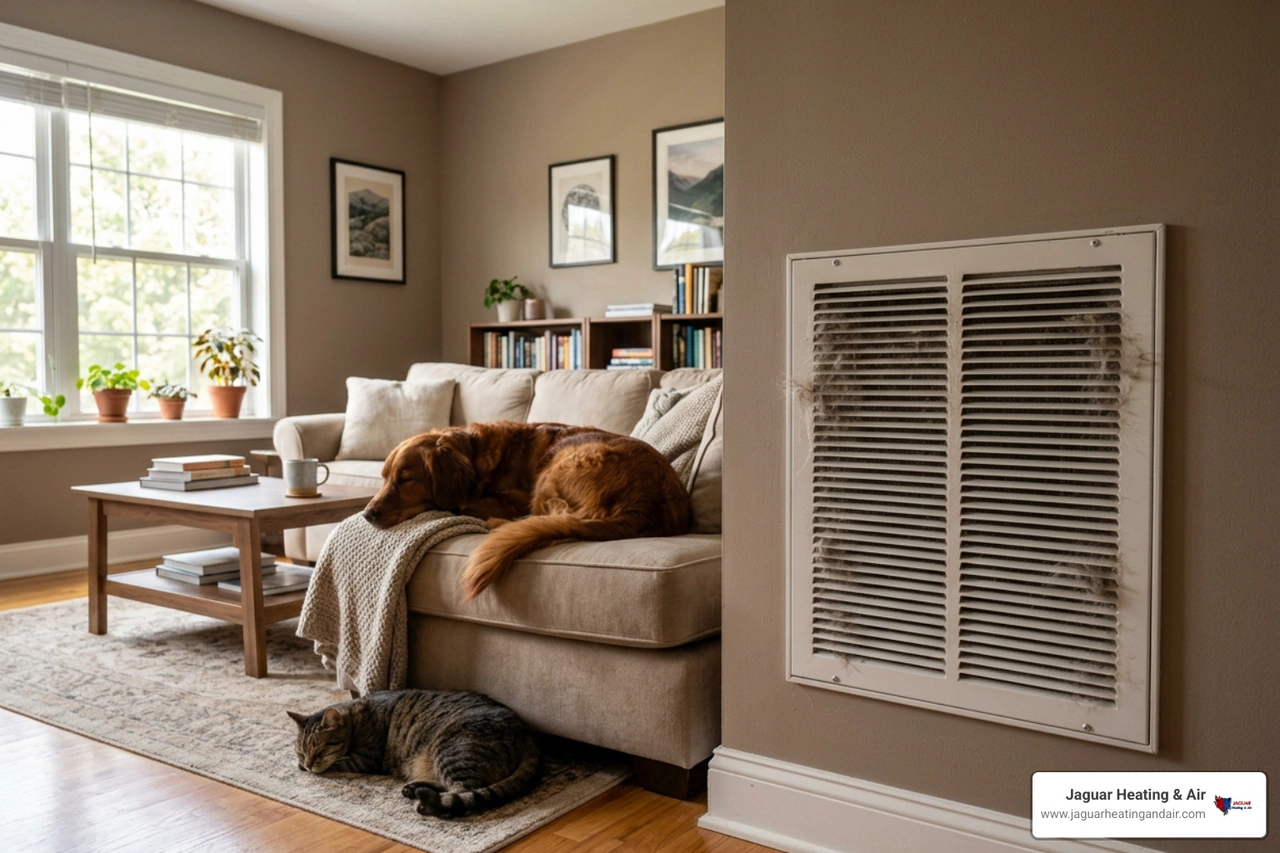
Basic how pets affect how often you change your filter terms:
- how hot dry valley affects filter replacement frequency
- how often should you change your hvac air filter
(Note: The links above have been adjusted to match the exact URLs provided in our internal directory to keep your reading seamless.)
How Pets Affect How Often You Change Your Filter and When to Replace It
To truly understand how pets affect how often you change your filter, we have to look at what happens inside your heating and cooling system when animals are present. Your HVAC system works by pulling air from your living spaces through return vents, conditioning it (heating or cooling it), and pushing it back out. The air filter sits at the gateway of this cycle, designed to capture airborne particles before they can settle on your sensitive HVAC components or recirculate through your home.
When you share your home with furry companions, the sheer volume of airborne material increases dramatically. Pets introduce three primary elements into your indoor air:
- Visible Pet Hair: Heavy shedders leave fur on carpets, furniture, and eventually in the air. These larger fibers quickly coat the outer surface of your filter, creating a physical blanket that restricts airflow.
- Microscopic Pet Dander: Dander consists of tiny, lightweight skin flakes that remain suspended in the air for long periods. Because they are so small, they travel deep into the filter media, packing the microscopic spaces between the fibers.
- Tracked-In Debris and Dried Saliva: Pets bring in dust, pollen, and soil from outside, and their dried saliva contains proteins that flake off into the air as they groom themselves.
As these particles accumulate, they create a dense barrier. This restricted airflow forces your blower motor to work harder and run longer cycles to keep your home comfortable. Over time, this extra strain can lead to higher utility bills, uneven heating or cooling, and even premature equipment breakdown.
If you want to dive deeper into the mechanics of animal-related airborne particles, check out our detailed guide on How Pets Impact Indoor Air Quality Rocklin CA to see how these factors specifically interact with local home environments.
How Pets Affect How Often You Change Your Filter in Multi-Pet Homes
If one pet shortens your filter's lifespan, adding more animals compounds the effect exponentially. In a multi-pet home, you are dealing with overlapping sources of dander, fur, and outdoor debris. A home with two dogs and a cat doesn't just have three times the pet material of a single-pet household; the cumulative load often creates a compounding effect that can saturate a standard filter in as little as three to four weeks.
For allergy sufferers, this buildup triggers severe symptoms. Between 15% and 30% of people with allergies react specifically to cats and dogs. When multiple pets are constantly shedding and releasing dander, allergen spikes can occur up to 40% more frequently if your filter is overdue for a change. Once a filter becomes fully saturated, it can no longer capture new particles. Instead, the high pressure from the blower motor can cause dander and dust to bypass the edges of the filter frame, recirculating these allergens directly back into your breathing space.
Maintaining a clean filter is one of the easiest ways to manage these spikes and protect your household's health. For more strategies on keeping your living spaces healthy, read our overview of the top Reasons Improve Indoor Air Quality Roseville CA.
How Pets Affect How Often You Change Your Filter During Seasonal Shedding
Shedding isn't a constant, uniform process throughout the year. Most pets experience "blow coats" or heavy seasonal shedding twice a year, typically in the spring and autumn. During these periods, the volume of loose hair and dander entering your return vents skyrockets, requiring you to check and replace your filters much more frequently.
The local climate in the Sacramento Valley plays a major role in how these seasonal shifts affect your HVAC system. Our hot, dry summers and cool winters mean that we keep our homes sealed tightly for large portions of the year. In the winter, when doors and windows remain closed to keep the heat in, there is very little natural ventilation. This lack of fresh air causes pet dander and hair to accumulate rapidly inside the ductwork and on the filter face, often requiring monthly changes even if your pets aren't shedding their summer coats.
Conversely, during the dry, dusty summer months, our air conditioning systems run almost continuously. This constant operation means your HVAC system is filtering your home's air volume multiple times a day, pulling in outdoor dust along with indoor pet dander.
| Number of Pets | Low-Shedding Breeds (Poodles, Maltese, etc.) | High-Shedding Breeds (Huskies, Labs, Golden Retrievers) |
|---|---|---|
| 1 Pet | Every 60 days | Every 45 days |
| 2 Pets | Every 45 days | Every 30 days |
| 3+ Pets | Every 30 days | Every 20–30 days |
To understand how our unique local weather patterns interact with your heating and cooling equipment, you can read more about How Hot Dry Valley Affects Filter Replacement Frequency.
Choosing the Best HVAC Filter for Homes with Pets
When dealing with pet hair and dander, not all air filters are created equal. Choosing the right filter type and efficiency rating is critical for maintaining clean air without putting unnecessary strain on your system.
Air filters are rated using the Minimum Efficiency Reporting Value (MERV) scale, which runs from 1 to 20. This scale measures a filter's ability to capture particles of varying sizes:
- Fiberglass Flat-Panel Filters (MERV 1–4): These are the inexpensive, semi-transparent filters often sold in bulk. While they are cheap, they are designed solely to catch large dust bunnies to protect the HVAC equipment itself. They do almost nothing to capture microscopic pet dander or airborne allergens, allowing these particles to pass straight through and recirculate into your home.
- Pleated Media Filters (MERV 8–11): This is the sweet spot for most pet owners. Pleated filters have significantly more surface area than flat-panel filters, allowing them to hold more debris before restricting airflow. A MERV 11 pleated filter is highly effective at capturing pet dander, mold spores, and fine dust, making it an excellent choice for single- or multi-pet households.
- High-Efficiency Filters (MERV 13): These filters capture extremely fine particles, including bacteria, smoke, and microscopic allergens. They are highly recommended for homes with multiple pets and family members who suffer from asthma or severe allergies. However, because they are so dense, they create more resistance to airflow. You must ensure your HVAC system's blower motor is designed to handle a MERV 13 filter without overheating or reducing system performance.
- HEPA Filters: True HEPA filters capture 99.97% of particles down to 0.3 microns. While they provide hospital-grade filtration, standard residential HVAC systems cannot handle the massive airflow resistance a whole-home HEPA filter creates. Using one in a standard system can cause the blower motor to burn out or the air conditioner's evaporator coils to freeze. If you want HEPA-level filtration, it is best to use standalone, portable HEPA air purifiers alongside a standard high-quality pleated HVAC filter.
To make an informed decision on which filter fits your specific system, take a look at our comprehensive guide: Everything Need Know About HVAC Filters.
Warning Signs Your Filter Needs Immediate Replacement
Relying solely on a calendar to decide when to change your air filter can lead to issues, especially during high-shedding seasons or periods of heavy HVAC use. Instead, it's best to look for the physical warning signs that indicate your filter has reached its capacity.
Keep an eye out for these common indicators that your filter needs to be swapped out immediately:
- Visible Gray Discoloration or Matted Hair: If you pull your filter and the white media has turned a dark gray or is covered in a visible layer of fur and dust, it is fully loaded and needs to be replaced.
- The Light Test: This is the most reliable DIY check. Remove your filter and hold it up to a bright light source (like a ceiling light or flashlight). If you cannot see light passing through the pleats of the filter, the media is too clogged to allow proper airflow and should be replaced immediately.
- Weak Airflow from Vents: If you notice that the air coming out of your supply registers feels weak or warm when the AC is running, a clogged filter is often the primary culprit.
- Increased Dust Around the House: When a filter is full, it can no longer trap new particles. You will notice dust and pet hair settling on flat surfaces, countertops, and around the air vents much faster than usual.
- Musty Odors or "Dirty Dog" Smells: A filter loaded with pet hair, dander, and moisture from the air can begin to smell. When your system kicks on, it will distribute these stale, musty odors throughout your entire home.
Ignoring these signs can lead to poor performance and health issues. To learn more about identifying these issues early, read about the Warning Signs Poor Indoor Air Quality and understand the long-term Consequences Neglecting Home Air Quality.
Frequently Asked Questions About Pet Filter Maintenance
Managing your home's air quality when you have pets doesn't have to be complicated. Here are answers to some of the most common questions pet owners ask us about keeping their HVAC systems running smoothly.
How often should I change my filter if I have one dog or cat?
If you have a single pet, we generally recommend changing a standard 1-inch pleated filter every 60 days. However, this timeline can vary depending on several factors:
- Pet Breed: A short-haired, low-shedding dog (like a Chihuahua or Poodle) will produce far less airborne hair than a heavy-shedding breed (like a Golden Retriever, German Shepherd, or Siberian Husky). If you have a heavy shedder, you should adjust your schedule to every 45 days.
- Home Size: In smaller homes or apartments, the volume of air is lower, meaning the concentration of pet dander is higher and the filter will load up faster.
- HVAC Usage: During mild spring and autumn days when your system rarely runs, your filter will last longer than during the peak of summer or winter.
Regardless of the calendar, we recommend performing a quick visual check of your filter once a month to ensure it isn't clogging early. For a complete breakdown of timing strategies, see Don't Let It Clog Your Ultimate Guide To HVAC Filter Timing.
Can I vacuum a disposable filter to make it last longer?
No, you should never vacuum a disposable air filter. While it might be tempting to run a vacuum hose over a dusty filter to extend its life, this actually damages the filter media.
Disposable pleated filters are made of delicate synthetic or paper fibers woven together in a specific pattern to trap tiny particles. Vacuuming these filters creates several issues:
- Fiber Damage: The high suction of a vacuum stretches and tears the microscopic fibers, creating larger holes that allow dust, dander, and allergens to pass straight through.
- Allergen Release: Vacuuming can break up trapped dander and release those fine particles back into your breathing air.
- Deep-Set Clogging: Vacuuming only removes the loose surface hair; it does not pull out the microscopic dander embedded deep within the filter material.
If your disposable filter is dirty, the only safe and effective solution is to replace it with a fresh one.
What other steps can I take to improve indoor air quality with pets?
While changing your air filter regularly is your first line of defense, you can take several other proactive steps to reduce the load on your HVAC system and keep your indoor air fresh:
- Regular Pet Grooming: Brushing your dogs and cats two to three times a week captures loose fur and dander before it can become airborne. Whenever possible, groom your pets outdoors to keep that material out of your home entirely.
- Frequent HEPA Vacuuming: Vacuum your carpets, rugs, and upholstered furniture at least twice a week using a vacuum cleaner equipped with a True HEPA filter. This prevents settled pet hair and dander from being kicked back up into the air when you walk across the room.
- Keep Pets Out of Bedrooms: If family members suffer from allergies, keep bedrooms as "pet-free zones" to give their respiratory systems a break overnight.
- Use Standalone Air Purifiers: Placing portable HEPA air purifiers in high-traffic areas or bedrooms helps capture fine dander and odors that your central HVAC system might miss.
- Clean Return Vents and Registers: Dust and vacuum the metal grates of your return vents annually to prevent hair from building up on the outside of the vents.
Implementing these habits will keep your home cleaner and extend the life of your HVAC filters. To explore more advanced options for your home, read about the Reasons Invest IAQ Solutions Elk Grove CA.
Conclusion
Sharing your home with pets brings incredible joy, but it also means your heating and cooling system has to work a little harder to keep your air clean and comfortable. By understanding how pets affect how often you change your filter, choosing the right pleated MERV-rated filters, and staying consistent with your replacement schedule, you can protect your HVAC investment and enjoy fresh, healthy indoor air all year round.
If you are noticing weak airflow, lingering pet odors, or need help finding the perfect indoor air quality solutions for your home, our team of NATE-certified technicians is here to help. We proudly serve homeowners across the Sacramento Valley, including Elk Grove, Folsom, Roseville, Rocklin, and the surrounding communities, with dependable, same-day service and a 100% satisfaction guarantee.
Schedule professional indoor air quality services with Jaguar Heating & Air today, and let us help you keep your home's air clean, fresh, and comfortable for every member of your family — furry friends included!
Recent Posts

Fall HVAC Startup Checklist: Diagnosing Burning Smells and System Red Flags
Deciding if that burning dust smell is normal? See why this seasonal home maintenance checklist is critical for catching heating failures before winter hits.

Fall HVAC Maintenance Troubleshooting: Decoding Furnace Startup Smells and Sounds
Is that burning dust smell normal? See what happens inside your system during fall startup and find home maintenance tips and troubleshooting to stay safe.

A Proactive Seasonal Home Maintenance Checklist for HVAC Systems
Why we prioritize October heating inspections. Use this seasonal home maintenance checklist to prevent sudden furnace failures. Schedule your checkup today.