.avif)
Why Your Sacramento AC Keeps Tripping the Breaker During Peak Heat Hours
It is 4 PM, your house is sweltering, and your air conditioner just shut down again. Forcing that breaker back on bypasses a critical safety mechanism and risks destroying your compressor.
It is 4 PM, your house is sweltering, and your air conditioner just shut down again. Forcing that breaker back on bypasses a critical safety mechanism and risks destroying your compressor.

The 4 PM Dilemma: Sweat It Out or Risk the Reset?
Your house is sweltering, and you are likely trying to figure out exactly why your Sacramento AC keeps tripping the breaker during peak heat hours. It is 4:00 PM on a blistering afternoon, the indoor temperature is climbing rapidly, and you are standing in front of your electrical panel. The decision point is clear: do you force that breaker back to the "ON" position to get some temporary relief, or do you leave it off and wait for professional help? Your instinct is to bypass the inconvenience with a quick flip of a switch, especially when late afternoon indoor temperatures can spike ten degrees in a matter of minutes.
If you find yourself in this exact situation, the safest and most cost-effective move is to secure professional AC repair in Sacramento. At Jaguar Heating & Air, our dispatch board lights up at exactly this time of day—we see firsthand how the extreme summer heat pushes systems to their absolute limits. A tripped breaker is never a nuisance; it is a critical safety mechanism actively protecting your home. When your air conditioner shuts down during the 4 PM peak electrical load, it means the system is drawing a dangerous amount of electricity. Ignoring this warning sign and repeatedly resetting the breaker puts your home at risk for severe electrical hazards and almost guarantees permanent damage to your cooling equipment. Professional diagnostics are required to uncover the underlying mechanical failure causing the massive amp draw.
The reality of the 4 PM breakdown:
• It is not a fluke: Air conditioners fail in the late afternoon because that is when they are under maximum strain.
• It is a cry for help: The breaker trips to stop an electrical fire, not to annoy you.
• It requires a real fix: Flipping the breaker does not repair the mechanical issue forcing the system to overwork.
The Hidden Dangers of the 'One More Flip' Habit
To understand why resetting a tripped breaker is so dangerous, you first need to understand what that switch actually does. A circuit breaker is essentially a traffic cop for your home's wiring. It constantly monitors the safe electrical capacity of the circuit powering your air conditioner. Wires are only rated to carry a specific amount of electrical current (measured in amps) safely. If your air conditioner begins to pull significantly more amps than the wiring can handle, the wires overheat rapidly. Before the insulation melts and starts a fire, the breaker detects the surge and trips, physically breaking the electrical connection.
When you force a reset, you are pushing raw electricity back into a compromised system. National Fire Protection Association (NFPA) data consistently identifies electrical distribution and lighting equipment as a leading cause of home structure fires. By bypassing the safety switch, you are overriding the very device designed to keep your family safe. The system tripped because it was pushed beyond its limits by the Sacramento peak summer heat, and forcing it to run again will only generate more dangerous heat within your walls.
Beyond the severe fire risk, the "one more flip" habit is a death sentence for your AC compressor. The compressor is the heart of your cooling system, responsible for pumping refrigerant. When a mechanical issue causes it to lock up or struggle, it demands massive amounts of electricity to try and force itself to turn. This is known as a "locked rotor amp" scenario. Sending a massive jolt of electricity into a locked compressor will burn out the internal motor windings, turning a repairable issue into a total system replacement.
• Normal Operation — Electrical Behavior: Pulls 15-20 amps during steady cooling. — Safety Consequence: Wires remain cool; breaker stays engaged.
• Overworked / Straining — Electrical Behavior: Pulls 25-35 amps as heat increases. — Safety Consequence: Breaker trips safely to prevent wire damage.
• Forced Reset (Locked Rotor) — Electrical Behavior: Pulls 100+ amps instantly upon startup. — Safety Consequence: Extreme fire hazard; compressor death imminent.
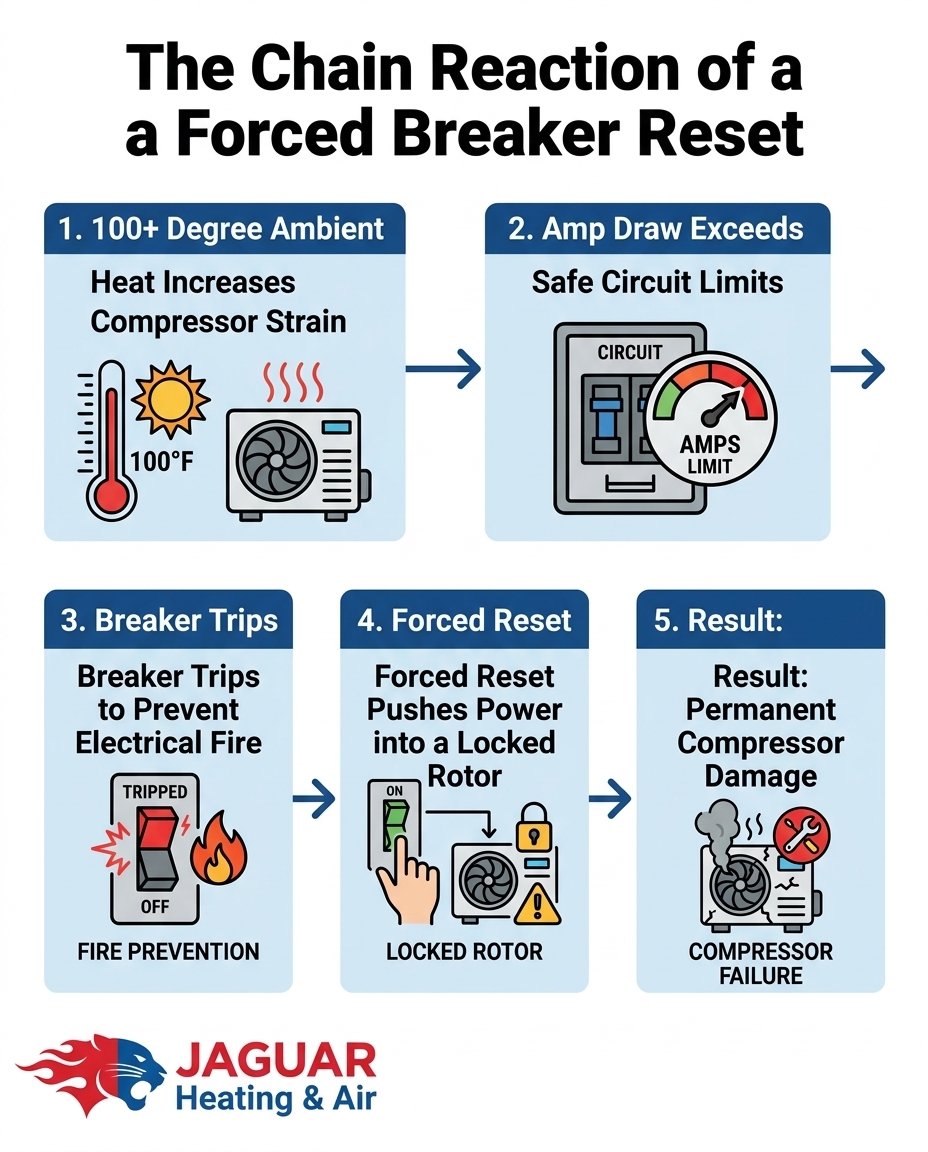
Why the Late Afternoon is the Danger Zone for Compressors
It is no coincidence that your air conditioner struggles the most just as you are getting off work. There is a direct, undeniable correlation between peak ambient outdoor temperatures and exponential compressor amp draw. To understand this, we have to look at how an air conditioner actually works. Your AC does not "create" cold air; it absorbs heat from inside your house and pumps it outside. This process is called heat rejection.
During July in Sacramento, temperatures frequently exceed 90 to over 100 degrees. When the outdoor coil (the condenser) tries to reject the heat from your home into an environment that is already 100 degrees, the system has to work incredibly hard. The compressor must compress the refrigerant to a much higher pressure to make it hotter than the outside air so the heat can transfer. This high-pressure demand forces the compressor motor to draw significantly more electrical current. The hotter it gets outside, the harder the compressor works, and the more amps it pulls through your breaker panel.
This massive strain aligns perfectly with the 4 PM peak electrical load. The Sacramento Municipal Utility District (SMUD) identifies 5 PM to 8 PM as peak electrical demand hours, which closely follows the peak ambient heat that strains AC units. At this time of day, the sun has been baking your roof for hours, heat has saturated your attic, and your AC is running non-stop just to maintain the temperature. The electrical grid is stressed, and your personal cooling system is pushed to its absolute limit.
One effective way to mitigate this specific afternoon strain is to adjust your cooling strategies earlier in the day. By pre-cooling your home during the morning hours when the ambient temperature is lower, you reduce the amount of heat the system has to remove during the hottest part of the day. Implementing tips for using your smart thermostat efficiently can help you automate this process, easing the burden on your compressor before the late afternoon danger zone arrives.
Common Culprits Behind Peak-Heat Power Surges
When the breaker trips, it is a symptom of a larger mechanical problem. Air conditioners are designed to operate safely even in hot weather, provided they are in good condition. When they fail during peak heat, it is usually because a specific component has degraded, forcing the system to compensate by pulling dangerous amounts of electricity. Investing in routine AC maintenance is the best way to catch these culprits before they cause a sudden shutdown.
1. The Role of the Capacitor Under Extreme Load
The most common reason an air conditioner trips a breaker in the heat of the summer is a failing dual-run capacitor. The capacitor acts like a heavy-duty battery that provides a massive jolt of electricity to jump-start the compressor and the fan motor. Because it takes so much energy to get a heavy compressor spinning, the capacitor stores up power to deliver it all at once.
The heat factor: Intense heat degrades capacitors faster than any other component in your HVAC system. When a capacitor weakens, it cannot deliver the necessary starting voltage. The compressor tries to start, fails, and pulls a massive amount of continuous electricity from the breaker instead. This instantly overloads the circuit and trips the switch.
2. Airflow Restrictions and Overheating
Your air conditioner needs to breathe to function. The outdoor unit features a condenser coil covered in hundreds of tiny aluminum fins. These fins allow air to flow through and carry heat away from the refrigerant. If these coils become caked with dust, dirt, pollen, or yard debris, the system suffocates. The heat cannot escape, forcing the compressor to run hotter and hotter.
The electrical consequence: As the compressor overheats, the internal electrical resistance increases. Higher resistance means the motor has to pull more amps to do the same amount of work. Eventually, this slow, steady climb in amp draw crosses the safety threshold, and the breaker trips to prevent a meltdown. This lack of airflow maintenance is a leading cause of sudden afternoon failures.
3. Grounded Compressors
A grounded compressor is a catastrophic electrical failure. Inside the steel shell of your compressor is an electric motor wrapped in copper wiring. This wiring is coated in a thin layer of insulation. Over time, due to age, extreme heat, or acid buildup in the refrigerant lines, this insulation can melt or wear away.
The short circuit: When the bare copper wire touches the steel casing of the compressor, it creates a direct electrical short to the ground. This causes an instantaneous, massive surge of electricity that trips the breaker the exact second the thermostat calls for cooling. If your breaker trips instantly every time the AC tries to turn on, a grounded compressor is highly likely.
4. Loose Electrical Wiring
Electrical connections naturally degrade over time, especially in outdoor environments subject to extreme temperature swings. As the Sacramento peak summer heat hits your outdoor unit, the metal components expand. When the unit cools down at night, they contract. This constant expansion and contraction can slowly loosen the lugs and terminal connections holding your electrical wires in place.
The resistance problem: A loose wire creates electrical resistance. The electricity has to work harder to jump the small gap, which generates intense, localized heat. This heat can melt wires, burn contactors, and cause the breaker to trip due to the erratic power draw. Our Jaguar Heating & Air technicians see this constantly. Just this past summer, a local homeowner called us during a stretch of triple-digit heat when their system simply stopped cooling the house. Our technician arrived, explained that extreme heat had degraded a critical electrical connection, and laid out the available options to get the house cooling effectively again without risking further electrical damage.
Immediate, Safe Steps to Take When the Power Cuts Out
When the breaker trips and the house starts warming up, it is easy to panic. However, taking the right steps immediately can mean the difference between a simple repair and a catastrophic system replacement. Here is exactly what you should do to protect your home and your equipment.
1. Turn the thermostat to the "OFF" position immediately. Do not simply turn the temperature up. You must switch the entire system setting to "OFF." This stops the thermostat from sending the 24-volt signal to the outdoor unit asking it to turn on. If you leave the thermostat calling for cooling, the system will immediately try to start the moment power is restored, which can cause further damage.
2. Leave the breaker in the tripped (or middle) position. Do not touch the electrical panel. The breaker did its job by stopping a dangerous power surge. Leave it exactly where it is so a professional can safely test the electrical load.
3. Check the indoor air filter. A completely blocked air filter can cause the indoor evaporator coil to freeze solid, which in turn causes liquid refrigerant to flow back to the compressor, overheating the motor and tripping the breaker. If the filter is completely caked in gray dust, remove it, but do not turn the system back on.
4. Contact a licensed professional for emergency diagnostics. You need an expert to measure the electrical draw safely before the heat of the day peaks further. Do not attempt DIY electrical troubleshooting on a 240-volt appliance.
We often work with families facing these exact sudden failures. Recently, a Sacramento homeowner reached out on a tight budget when their system started blowing ambient air during a peak July heatwave. Our service tech professionally diagnosed the electrical fault, explained the exact solution, and fixed the system quickly, providing immediate relief from the hot weather. This highlights exactly why relying on our team's rapid response and expertise at Jaguar Heating & Air is crucial for safely handling urgent, peak-heat AC electrical issues before they cause permanent compressor damage. If you are facing a sudden shutdown, reaching out for emergency HVAC service is the safest path forward.
Frequently Asked Questions About Afternoon AC Breaker Trips
Why does my AC breaker trip only in the afternoon?
Your AC breaker trips in the afternoon because the system is under maximum thermal and electrical strain. As outside temperatures peak, the compressor must work twice as hard to reject heat, which exponentially increases its electrical amp draw. When this amp draw exceeds the safe limit of your wiring during the 4 PM peak electrical load, the breaker trips to prevent an electrical fire.
Is it safe to turn the AC back on after tripping the breaker?
No, it is generally not safe to turn the AC back on after it trips the breaker. A tripped breaker is a definitive warning that the system is pulling a dangerous amount of electricity due to a mechanical fault. Forcing the system to restart without diagnosing the root cause can push raw power into a stuck compressor, risking permanent damage or an electrical fire.
How many times can I safely reset my AC breaker?
You should never reset an AC breaker more than once, and even a single reset is risky if you do not know why it tripped. Repeatedly flipping the breaker forces electricity into a failing component, which will quickly melt wires or destroy the compressor motor. If the breaker trips a second time, leave it off and call a professional immediately.
Can a hot day directly cause an AC breaker to trip?
A hot day does not directly trip the breaker, but the extreme heat forces your air conditioner to work much harder, which indirectly causes the trip. The high ambient temperatures elevate the pressure inside the refrigerant lines, requiring the compressor to pull more electrical current to keep pumping. If the system is already weak or dirty, this extra heat-induced strain pushes the amp draw over the safety limit.
Will a compressor hard start kit stop my breaker from tripping?
A hard start kit can sometimes stop a breaker from tripping if the sole issue is a compressor struggling to overcome high pressure during startup. The kit provides a massive, temporary boost of electricity to get the motor spinning faster. However, if the breaker is tripping due to a grounded motor, loose wiring, or severe overheating, a hard start kit will not solve the underlying danger.
What is the difference between a tripped breaker and a blown fuse in my AC?
A tripped breaker occurs at your main electrical panel and can technically be reset, whereas a blown fuse usually occurs at the outdoor AC disconnect box and must be physically replaced. Both serve the exact same safety purpose: they cut electrical power when the air conditioner draws too many amps. A blown fuse indicates a severe, instantaneous power surge, often pointing to a grounded compressor or a major short circuit.
Protect Your Home and Restore Your Cooling Safely
An afternoon breaker trip is your air conditioning system's loudest cry for help. When the Sacramento peak summer heat pushes your equipment to its absolute breaking point, the circuit breaker steps in to prevent an electrical disaster. Understanding that this is a critical safety mechanism—not a simple nuisance—is the first step in protecting your home.
We cannot stress enough that a professional diagnosis is the only safe way to restore your cooling without risking a fire or a dead compressor. Bypassing the breaker is a gamble that homeowners rarely win. Instead of sweating it out or risking a dangerous reset, we encourage you to explore professional repair options to keep your home safe and comfortable. For comprehensive diagnostics and reliable solutions, trust our full range of air conditioning services to get your system back online safely.
Recent Posts

Fall HVAC Startup Checklist: Diagnosing Burning Smells and System Red Flags
Deciding if that burning dust smell is normal? See why this seasonal home maintenance checklist is critical for catching heating failures before winter hits.

Fall HVAC Maintenance Troubleshooting: Decoding Furnace Startup Smells and Sounds
Is that burning dust smell normal? See what happens inside your system during fall startup and find home maintenance tips and troubleshooting to stay safe.

A Proactive Seasonal Home Maintenance Checklist for HVAC Systems
Why we prioritize October heating inspections. Use this seasonal home maintenance checklist to prevent sudden furnace failures. Schedule your checkup today.