
The Heat Pump Defrost Cycle Explained: Navigating Chilly, Damp Nights
Waking up to cold air and loud noises? Get the heat pump defrost cycle explained to decide with confidence if it's normal fall behavior or time to call a pro.
Waking up to cold air and loud noises? Get the heat pump defrost cycle explained to decide with confidence if it's normal fall behavior or time to call a pro.

Why Damp November Nights Trigger Strange Heat Pump Behaviors
Late fall weather is shifting fast, and if you are hearing strange noises outside your window, having the heat pump defrost cycle explained is the first step to knowing if your system is healthy or failing. The transition into late fall and November brings a sudden drop in evening temperatures. You might wake up feeling chilly in the middle of the night, only to hear a loud, startling "whoosh" sound coming from your outdoor unit. For many homeowners, this sudden shift in behavior causes immediate alarm.
Here is the thing: heat pumps operate differently than traditional gas furnaces. When the outdoor temperature drops, the system has to work harder to extract heat from the ambient air. During this process, it is entirely normal for the equipment to shift gears to protect itself from freezing over. The core decision you face as a homeowner is determining whether this frequent cycling is a normal response to damp, cold weather or an early warning sign of a failing component.
If you are concerned about your system's sudden changes in behavior, our Heat Pump Services team at Jaguar Heating & Air can help evaluate your equipment. In this guide, we will break down exactly what this cycle is, why it happens, and how to spot the red flags that mean your system needs professional attention.
The Heat Pump Defrost Cycle Explained: What It Is and Why It Happens
Most homeowners start searching for a "heat pump defrost cycle explained" when they realize their outdoor unit is covered in a thin layer of white frost. To understand why this happens, you have to understand how your system gathers heat. Even when it is cold outside, there is still thermal energy in the air. Your outdoor unit uses cold liquid refrigerant to absorb that heat. Because the refrigerant is colder than the outdoor air, any moisture in the air condenses on the metal coils. When temperatures drop low enough, that condensation freezes into frost.
The defrost cycle is a built-in protective mechanism engineered to prevent your outdoor coil from turning into a solid, impenetrable block of ice. If ice completely covers the fins, air can no longer flow through the unit, and the system cannot absorb heat. To clear this frost, the system temporarily reverses its operation.
If you suspect this protective mechanism is failing to engage, scheduling Heat Pump Repair in Sacramento ensures your equipment does not suffer permanent compressor damage.
The Role of the Reversing Valve
The secret behind this process is a component called the reversing valve. During normal winter heating, this valve directs hot, high-pressure refrigerant inside to warm your home. When the system detects too much frost on the outdoor coils, the reversing valve shifts.
• The shift: The valve redirects the flow of refrigerant, essentially turning your system into an air conditioner for a few minutes.
• The sound: This rapid change in pressure creates the loud "whoosh" or swooshing noise you hear outside.
• The result: Hot refrigerant is sent to the outdoor coil, rapidly melting the accumulated frost.
Why Your Vents Blow Cool Air Temporarily
Because the system is temporarily operating in cooling mode to melt the outdoor ice, it is absorbing heat from inside your house. This means your indoor vents may start blowing cool air. To prevent your home from becoming uncomfortably cold during this brief period, most systems automatically engage an auxiliary or backup heat strip.
• Normal Heating — Reversing Valve Position: Directs heat indoors — Indoor Airflow: Warm air blowing — Outdoor Coil State: Absorbing heat, frost may form
• Defrost Cycle — Reversing Valve Position: Directs heat outdoors — Indoor Airflow: Cool air (unless aux heat runs) — Outdoor Coil State: Melting frost rapidly
How Tule Fog and 40-Degree Temperatures Accelerate Frost Buildup
If you live in an area that experiences dense, damp winter weather, you will likely notice your system defrosting much more frequently than someone living in a dry, freezing climate. The ambient moisture in the valley acts as direct fuel for frost accumulation on cold outdoor coils. When the late fall / November weather rolls in, it brings a very specific set of conditions that force heat pumps to work overtime.
The Frost Paradox: 40 Degrees vs. 20 Degrees
It sounds counterintuitive, but your outdoor unit will often build up frost much faster at 40 degrees than it will at 20 degrees. The reason comes down to relative humidity. When you have 40-45°F overnight lows with high humidity, the air is thick with moisture. In the Sacramento valley, Tule fog significantly increases this ambient moisture. In fact, our technicians at Jaguar Heating & Air respond to calls every November from homeowners alarmed by this rapid frost accumulation.
The process of rapid frost buildup:
1. The outdoor temperature sits around 40-45°F.
2. The outdoor coil drops below freezing to absorb heat from the air.
3. The heavy moisture from the fog immediately condenses on the freezing coil.
4. Because there is so much water in the air, the frost layer builds rapidly, triggering frequent defrost cycles.
In contrast, when the air is 20 degrees, it is usually very dry. There is simply less water available in the air to freeze on the coils. This is why local homeowners often experience frequent, noisy cycling during damp, foggy nights. To learn more about this regional phenomenon, read our guide on how dense fog affects heat pumps. Understanding this paradox provides peace of mind that your system is likely functioning exactly as engineered.
Timeline of a Normal Defrost Cycle: Sounds, Sights, and Duration
Knowing what a healthy cycle looks and sounds like is the best way to avoid unnecessary panic. When those 40-45°F overnight lows with high humidity hit, your system will follow a very predictable sequence of events. Regular Heat Pump Maintenance keeps this timeline on track and ensures all sensors are calibrated correctly.
The Initial 'Whoosh' and Steam
The cycle begins abruptly. You will hear the reversing valve shift, followed by the outdoor fan turning off. The fan stops spinning so the heat sent to the outdoor coil is not blown away by the cold wind. As the hot refrigerant melts the frost, you will likely see a cloud rising from the unit.
One thing our team at Jaguar Heating & Air sees often during late fall maintenance visits is homeowners mistaking this rising cloud for smoke. It is actually just steam. As the ice melts into water and hits the hot copper coils, it evaporates rapidly in the cold winter air. If you see white, odorless vapor rising from the top of the unit, it is a sign the system is working perfectly.
The 15-Minute Benchmark
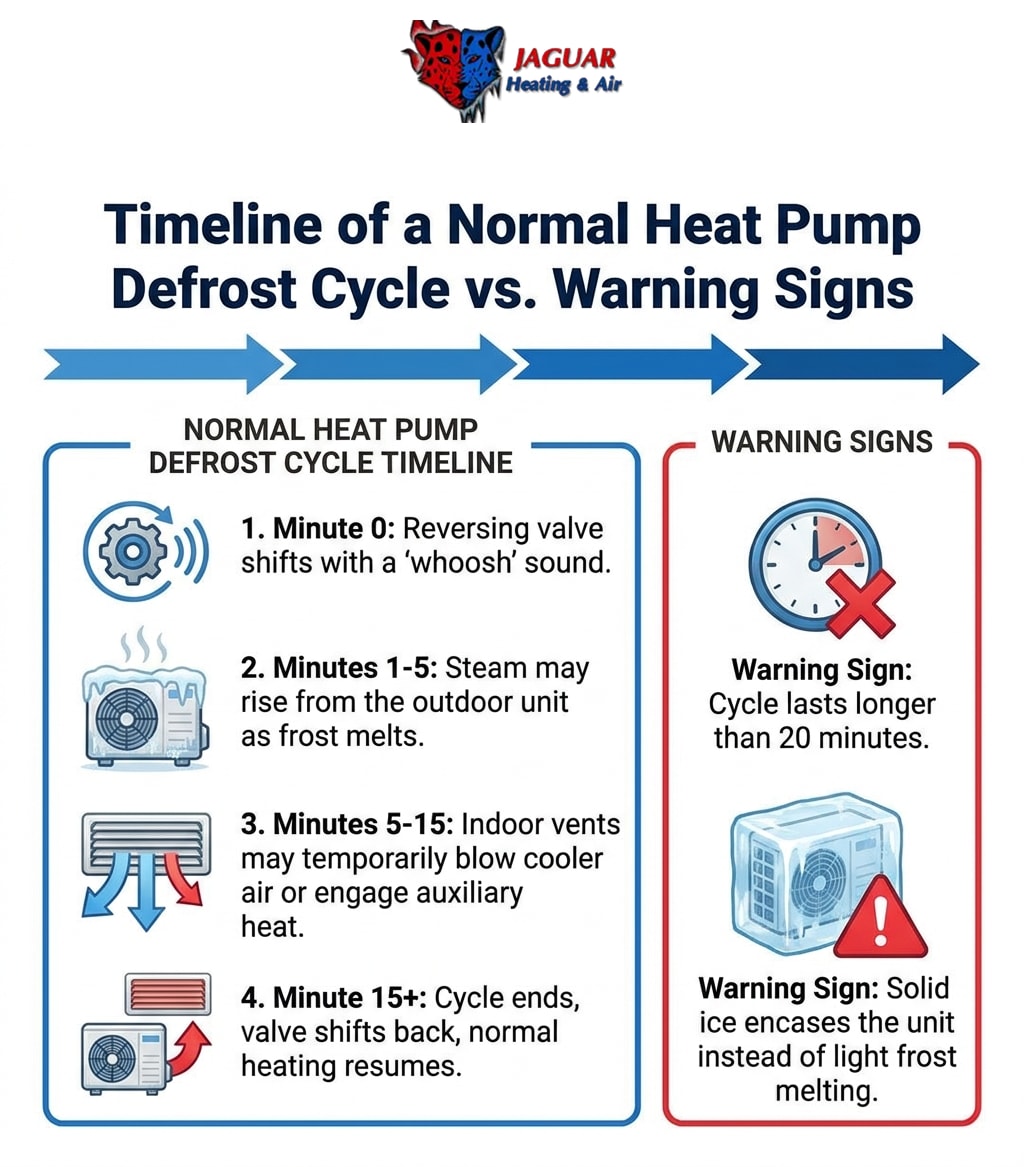
According to Department of Energy guidelines, a normal defrosting period is relatively short. You can use the following timeline as a benchmark for a healthy system:
• Minute 0: The reversing valve shifts with a loud whoosh. The outdoor fan stops.
• Minutes 1 to 5: Steam begins to rise from the outdoor unit as the frost melts.
• Minutes 5 to 15: Indoor vents may temporarily blow cooler air, or you may smell the slightly dusty scent of the auxiliary heat strips turning on.
• Minute 15+: The cycle ends. The valve shifts back, the outdoor fan restarts, and normal warm airflow resumes inside.
If your system completes this sequence within 5 to 15 minutes, it is operating normally.
Signs Your Heat Pump is Stuck in Defrost Mode
While frequent cycling is normal during late fall / November weather, getting stuck in that cycle is a serious mechanical issue. When a system cannot resolve the frost buildup on its own, it will exhibit clear warning signs. If you notice any of the following symptoms, your equipment requires professional diagnostics.
Thick Ice Encasement vs. Light Frost
A healthy unit will have a light, white dusting of frost on the metal fins—similar to the frost you see on a car windshield in the morning. An unhealthy unit will look drastically different.
Watch for these critical red flags:
• Solid ice blocks: The outdoor unit is encased in thick, clear, or milky solid ice rather than a light white dusting.
• Extended duration: The system blows cold air continuously for over 20 minutes without the auxiliary heat compensating or the cycle ending.
• Rapid short-cycling: The unit shifts in and out of defrost mode every few minutes, never actually clearing the ice or warming the house.
• Ice inside the fan grille: Ice is building up so heavily that it is physically encroaching on the outdoor fan blades.
Thick ice prevents airflow entirely. If the system continues to run while encased in a block of ice, the compressor will overheat and fail, leading to catastrophic equipment damage.
Common Culprits Behind a Stuck Defrost Cycle
When you find yourself searching for a "heat pump defrost cycle explained" because your unit is completely frozen, the root cause is usually electrical or mechanical. These are highly complex, closed-loop systems.
Sensor Miscalibrations and Board Failures
Most modern units use a time/temperature demand board to manage this process. These control boards rely on accurate readings from outdoor sensors to know when frost has formed and when it has successfully melted.
The most common points of failure include:
• Faulty thermistors: If the temperature sensor goes bad, the control board becomes "blind." It may never realize the coil is freezing, or it may never realize the ice has melted, leaving the system stuck.
• Stuck reversing valves: The internal slide mechanism inside the brass reversing valve can become physically jammed, trapping the system in cooling mode.
• Low refrigerant levels: If your system has a leak, the pressure drops. Low pressure causes the coils to freeze much faster and deeper than the system is designed to handle.
• Failing outdoor fan motors: If the fan motor is dying, it cannot pull enough air across the coils, leading to rapid, unmanageable freezing.
Because these issues involve high-voltage electricity and pressurized chemicals, they require professional tools and licensing to test safely.
Why Accurate Diagnostics Matter for Winter Heat Pump Reliability
When you are dealing with a malfunctioning system during 40-45°F overnight lows with high humidity, accurate diagnostics are paramount. The worst thing a homeowner can do is attempt a DIY intervention. Trying to chip thick ice off the delicate aluminum fins with a screwdriver or shovel will almost certainly puncture the pressurized refrigerant lines, turning a manageable repair into a complete system replacement.
Proper diagnostics involve testing electrical components, measuring sensor resistance with a multimeter, and checking refrigerant pressures simultaneously. Over our years serving the Sacramento area, the Jaguar Heating & Air team has learned exactly how valley weather and damp cold impact heat pump performance and sensor readings. A sensor that reads correctly at 60 degrees might fail completely when exposed to dense, freezing fog.
Booking Sacramento Heating Maintenance before peak winter hits allows a professional to test the defrost control board, verify the reversing valve operation, and calibrate the sensors. Proactive care is the only way to ensure your system is ready to handle the heavy moisture of the season safely.
Frequently Asked Questions About Heat Pump Winter Operation
How long should a heat pump defrost cycle last?
A normal cycle typically lasts between 5 and 15 minutes. During this time, the system works rapidly to melt accumulated frost from the outdoor coils. If your system runs in this mode for longer than 20 minutes without returning to normal heating, it is likely stuck and requires professional evaluation.
Why is my heat pump blowing cold air in winter?
Your heat pump temporarily blows cold air during the defrost cycle because it reverses operation, pulling heat from inside your home to melt the outdoor ice. Most systems turn on an auxiliary heat strip to warm this cool air before it reaches your vents. If the cold air persists for more than 15 minutes, your auxiliary heat or control board may be failing.
How often should a heat pump go into defrost mode on a damp night?
During late fall / November weather with high humidity and temperatures around 40 degrees, your system may need to defrost every 60 to 90 minutes. Dense fog and heavy moisture cause frost to build up rapidly. However, if it is cycling every 10 to 15 minutes, the system is short-cycling and needs a technician's attention.
How do I know if my heat pump is stuck in defrost?
You can tell your system is stuck if the outdoor unit remains encased in a thick, solid block of ice rather than a light dusting of white frost. Additionally, if the indoor vents blow cold air continuously for over 20 minutes, the reversing valve or control board is likely trapped in the wrong mode.
Is it normal for my heat pump to look like it is smoking?
Yes, it is entirely normal to see white vapor rising from the outdoor unit during winter operation. This is not smoke; it is steam created when the hot refrigerant rapidly melts the frost off the cold metal coils. As long as the vapor is white and odorless, your system is functioning correctly.
Should I pour hot water on my frozen heat pump to speed up defrosting?
No, you should never pour hot water over a frozen unit, and you should never try to chip the ice away with tools. Hot water can rapidly expand the cold metal coils, causing structural damage or electrical shorts, while tools can easily puncture the refrigerant lines. Always call a licensed professional to diagnose a frozen system.
Keep Your Home Warm and Defrost Cycles Normal This Winter
Navigating the shift into late fall / November weather does not have to be stressful. While frequent defrosting is a completely normal response to damp, chilly conditions, getting stuck in that cycle is not. Knowing the difference between normal steam and a dangerous block of solid ice protects your equipment and ensures your home stays comfortable all season long. Do not wait until your system is completely frozen over. If you suspect your unit is struggling to clear frost or is blowing cold air for too long, schedule professional diagnostics with Jaguar Heating & Air today before the deep winter weather sets in.
Recent Posts

Managing Indoor Dryness in Late Fall: Why Whole-House Humidifiers Outperform Portable Units
Tired of refilling room humidifiers? When managing indoor dryness in late fall, a whole-house system provides superior comfort. Compare your options today.
How to Optimize HVAC for Holiday Guests & Avoid Hot Spots
Why we recommend safe airflow adjustments for crowded homes. See how to optimize hvac for holiday guests to balance freezing bedrooms and hot kitchens.
Why Upgrading Your Heating Won't Fix the Chill: How Drafty Windows Affect HVAC Efficiency
Think you need a new furnace? Find out how drafty windows affect hvac efficiency first. Why we check your home's envelope before replacing equipment.